


NASA unveils new Boeing 777 airborne research laboratory as replacement for its vintage DC-8

5 min read
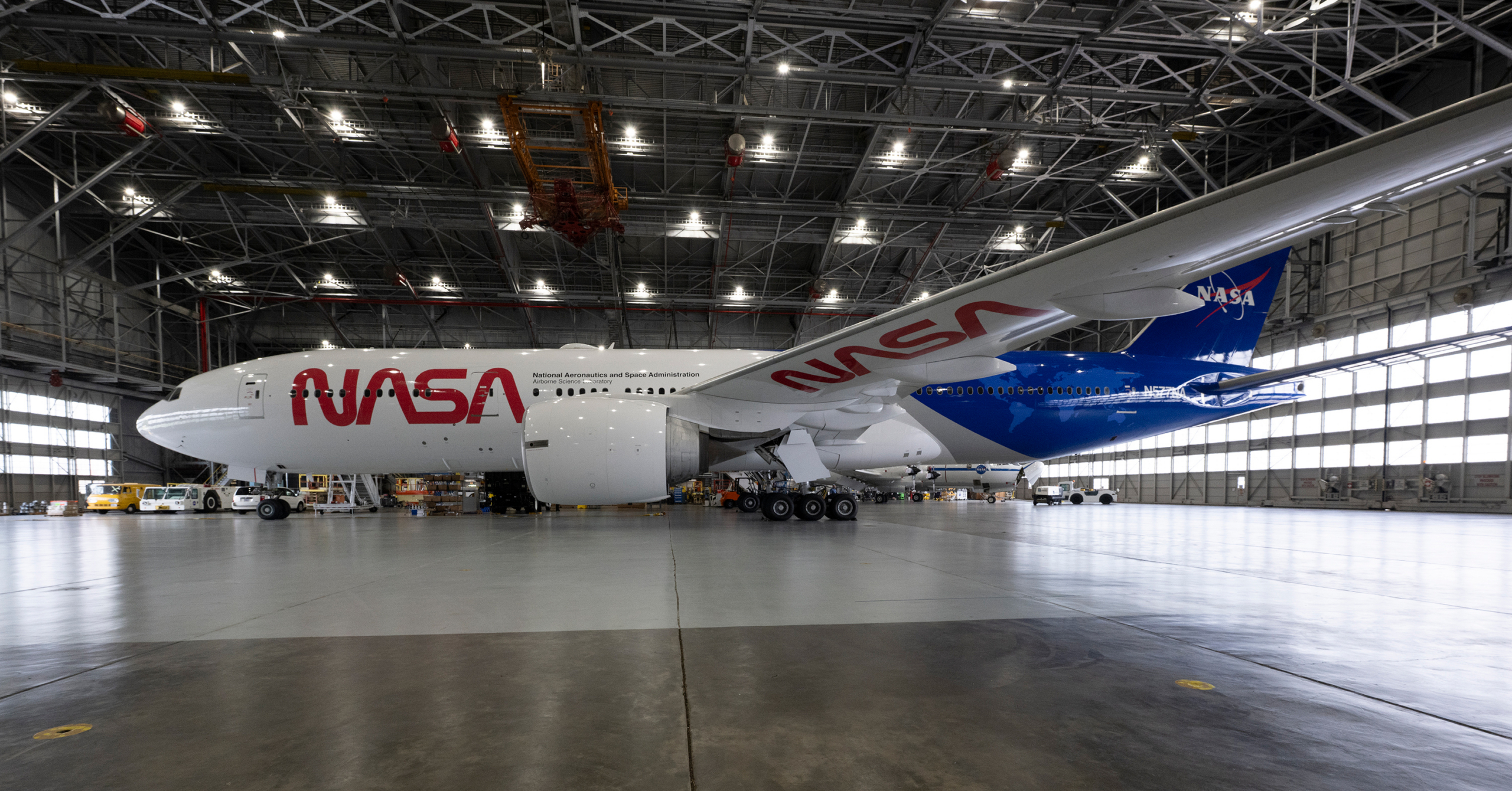
Having retired its Douglas DC-8 airborne research laboratory in 2024, NASA has unveiled its replacement in the form of a modified Boeing 777-200ER widebody passenger jet.
The aircraft will be used to continue the work of the NASA Langley Research Centre based in Virginia, which handles a range of atmospheric projects for several US agencies, as well as other environmental and aerospace-related studies.
Introducing NASA’s new Boeing 777 flying laboratory
The new NASA B777-200ER was acquired to replace and extend the capabilities of NASA’s vintage DC-8-72, which was retired in 2024, having flown for the agency for 37 years.
Built in 2003, the replacement aircraft (now carrying registration N577NA) was first revealed on 12 August, resplendent in a stunning new NASA-themed livery.
The aircraft is currently undergoing various modifications to include several nadir and window ports, power, data, and communications systems, and instrument operator accommodations. First operations with the aircraft are due to begin in early 2027.
It's a bird! It's a plane! It's… NASA's Boeing 777! ✈️
— NASA Langley Research Center (@NASALangley) August 11, 2026
Isn't she a beaut? The B777 returned to Langley today with a fresh, new paint job. This huge aircraft is the future of our airborne science research.
💫 Learn more about the newest addition to our fleet:… pic.twitter.com/6JqocyE8ng
The new livery features large red ‘billboard-style’ NASA titles on the forward fuselage, over the window line, on an otherwise all-white forward fuselage.
To the rear of the aircraft, a navy-and-silver sweep covers the rear fuselage (superimposed with a light blue world image), with the standard NASA globe logo appearing on the vertical stabiliser. Under the port wing, large NASA titles also appear in red.
What NASA’s Boeing 777 research aircraft will be used for
According to a NASA statement, with its extended range capabilities, the flying laboratory will offer “truly global reach”, which will enable data collection for NASA projects to include sensor development, satellite sensor calibration, data product validation, and field studies to better understand earth system processes to improve models and decision-making.
“The predecessor to the new Boeing 777, the DC-8, demonstrated the multidisciplinary nature of this class of platforms by supporting such diverse fields such as atmospheric chemistry, archaeology, biology, ecology, hydrology, meteorology, oceanography, and volcanology,” added the agency.
How NASA chose the Boeing 777 as its new airborne research laboratory
The project to source a replacement for NASA’s ageing Douglas DC-8 began in 2021 with the National Academies of Science, Engineering, and Medicine (NASEM) launching a report entitled ‘Airborne Platforms to Advance Earth System Science Priorities: Assessing the Future Need for a Large Aircraft.’
This paper outlined the need to maintain and improve the capability to carry a variety of remote sensing and gas sampling instruments in order to answer some of the most challenging questions in Earth science.
The new aircraft was built in 2003 and first rolled off the production line as a Boeing 777-246(ER) with manufacturer serial number 32892. It was delivered to customer Japan Airlines (JAL) later that year and flew commercial routes for JAL under registration JA704J until it was retired in May 2020 and placed in storage.
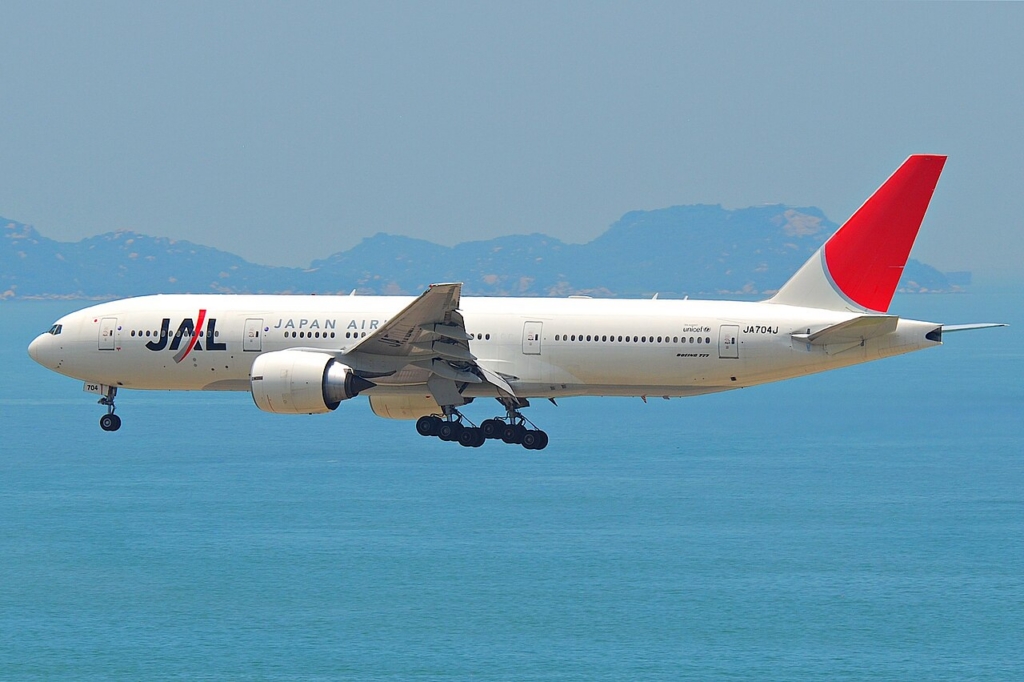
Later acquired by Logistic Air based in Southern California, the aircraft was subsequently re-registered as N774LG before being acquired by NASA following the publication of the NASEM study report.
Selected for its long-range capabilities, relatively low age, and modern avionics and technology, the aircraft was deemed suitable for use by NASA’s Langley Atmospheric Research Centre.
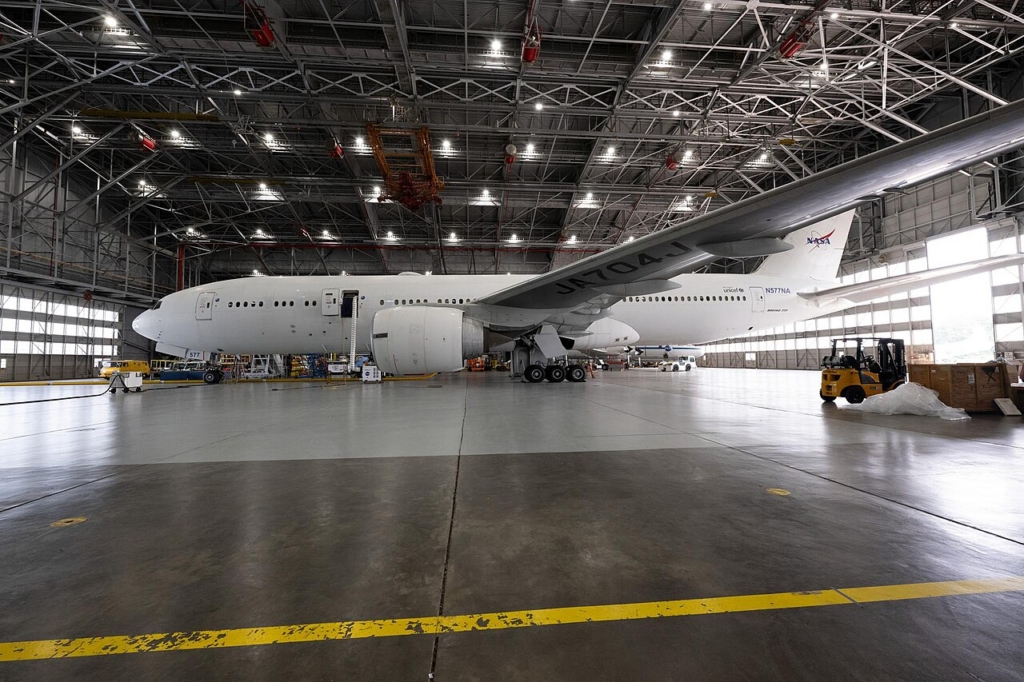
Heavy modification began on the aircraft in 2025, and the aircraft assumed its new NASA registration of N577NA. The aircraft has undergone extensive retrofitting by L3Harris Technologies in Waco, Texas.
Engineers added custom window ports, nadir observation openings, advanced communication architectures, and specialised interior operator stations.

The aircraft later ferried back to the NASA Langley Research Centre based in Hampton, Virginia, in April 2026, sporting NASA’s modern blue livery
The aircraft is currently scheduled to operate its inaugural mission, known as ‘NURTURE’, to study severe winter weather and Arctic systems at the start of 2027.
NASA’s first Boeing 777 mission: The NURTURE weather research project
The NURTURE mission (North American Upstream Feature-Resolving and Tropopause Uncertainty Reconnaissance Experiment) is a NASA-funded airborne research field campaign designed to improve forecasts of severe winter weather.
Due to begin its second phase in January and February 2027, the mission will be the first undertaken by the Boeing 777 flying laboratory. The core goal of NURTURE is to study the atmospheric triggers that generate extreme, high-impact winter weather (HIW).
According to NASA, the mission will focus on tracking severe weather development by investigating how atmospheric disturbances near the Arctic interact with mid-latitude air masses to create severe cold air outbreaks, blizzards, windstorms, ice storms, and hazardous sea states.
The project will also study the jet stream and the tropopause to quantify how small, high-altitude air perturbations poleward of the jet stream cause the jet stream to shift, leading to extreme weather downstream.
The base of operations for the Boeing 777 will be Goose Bay in Newfoundland and Labrador, Canada, which happens to be positioned directly poleward of the winter jet stream.
Due to the Boeing 777’s 2,700-nautical-mile range and 18-hour flight endurance, the aircraft will collect data across all of Canada, most of the US, Greenland, the Arctic Ocean, the North Atlantic Ocean, and Europe.
A NASA statement said that the Boeing 777’s long range will also allow scientists to sample emerging storm features three to five days in advance, tracking them from inception all the way to their downstream impacts.
The Boeing 777 will allow for the gathering of high-sensitivity atmospheric data in dry high-latitude environments where standard satellites and space observations lack accuracy.
Sign up for our newsletter and get our latest content in your inbox.


More from


September 25, 20264 min read


