


Lockheed Martin’s X-62 VISTA intercepts 27 targets using artificial intelligence

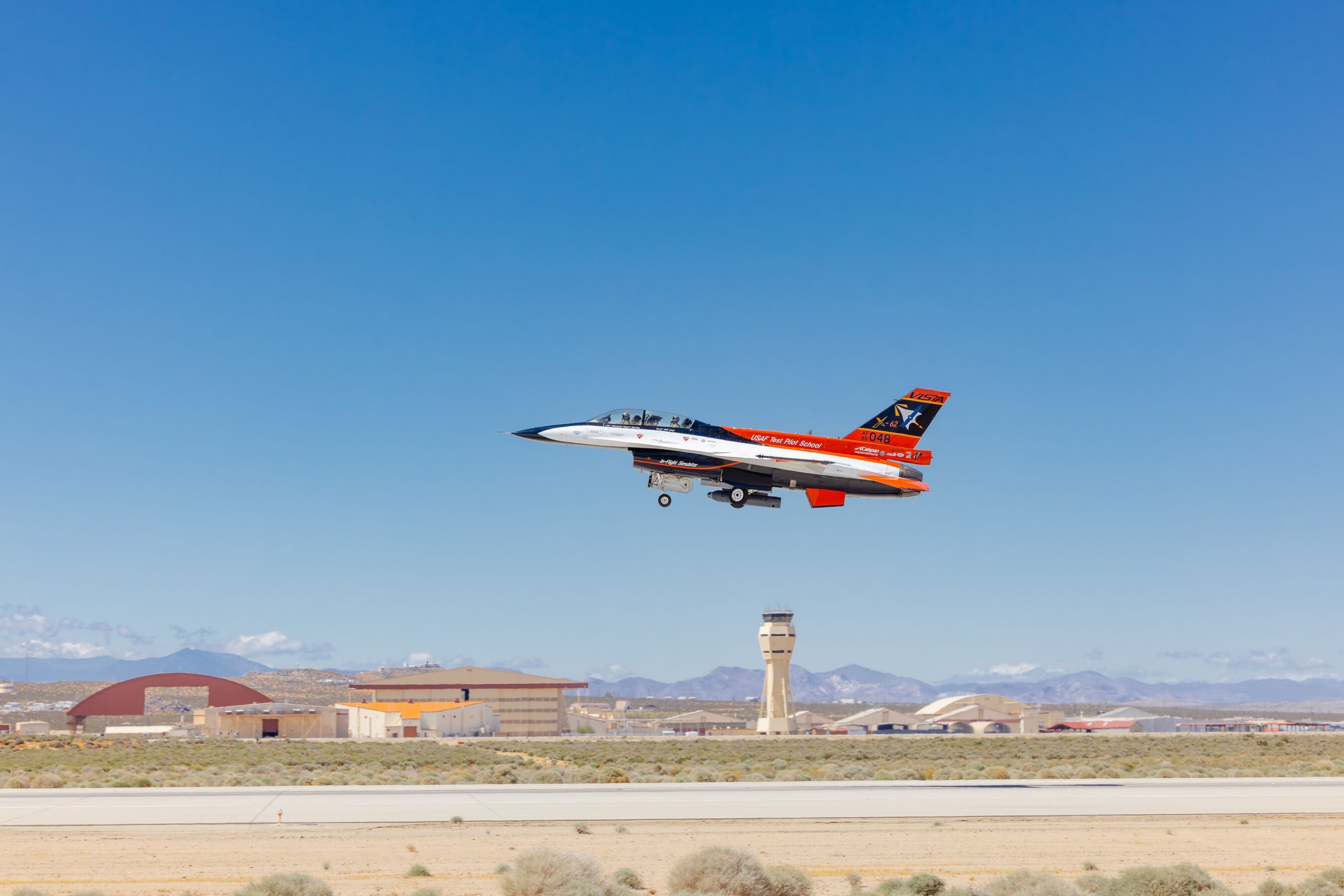
Yesterday, Lockheed Martin’s Skunk Works reported that its highly modified F-16 testbed, the X-62 Variable In-flight Simulation Test Aircraft (VISTA), executed 27 AI-controlled intercepts.
Air Force’s testbed X-62 VISTA performs more autonomy tests
Skunk Works defined the objective of the tests as “demonstrate that the X-62 and its integrated autonomy architecture can successfully use real sensor data to inform AI behaviour, validating the full test cycle from development and simulation through training and flight execution.”

Lockheed termed the development a landmark step toward the future of airborne autonomy, demonstrating sensor-driven autonomy on fighter aircraft.
During the tests, an artificial intelligence (AI) agent used targeting information from an operational sensor “to execute successful air intercepts against a live target.” The X-62 has Skunk Works’ “Supermassive” AI agent that was integrated into the X-62 in just three months.
The X-62 is equipped with the Lockheed Martin Legion Pod that tracks a live T-38 jet. It feeds the data to an AI agent that then autonomously pilots the fighter into a tactical intercept position.
The tests help Lockheed gather real-world sensor data (validating simulated target data).

Stacy Kubicek, vice president and general manager, Lockheed Martin Sensors and Global Sustainment, said, “This project demonstrates how sensing and autonomous AI can come together as a force multiplier to make faster, more informed action in complex environments.”
Meanwhile, Ron Fehhlen, vice president and general manager, Lockheed Martin Skunk Works, noted, “This achievement marks a decisive advance toward delivering AI‑augmented air dominance for the United States.”
Builds on earlier X-62 VISTA tests
In April, the US Air Force announced that its Test Pilot School’s Research Division had simultaneously executed two accelerated test programs, HAVE HEAT and HAVE HOLIDAYS, using the X-62 VISTA.
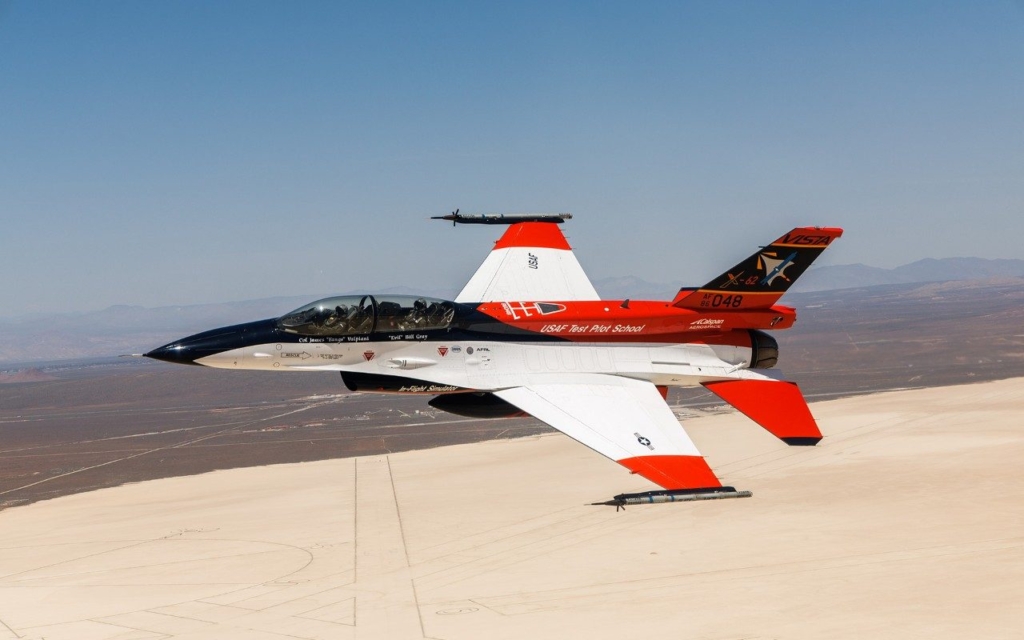
At the time, it wrote, “Driven by the Test Resource Management Center’s X-62 Mission Systems Upgrades (MSU), these latest milestones reflect continued emphasis on the safe acceleration of artificial intelligence and autonomy capabilities for the warfighter.
The X-62A has been used for programmes like the Skyborg and various efforts related to developing Collaborative Combat Aircraft (CCA) concepts.
AGN recently reported that Shield AI has completed the “integration, actuation, and engine light-off testing of the advanced Axisymmetric Vectoring Exhaust Nozzle (AVEN) for Shield AI’s X-BAT aircraft.”
No runway, no problem.
— Shield AI (@shieldaitech) July 20, 2026
Shield AI and @GE_Aerospace just cleared a critical path to vertical flight, completing engine light-off testing of the Axisymmetric Vectoring Exhaust Nozzle (AVEN) for X-BAT.
Engineers from both companies integrated the AVEN into GE Aerospace's… pic.twitter.com/OxV3y3sRKB
This is part of an effort to develop a tail-sitting VTOL autonomous fighter jet leveraging the AVEN nozzle originally built for and tested by the X-62A VISTA in the 1990s.
The one-of-a-kind X-62A VISTA testbed
The X-62A VISTA (originally called the NF-16D VISTA) is a one-of-a-kind, originally a Block 30 F-16D (registered 86-0048) experimental aircraft that serves as a variable-stability flight simulator and as a testbed for AI and autonomy technologies.
It is operated by the US Air Force Test Pilot School based at Edwards Air Force Base in California with support from the Air Force Research Laboratory.
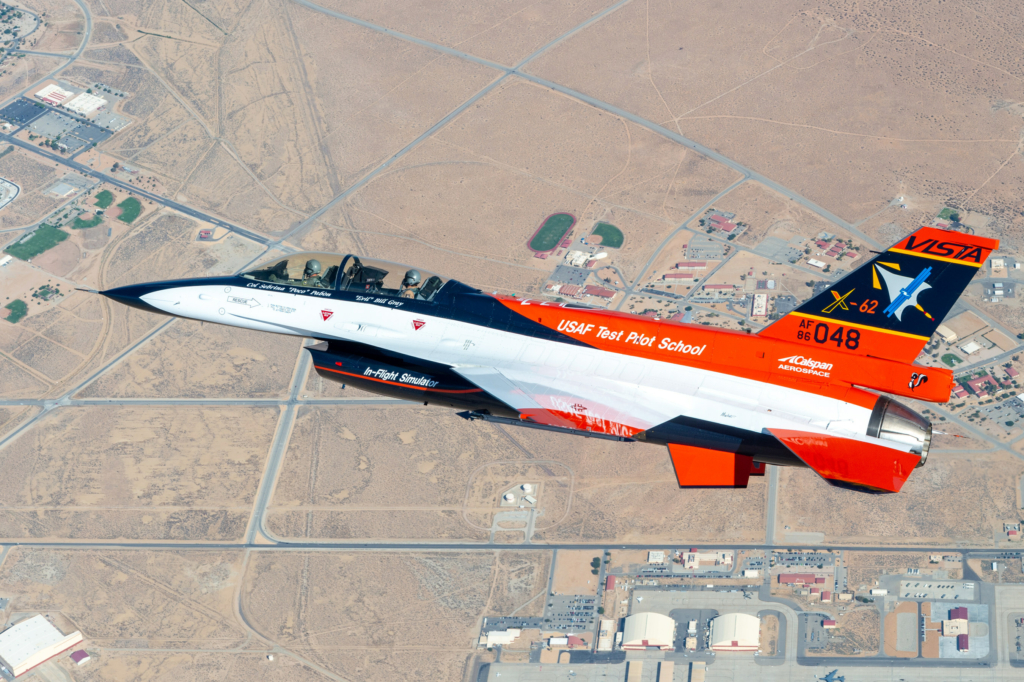
The testbed started as a General Dynamics F-16D Block 30 (Peace Marble II configuration). The contract for the VISTA programme was awarded in 1988, with the aircraft’s first post-modification flight taking place in 1992.
The modified F-16 should not be confused with the Air Force’s other modified F-16s that include the QF-16 “Zombie Vipers” that function as full-scale aerial target drones or the Fighting Falcons modified as part of the Viper Experimentation and Next-gen Operations Model – Autonomy Flying Testbed programme.


