


Scientists prepare for rare lunar impact as discarded SpaceX rocket stage nears final destination

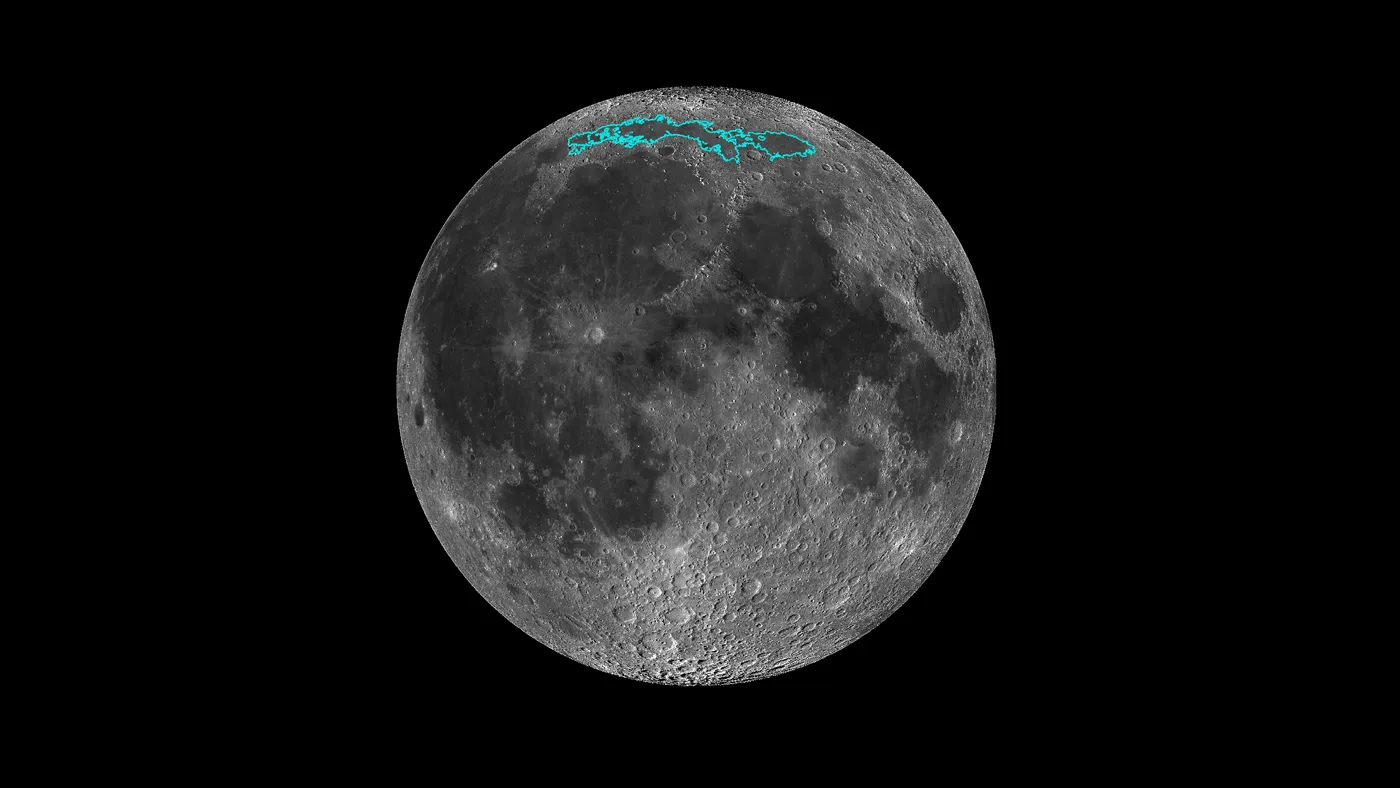
More than a year after launching two spacecraft towards the Moon, a discarded SpaceX rocket stage is about to complete an unexpected final mission. On Wednesday, it is expected to crash into the lunar surface in a collision scientists have been tracking for months.
The Falcon 9 upper stage, which launched Firefly Aerospace’s Blue Ghost and ispace’s Hakuto-R lunar landers in January 2025, is expected to strike the Moon at around 06:35 UTC on 5 August, near the rim of Einstein Crater, travelling at about 8,700km/h (5,400mph).
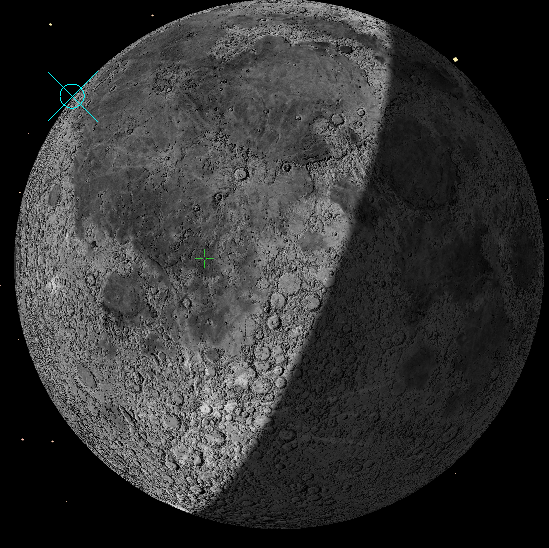
The impending impact was first reported by NPR and is based on months of orbital calculations by astronomer Bill Gray, using more than 1,000 observations gathered by professional and amateur astronomers around the world.
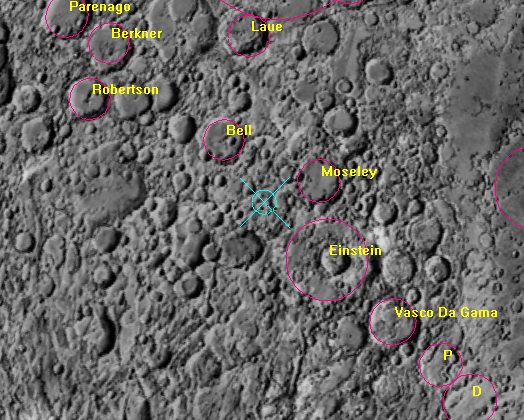
Unlike most pieces of discarded space hardware, whose final moments pass unnoticed as they burn up in Earth’s atmosphere, this one will leave a fresh crater on the Moon, offering scientists a rare opportunity to study a well-documented impact from beginning to end.
A rocket stage that refused to disappear
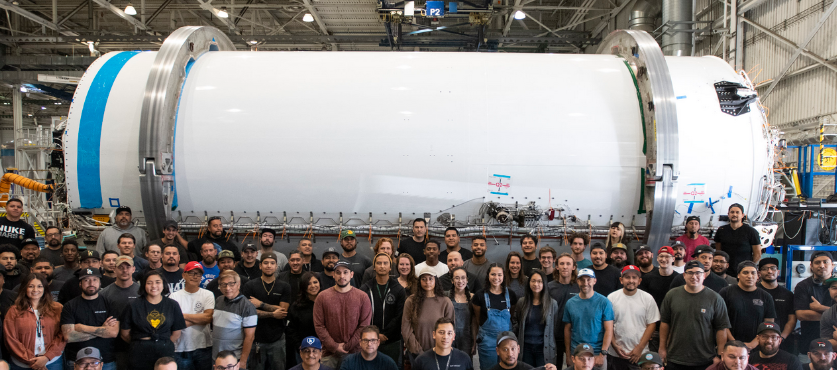
The object, officially designated 2025-010D, is the Falcon 9 upper stage that propelled Blue Ghost and Hakuto-R out of Earth orbit before completing its job and separating from the spacecraft.
Blue Ghost successfully landed on the Moon in March 2025. Hakuto-R followed a longer, fuel-saving trajectory but lost contact about 90 seconds before landing in June.
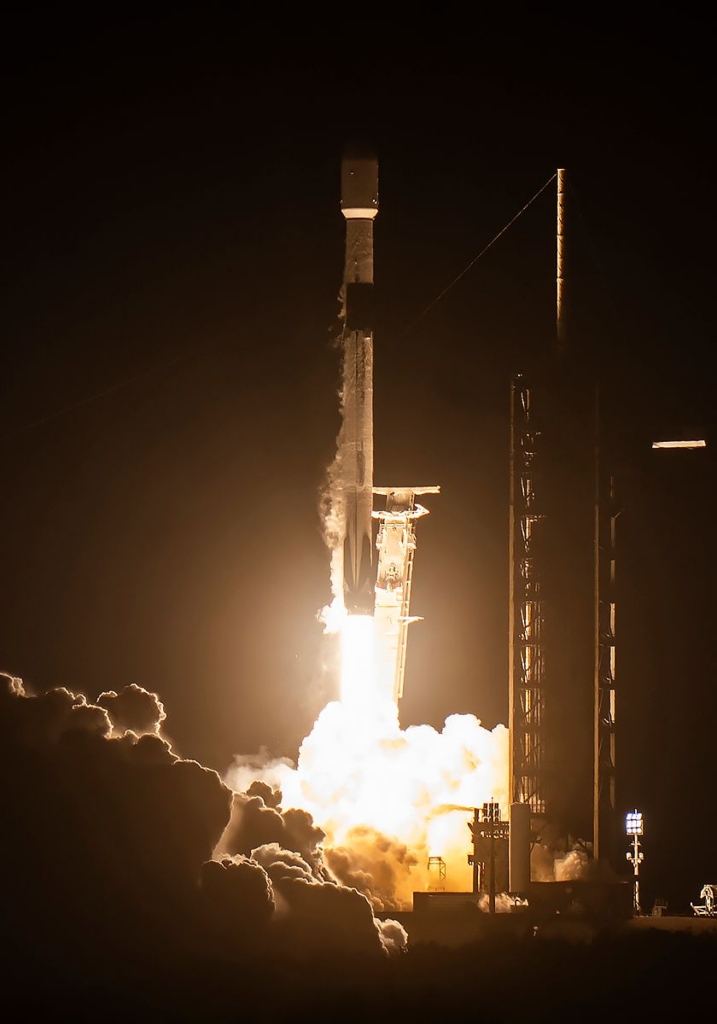
The payload adapter later re-entered Earth’s atmosphere over South America, but the upper stage remained in a highly elliptical orbit, making repeated passes of both Earth and the Moon until gravity finally placed it on a collision course with the lunar surface.
Although the object has no name, it is far from insignificant. Standing roughly the height of a five-storey building and weighing about 4,900kg, it is one of the largest pieces of deep-space hardware whose final destination has been predicted with such precision.
Astronomers, not military radar, solved the puzzle
Tracking the rocket stage has presented a very different challenge from monitoring satellites orbiting close to Earth.
Gray explains that military radar systems excel at following objects in low-Earth orbit but are largely ineffective at lunar distances, where reflected radar signals become billions of times weaker. Instead, this Falcon 9 stage was followed by asteroid survey telescopes and experienced amateur astronomers spread across several countries.
The irony, Gray notes, is that asteroid surveys are not actually looking for space junk.
Their primary task is planetary defence, finding asteroids that could threaten Earth. But distant rocket stages appear as slowly moving points of light, much like asteroids, meaning they are discovered and tracked almost by accident.
Gray first predicted the impact in September 2025 after analysing the available observations. Since then, fresh measurements from observatories in the United States, China and Europe have steadily refined both the impact time and location.
The greatest uncertainty, surprisingly, is not gravity.
“The problem is that space junk… is also pushed around by sunlight,” Gray explains. Over many months, the tiny pressure exerted by sunlight on the slowly tumbling rocket stage gradually alters its path, making it impossible to predict the exact impact point until shortly before the event.
A scientific opportunity, not a cause for concern
At first glance, the idea of a five-storey rocket stage crashing into the Moon sounds dramatic. Gray believes it should not be viewed that way.
“Well… I wouldn’t really worry about it very much,” he writes. “If anything, I’d be more concerned with the many similar objects that don’t hit the Moon, and hit the Earth’s upper atmosphere instead.”
He points out that spacecraft have been intentionally crashing into the Moon for decades.
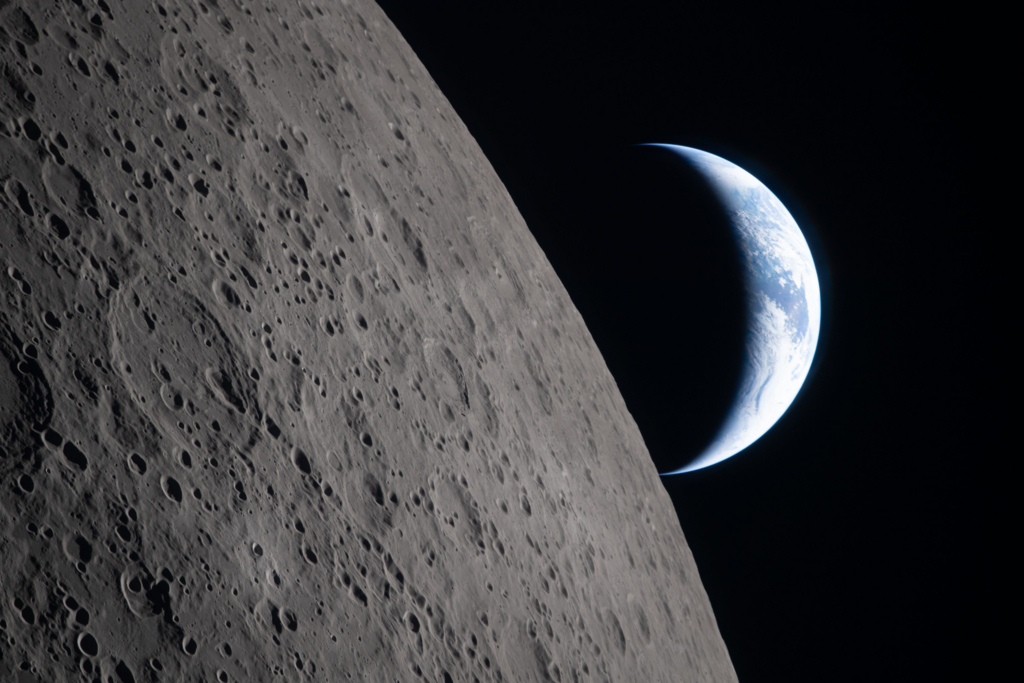
The upper stages from Apollo 13 through Apollo 17 were deliberately directed into the lunar surface during the early 1970s, producing moonquakes that helped scientists calibrate seismometers left behind by earlier Apollo missions.
Apollo lunar modules, robotic probes and NASA’s LCROSS mission in 2009 also ended their journeys on the Moon in the name of science. Meanwhile, natural asteroid impacts continue to reshape the lunar landscape every day.
This week’s impact differs because it was never planned, yet scientists know almost exactly when and where it will happen.
Can anyone actually see it?
Whether observers on Earth will witness the impact remains uncertain.
Gray believes the impact flash itself will probably be too faint to detect because the Falcon 9 stage is travelling much more slowly than the meteoroids that regularly strike the Moon. Most of the energy is expected to excavate a crater rather than produce visible light.
He is slightly more optimistic about the possibility of seeing debris thrown high above the lunar surface.
Because the impact is expected close to the Moon’s visible edge, rock blasted several kilometres into space could briefly rise above the lunar limb before falling back.
“As with much in science,” Gray writes, “the answer is ‘we don’t know; let’s find out’. Maybe we’ll see the flash. Maybe we’ll see rocks ejected from the crater. Maybe we’ll even see both.”
According to NPR, Brent Garry, project scientist for NASA’s Lunar Reconnaissance Orbiter (LRO), said the spacecraft will image the area before and after the impact to identify the newly formed crater and assess how the surface has changed.
Learning from the Moon’s newest crater
Gray expects the Falcon 9 stage to excavate a crater roughly 17 metres across.
That may sound substantial, but he puts it into perspective. A natural meteor impact in spring 2024 created a crater around 225 metres wide and blasted out around a thousand times more material than this collision is expected to produce.
“The dangers from natural impacts would still dwarf those of artificial ones,” he notes.
The coming impact will also be compared with another accidental lunar collision that Gray identified in 2022 when the upper stage of China’s Chang’e-5 T1 mission hit the moon.
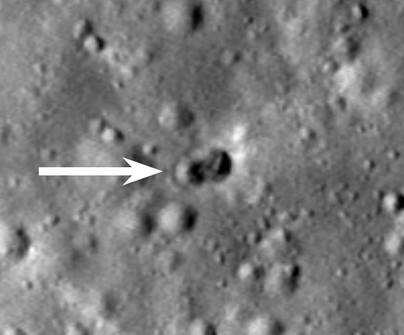
When NASA’s Lunar Reconnaissance Orbiter later photographed that site, scientists found an unexpected double crater, suggesting the discarded rocket stage contained an unseen concentration of mass.
Because the Falcon 9 stage’s design is well documented, researchers expect this week’s impact to produce a single crater instead.
One last lesson from a spent rocket
Gray says the only realistic concern is the remote possibility that debris thrown from the impact could strike another spacecraft already on the Moon. Even that, he stresses, is extremely unlikely because no active missions are operating close to the predicted impact site.
“If we have humans on the Moon in the coming years, we might start to worry more about this sort of thing,” he writes. “But it won’t be a problem on 2026 August 5.”


