


Opinion: National resilience is becoming the defining challenge of this decade, but no one solves it alone

6 min read

Nichola Quinn is Founder and CEO of XeleratedFifty, the global innovation incubator working across defence, aerospace, energy and maritime. XeleratedFifty will be taking part in the Enterprise Gateway Zone at the Farnborough International Airshow 2026.
For decades, “resilience” was a boardroom buzzword, a footnote in policy papers or an insurance policy for a rainy day. That era is over. The successive shocks of the 2020s have transformed resilience from a background theme into one of the defining political and industrial challenges of our time. In 2026, the abstract became concrete.
Of course, we’ve had some alarming geopolitical headlines, but we’ve also seen the warning signs in our everyday lives. When a local power failure shuts down a major transport route in the middle of the week, or a spike in summer temperatures pushes an ageing electric grid to its limit, we see first-hand what systemic fragility looks like.
While these events sit far outside traditional definitions of sovereignty and military defence, they are tangible symptoms of the same underlying condition: The networks we rely on are far more vulnerable than we care to admit.
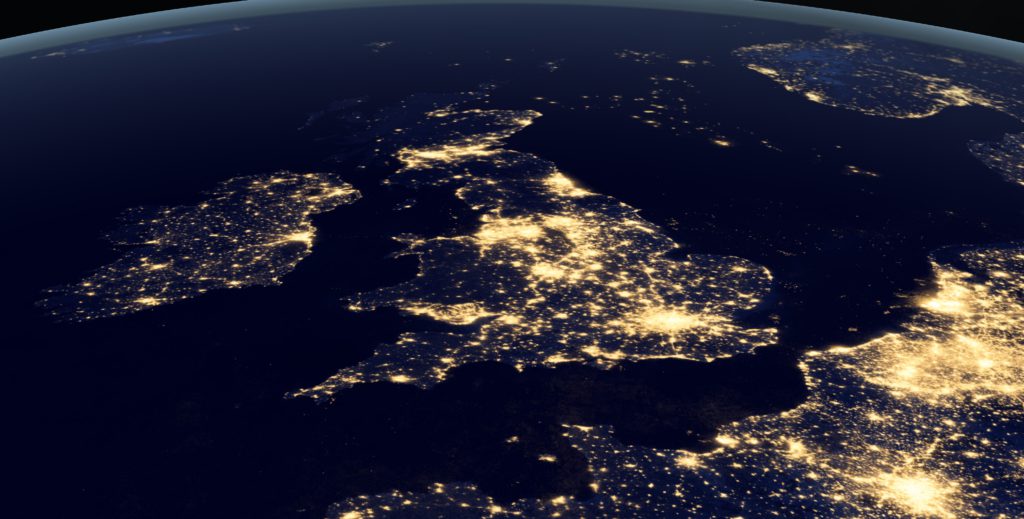
When I’ve spoken with different government ministers recently, the same concern comes up. It doesn’t matter whether I’m in London, Dublin, Abu Dhabi or Ottawa, the conversation turns to how the old lines between economic stability and national security have disappeared, leaving nations exposed, and how to manage the complex, cascading vulnerabilities.
Resilience is easy to talk about but hard to build. It is the ability of a country to keep functioning, and to keep its people safe and well, when something goes wrong, whether that is a deliberate attack, a supply shock, a climate event or just bad luck.
Building that ability in advance is a different discipline from responding after the fact, and that is exactly the discipline this decade demands.
This is actually about sovereignty, in a fiercely practical sense of the word. It is about a nation having the capacity to make its own choices, entirely free from the leverage of a single supplier or a single point of failure. Resilience is just sovereignty in working clothes. It is what independence looks like on an ordinary Tuesday when a subsea cable is severed or a harvest fails, and the country carries on regardless.
I find framing it this way to be especially useful because it positions national resilience as a cause that corporates, investors and innovators across different industries can rally around. After all, one way or another, it touches all of them.
The three characteristics of readiness
Current strategic thinking, including the UK government frameworks guiding the Strategic Defence Review and the Defence Industrial Strategy, treats national resilience as a connected system rather than a series of individual problems.
Crucially, evaluating this system also requires distinguishing between capability and capacity. A nation will often have the technical capability or skill to do something but lack the industrial capacity to sustain it. True resilience is about understanding these hidden dependencies to prevent cascading failures before they start.
To examine a nation’s resilience, we need to focus on three core characteristics:
- Critical national infrastructure: These are the unglamorous foundational systems that keep society moving. Most people only think about critical infrastructure on the day it fails. It means ensuring our energy grids, everyday infrastructure, such as water and transport, and health systems, including broader healthcare provision and the life sciences ecosystem, can withstand severe strain.
- Digital sovereignty: Resilience increasingly depends on our digital backbone: the telecoms networks, data centres and cloud infrastructure that underpin much of how a nation communicates, shares information and keeps everything else running. Built without an eye on disruption, these networks can easily become single points of failure themselves. This extends rapidly into AI and frontier technology. A country wholly dependent on foreign architectures fundamentally surrenders control over its own data and choices. Ultimately, this digital infrastructure plays an important role in protecting democracy itself, securing elections, a free press and public discourse from foreign interference and disinformation. Many countries are discovering new vulnerabilities in this area.
- Global supply chains: Because our vulnerabilities are fluid, international dependencies dictate domestic stability. With the vast majority of global trade still moving by ship and undersea cables carrying the bulk of the world’s data, our ports, shipping lanes and subsea architectures are the front lines of strategic exposure.
It affects our food security too. A nation’s resilience hinges on whether its food systems can survive a sudden import disruption or a broken supplier relationship after years of being taken for granted.
The threats within each characteristic keep evolving, which is exactly why we advise leaders to keep the framing wide when calculating risks, rather than picking one domain and stopping there.
A necessary catalyst
The scale of this challenge demands a coordinated ecosystem of innovators, corporates, government and long-term capital. Believing a single company or government department can solve this alone is for the birds.
Fortunately, the momentum is shifting. At XeleratedFifty, we see it daily across industry and government: capital is moving, and the appetite for real industrial depth is stronger than ever.
As the global aerospace industry gathers at Farnborough this month, the halls will be filled with spectacular hardware. But if you look past the flying displays, you will see the raw ingredients needed to build resilient industrial ecosystems, waiting to be connected.

This is where the hard work begins, and it is one of the reasons why we built XeleratedFifty in the first place. Many of the innovations and breakthrough technologies that will help keep nations resilient and secure are not sitting in established corporate R&D departments; they are being built by founders and early-stage startups right now.
But a brilliant idea in a lab means nothing if it cannot survive the transition to the real world. Those founders need mentors with the experience to guide and nurture them, and capital from investors with the patience and understanding to see the development journey through to fruition. It is part of our mission as a company to pull those pieces together and help those teams succeed.
True resilience and sovereignty are not built by lonely heroes, but by connecting the dots between industries, dual-use innovations and strategic capital. It requires a collaborative ecosystem where the public and private sectors orchestrate their efforts in unison.
Of course, the irony of resilience is that its greatest successes are completely invisible. When the work is done well, nothing happens. The grid holds, the trains run, the data flows, everyone gets fed, and no headlines are written. Single points of failure are the new front line. Eradicating them is a quiet, patient and critically important discipline.
For most of the last century, the measure of a nation was the strength of its military, the speed of its economy or the size of its technology sector. The defining challenge of this decade is likely to be whether a country can keep functioning when several of its systems come under pressure at once.
The leaders who meet this challenge will be the ones who can identify the dependencies and single points of failure within their national systems, and then connect and inspire the broader ecosystem to work together to eliminate them. That is resilience in its truest sense, and no leader builds it alone.
Sign up for our newsletter and get our latest content in your inbox.


More from


January 15, 20251 min read

January 15, 20251 min read


April 18, 20241 min read


July 22, 20222 min read


November 21, 20232 min read