


Opinion: The RAF’s SAF bill should buy energy security, not just compliance

6 min read

Andrew Symes is Co-Founder and CEO of OXCCU, a spinout from Oxford University, specialising in converting waste carbon into fuels, chemicals, and plastics via novel catalysis. With his expertise as a Climate Tech investor and entrepreneur, Andrew has a wealth of experience growing business innovations at companies including BP Ventures and IP Group. He also holds a degree in Chemistry from Oxford University.
Arguments about sustainable aviation fuel almost always end up as arguments about Net Zero. That is understandable, but in the case of the RAF, we are missing the more important point.
Recent coverage of the RAF’s projected SAF bill has raised the question of whether the SAF mandate is creating a new cost for defence and whether that money could be better spent elsewhere. That is a fair challenge.
However, I do not think the answer is that the RAF should avoid SAF. Aviation is one of the hardest sectors to decarbonise, defence aviation still needs liquid fuel, and SAF is one of the only realistic tools we have that can work with existing aircraft and infrastructure.
The Ministry of Defence’s own Defence Aviation Net Zero Strategy includes sustainable aviation fuel as one of its five strategic pillars, so this is already part of the defence aviation plan. The real question is what that money is buying.
If the RAF is going to spend hundreds of millions of pounds on sustainable fuel over the next 15 years, then it should buy more than compliance with a mandate. It should buy resilience.
RAF SAF spending must deliver resilience
A Parliamentary answer earlier this year estimated the RAF’s SAF and Power-to-Liquid fuel costs at £16.5m in 2025, rising to £187.6m in 2040, based on annual fuel consumption of 250 million litres.
Those figures may change as the market develops, but they are still large enough that the RAF, and the taxpayer, should be asking what strategic value comes back from that spend?
For commercial aviation, the main question is always going to be cost. Airlines use huge volumes of fuel, passengers are price sensitive, and most aviation fuel will continue to move through large global supply chains. That is just reality.
The UK is not going to make every litre of jet fuel it needs domestically, and it would be foolish to pretend otherwise. But defence is not quite the same problem.
A military airbase does not need domestic fuel production because it is trying to make consumer flights cheaper. It needs it because there are situations where secure supply matters more than lowering cost.
The same is true for air ambulances, emergency vehicles, disaster response and critical infrastructure. These are not the biggest fuel markets, but they are the places where failure is hard to tolerate.
Fuel is easy to ignore when it arrives on time. It becomes a strategic issue very quickly when it does not.
Imported SAF will not solve sovereign fuel risk
This is why RAF SAF spending should be judged against energy security, not only emissions reduction. If all we do is replace imported fossil fuel with imported sustainable fuel, or SAF made from imported feedstocks, then we have not really solved the security problem.
We may have reduced emissions, and that matters, but the fuel still comes from somewhere else.
HEFA fuels made from waste oils and fats have an important role in the early SAF market, but those feedstocks are limited, already in demand, and often part of international supply chains.
They can help aviation decarbonise. However, they should not be treated as the whole answer to sovereign fuel resilience.

For defence, the test has to be tougher: can we make enough of the right fuel, from inputs we can control, close enough to the places where it is needed?
The UK should use the SAF transition to build capability, not just to buy finished fuel. That does not mean protectionism for the sake of it, and it does not mean pretending we can do everything ourselves.
It means being practical about where domestic capability really matters. Large centralised refineries and global supply chains will remain part of the system, but they are not the only answer.
Smaller modular fuel production facilities using UK feedstocks, built on or near airbases, could provide a layer of sovereign supply for the places where fuel supply cannot fail.
Not enough for everything. That is not the point. Enough to give operators options when wider supply chains are under pressure.
That is the difference between treating SAF as a compliance cost and treating it as part of a defence energy security strategy.
Modular UK fuel production can turn compliance into capability
This is where British technology should matter. If the RAF is creating demand for sustainable fuel, then some of that demand should help build British plants and British IP.
At OXCCU, we are developing one example of how that could work. Our technology efficiently converts waste carbon, either biogas or CO2, with green hydrogen into jet fuel-range hydrocarbons.
It has fewer steps than other technologies and produces no wax byproduct, which means simpler plants and lower capital cost.
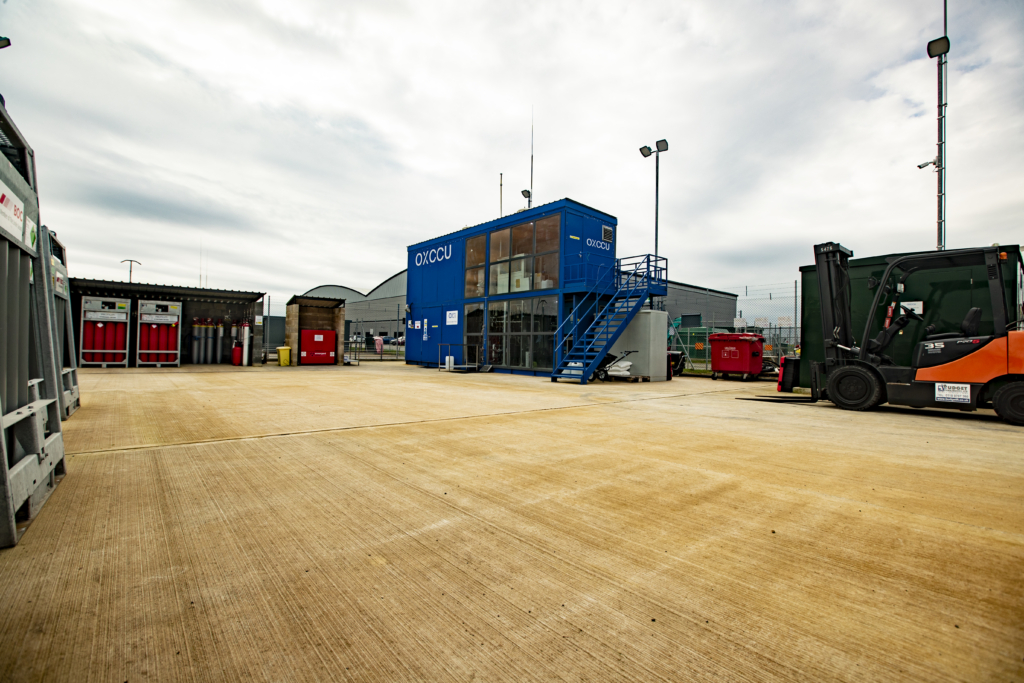
When using UK biogas, or UK CO2 and hydrogen, it means the UK can start to think about producing more of the fuel it needs rather than relying only on imported feedstocks, imported fuel or large projects built somewhere else, and using UK technology.
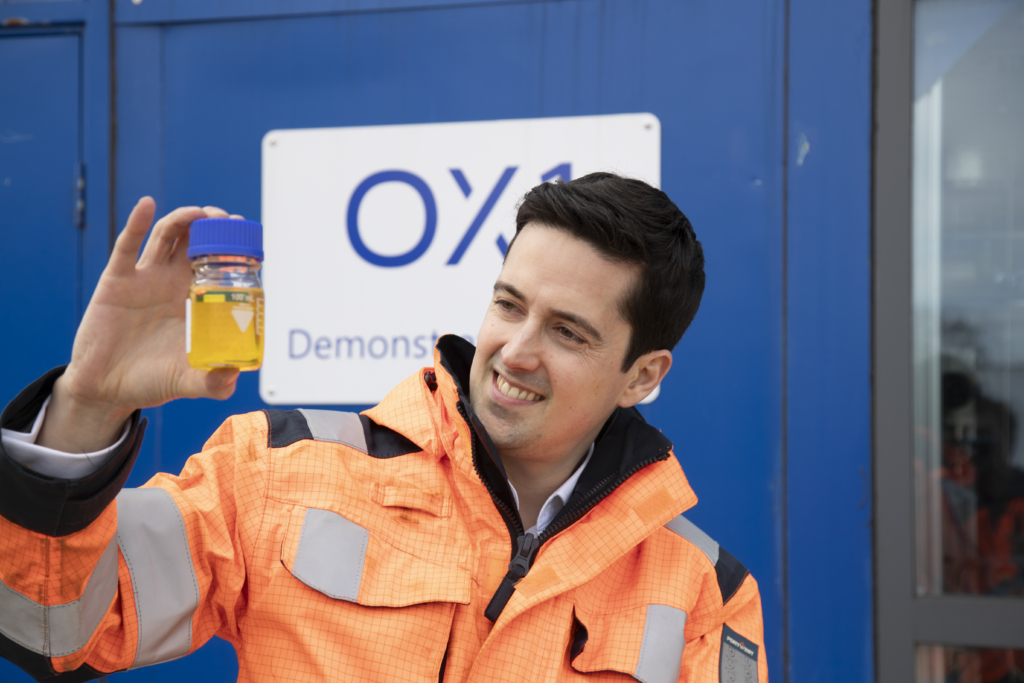
Our OX1 plant at Oxford Airport has already been in operation since 2024 and we plan to have our OX2 plant in operation in early 2027. It is able to run on either biogas or CO2 and hydrogen.
The wider point is that if the UK wants sovereign aviation fuel capability, it needs to back technologies that can actually be built here using UK feedstocks.
So the answer is not that the RAF should avoid SAF. It is that the UK should be much clearer about what it is buying.
A SAF mandate can create demand, but demand on its own is not a strategy for the RAF.
If the RAF spends the next 15 years buying fuel made from imported feedstocks, or relying on supply chains it does not control, then it may meet the target and still be left with the same vulnerability.
The more useful path is to use some of that spending to prove modular production in the UK, close to the airbases and critical services that would actually need it in a crisis.
Not to make every litre at home. Not to disregard imports. But to make sure that when fuel supply becomes a defence issue, Britain has capability of its own.
That is the test RAF SAF spending should be held to: not just whether it is cleaner, but whether it makes the fuel system more secure.
Sign up for our newsletter and get our latest content in your inbox.


More from


January 15, 20251 min read

January 15, 20251 min read


April 18, 20241 min read


July 22, 20222 min read


November 21, 20232 min read