


Inside the challenges of operating private jets at Aspen during winter
8 min read

Pilot, president and founder of Icarus Jet, a leading global trip support and aircraft management company, Kevin Singh has flown globally as a chief pilot and captain on private jets including the Hawker 800A and 850XP, Challenger 600 series and Global 6000.
Aspen showcases the benefits of private aviation at their finest. Travellers can depart major US cities and be minutes away from the top ski destination in the United States. This is why the Aspen/Pitkin County Airport (ASE) becomes an active private aviation market in ski season.
For pilots, winter at Aspen means something else. It means dealing with the combination of weather, aircraft performance, mountain terrain, and heavy traffic in a short amount of time.
Aspen sits at about 7,820 feet in Colorado’s Roaring Fork Valley, surrounded by rapidly rising mountain terrain. With more than 8,500 hours of flight experience as a chief pilot on various business jets (from mid-size to long-range and heavy), I’ve learned that the more complex the environment, the more important it is to stay ahead of the aircraft.
And I also taught pilots how to operate Hawker, Challenger, and Global jets. The lessons we teach in training become especially relevant to Aspen operations during the winter.
Winter changes the performance equation
Snowfall, low clouds, visibility, winds, and changing runway conditions can impact Aspen operations. In addition, the pilot must always keep in mind the performance limitations of operating from a high-elevation airport.
However, none of these factors makes Aspen a tricky place to handle. The trick is understanding how these factors interact and how quickly they can change.
When teaching Challenger and Global aircraft pilots, one of the main lessons I give is that performance planning should not only prove the aircraft can complete the flight. It is also crucial to understand how much margin remains if conditions worsen.
In Aspen, you need to consider how aircraft weight, pressure altitude, and runway condition affect performance, and what will happen if conditions change between preparation and departure.
Passenger schedules are irrelevant to these decisions. A passenger might have a dinner reservation or want to go to the slopes at a certain time, but the crew needs enough flexibility to adjust if required.
The approach is only part of the challenge
Aspen’s approach environment gets a lot of attention. However, focusing only on the approach misses another Aspen characteristic.
A fellow instructor I work with regularly trains business jet crews on the Aspen approach, and his perspective shows how quickly the workload can build. DOYPE is the final approach fix and CEYAG the missed approach point. For Category C aircraft, minimums are 10,960 feet, while airport elevation is 7,838 feet. CEYAG is approximately 2.6 miles from the runway.
If the crew does not have the airport in sight until CEYAG, that leaves just 2.6 miles to lose more than 3,100 feet. At approximately two miles per minute, that means descending around 1,500 feet per minute to touchdown. In practice, the airport needs to be in sight before CEYAG.
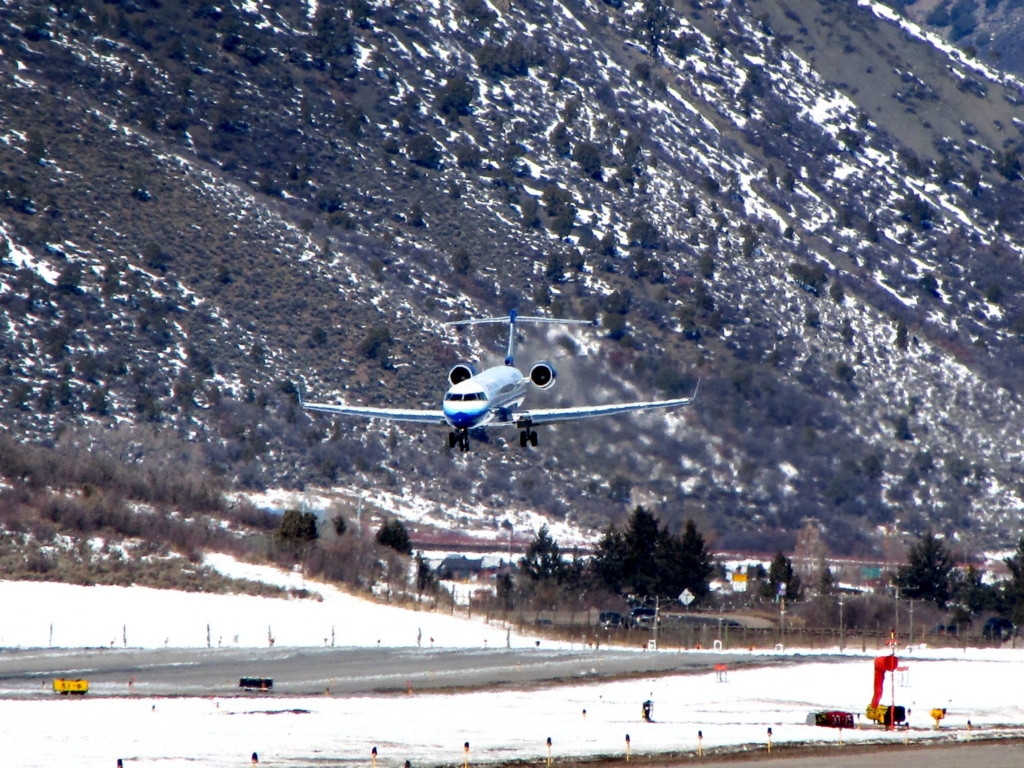
The challenge starts earlier. Aircraft cross DOYPE at 11,700 feet before transitioning to a 6.59-degree descent path, while Category C minimums are only 740 feet below. There is very little time to establish the steeper descent before reaching minimums, which helps explain the operational logic behind Part 135 OpSpec requirements for applicable operators to have the airport in sight from DOYPE.
There is little room for hesitation, because delaying the descent at DOYPE can put the aircraft above profile, while allowing the autopilot to level at minimums can make recovering the descent extremely difficult. A tailwind, which the instructor says is common outside the early morning, further reduces that margin.
Although he regularly teaches crews to fly the approach using the autopilot, he personally prefers to hand-fly it because of response time. If the autopilot is slow transitioning to the required 6.59-degree path, or the steeper seven to 7.5-degree descent that may be needed, the aircraft can quickly get behind the profile.
Furthermore, some operators also circle to land on Runway 33. While this is a valid procedure when authorised and conditions permit, winds above approximately 10 knots can produce significant turbulence in the canyon, adding another consideration for crews operating at Aspen.
Aspen usually operates with arrivals on Runway 15 and departures on Runway 33, thus creating a traffic environment in the opposite direction. FAA warns about this in its advisory note to pilots.
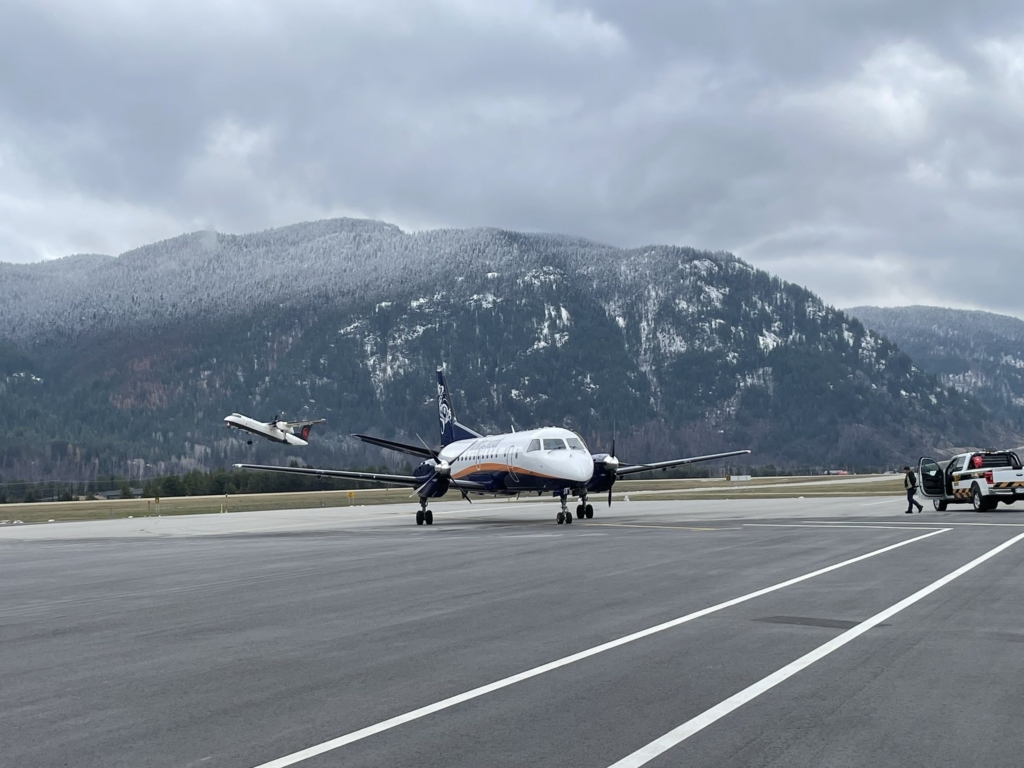
During the busy periods, controllers can sequence arrivals and departures using various procedures like “Westbound-in-Front-of” and “Wrap”.
From the cockpit perspective, it takes discipline.
The departing aircraft will be instructed to line up and wait while the incoming flight is approaching. After being cleared, ATC expects the departure to move quickly because the whole sequence was built around a few flights.
This is not the time to start discussing the clearance and completing other activities which can be done earlier.
As an instructor pilot, I want both pilots to know what clearance, departure procedure, terrain, and traffic sequence are waiting for them at the runway. Then, if anything changes, they can cope with it.
Know what is in the FMS
Avionics systems in modern business jets provide tremendous situational awareness, but they do not eliminate the need to verify procedures.
The FAA warns pilots that Aspen presents a risk of confusion because the FMS database may include both the public LOC-DME E approach and the Special LOC-DME Runway 15 approach.
The special procedure requires Flight Standards authorisation from the FAA and differs from the standard procedure, such as in crossing altitudes.
Having the approach procedure in the FMS does not automatically mean that the crew has permission to fly it.
This is especially important in sophisticated business jets like the Challenger and Global, where automation manages most of the flight. Pilots need to verify that the procedure loaded in the FMS matches the cleared, briefed, and authorised procedure.
In other words, in mountain terrain, automation should complement, not replace, situational awareness.
A good alternate needs to work beyond the runway
Sometimes the correct Aspen decision is not to land at Aspen. This is not a failure. In the winter months, having a realistic alternate in place is part of operating into mountain airports.
Conditions may deteriorate, traffic may build up, and the flight may fall outside planned margins. However, choosing a business aviation alternate requires more than fuel and runway availability.
In the case of Aspen, Eagle County Regional Airport (KEGE) and Rifle Garfield County Airport (KRIL) could be two of the most realistic alternates, and the Grand Junction Regional Airport (KGJT), being located further West, at a significantly lower altitude, could serve as another option if conditions at the mountain airports are less favourable. Montrose Regional Airport (KMTJ) could also be a part of the contingency plan.
For a pilot, the closest airport does not necessarily equal the most suitable one, as weather patterns, runway conditions, aircraft performance, and even fuel requirements must be considered. For a Challenger or Global operation, maintaining sufficient operational margins may matter more than saving passengers the ground transportation.

Flight departments also have to consider how the diversion will affect passenger transfer. Ground transport that looks simple on a map may be entirely different in Colorado winter conditions.
If passengers have to be taken to Aspen, it could be up to an hour and a half away from KEGE and KRIL in normal driving conditions. The ground transport to KGJT or KMTJ could take much longer. So the alternative choice should account for not only the aviation decision, but also the ground portion of the trip.
Having flown business aircraft for thousands of hours internationally, I found out that diversion becomes much more efficient if the following steps are already laid out.
If Aspen becomes unusable for the flight, then the pilots could focus on the diversion while the support team carries out the pre-established plan.
Aspen is entering a period of change
This winter also comes as Aspen/Pitkin County Airport enters a major modernisation period.
Enabling works have already begun ahead of the airfield changes. The most notable change will be the airport’s closure to aircraft operations from April 4 to November 19, 2027, while the runway is reconstructed and shifted.
The runway width will increase from 100 to 150 feet, and it will be shifted about 80 feet westward. This project will bring the airfield closer to current FAA standards and will eventually allow aircraft with wingspans up to 118 feet, instead of the current 95-foot limit.
For the flight departments that operate into Aspen regularly, the 2026-27 ski season will be the last winter before the runway reconstruction and long-term airport closure.
It also serves as a reminder that airport experience is no substitute for a current information check. Procedures, NOTAMs, and infrastructure change.
Preparation remains the difference
Aspen is often called a challenging airport. However, a more accurate description is that it is a demanding airport with known risks.
And the experience certainly helps. But operating into Aspen 1,000 or even 10,000 times is no excuse to cut corners on preparation.
Before the winter operation in Aspen, the crew needs to be prepared for the expected weather, runway conditions, aircraft performance, procedures, NOTAMs, traffic environment, and the diversion strategy. The flight department should also handle parking and passenger logistics.
For passengers, Aspen is one example of a key advantage of private aviation: getting extremely close to a major ski resort.
And for the pilots in the cockpit, providing that convenience depends on preparation passengers never see.
Sign up for our newsletter and get our latest content in your inbox.


More from


January 15, 20251 min read

January 15, 20251 min read


April 18, 20241 min read


July 22, 20222 min read


November 21, 20232 min read