


Can private air ambulances operate at remote airports?
7 min read

Sebastian Demiet is COO at MTI 24/7, a worldwide medical transport company providing patient transport solutions.
A medical emergency doesn’t always happen near a major international airport. A tourist may get critically ill on an island; somebody may get injured in a remote area; a patient may need to be transported from a small regional airport.
In such cases, the first step is to check whether an air ambulance can reach the nearest airport.
However, it depends on more than the presence of an airport near the destination. An airport may be open and serve flights regularly, but certain conditions may restrict the specific air ambulance and mission.
Therefore, evaluating a remote airport starts with an analysis of the whole operation. And runway length is typically the first factor to consider.
Air ambulance runway requirements and aircraft selection
When determining the feasibility of a remote airport, runway length becomes the primary point.
Each aircraft has specific performance characteristics. Whether an air ambulance can safely use a runway depends on the aircraft type, weight, airport altitude, temperature, runway condition, and expected weather on the day of the operation.
This is when aircraft selection plays a key role. Private air ambulance providers typically offer turboprop aircraft, light jets, and mid-size jets, with each category having different capabilities.
Turboprop aircraft can be very helpful when accessing smaller or remote airports. Popular aircraft used for medical flights include models like the versatile Pilatus PC-12. Depending on the aircraft, configuration, and weather, turboprops can access tighter runways than jets.
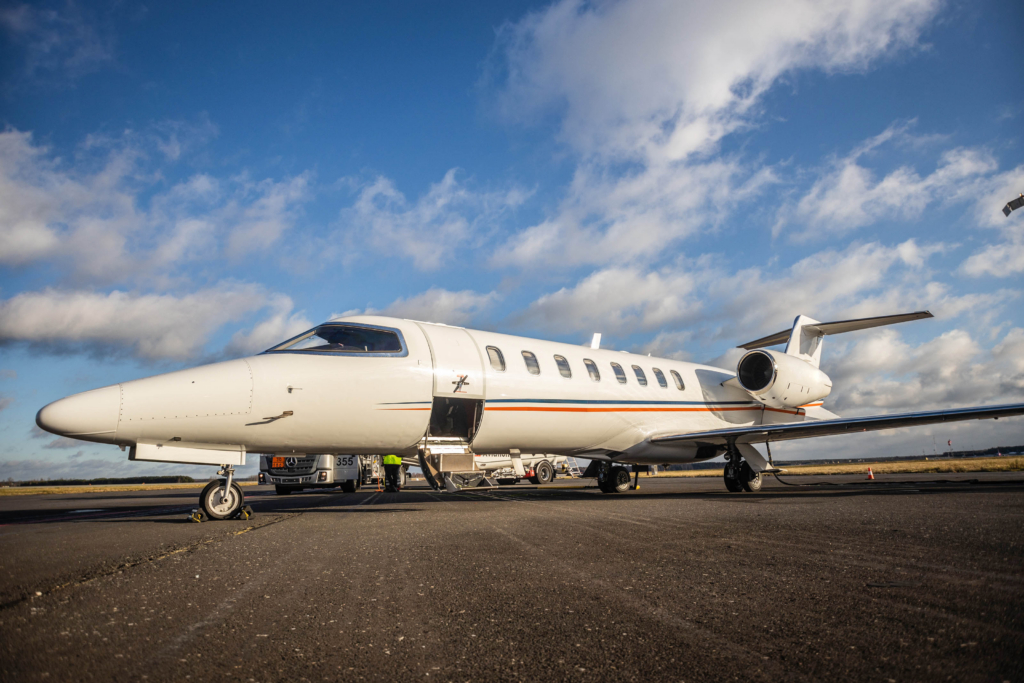
Light and mid-size jets like Learjet and Citation can offer advantages in other areas. They are faster and have greater range. This makes jets well-suited for international medical transportation, but their runway length requirements should still be considered.
Therefore, no single aircraft is optimal for all missions. A turboprop may let the medical team reach a remote destination closer to the patient, but a jet will reduce flight time.
And landing is not everything. The aircraft should also take off safely with all passengers and medical equipment on board.
Unpaved runways and remote air ambulance operations
Surface state becomes especially relevant when we move away from the major aviation infrastructure.
Usually, one can expect asphalt or concrete at any big airport. However, remote airfields often have other surfaces. Some may have gravel or other unpaved conditions, and whether a particular aircraft can use them depends on its limitations.
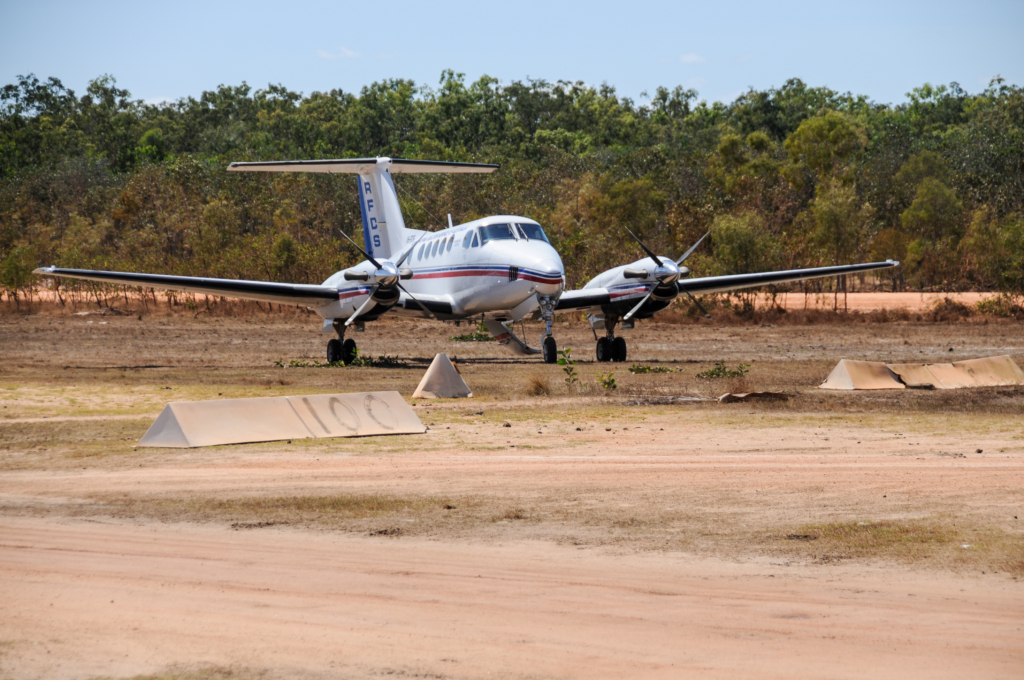
The Australian Outback is a good example of the distances and infrastructure conditions found far from populated areas. Communities, mining enterprises, and other remote areas can be hundreds of kilometres from major centres, making local airfields especially useful for medical flights.
Antarctica is another example of a challenging environment where surface conditions, infrastructure, low temperatures, and weather make the situation different.
In essence, having an airstrip on a map does not mean that an air ambulance can use it.
Mountain airport challenges: Courchevel and Innsbruck
Courchevel in the French Alps is a good example of an airport that is very different from a conventional regional terminal.
Its mountain location, short and steep runway, and unique environment require specific analysis of aircraft performance, crew limitations, and weather.
Courchevel is an extreme case, but it shows the general principle. Another case worth mentioning is Innsbruck Airport, where pilots need a special briefing due to its unique approach and departure demands.

A patient can be close to a challenging airport, making it seem like the best choice. But a different airport farther from the destination may have a longer runway, better infrastructure, and better accessibility.
It may be worth accepting a longer ground ambulance journey to make the whole mission easier; as geographic proximity does not mean the nearest airport is the best airport for a patient.
Remote airport fuel, opening hours and emergency services
We can expect to have fuel at any major airport. However, it is not always the case for a remote terminal. There may be no appropriate fuel available, only a limited quantity, or fuel may require special arrangements.
This means that if a remote airport does not have fuel, the aircraft must carry enough fuel to arrive, take off with a patient, and land at a different airport. Or it may require a detour for a fuel stop on the way.

Opening hours can create similar problems.
Medical cases can happen at night, on weekends, or on holidays, and some airports cannot handle such flights. Some can handle them if arrangements are made beforehand. Other airports do not have such flexibility.
Customs availability is crucial for international missions. Even without a regular customs service, many airports can arrange customs upon request.
Fire category can also determine whether an airport is suitable. Required firefighting and rescue capability depends primarily on aircraft length and fuselage width, with larger aircraft generally requiring a higher category.
Ground handling requirements for air ambulances
The level of ground handling services offered by remote airports varies greatly.
You can expect services like aircraft handling and fuel delivery at any major airport. However, at a remote airport, these services may require additional preparation or may be unavailable.
Medical flights have requirements that regular passenger flights do not.
A patient should be transported by ambulance on a stretcher, accompanied by medical professionals and with specialised equipment. Therefore, the team should check whether it will be possible to transport a patient from the ambulance to the aircraft.
Therefore, an airport may look great from an aircraft performance perspective, but without proper handling services, which serve as the primary contact for all local arrangements and ground ambulance coordination, it is not suitable for a mission.
Coordinating ground ambulance transfers and patient care
An air ambulance mission should never be considered as a flight between two airports.
A medical case usually begins at a hospital, clinic, hotel, or another location. A ground ambulance transports a patient to the departure airport, and after arrival, another ambulance completes the journey to the medical facility.
The ground part of the journey may become especially important in the remote regions.
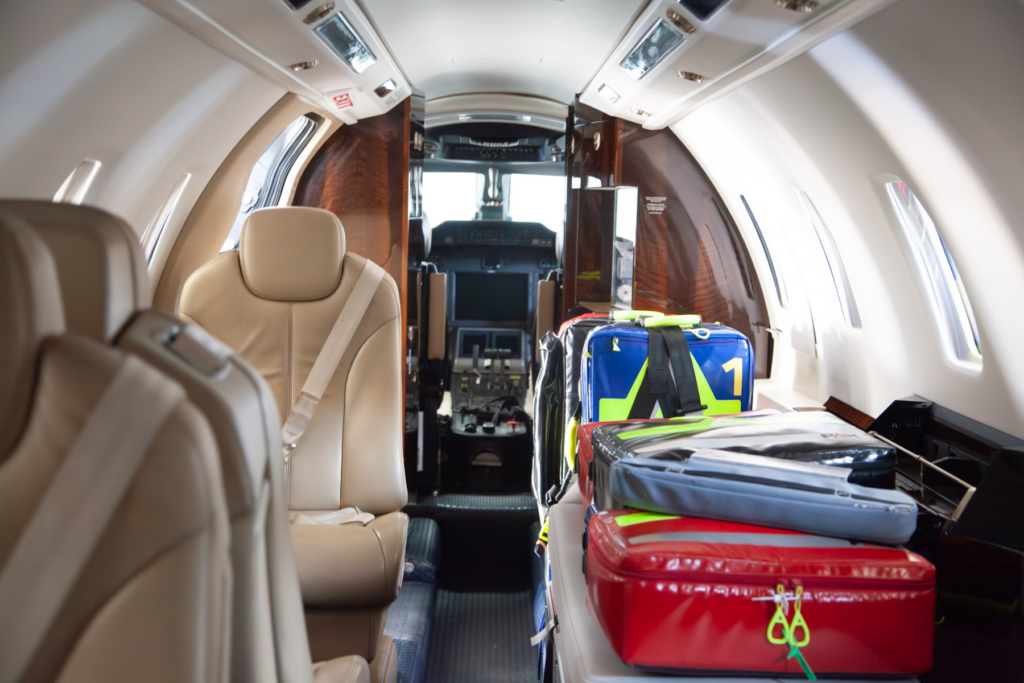
The nearest airport may have an adequate runway, but it may lack proper handling services. A farther airport may have better ground-ambulance access, even if it is farther away.
Patient condition also becomes important here. Some patients need to spend as little time as possible in the ground ambulance, but for others the additional travel time may be acceptable to reach a safer airport.
Both aviation and medical sides of the mission should be evaluated simultaneously.
Why the nearest airport is not always best for an air ambulance
In the end, however, getting the aircraft as close as possible to the patient is not the key issue. It’s about delivering the safest and most practical trip from the patient’s position to the receiving medical facility.
Consider two airports: one within 20 minutes of flying time from the patient’s location and one 90 minutes away. The closer airport sounds like the better option.
But take into account the possibility of a restricted runway, problems with available fuel, irregular opening times, little ground support and difficult access to the airport by the ambulance and suddenly these 20 minutes become deceptive. There might actually be more options with the airport that is further away.
Private air ambulances can perform their mission at numerous remote airports and, where feasible, such trips will greatly shorten the patient’s ground ride. Turboprops can prove invaluable because they can access runways that are less suitable for jets. For other missions, the jet’s greater speed and range will be a definite advantage.
There is no general answer to this question.
It is not a matter of whether we can fly to a remote airport. We have to determine what combination of aircraft, airport and ground transportation makes it possible to deliver the patient safely and successfully.
Sometimes the closer runway will be our choice. Sometimes it will be the airport that is located further away.
About MTI 24/7
MTI 24/7 is a worldwide medical transport company with years of medical aviation experience. With our patient transport solutions, we make healthcare more accessible to patients across the globe.
Sign up for our newsletter and get our latest content in your inbox.


More from


January 15, 20251 min read

January 15, 20251 min read


April 18, 20241 min read


July 22, 20222 min read


November 21, 20232 min read