


Beyond the free pen: What defence brands can learn from Eurosatory’s best giveaways
6 min read

Julia Petryk is the CEO and co-founder of Calibrated, a Ukraine-born communications agency working on defence tech, cybersecurity and cognitive security.
At defence trade shows, merchandise is often treated as an afterthought: something to order before the event, place on the stand, and hand out to visitors. But at Eurosatory 2026, the strongest brands used merchandise in a much more strategic way.
In an industry where products are complex, procurement cycles are long, and trust matters as much as technical capability, a branded object can do more than carry a logo. It can explain a product, make a technology tangible, start a conversation or leave a stronger memory than another brochure.
That matters at events like Eurosatory or the Farnborough International Airshow, where thousands of military officials, procurement specialists, engineers, investors, journalists and government representatives move through hundreds of stands in just a few days. Attention is limited, and memorability becomes part of competitive advantage.
The broader promotional products market is moving in the same direction. According to the PPAI Product Power 2026 report, 65% of respondents said they would be likely to use a branded product for at least six months if it is high-quality, well-designed, and functional.
At Eurosatory, I saw this in practice: the best merchandise was not the loudest or most expensive. It was useful, product-led, culturally meaningful or built into a wider booth experience.
Practical merchandise keeps working after the event
Some of the most effective giveaways at Eurosatory were practical items that solved small but real problems.
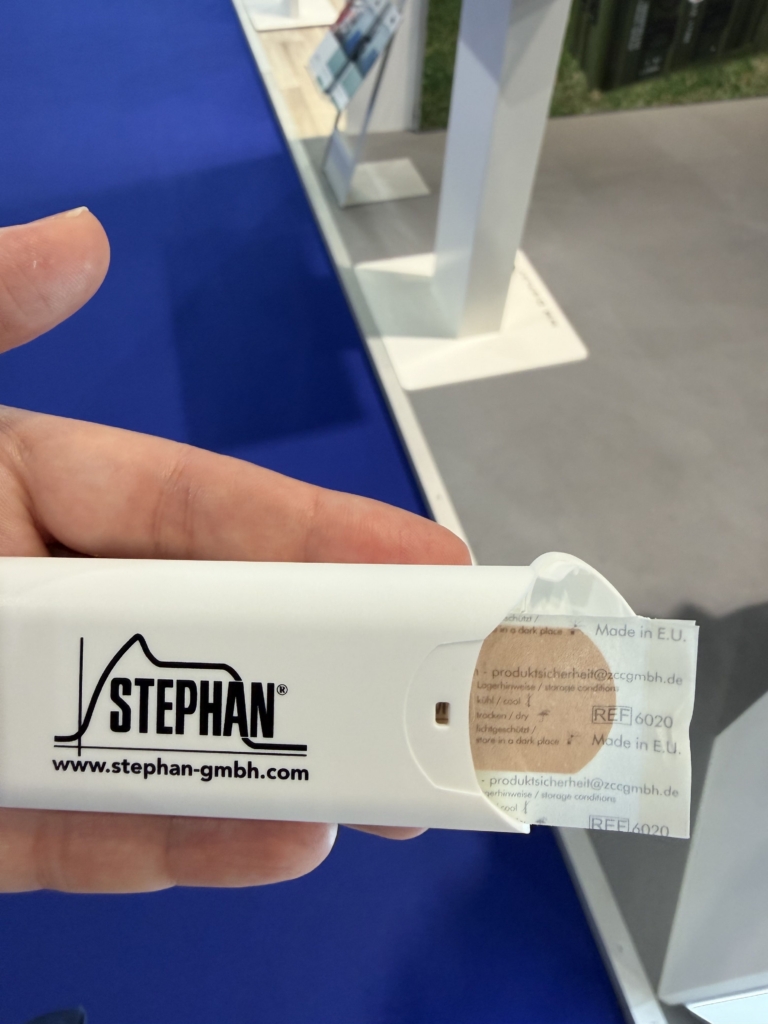
German manufacturer Stephan distributed branded first-aid kits containing adhesive bandages. It was a simple gesture, but the value was obvious: the kit could stay in a backpack or travel bag long after the exhibition ended, keeping the brand useful rather than disposable.
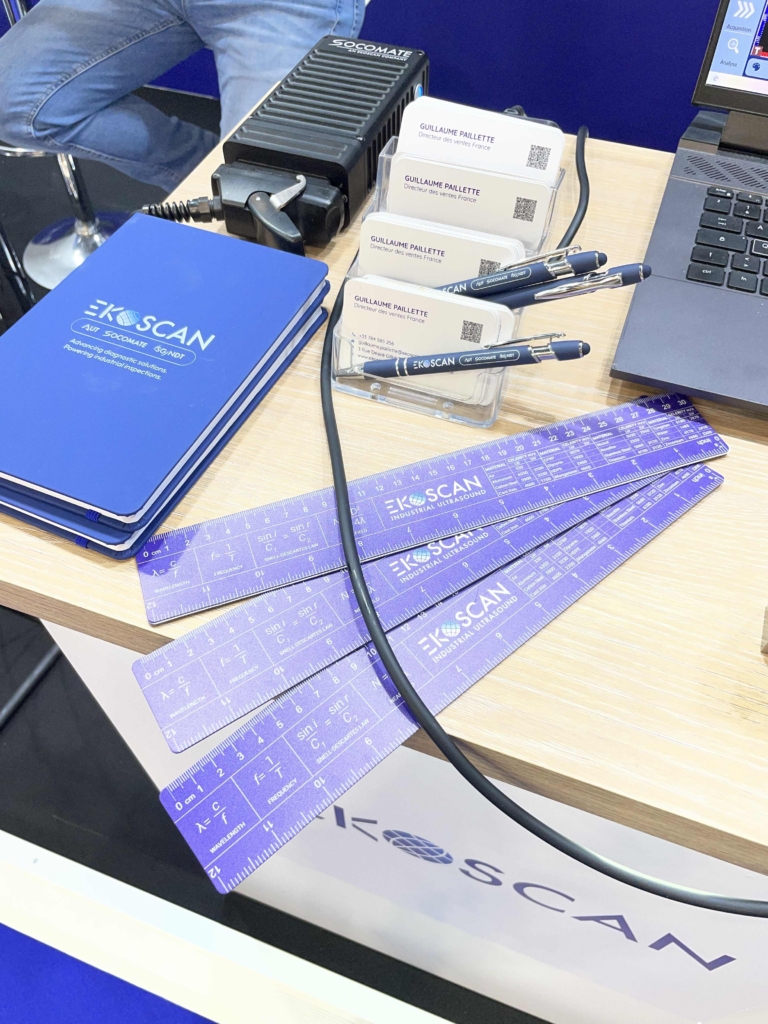
EKOSCAN, a manufacturer of ultrasonic testing equipment, handed out branded rulers printed with engineering formulas and technical reference information. Instead of producing a generic desk item, the company created something directly relevant to its audience.
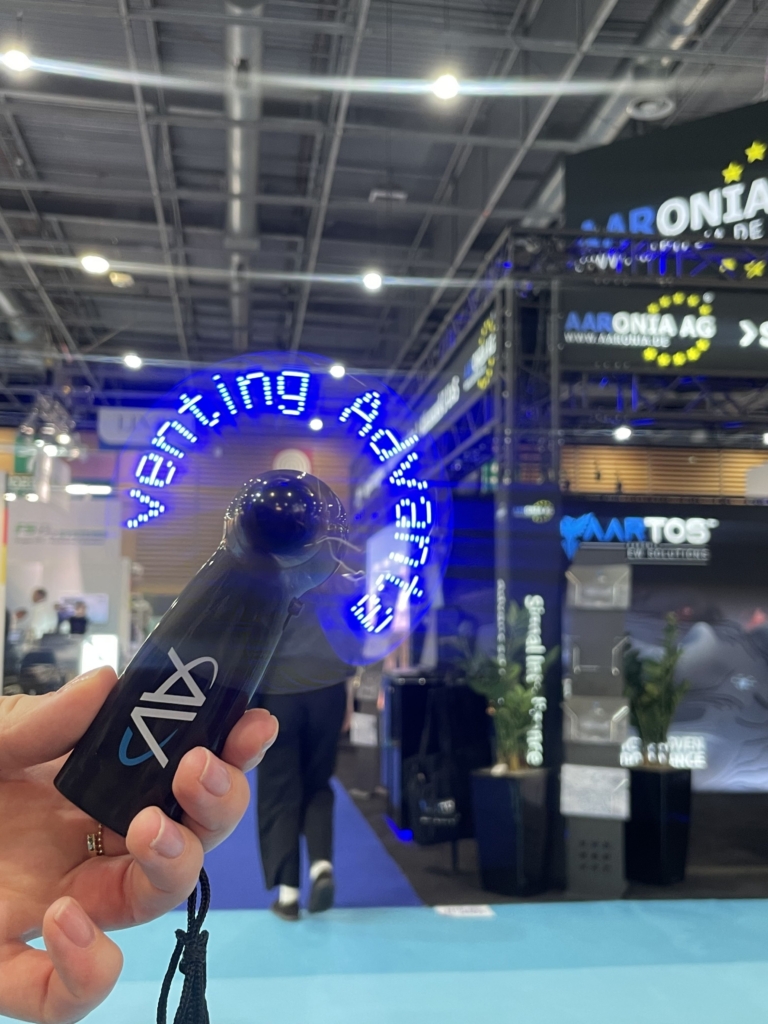
During the unusually hot weather in Paris, compact portable fans became one of the most wanted giveaways. AeroVironment made the item more memorable by integrating its branding into the product itself: when switched on, the fan projected the company’s illuminated logo.
The lesson for communicators is simple: utility creates retention. If a branded item genuinely helps the audience, it has a much better chance of staying with them beyond the event.
The strongest merch extends the product story
The most effective merchandise did not just promote the company. It connected back to the product.
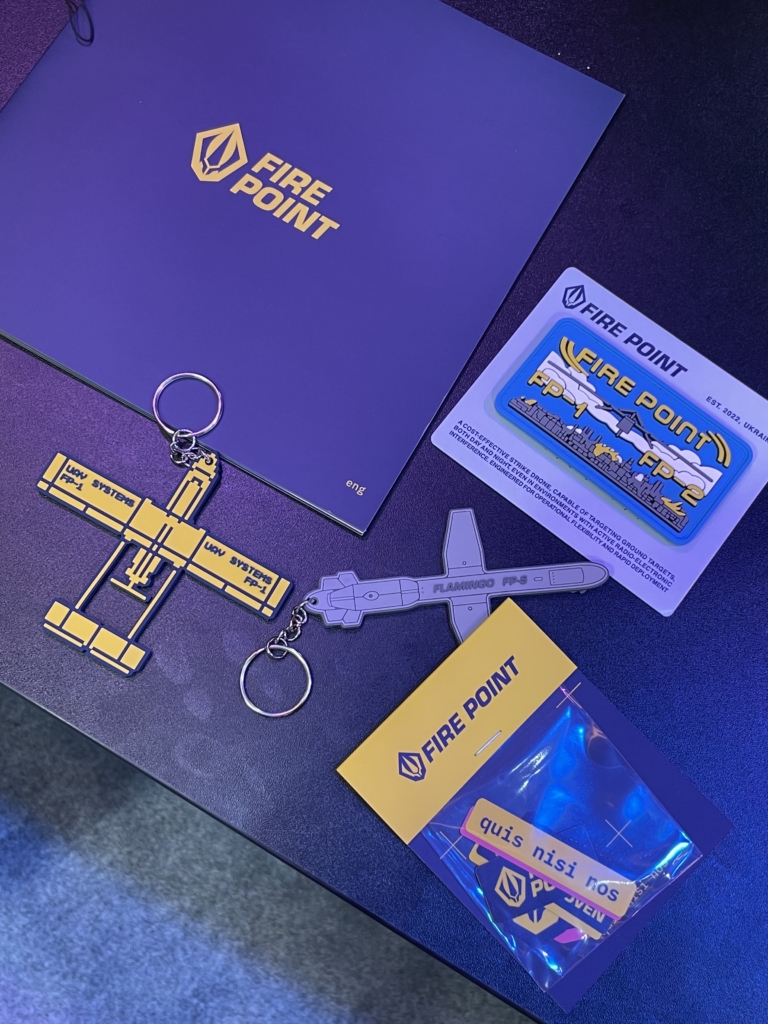
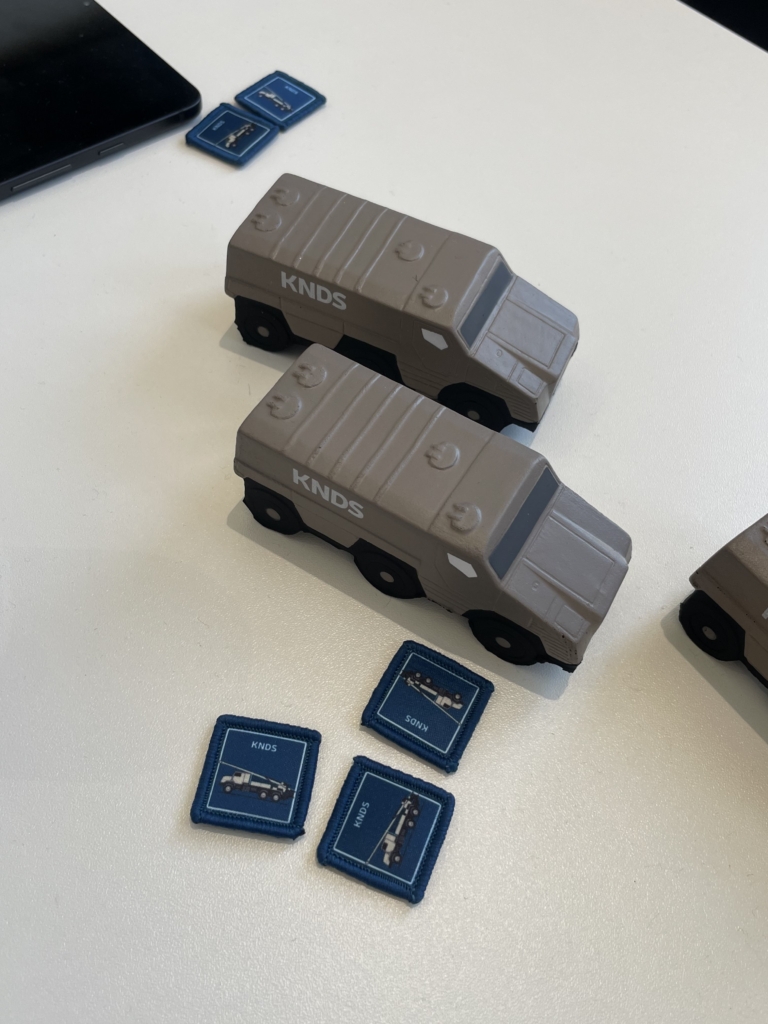
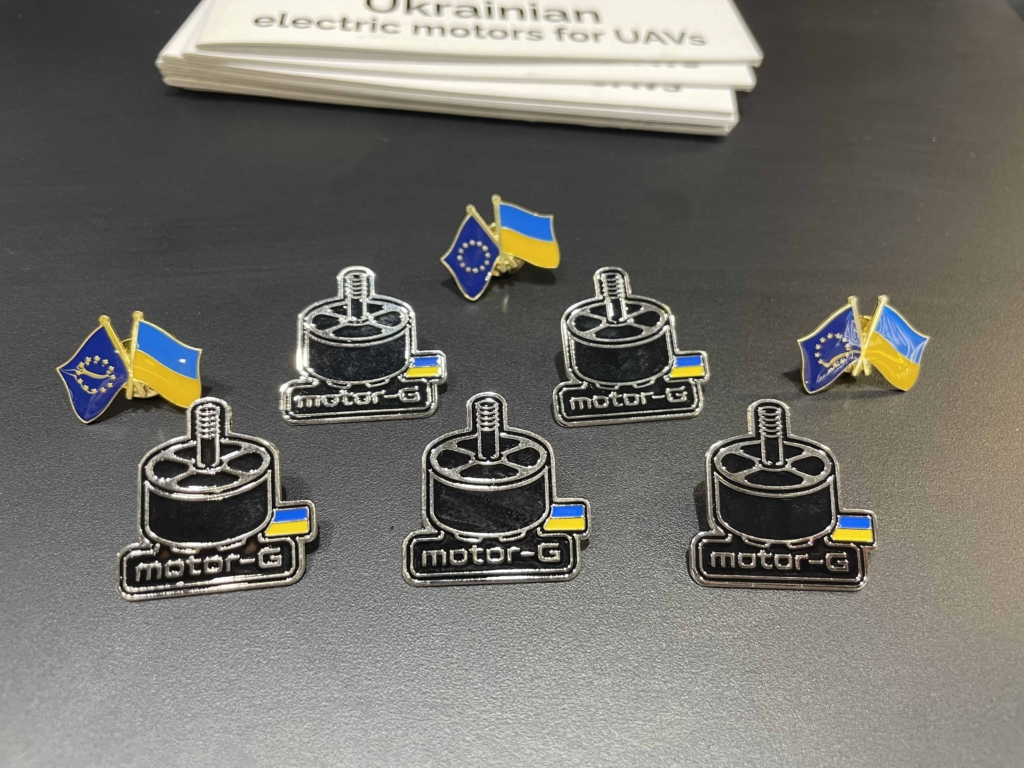
At Eurosatory, this included 3D-printed drone and aircraft models, keychains shaped like defence technologies, UAV motor-shaped enamel pins and patches inspired by product designs.
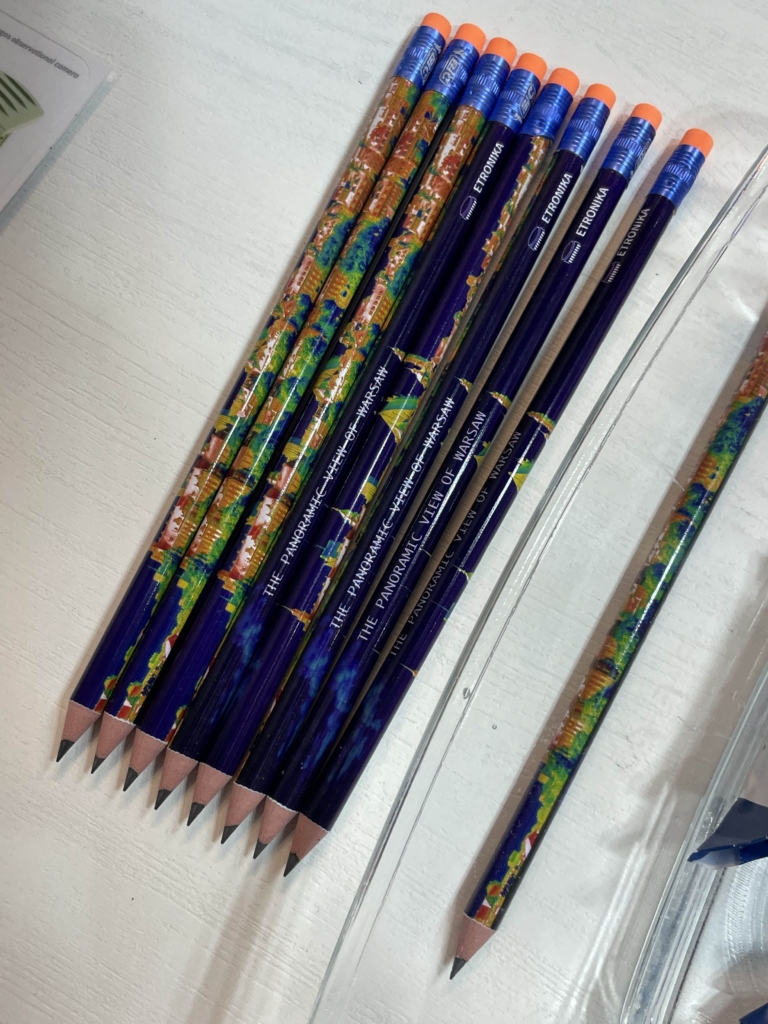
Polish company Etronika offered one of the clearest examples. Its pencils featured the Warsaw skyline viewed through a thermal imaging camera — the core technology behind the company’s products. The item was simple, but it helped visitors understand the product through an everyday object.
This is where merchandise becomes a communications tool. A product-inspired giveaway reinforces recognition every time it is picked up or used. It gives sales and communications teams a more natural way to explain what the company does, especially when the technology itself is difficult to demonstrate quickly on a crowded exhibition floor.
Gifts can carry a story, not just a logo
Not every effective item needs to explain a product. Some work because they communicate values, context or identity.
During meetings with French partners, Calibrated presented enamel pins featuring the Borodianka ceramic rooster from Pivnyk Foundation – the decorative figurine that became a symbol of Ukrainian resilience after surviving the destruction of a residential building during Russia’s full-scale invasion. The pins were accompanied by postcards showing the damaged apartment block with the rooster still standing on a kitchen cabinet.
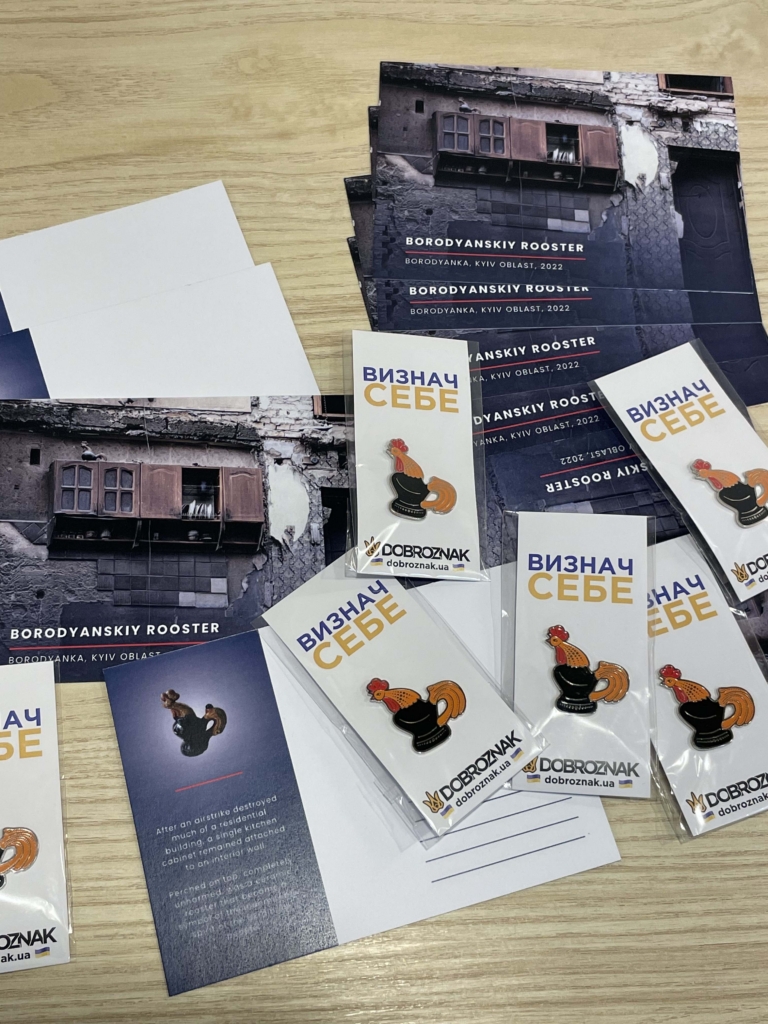
For French recipients, the gift carried another layer of meaning: the rooster is also one of France’s national symbols. That cultural connection made the object more memorable than a conventional corporate gift.
Experiences turn attention into conversation
The strongest exhibition stands were not only product showcases. They were spaces for interaction.
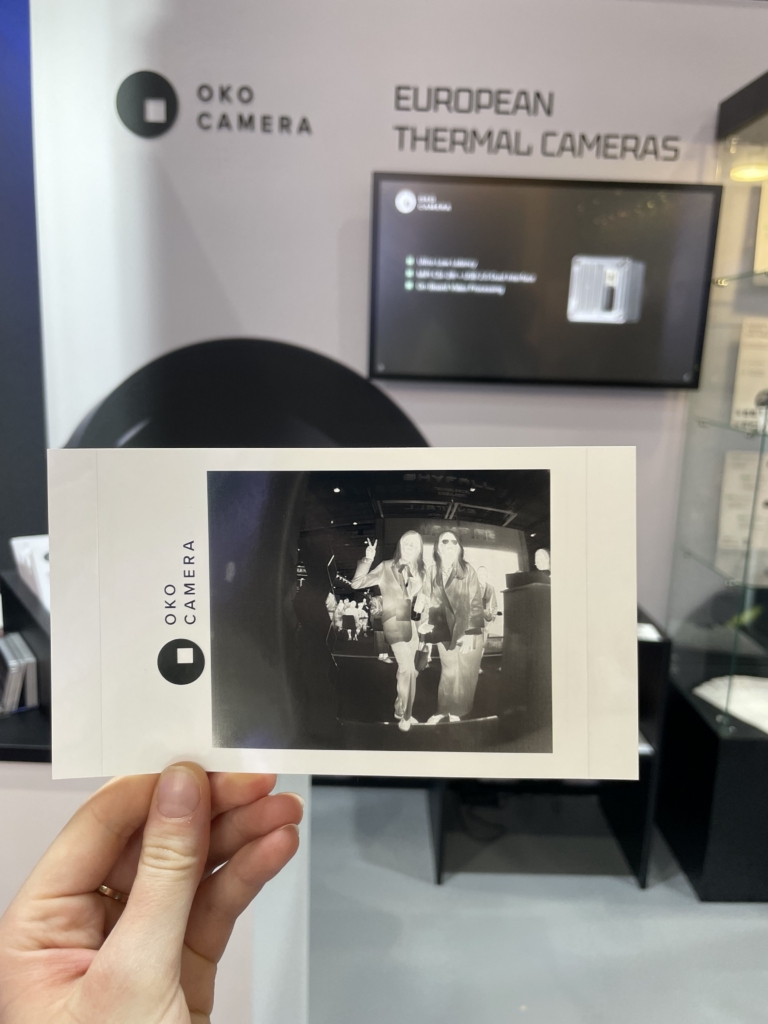
Oko Camera invited visitors to have an instant photograph taken using the company’s thermal imaging camera and take the printed image home. Instead of watching a demonstration, visitors became part of it.
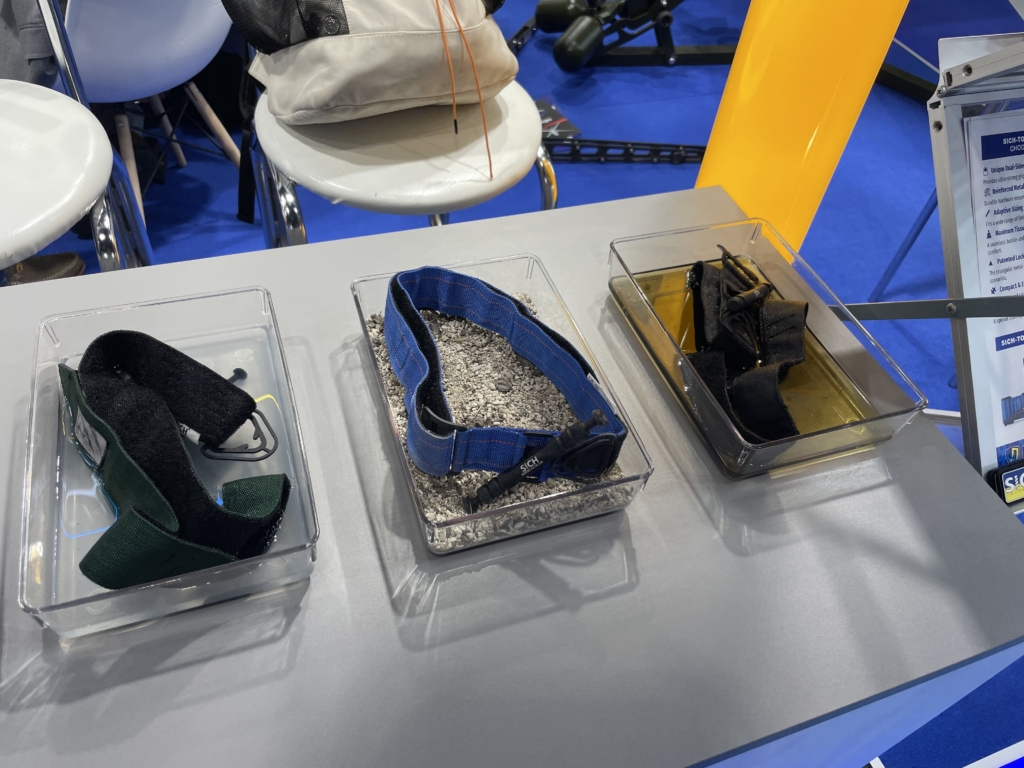
Ukrainian manufacturer SICH took a similarly hands-on approach to demonstrating its tourniquets. Visitors were invited to apply a tourniquet to a training mannequin under conditions designed to replicate real-life scenarios, including substances that made handling more difficult.
Other exhibitors used entertainment and tactile interaction to extend time at the stand. One counter-drone company streamed FIFA World Cup matches and raffled branded footballs, while a rubber components manufacturer invited visitors to engage with its materials through bouncing anti-stress balls and a robotic arm.
For communicators, the value of these experiences is clear. Interaction creates dwell time. Dwell time creates conversations. Conversations create better opportunities to explain complex products and build trust.
Food can also be a brand touchpoint
Branded food and drinks were everywhere at Eurosatory, but the strongest examples went beyond hospitality.
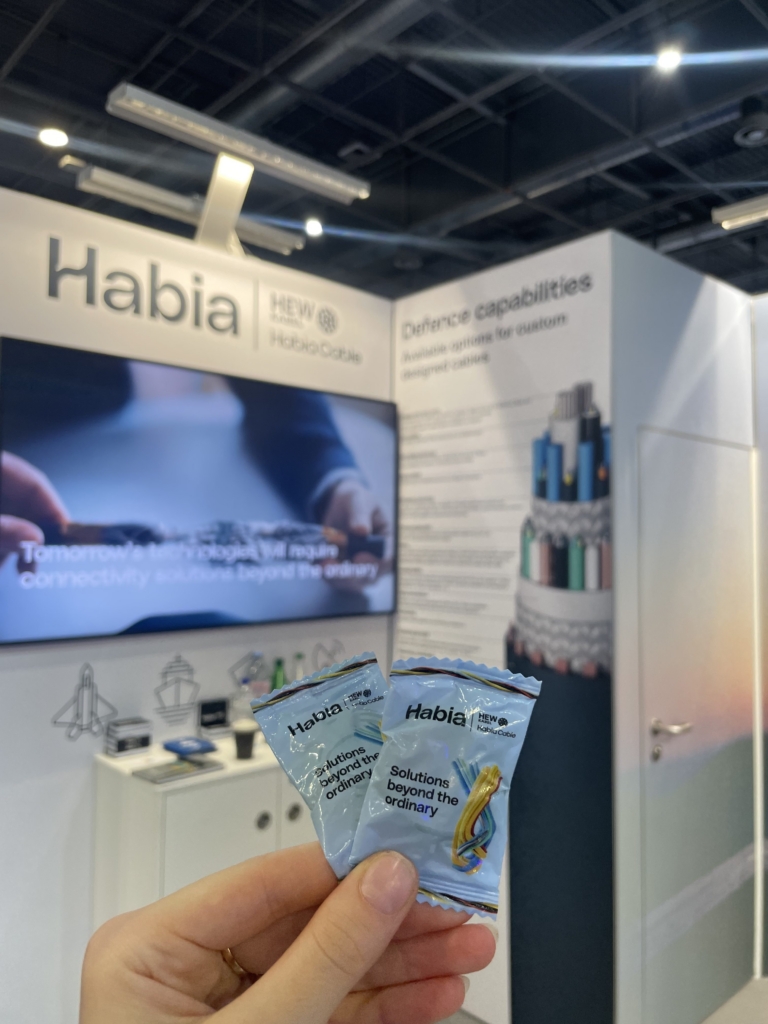
Habia, a manufacturer of cable systems, handed out gummy sweets shaped like colourful electrical cables, creating an immediate visual link between the giveaway and the product. Several companies served branded coffee or chocolates with logos printed directly onto the product.
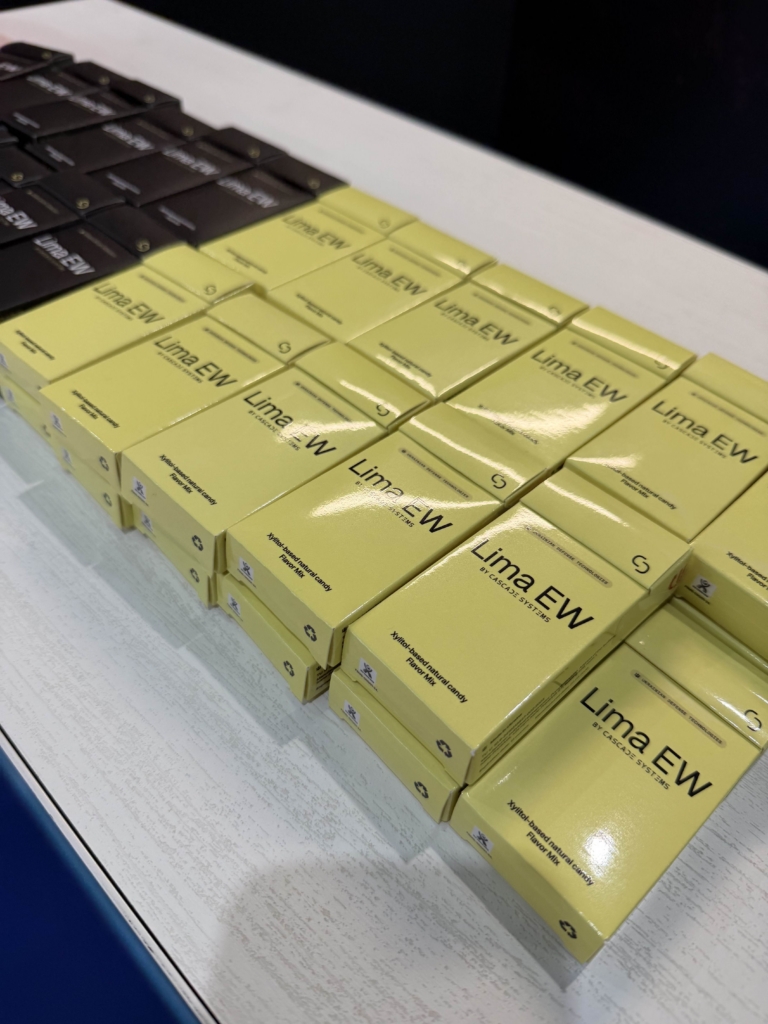
Ukrainian company Cascade Systems offered visitors Lima EW drip coffee. The packaging featured the product name, key messages and a QR code, turning the coffee into more than a giveaway. It became another brand touchpoint that continued the interaction beyond the stand.
Food works because it creates a natural pause. But when it is connected to the product, message or brand identity, it becomes part of the communications strategy.
The takeaway for communicators
Eurosatory 2026 showed that successful exhibition marketing is no longer about the quantity of branded giveaways. It is about the quality of audience engagement.
The same logic applies across the wider show calendar. At the Farnborough International Airshow, where defence primes share the halls with civil aviation, space and advanced air mobility companies, exhibitors compete for the attention of an even broader and more varied audience. That makes a clear, product-led brand system even more valuable: when visitors move between very different technologies in a single day, the companies that make their products easy to understand are the ones they remember.
The best exhibitors treated merchandise, demonstrations and hospitality as parts of one brand system. Each touchpoint helped explain the product, support the conversation or make the company easier to remember.
This matters beyond defence. Any communicator working in a complex B2B sector faces the same challenge: how to make abstract, technical or high-stakes products easier to understand.
A good branded object will not replace a strong message, a clear positioning strategy or a credible sales conversation. But when used well, it can make all three work harder.
An exhibition stand now is a strategic communications platform – one that can build trust, strengthen brand recognition and create the first step toward future partnerships.
Sign up for our newsletter and get our latest content in your inbox.


More from


January 15, 20251 min read

January 15, 20251 min read


April 18, 20241 min read


July 22, 20222 min read


November 21, 20232 min read