Northrop Grumman B-21 Raider capacity expansion sets up bigger fleet decision

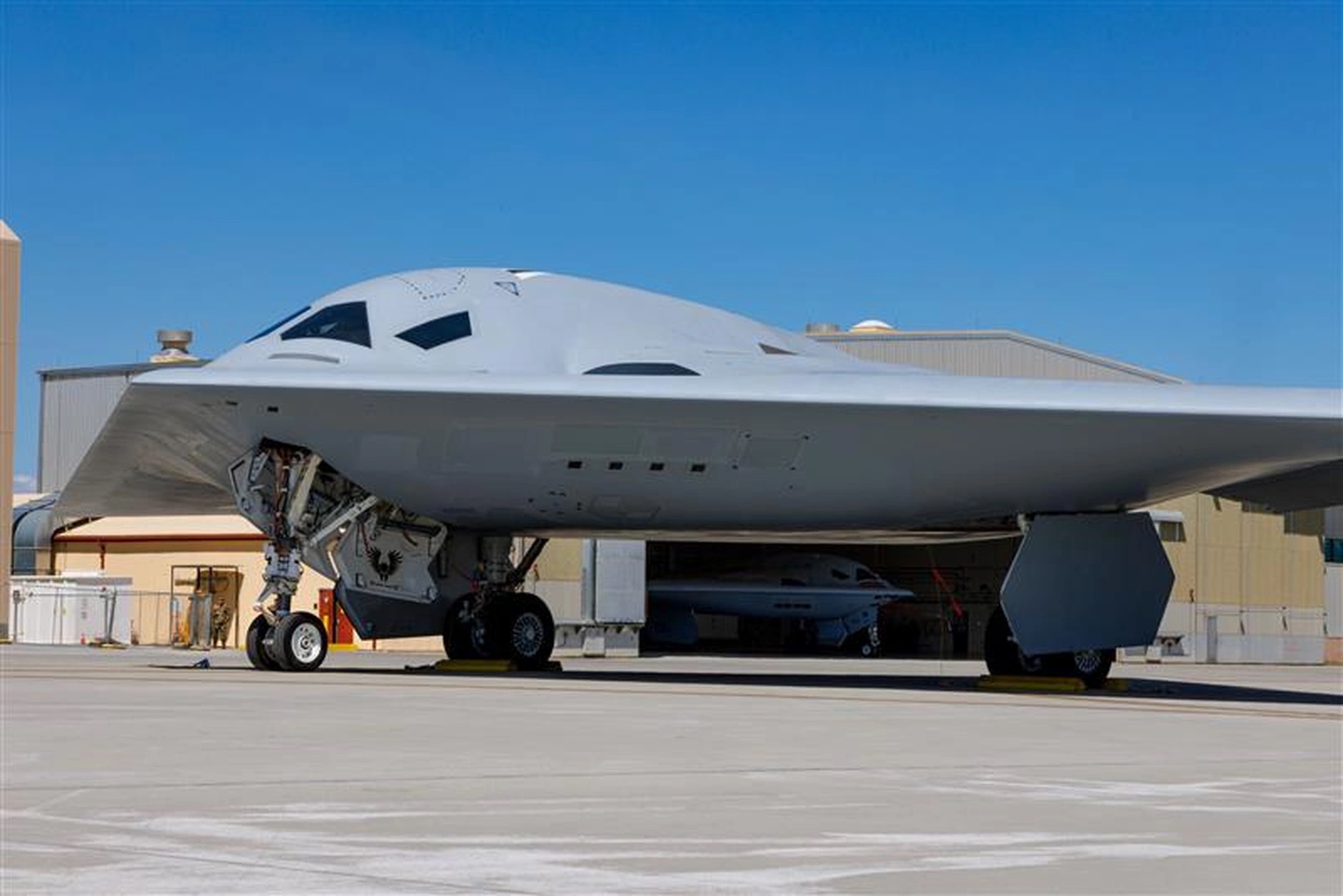
The US Department of the Air Force has agreed to expand production capacity for the B-21 Raider by 25%, applying $4.5 billion in previously authorised funding to accelerate delivery timelines for America’s next-generation stealth bomber.
The move, announced this week, is being framed as a disciplined acceleration of a critical deterrence capability. But while manufacturing throughput is increasing, the official fleet target remains unchanged, raising a key question: will the Air Force actually take delivery of B-21s faster, and will it ultimately buy more of them?
B-21 production rate increase: What has been agreed
Under the new agreement with Northrop Grumman, annual B-21 production capacity will rise by 25%, compressing potential delivery timelines while preserving cost and performance controls.
The funding comes from FY2025 reconciliation legislation and does not represent new appropriations. Instead, it reallocates already authorised money to strengthen the industrial base and prepare the programme for higher throughput.
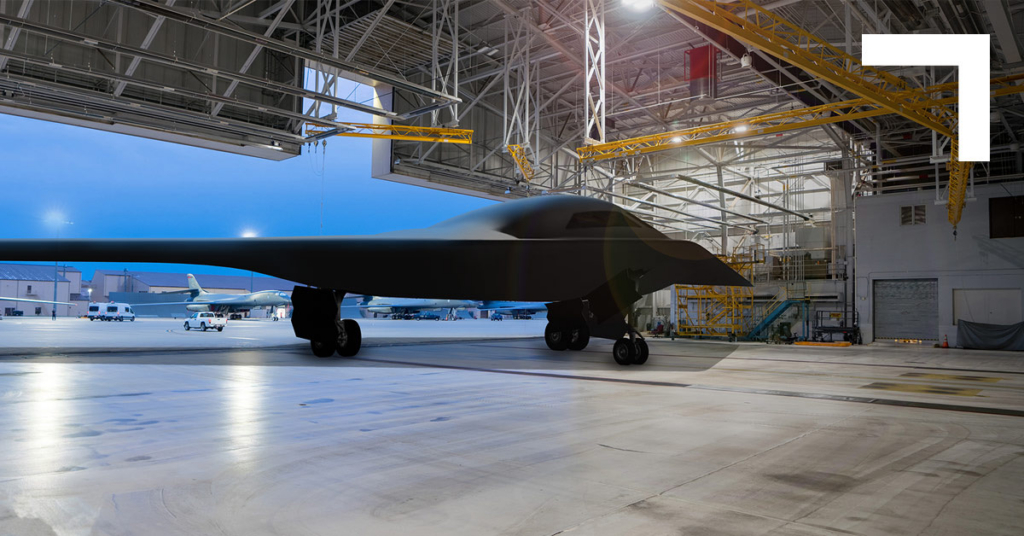
The B-21 remains in low-rate initial production, with three LRIP lots already awarded. While the precise annual production rate is classified, publicly cited figures have suggested output in the region of roughly seven aircraft per year.
A 25% increase in capacity would therefore represent a meaningful uplift in potential annual deliveries, even if exact numbers remain undisclosed.
Aircraft are still expected on the ramp at Ellsworth Air Force Base in 2027, with initial operational capability projected for the late 2020s.
Current B-21 status: Flight test and manufacturing progress
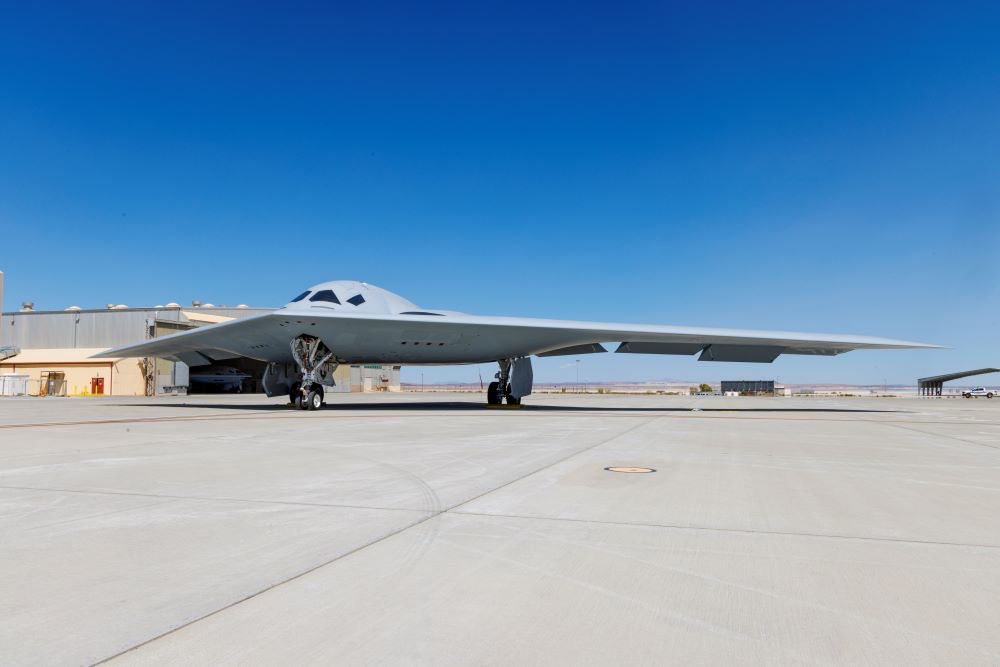
Northrop Grumman has delivered two flight-test aircraft and two ground-test articles. Additional flight-test aircraft are in final assembly, and the programme continues to transition from development into more stable production at Air Force Plant 42 in Palmdale, California.
Recent comments from Northrop leadership have highlighted confidence in modelling performance and manufacturing learning curves. The capacity expansion reflects that growing programme maturity.
However, increasing production capacity does not automatically mean accelerating deliveries.
That depends on the customer.
Will the US Air Force take B-21 deliveries faster?
Northrop Grumman CEO Kathy Warden has repeatedly linked any meaningful production acceleration to a corresponding decision by the Air Force to pull deliveries forward.
Earlier this month, Aviation Week reported Warden saying that an expanded programme of record is “contingent on our ability to build at a faster rate”. However, she also made clear that Northrop would require a formal decision from the Air Force to accelerate orders before committing billions in additional capital investment.

If such approval is granted, Northrop has indicated it would invest between $2 billion and $3 billion from 2027 to 2029 to further scale infrastructure. The Air Force would also need to commit funds to support accelerated procurement.
The newly announced 25% capacity increase strengthens the industrial base, but it does not yet confirm that procurement profiles will be pulled forward.
In effect, the factory is being prepared to move faster. Whether the Air Force presses for higher annual deliveries remains publicly unanswered.
How many B-21 Raider bombers does the US Air Force really need?
Crucially, the programme of record remains “at least 100” B-21 Raiders. There has been no formal increase in fleet size.
Yet senior leaders within Air Force Global Strike Command have previously signalled a requirement for a total bomber force of around 225 aircraft. With only 76 re-engined B-52Js expected to remain in service after B-1B and B-2 retirements, basic arithmetic implies a need for roughly 150 B-21s to reach that force level.
Independent strategic studies have gone further, arguing that closer to 200 B-21s may be required to sustain penetrating strike mass in a prolonged Indo-Pacific conflict.
For now, however, the Pentagon is not revising its official number. Instead, the sequence appears deliberate:
- Stabilise flight test and low-rate production
- Harden the industrial base
- Create headroom for higher throughput
- Then potentially revisit fleet size
By expanding production capacity without immediately increasing the programme of record, the Air Force preserves strategic flexibility while avoiding a near-term budget confrontation.
Could faster manufacturing lead to a larger fleet of B-21s for the US Air Force?
The B-21 is central to US long-range strike and nuclear deterrence. In a security environment increasingly defined by contested airspace and hardened targets, sortie generation and mass matter as much as stealth.

This production capacity expansion therefore does more than adjust a factory schedule. It signals confidence in programme performance, reassures the supplier base, and creates the industrial conditions necessary for a larger fleet if political leaders decide it is required.
The remaining question is whether Washington concludes that 100 B-21 Raiders is enough to meet the strategic demands of the late 2020s and beyond, or whether this 25% capacity increase is the first step toward a significantly larger stealth bomber force.
Featured image: Northrop Grumman