


Opinion: The UK leads in space science, so why is it falling behind commercially?

7 min read

Phil Merchant is a Chartered UK and European Patent Attorney, and Principal and Space Technology Team Lead at Marks & Clerk. With a background in condensed matter physics, he advises clients from start-ups to global organisations on patent strategy across aerospace, AI and quantum technologies, with a particular focus on the space sector.
Impact in orbit and beyond: the breadth of value of space technology
The space sector is going through an exciting period of development and innovation. It is cheaper than ever to put mass into orbit, a record number of satellites are orbiting our planet, the human race is returning to the moon, and innovative technologies are being developed every day to tackle problems relating to climate change, connectivity and defence.
At the same time, the space market is attracting record levels of investment, from both the public and private sectors. While most of the investment continues to be sourced from the public sector (the ESA reported that 2024 worldwide public investment in space grew by 9% to €122 billion), private sector investment is significant and rising.

In 2024, it reached €7 billion (growing by 20% on the previous year), and figures for 2025 look similarly buoyant; data from Seraphim space estimated $12.4 billion in private sector investment across the year.
These recent 2025 figures surpass the previous peak in 2021 and mark a full recovery from what appears to be a temporary downturn in 2022. This increase in investment is undoubtedly linked not only to the immense benefit the sector provides our everyday lives, but also to the promise of the sector in the coming decades – the space sector is projected to grow to $1.8 trillion by 2035.
Why space technology matters more than ever to the global economy
However, this potential may not be immediately apparent to someone with only passing familiarity with the sector. To many, the meaning of the word ‘space’ does not fully reflect its true value to our economy.
According to recent polling, while the public do clearly associate ‘space’ with “going to the moon/mars” (37%) and “satellites” (46%), they are more likely to think of “Star Wars” (10%) and “Aliens” (21%) than “Broadcasting and television” (only 3%) or “communications and connectivity” (8%). This is in direct contrast to some of the most important contributions space makes to the economy.

While in the initial years of the space age, space technology did indeed focus on bigger and more powerful rockets and achieving ever more impressive milestones in human spaceflight, the main utility of the modern space sector now extends far beyond these applications.
The development of new rocketry is, of course, essential, and the human spaceflight market is anticipated to significantly grow by 2030, but it is actually the quiet ‘hidden utility’ of space-based technologies that contributes the vast majority of value to the space economy.
The space technology initially developed for national security and scientific aims of the Cold War has, over the last 80 years, expanded beyond this purpose and quietly established a foundation of sophisticated and essential technology.
How satellite services underpin the UK economy and everyday life
Space-derived technology has become so ubiquitous that we may not recognise the significant role space has played in every technology we take for granted, and may not fully appreciate the raw long-term potential of space-based innovation.
Recent analysis estimates that space and satellite services underpin 18% the UK’s GDP, with another estimate that the loss of access to PNT services (Positional, Navigation and Timing services such as GPS) would cost the UK economy £1 billion per day.

When viewing these and similar analyses, it is clear that in 2026, and 69 years on from Sputnik, space-derived technology is ubiquitous and has societal impacts of both breadth and depth. These include the country-wide critical role of satellite services such as PNT, as mentioned above, to technologies transforming lives on an individual scale.
For example, work at NASA has resulted in the development of assistive technologies like the cochlear implant and eye-tracking technology to aid communication for people living with disabilities.
From space exploration to real-world innovation: hidden benefits of space tech
To underline this message, and perhaps challenge some of the misunderstandings of the role and utility of space technologies, Marks & Clerk’s upcoming “Impact Beyond Orbit” series explores a number of technologies developed for space that benefit our lives on Earth.
We discuss technologies such as compression algorithms, weather forecasting, water purification systems, and advanced prosthetics. It is impossible to expand fully on the myriad of ways we use space technology, but even with these examples, it is hopefully clear that space technology is far, far more than a billionaire’s playground and science fiction movies.
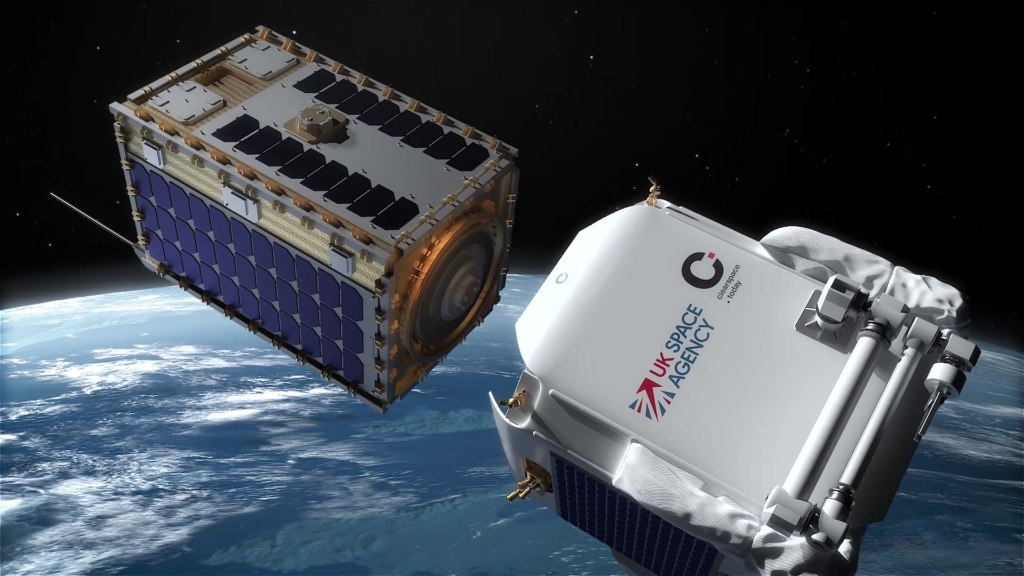
The future is also bright – scientists and engineers are even now tackling exciting new challenges in space technology, including satellite-based AI tools to combat climate change, the manufacture of more efficacious pharmaceuticals in space, and satellite-based quantum communication.
Even technologies that are ostensibly aimed at deep space exploration years in the future can have surprising and immensely important benefits here, and now, on Earth.
The UK space sector: Strong science, weak commercialisation and investment
The UK’s technical and scientific capability in the space sector is far from hypothetical; it is a current, world-leading reality. As evidenced by our rank as second in the world for highly cited space science publications, our academic foundation is exceptionally strong. We are critical contributors to landmark international missions like the James Webb Space Telescope and the Artemis moon missions.
However, this academic competence is not tracking into a correspondingly strong commercial success.

The 2025 House of Lords report “The Space Sector: Act Now or Lose Out” observes that the UK’s spending commitments are not commensurate with its capabilities.
We are currently seeing a gap where UK institutions and companies trail other major economies in patent filings across space technologies, so while the will and talent to innovate are present, the commercial and financial commitments have arguably failed to keep pace with our scientific capabilities.
Why intellectual property and patents are critical to UK space sector growth
In the intellectual property industry, this disconnect represents more than just missed opportunities; it represents a systemic vulnerability.
Space is an area of innovation, with far-reaching, even unexpected applications. When our patent applications lag behind peer states, we aren’t just losing “ideas”, we’re losing the ability to lead the markets they create.
For the UK space industry to mature, it must move beyond being a “research hub” and become a “commercial hub” that owns its intellectual property. Patents and trade marks provide an environment in which businesses are more likely to succeed.

This extends not just to protecting an invention or brand, but also in increasing the value of the business, potentially reducing corporation tax, and significantly increasing chance of investment (according to research published by the European Patent Office (EPO) and European Union Intellectual Property Office (EUIPO), small companies that hold IP rights can be over 10 times more likely to secure investment, and are more likely to achieve faster growth).
Investors should see this as a market ripe with potential, but only if the underlying IP is secured with the same rigour as the science itself. Without a robust IP strategy, even the most groundbreaking research can fail to become a scalable asset.
Turning space innovation into commercial success: closing the gap
Bridging this gap sits in how we approach the commercialisation of space tech; we must implement a strategy from the moment of discovery by matching our “second in the world” publication status with similarly strong IP strategies and incentivise funding for space-focused research groups and start-ups early.
The UK’s unrivalled academic achievements should not only be celebrated in journals but also protected as sovereign commercial successes. Investing now in space-focused research groups and start-ups could result in significant returns as this fast-changing sector rapidly matures and delivers the next exciting technologies.
Marks & Clerk LLP is a world-leading provider of intellectual property services with offices in the UK, Europe, North America, and Asia. We have a dedicated team of space sector specialists with legal and technical expertise to help any company working in the space sector with their Intellectual Property questions.
If you have technology that you are interested in protecting, contact us today to book an initial consultation.
Sign up for our newsletter and get our latest content in your inbox.


More from


January 15, 20251 min read

January 15, 20251 min read


April 18, 20241 min read


July 22, 20222 min read


November 21, 20232 min read