US military aviation mishaps surge 55% as deaths and losses climb, new data shows

November 21, 2025
New Pentagon data points to a sharp rise in severe US military aviation mishaps over the past four years, renewing concern in Congress about flight safety and the armed forces’ ability to prevent avoidable accidents.
The figures, provided to Senator Elizabeth Warren after a series of deadly crashes, show that the rate of the most serious incidents has increased by more than half since 2020, with the upward trend continuing into 2025.
The data highlights long-standing failings across the services: recurring loss of life, rising financial damage, destroyed aircraft and investigation findings that are not routinely shared with lawmakers charged with oversight.
Sharp rise in fatal US military aviation mishaps since 2020
Between late 2019 and mid-2024, the services logged 4,820 aviation mishaps. Of these, 222 were classified as Class A incidents, accidents involving a death, permanent disability, destroyed aircraft or at least $2.5 million in damage.
The Class A mishap rate climbed from 1.30 per 100,000 flight hours in 2020 to 2.02 in 2024, a 55 percent increase. Over the period, 90 service members and Defence Department civilian employees were killed, 89 aircraft were destroyed and losses totalled $9.4 billion.
| Fiscal Year | Air Force | Marine Corps | Navy | Army | All DoD |
|---|---|---|---|---|---|
| 2020 | 1.72 | 1.33 | 1.12 | 0.76 | 1.30 |
| 2021 | 1.14 | 0.41 | 1.25 | 0.99 | 1.08 |
| 2022 | 1.51 | 3.51 | 1.98 | 0.99 | 1.64 |
| 2023 | 1.79 | 2.89 | 0.91 | 1.21 | 1.48 |
| 2024 | 1.90 | 3.91 | 1.76 | 2.02 | 2.02 |
The Marine Corps recorded the steepest rise, with a 194% increase in its Class A mishap rate. The Air Force, Navy and Army also saw worsening trends. Internal Navy data shows eight Class A accidents in 2024 and 14 so far in 2025.
Aircraft fleets with the fastest-growing military mishap rates
Though accident rates rose across most fleets, several platforms stand out. The V-22 Osprey, already associated with fatal crashes and complex emergency procedures, continued to feature in deadly incidents.
The Army’s Apache helicopter fleet saw roughly 4.5 times more Class A mishaps in 2024 than in 2020. The C-130 transport fleet also nearly doubled its rate of serious accidents.
\Fixed-wing losses have mounted, too. The Navy lost multiple F/A-18F Super Hornets in 2024 and 2025, including jets that went overboard from carriers and two that crashed in the South China Sea within half an hour of each other.
Each aircraft costs around $60 million. Separately, an Army helicopter collided with a commercial aircraft over Washington, D.C., killing 67 people.

The Air Force faced similar setbacks. In 2024, leaders reported the loss of 47 airmen and $1.5 billion in weapons systems due to preventable accidents. An F-35 crash in Alaska in early 2025, linked to frozen hydraulic fluid that caused incorrect landing-gear readings, underscored how technical faults can escalate into catastrophic failures.
The financial impact of mishaps has escalated. Class A accidents cost $1.6 billion in fiscal year 2022 and $2.9 billion in 2023. In the first half of 2024 alone, losses reached $1.7 billion. Previous reviews found more than $11 billion in aviation mishap costs between 2013 and 2020.
Individual crashes significantly add to that burden. A 2022 B-2 crash caused nearly $300 million in damage. Four Super Hornets lost this year represent hundreds of millions more. These losses drain budgets, reduce available aircraft and strain readiness.
Lawmakers seek more transparency in military aviation safety investigations
A key concern for lawmakers is the limited release of detailed safety findings. Each aviation accident triggers two investigations: an Accident Investigation Board report, which is publicly released, and a Safety Investigation Board review, which assesses systemic factors but is not shared with Congress.
Warren and Senator Dan Sullivan have proposed a provision in the 2026 defence policy bill requiring the Pentagon to provide Congress with executive summaries of safety board findings from the past three years, along with corrective actions taken.
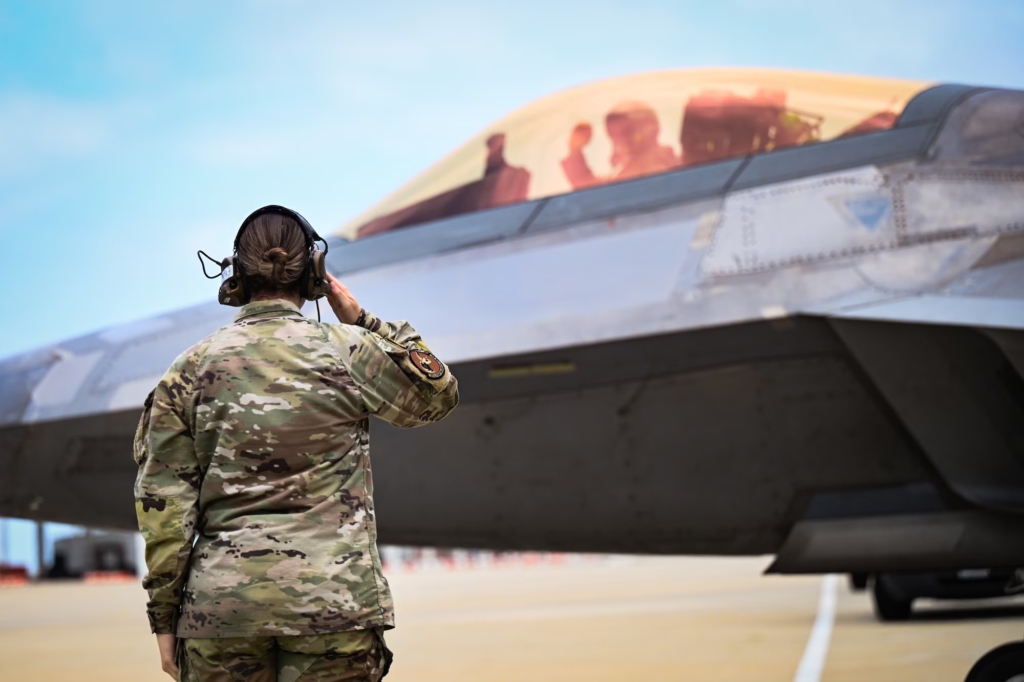
Multiple reviews, including those from the Pentagon’s own safety commission, have identified deeper issues: declining experience among pilots and maintainers, shortages of skilled personnel and uneven training standards. Some crews have also suffered physiological incidents linked to equipment malfunctions.
Analysts argue that mishap reporting varies between services, limiting the ability to compare trends or identify recurring mechanical problems. These inconsistencies weaken early detection of systemic risks.
New crashes add scrutiny as US military aviation safety crisis deepens
The release of the data was quickly followed by more fatal incidents. In September 2025, four soldiers were killed in an MH-60 Black Hawk crash in Washington state. In October, an MH-60R and an F/A-18F from the same carrier group crashed into the South China Sea within minutes of one another.

Warren has asked the DoD for updated mishap figures from August 2024 to the present, as well as detailed plans to address training, maintenance and aircraft design shortcomings. She has requested a formal response by 2 December 2025.
With accident rates climbing, costs accelerating and new crashes raising fresh concerns, aviation safety is increasingly becoming a central oversight issue on Capitol Hill. Lawmakers warn that without greater visibility into internal investigations and a clearer plan to stabilise training and maintenance pipelines, the trend is unlikely to reverse.