US government admits liability in Washington DCA midair crash

December 18, 2025
The US government has acknowledged that both the Federal Aviation Administration (FAA) and the US Army played roles in causing a midair collision near Washington’s Ronald Regan National Airport (DCA) in January this year.
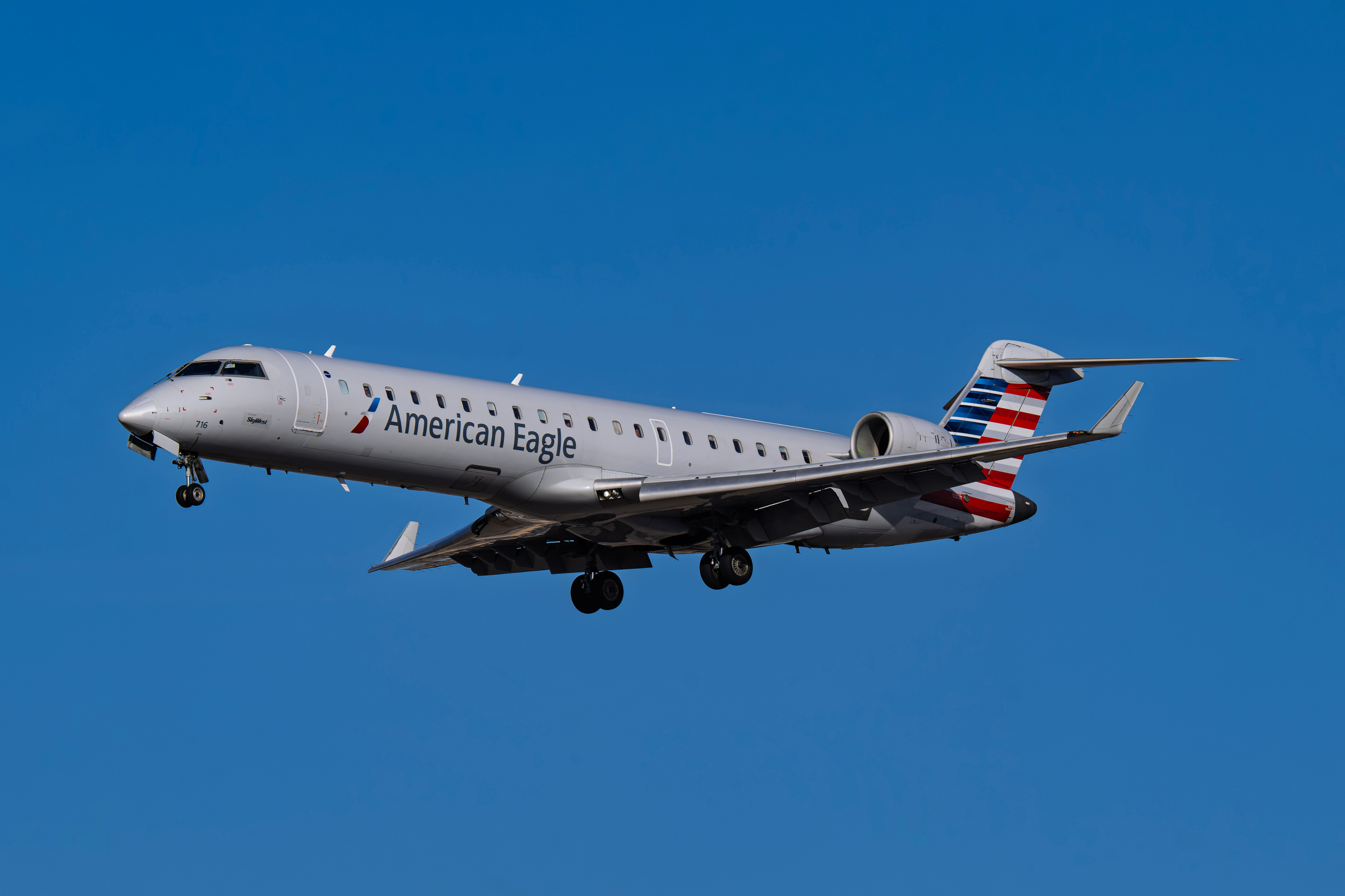
The collision involved a PSA Airlines Bombardier CRJ-700 regional jet (operating for American Airlines) and a US Army Black Hawk helicopter, and resulted in the loss of 67 lives. The crash was the most deadly aviation incident in the US for more than 20 years.
The US government accepts liability for the DCA midair collision
An official response has been filed by lawyers acting on behalf of the US government in response to a lawsuit being filed by one of the victim’s families. In that document, the government accepts liability through the negligence of the air traffic controllers on duty on the evening of 29 January.
According to a report by NBC News, the response filed by the government admits that an air traffic controller tasked with controlling the airspace in which the crash took place violated standard procedures concerning when to rely on pilots of individual aircraft maintaining adequate visual separation from other aircraft.
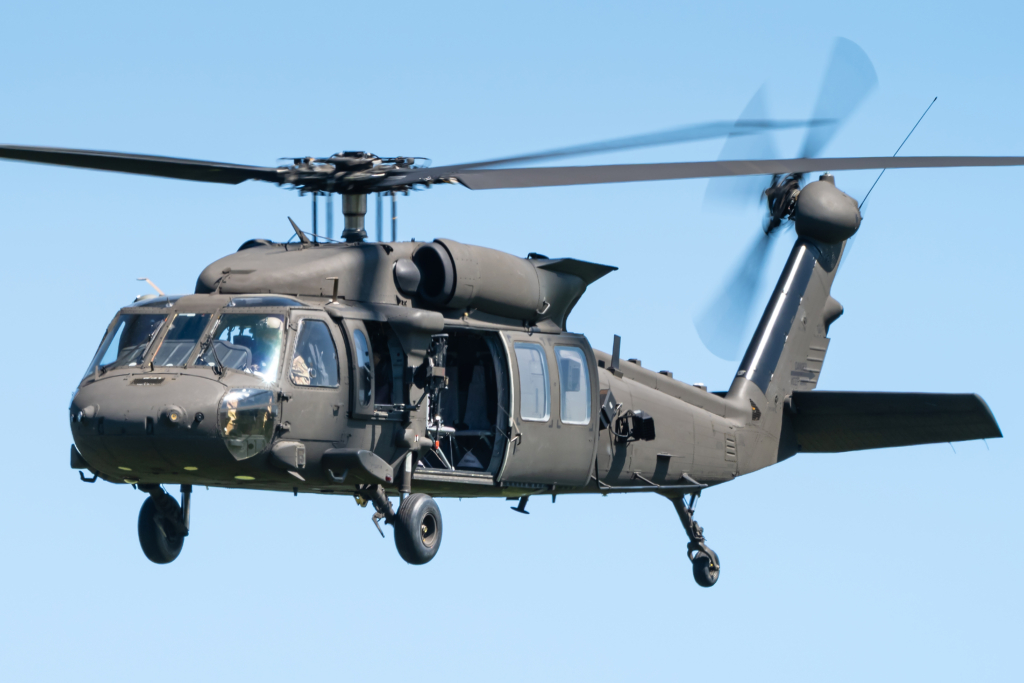
Additionally, the document states that the US Army helicopter pilot failed in their duty to perform ‘see-and-avoid’ anti-collision procedures and failed to maintain a good lookout of their aircraft when in a busy section of airspace.
One of the attorneys acting on behalf of the victim, Casey Crafton, said the government had admitted “the Army’s responsibility for the needless loss of life and the FAA’s failure to follow air traffic control procedures.”
“The United States admits that it owed a duty of care to Plaintiffs, which it breached, thereby proximately causing the tragic accident,” attorneys for the government responded in their filing.
Liability is not exclusively for the US government to accept
Combined, the admittances lay liability firmly, although not exclusively, at the government’s feet. As proceedings continue, the US government lawyers will raise the question of joint liability. They believe, through the arguments in the defence filing, that others, including the crew of the regional jet and the airline itself, may also have a share in liability.
While the lawsuit filed by the family of the victim has also named both American Airlines and its regional partner, PSA Airlines (the operator of the CRJ jet) as joint parties in its negligence claim, both carriers have instructed lawyers to dismiss the claims against their clients.
According to NBC News, in the American Airlines filing to dismiss the claims against it, the airline said that “The plaintiffs’ proper legal recourse is not against American. It is against the United States government. The court should therefore dismiss American from this lawsuit.”
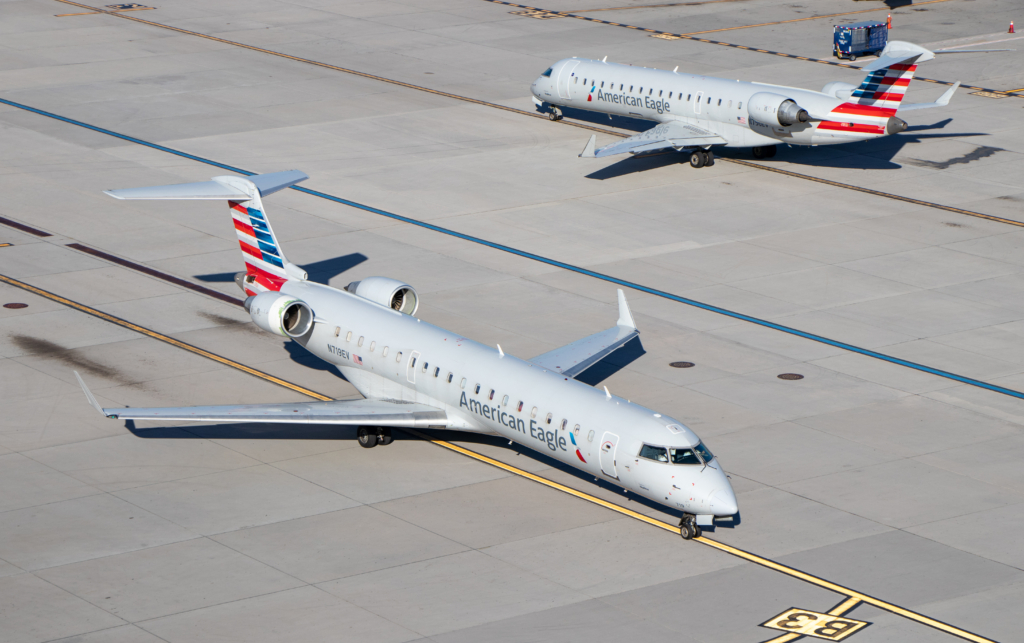
American’s lawyers added that the Federal Aviation Act “gave the federal government exclusive control in regulating the field of aviation safety and that the airline is not accused of violating any federal standard.”
In support of its filing, American reiterated that it had continued to support the victim of the accident both immediately after the crash and in the months since.
Recap of the events of 29 January 2025
On 29 January, at about 20:48 eastern standard time (EST), a Sikorsky Black Hawk helicopter operated by the US Army under the callsign PAT25, and a Bombardier CRJ700 registered as N709PS and operated by PSA Airlines as flight 5342, collided midair approximately 0.5 miles southeast of Ronald Reagan Washington National Airport (DCA).
Both aircraft impacted the Potomac River in southwest Washington, DC.
Both pilots, two flight attendants, and 60 passengers aboard the regional jet and all three crew members aboard the helicopter were fatally injured. Both aircraft were destroyed as a result of the accident.
Flight 5342 was operating as a scheduled domestic passenger flight from Wichita Dwight D. Eisenhower National Airport (ICT) in Kansas to Reagan National Airport.
Helicopter PAT25 originated from Davison Army Airfield (DAA), Fort Belvoir, Virginia, for the pilot’s annual standardisation evaluation with the use of night vision goggles (NVGs). Night visual meteorological conditions prevailed in the area of DCA at the time of the accident. The crew were understood to be wearing night vision goggles at the time of the impact with the regional jet.
The lawsuit filed against the government and airlines called the deadly midair crash a “wholly avoidable tragedy” and “an accident waiting to happen.” It added that it was widely known that both flights were operating in one of the busiest airspace corridors in the United States and that there had been near-misses in the vicinity before.
The NTSB investigation report is pending
The National Transportation Safety Board (NTSB) is due to release its full report on the cause of the crash early in 2026. However, investigators have already highlighted several factors that contributed to the fatal accident.
From radar evidence, the Black Hawk was found to be flying 24m (78ft) higher than the 61m (200ft) limit on a route that already allowed only minimal separation between air traffic landing at Reagan Airport and helicopters passing below.
Additionally, the NTSB said in its preliminary report that the FAA had failed to recognise and deal with the dangers near Reagan Airport despite there having been a total of 85 near misses in the three years leading up to the accident.
LISTEN to ATC audio of American 5342 as Reagan tower clears them to land, advises PAT25 helicopter to watch for traffic, and then alarm hits tower as they watch the collision unfold and both aircraft fall into the river. pic.twitter.com/KZC91vXg2r
— Tyler Anderson, MD (@DoctorTyMD) January 30, 2025
Recordings show that prior to the collision, the air traffic controller twice asked the helicopter crew whether they had the regional jet in sight, to which they replied in the affirmative. The Black Hawk crew subsequently requested visual separation approval so they could use their own eyes to maintain distance between the approaching aircraft and themselves.
Investigators have said the helicopter pilots might not have realised how high they were because the barometric altimeter they were relying on was reading 24 to 30 meters (80 to 100 ft) lower than the altitude registered by the flight data recorder.
FAA officials have already acknowledged that the controllers at Reagan Airport had become “overly reliant on the use of visual separation.” This practice has since ended, according to the FAA.
However, other claims, including that air traffic control failed to properly monitor the path of the helicopter or that they failed to notify the helicopter that it was too high or to tell it to descend, were denied.
The Senate passes the US ROTOR Act
The FAA took remedial action after the DCA midair collision by permanently restricting all non-essential helicopter operations around Washington-Reagan National Airport after the accident and eliminating helicopter and fixed-wing mixed traffic.”
Now, in efforts to strengthen safety boundaries further, the US Senate has approved the Rotorcraft Operations Transparency and Oversight Reform Act, or ROTOR Act – a bill to address problems and strengthen aviation safety in the wake of the accident.
Transportation Secretary Sean Duffy said on 17 December that eliminating the mixing of helicopter and fixed-wing air traffic has made the airport safer, adding that the ROTOR Act would increase and improve communication protocols between aircraft.
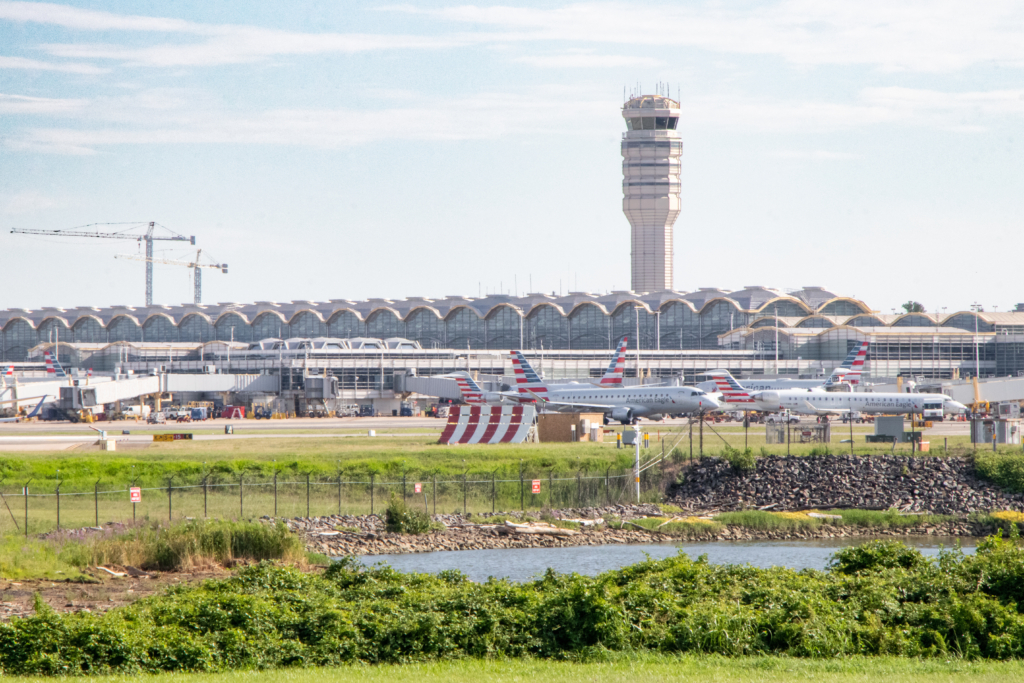
“That flight (Flight 5342) and its collision with the Army Black Hawk helicopter changed the way we look at air safety every moment since then,” said Senator Jerry Moran, a sponsor of the ROTOR legislative bill.
“After numerous conversations with my colleagues, we have secured an agreement from the Senate leadership for an amended version of the ROTOR Act to be quickly brought to the Senate floor for consideration to reinstate the advanced critical standards of safety for commercial and military aviation,” he said.
“I commend the FAA Administrator for his commitment, and particularly Secretary Duffy, for their combined commitment to air safety,” Moran concluded.
Featured image: robin / stock.adobe.com