Explained: Types of jet engines and applications

December 27, 2025
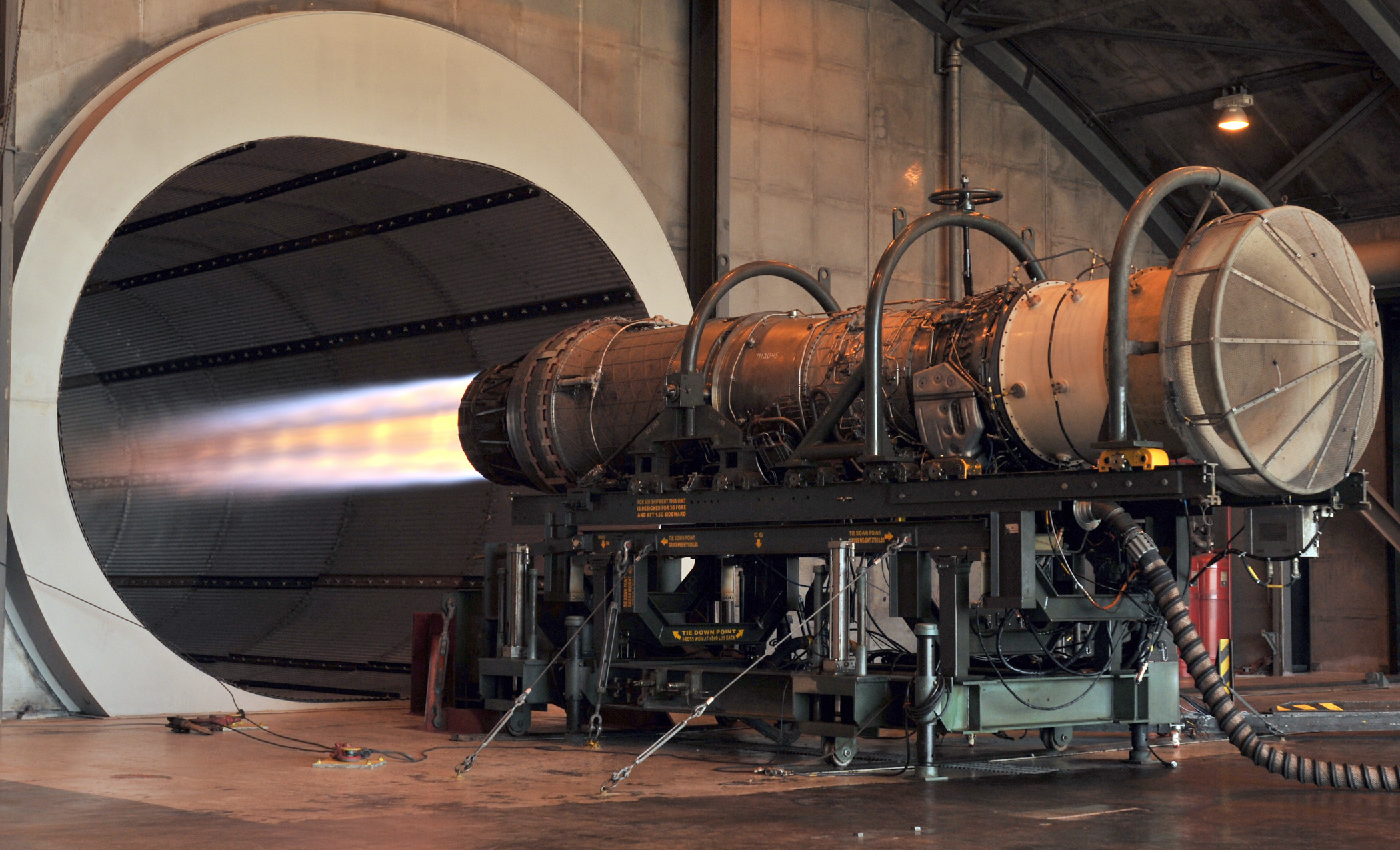
Jet engines work on the principles of compression, combustion, and expansion. Air drawn from the inlet is compressed through a series of low-pressure (LP) and high-pressure (HP) compression stages.
The high-pressure, high-temperature air is mixed with atomised fuel and ignition in the combustor. Fast-moving gases run the turbines and exit through the exhaust, generating thrust.
Irrespective of the type and application of the jet engine, the basic operating principle remains the same. Unlike a piston engine, which uses single strokes to extract energy, jet engines produce maximum continuous power.
We dive deeper into the most common types of jet engines and where those are typically used. While the primary components (inlet, compressor, combustor, and turbine) are the same, they differ in how these components work.
Turbojet engines
A turbojet is the simplest type of jet engine, which generates thrust by compressing all the incoming air and mixing it with fuel for combustion. The cold section of the engine comprises the air inlet and the compressor, whereas the hot section includes the combustion chamber, turbines, and exhaust.
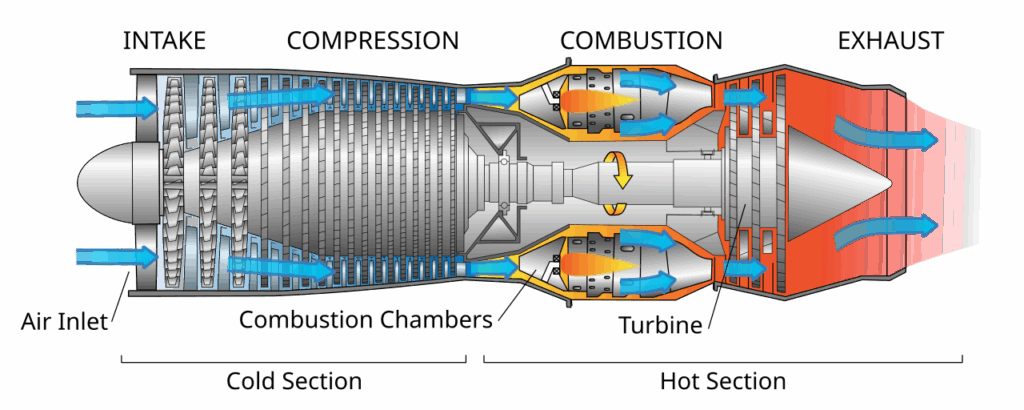
Specially shaped propelling nozzles in the exhaust ensure mission-specific thrust is achieved. With its compact design, turbojets are highly suitable for use on high-speed aircraft, including supersonic jets.
Turbojets have relatively low propulsive efficiency at lower speeds, limiting their viability for special-purpose aircraft, such as supersonic military jets. Certain high-speed unmanned aerial vehicles (UAVs) and cruise missiles utilise turbojets for rapid thrust during special missions.
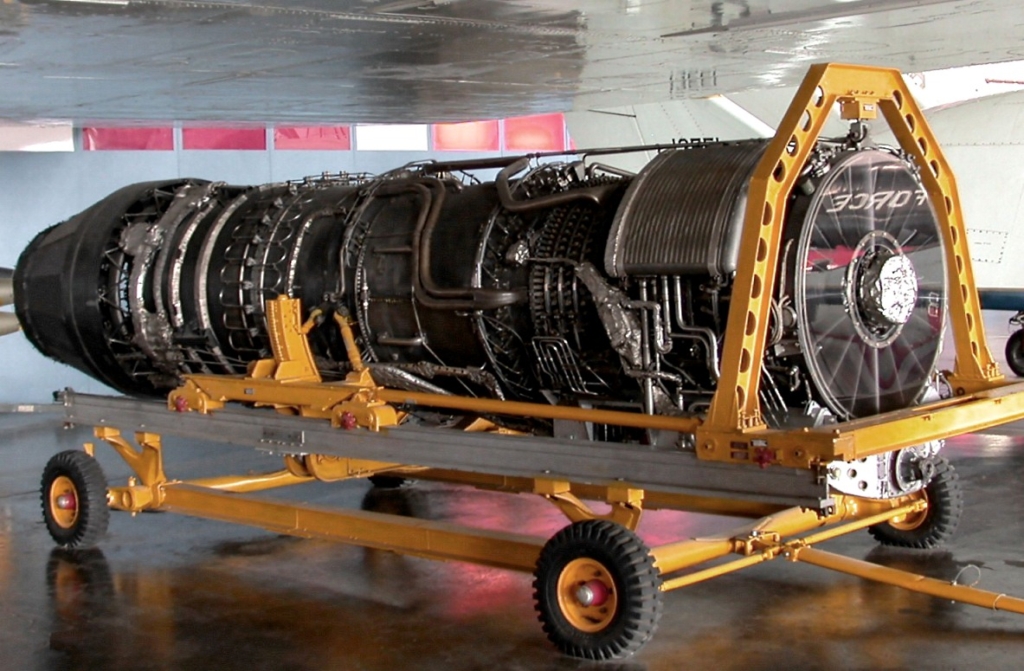
Modern turbojets are designed with advanced temperature-resistant materials to improve operational performance and fuel efficiency.
Turboprop engines
A turboprop engine uses the same principles as a turbojet engine, utilising a compressor, combustor, and turbine for power generation. However, the functionality, operating conditions, and applications differ. A turboprop features additional turbines, a drive shaft, and a planetary reduction gearbox to drive the propeller.
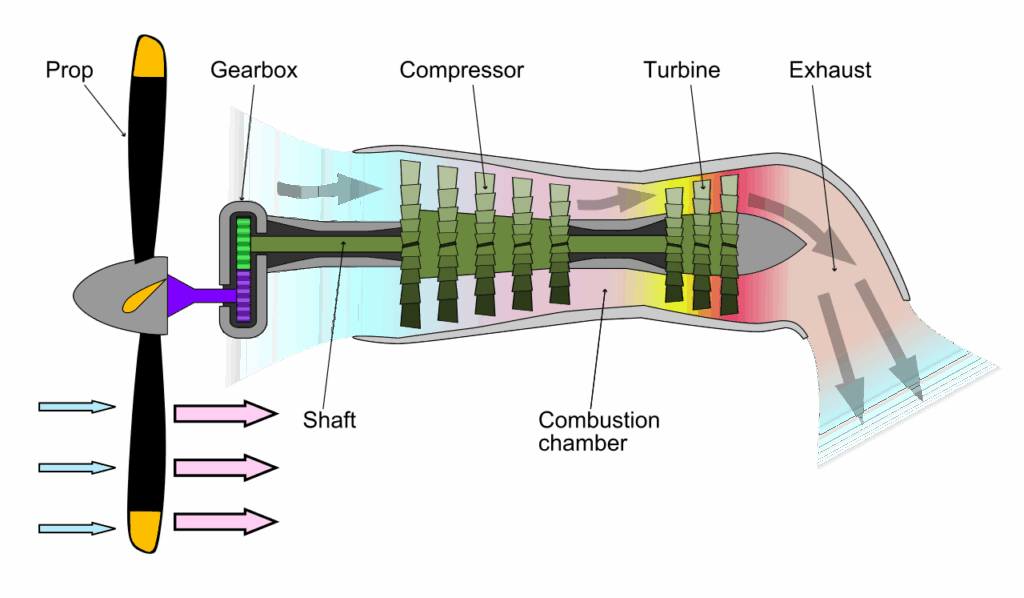
Engine turbines extract most of the energy from the exhaust stream, routing some of it to drive the propeller. The gearbox may or may not be driven by the same turbines. For example, one turboprop design links the main shaft housing the compressor and turbines to the propeller. Another configuration separates the engine turbine from the power turbine driving the gearbox.
Referred to as a ‘free power turbine’, the design uses a concentric, mechanically isolated shaft to power the gearbox. The Pratt & Whitney Canada PT6 turboprop is a free power turbine with a reduction gearbox.
The PT6 engine is often mounted backwards on the aircraft with the intake in the rear and the exhaust at the front. In a reverse flow configuration, engine inlets around the propeller suck air and move it towards the aft of the engine before entering the compressor.
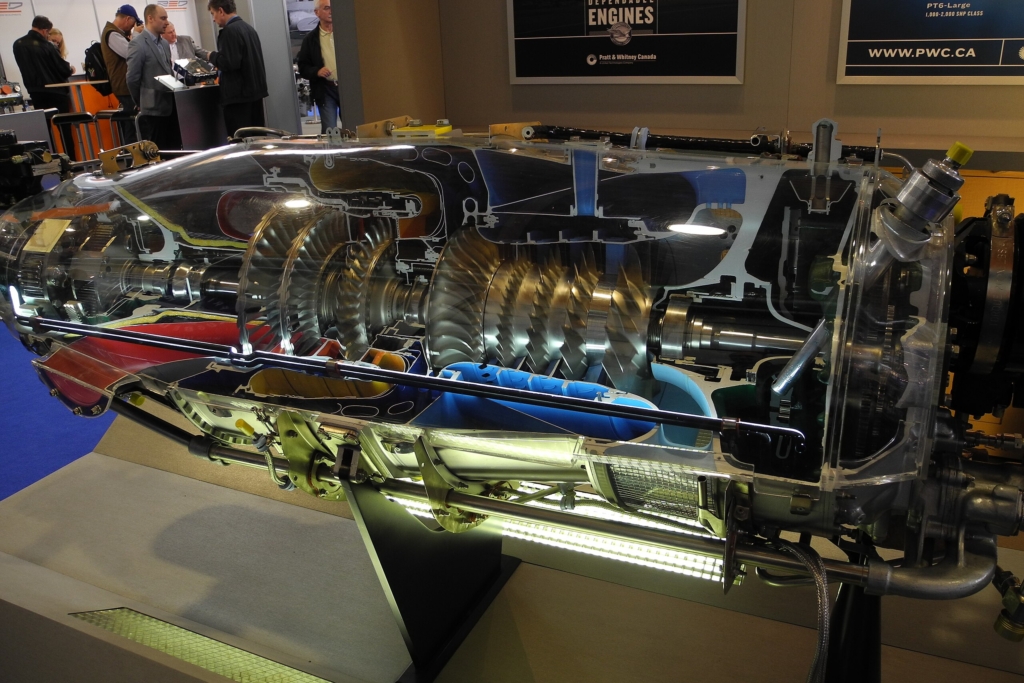
Approximately 70% of the engine power spins the compressor section and engine-driven accessories, while the remaining 30% is dedicated to rotating the propeller in a PT6 engine. More than 40,000 PT6 engines have been produced since the 1960s, making it the most popular turboprop engine. Turboprops are highly efficient at low-to-mid altitudes and offer greater reliability for small aircraft
Turboshaft engines
A turboshaft engine is similar to a turbojet but uses the majority of its power to rotate the turbine, rather than producing thrust through the exhaust. Turboshaft engines are generally used in aircraft that are relatively lightweight and require high power output.
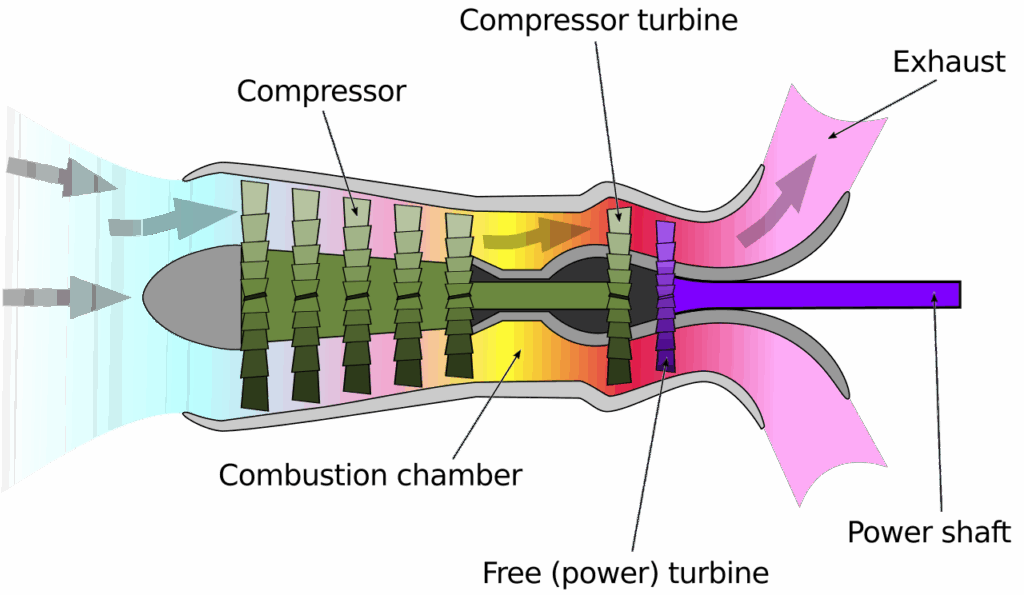
Turboshaft engines are commonly used on helicopters, featuring an all-axial compressor and a power turbine shaft for horizontally spinning rotors. Large helicopters may use up to three turboshaft engines. For example, the Soviet heavy transport helicopter, Mil Mi-26, is equipped with two ZMKB Progress D-136 turboshaft engines, each generating 11,400 horsepower (8,500 kW).
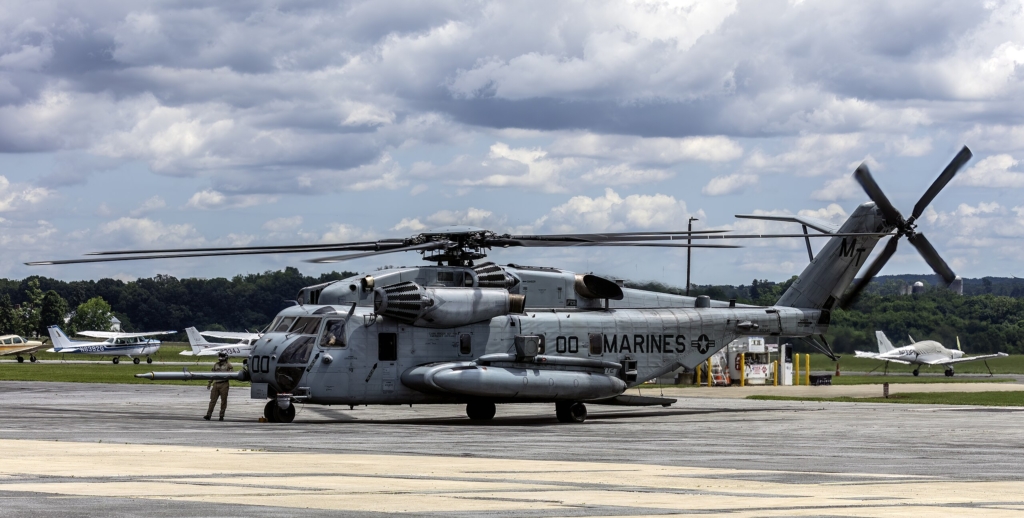
The Sikorsky CH-53E Super Stallion, operated by the US military, uses three General Electric T64 turboshaft engines, each generating 4,380 horsepower (3,270 kW). While turboshaft engines are loud, they are much smaller than piston engines with a higher power-to-weight ratio.
Turbofan engines
While working on a similar principle, turbofan engines feature a large fan at the inlet to draw air for compression. In a conventional turbofan engine, the fan is connected to the low-pressure system (fan, LP compressor, and LP turbine).
Turbofan engines can be categorised into two major types. low bypass and high bypass engines. The engine bypass ratio is the ratio of the airflow entering the engine core to the air bypassing the core through the secondary duct. In low bypass ratio engines, almost all incoming air is compressed and combined with fuel to generate thrust.
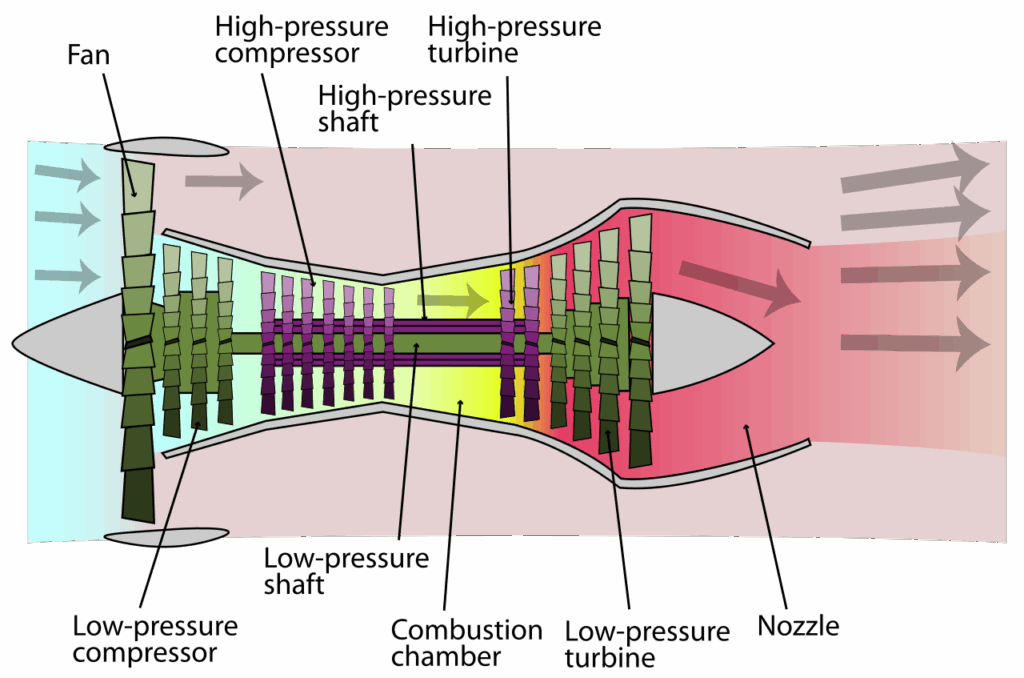
These are high-performance engines that allow maximum power and much lower fuel efficiency. Low bypass engines are generally used on modern combat aircraft to achieve mission-specific performance.
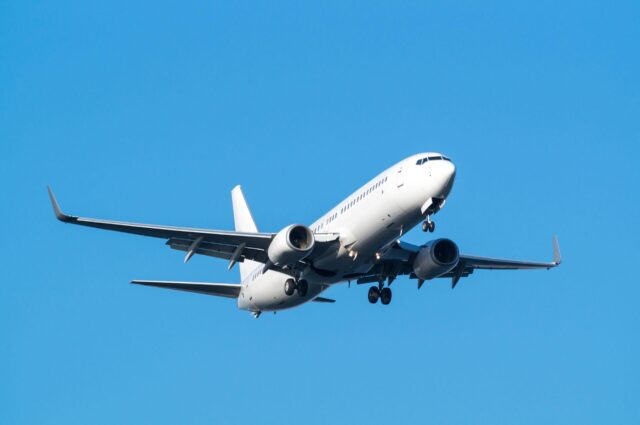
High bypass engines, typically seen on most commercial jetliners, feature approximately a 5:1 bypass ratio. Approximately 20% of the incoming air enters the core, compressed and combusted with fuel to turn the turbines. In return, the LP system rotates the fan at optimal speeds, drawing more air into the engine. Nearly 80% of the air bypasses the core, adding to the engine thrust.
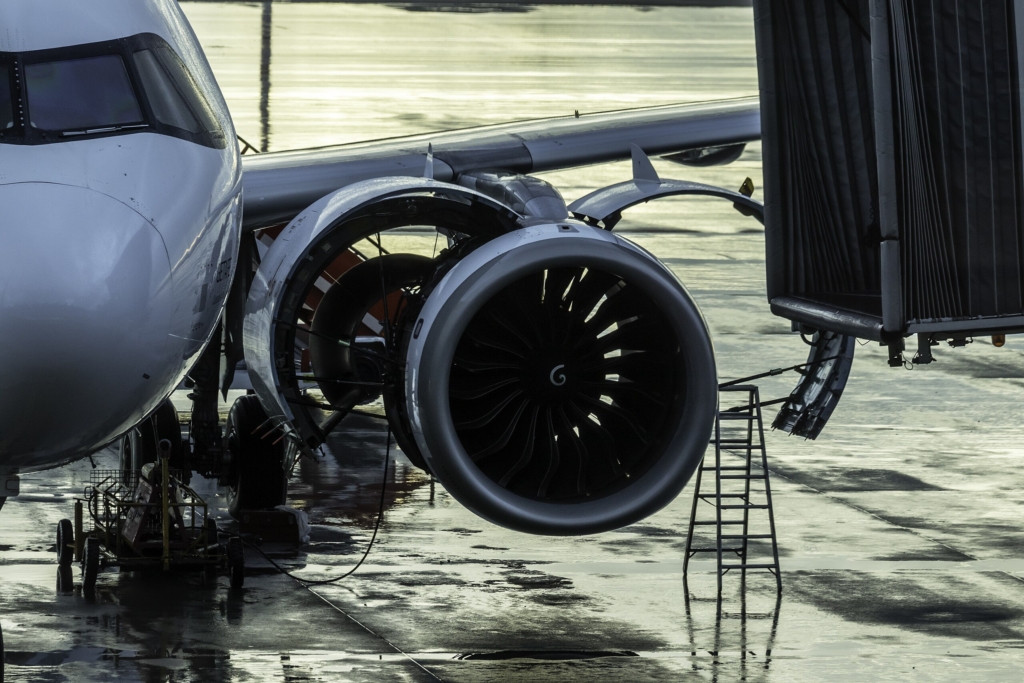
Geared turbofan (GTF) and open fan designs are more advanced types of high-bypass-ratio engines. A GTF engine features an additional planetary gear between the LP compressor and fan, enabling the two to rotate at different (optimal) speeds. The GTF technology further enhances the fuel efficiency of turbofan engines.
The open fan technology aims to significantly enhance the bypass ratio (in the range of 60:1), featuring an uncontained open fan and a smaller engine core. Irrespective of the type and configuration, turbofan engines are very large and highly fuel-efficient at high subsonic speeds.
Ramjets
A ramjet requires a forward motion of the engine to achieve combustible air. The air-breathing engine has a specially shaped duct that is open from both sides. The aircraft on which a ramjet is installed must be travelling through the air at extremely high (nearly or completely supersonic) speeds before starting the ramjet. As such, a differential propulsion system accelerates the vehicle to the desired speed.
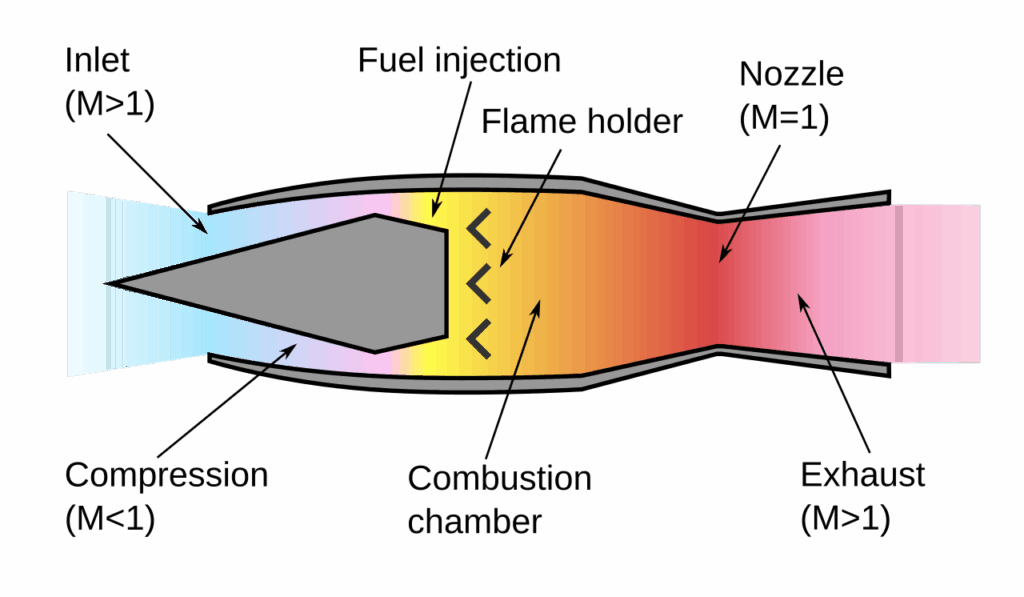
The incoming air compresses in the inlet and gets mixed with high-pressure fuel in the airstream. Highly efficient above Mach 3 (4,600 mph) speeds, ramjets can operate up to five times the speed of sound (7,400 mph). Ramjets are used in compact high-speed mechanisms, including artillery shells, missiles, and rocket-powered aeroplanes.
Featured image: Shelley Gill / Wikimedia Commons