Sustainable Aviation launches £2m greenhouse gas removals initiative to tackle aviation’s net zero gap

March 18, 2026

A leading aviation body has launched a £2 million initiative to support the development of the greenhouse gas removals (GGR) market, signalling growing recognition that emissions reductions alone will not be enough for the sector to reach net zero.
Sustainable Aviation said its proposed “Advanced Market Signal” is designed to help scale solutions that remove carbon dioxide (CO₂) and other greenhouse gases from the atmosphere, rather than simply reducing emissions at source.
The announcement, made at the Sustainable Skies World Summit 2026, comes as the industry grapples with how to remove an estimated 20–30 million tonnes of greenhouse gases annually by 2050, a gap widely seen as one of the most difficult challenges in aviation decarbonisation.
Sustainable Aviation launches £2m greenhouse gas removals initiative
Sustainable Aviation members, including airlines, airports, aerospace manufacturers and fuel producers, will invest more than £2 million to purchase GGR credits, with the aim of supporting early-stage market development.
While modest in scale, the funding is intended to stimulate demand and provide early confidence to a sector that remains nascent and capital-intensive.
The UK government has also highlighted the need to “address the supply-demand gap and rapidly scale GGRs production”, noting that stronger investment signals will be critical if the UK is to capture the economic opportunity linked to the emerging market.
Advanced Market Signal aims to scale greenhouse gas removals market
The initiative reflects a broader shift in thinking across aviation, where attention is increasingly turning to residual emissions that cannot be eliminated through sustainable aviation fuels (SAF), efficiency gains or new propulsion technologies.
Duncan McCourt, chief executive of Sustainable Aviation, said scaling GGR will be essential for “hard-to-abate sectors”, describing the Advanced Market Signal as a way for aviation to “act now” in supporting the growth of the market.
Alongside GGR, the group is also stepping up work on non-CO₂ impacts such as contrails and nitrogen oxides, areas that are gaining greater attention as the industry looks to address aviation’s full climate footprint.
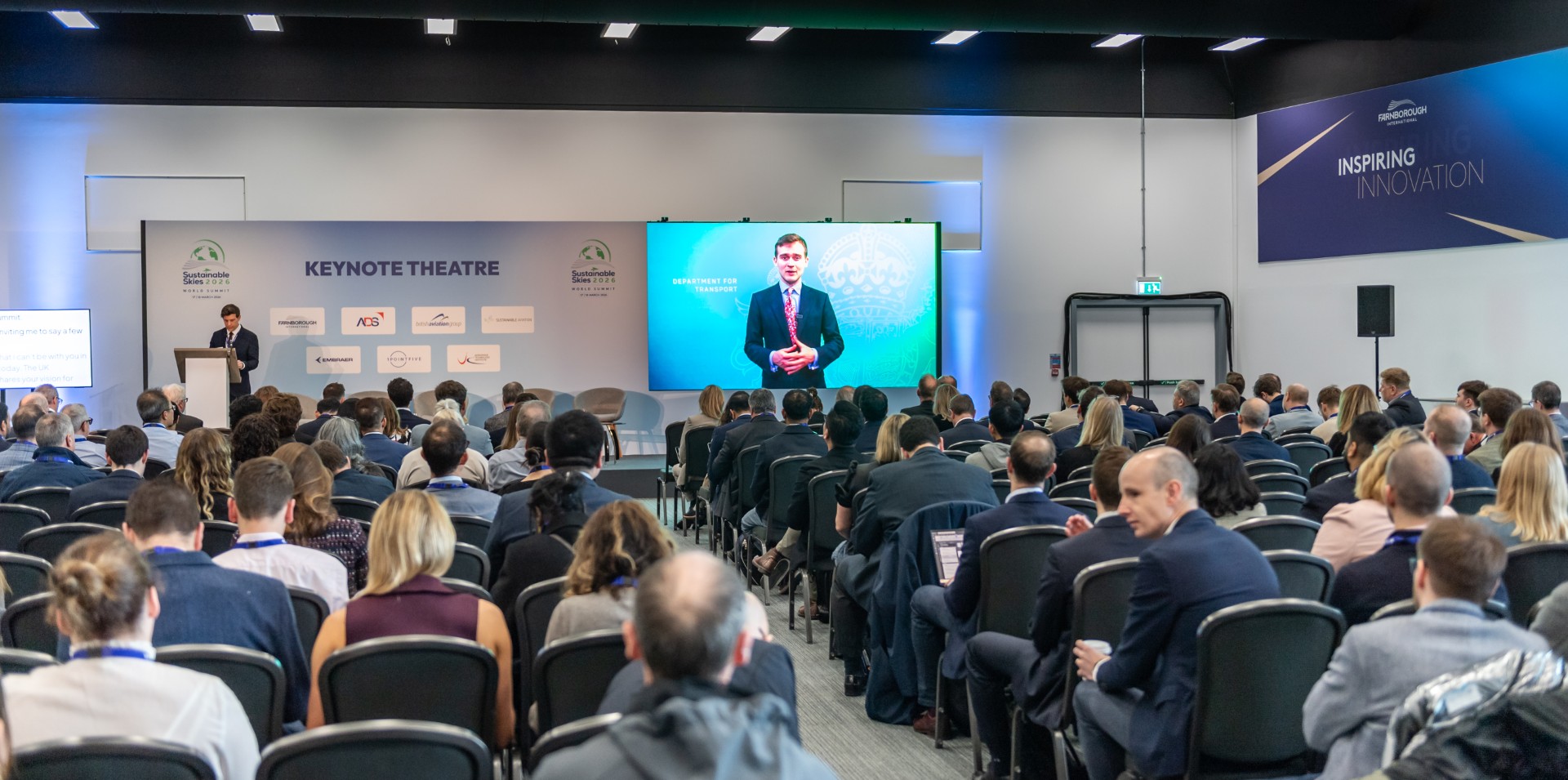
Also at the Sustainable Skies World Summit, held at Farnborough on 17–18 March, the Jet Zero Taskforce published its first annual progress report.
The report outlines progress made in 2025 across sustainable fuels, zero-emission technologies and operational efficiency, and signals what officials describe as a transition into a “delivery phase” for aviation decarbonisation.
Taken together, the initiatives underline a shift in focus from long-term ambition to practical implementation, even as major uncertainties remain around the scale, cost and availability of the technologies required to reach net zero.
Featured image: stock.adobe.com