South Korea’s KF-21 Boramae fighter jet to move from test programme to frontline service in 2026

January 5, 2026
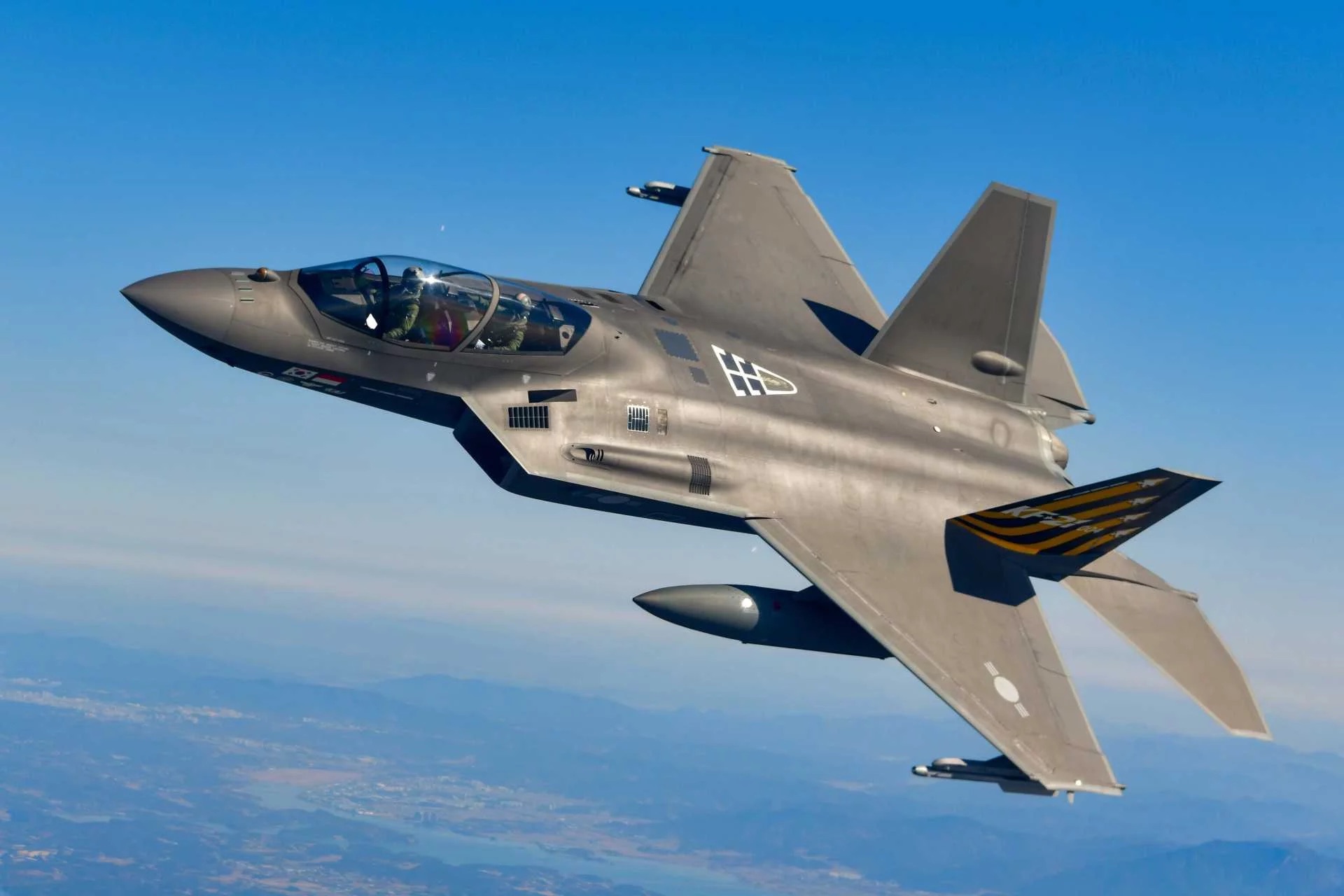
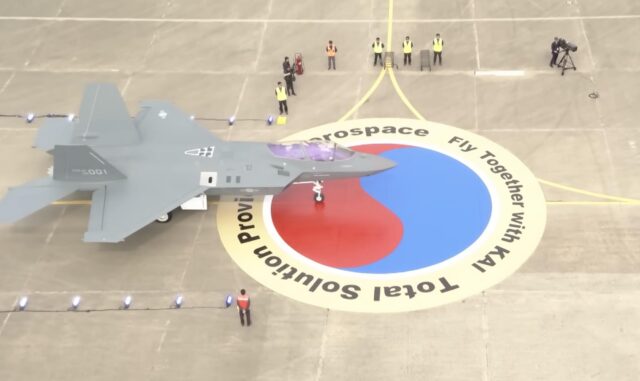
In 2026, the Republic of Korea Air Force is set to receive its first operational examples of the KF-21 Boramae, the country’s first domestically developed supersonic fighter aircraft.
The deliveries, first reported by Korea JoongAng Daily, mark the transition of the programme from development into frontline service and signal a quiet but significant shift in Seoul’s military aviation posture.
The handover of the initial production aircraft will cap one of the most complex defence programmes South Korea has ever undertaken.
Developed under the leadership of Korea Aerospace Industries, the KF-21 is intended to replace the air force’s remaining F-4 Phantom II and F-5 Tiger II fleets, both of which trace their origins to the Cold War era.
Beyond fleet renewal, the aircraft is designed to reduce long-term reliance on foreign combat aircraft and place South Korea among the small group of nations capable of designing and producing advanced fighter jets.
The KF-21 Boramae: From concept to combat aircraft
The origins of the Boramae stretch back to 2010, when the South Korean government launched what was then known as the KF-X programme.
The goal was ambitious: develop a modern multirole fighter that could sit between legacy fourth-generation aircraft and the costly fifth-generation platforms then entering service elsewhere.
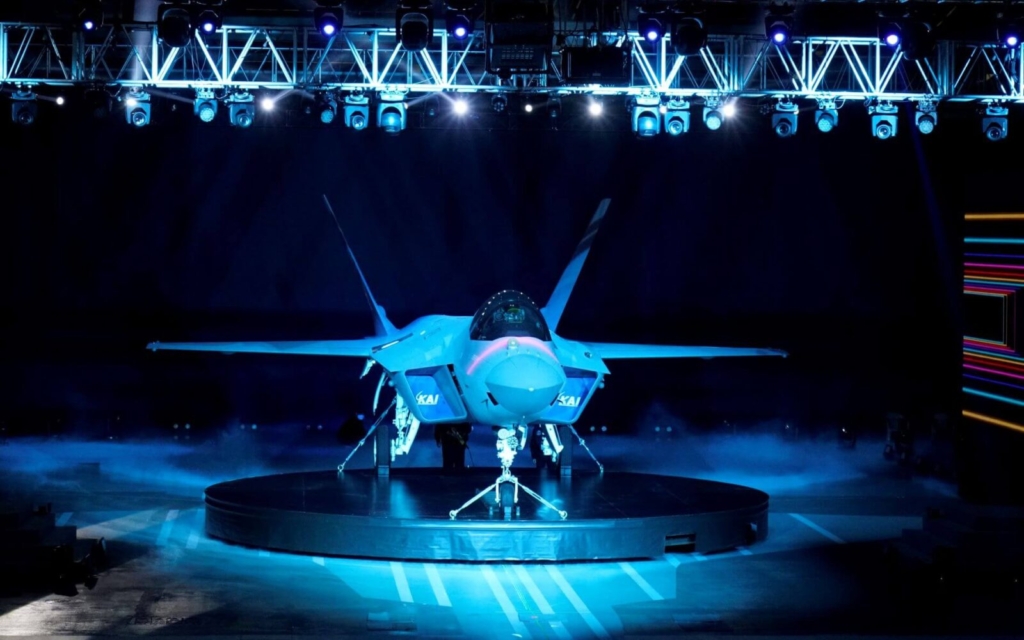
After years of design studies, wind-tunnel testing and negotiations over technology access, the programme reached a public milestone in April 2021 with the unveiling of the first prototype.
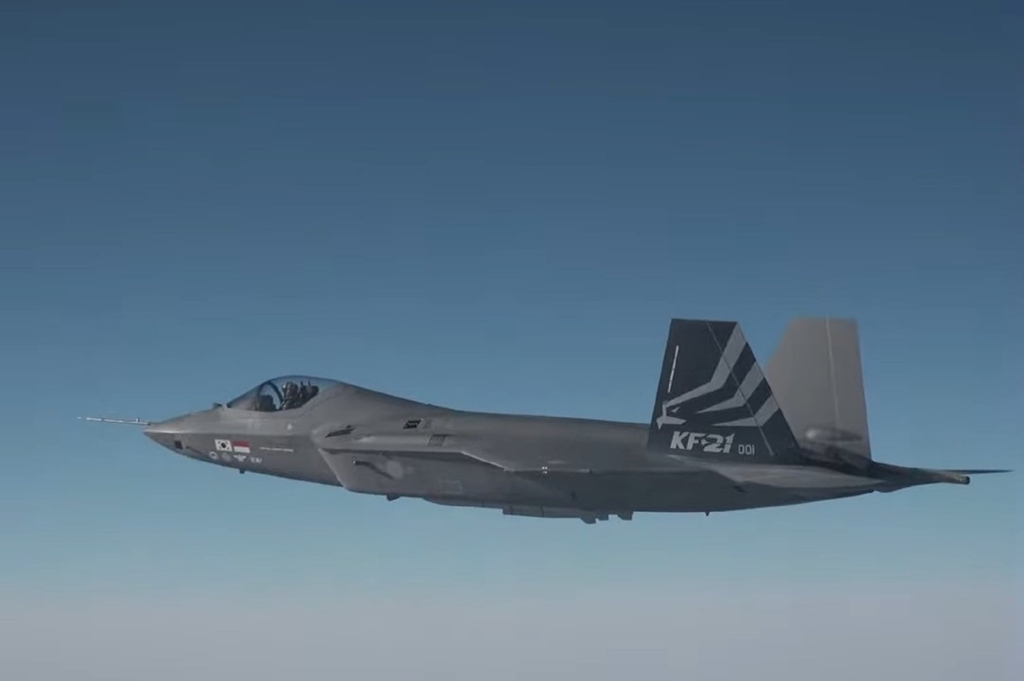
The aircraft flew for the first time in July 2022, beginning a demanding flight-test campaign that would eventually involve six prototypes and more than 2,000 flight sorties.
Those tests validated key aspects of the design, including flight handling, avionics integration, radar performance and weapons separation. They also laid the groundwork for serial production, which formally began in July 2024 with the first batch of 20 Block I aircraft.
What the KF-21 brings to South Korea’s Air Force
Classified as a 4.5-generation fighter, the KF-21 incorporates stealth-influenced shaping, advanced fly-by-wire controls and a domestically developed active electronically scanned array radar.
The radar was produced by Hanwha Systems in cooperation with South Korea’s Agency for Defense Development, following earlier refusals by the United States to transfer similar technology.
The aircraft is powered by twin General Electric F414 engines, giving it the range and redundancy required for high-intensity regional operations.
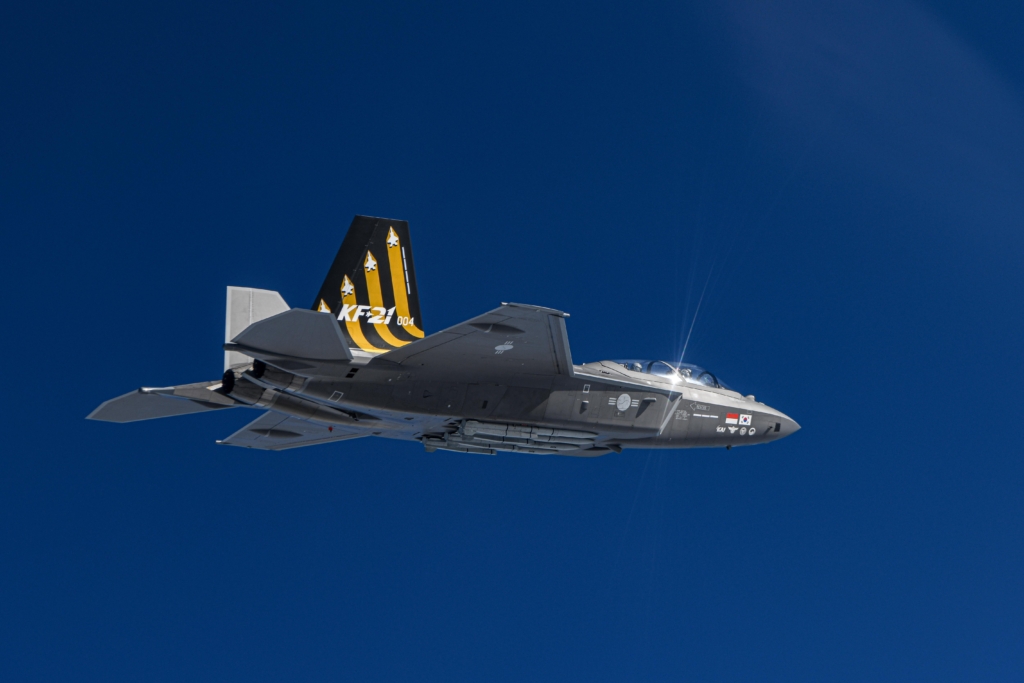
While it lacks internal weapons bays, the design emphasises flexibility and growth potential rather than full stealth, a deliberate choice reflected in both capability and cost.
Block I aircraft are optimised primarily for air-to-air and air-defence missions. A more capable Block II variant, expected later in the decade, will add full air-to-ground functionality through expanded weapons integration and mission systems.
South Korean officials have indicated that the air force plans to operate around 120 aircraft by the early 2030s.
Indicative pricing released alongside the programme places the Block I jets at roughly $83 million each, with Block II aircraft rising to about $112 million. The difference reflects mission equipment rather than changes to the underlying airframe.
The first KF-21 is complete and awaiting delivery
Final assembly of the first production-standard aircraft was completed in 2025, with acceptance testing now underway ahead of deliveries beginning in 2026.
Initial aircraft will allow the air force to reach limited operational capability, with full operational status targeted for 2028.
For the Republic of Korea Air Force, the KF-21 is positioned as a complement to, rather than a replacement for, fifth-generation platforms such as the F-35.
The aircraft is expected to shoulder much of the routine air-defence burden, freeing more advanced assets for specialised missions.
South Korea has export ambitions for the KF-21
As the programme approaches service entry, international attention has intensified.
The KF-21 sits in a segment of the market that remains in high demand: air forces seeking modern fighters with advanced sensors and networking, but without the political constraints, cost and sustainment complexity associated with fifth-generation aircraft.
Indonesia remains the only formal development partner. After years of uncertainty over funding, Jakarta and Seoul signed a revised agreement in 2025 that reduced Indonesia’s financial commitment while preserving its allocation of 48 aircraft and industrial participation. Indonesian company PT Dirgantara Indonesia is set to produce fuselage and airframe components and take part in future maintenance work.
Beyond Indonesia, countries in Southeast Asia, the Middle East and Africa have been linked to potential interest, including the Philippines, Malaysia, Poland and the United Arab Emirates. South Korea’s growing credibility as a defence exporter, built on recent sales of the K9 howitzer, K2 tank, FA-50 light fighter and T-50 trainer, has strengthened the Boramae’s export prospects.
Indigenous fighter jet programmes continue to advance
Globally, the KF-21 arrives at a moment when several indigenous fighter programmes are progressing at very different speeds.
India’s Tejas Mk1A is entering squadron service, but more advanced follow-on projects continue to face delays. Turkey’s TF-X Kaan has completed some test flying but remains some way from entering serial production.

China’s J-20 is already in service, while the FC-31 continues to mature, though transparency around performance remains limited.
Meanwhile, European sixth-generation efforts such as FCAS and GCAP remain long-term projects, with operational aircraft unlikely before the mid-2030s.
Against that backdrop, the KF-21 stands out as one of the few advanced fighters transitioning into production and service in the 2020s, positioned squarely between legacy fourth-generation jets and the high end of stealth aviation.
For South Korea, KF-21 is more than an aircraft
For South Korea, the significance of the KF-21 extends well beyond airframes and flight hours. The programme has forced the domestic industry to master complex systems integration, digital design, flight-test management and sustainment planning at a level previously reserved for established aerospace powers.
As the first aircraft prepare to enter service this year, the Boramae represents a test not just of engineering, but of ambition. Its success will be measured not only by how it performs in the skies over the Korean Peninsula, but by whether it can secure a durable place in an increasingly competitive global fighter market.
Featured image: KAI