How Royal Jordanian’s Embraer E2 ‘regional jet’ flies narrowbody missions at a fraction of the cost

November 28, 2025
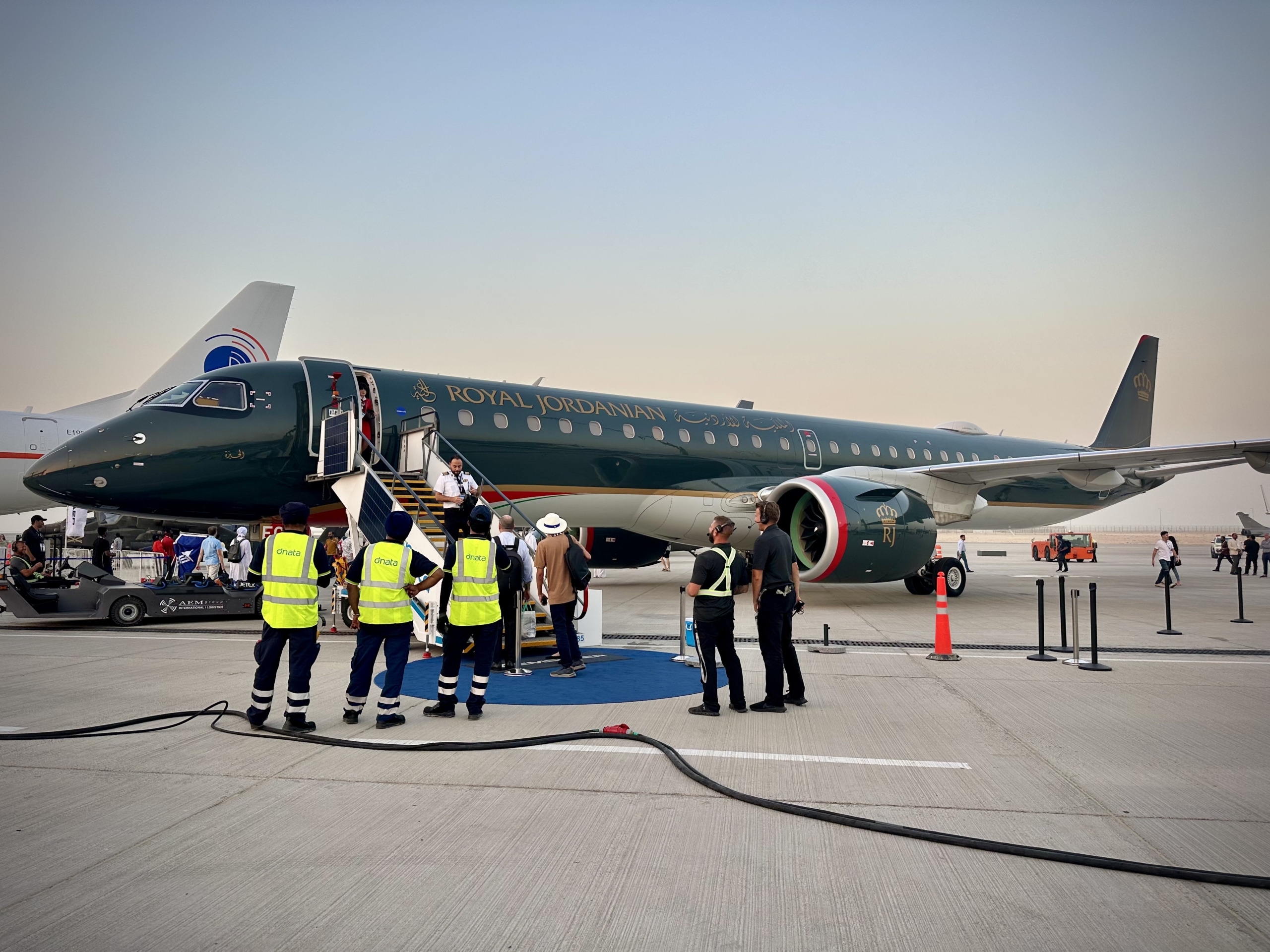
Royal Jordanian is flying the Embraer E2 harder, further and more profitably than almost any carrier in the world.
At first glance, the 120-seat E195-E2 might look like a classic regional jet, the sort typically dispatched on one-to-two-hour city pairs. But in Amman, it has quietly become a narrowbody workhorse; a platform capable of five-and-a-half-hour sectors, double-digit daily utilisation, and long, thin routes that would bleed money on an A320neo.
For a carrier reinventing itself around boutique service, inbound tourism and Levant-centric connectivity, the E2 has become something far more valuable than a fleet addition. It is the backbone of a strategy.
That strategy was laid out in unusual detail at the Dubai Airshow, where Royal Jordanian’s Chief Commercial Officer, Karim Makhlouf, spoke candidly about how the E2 fits into the airline’s transformation plan.
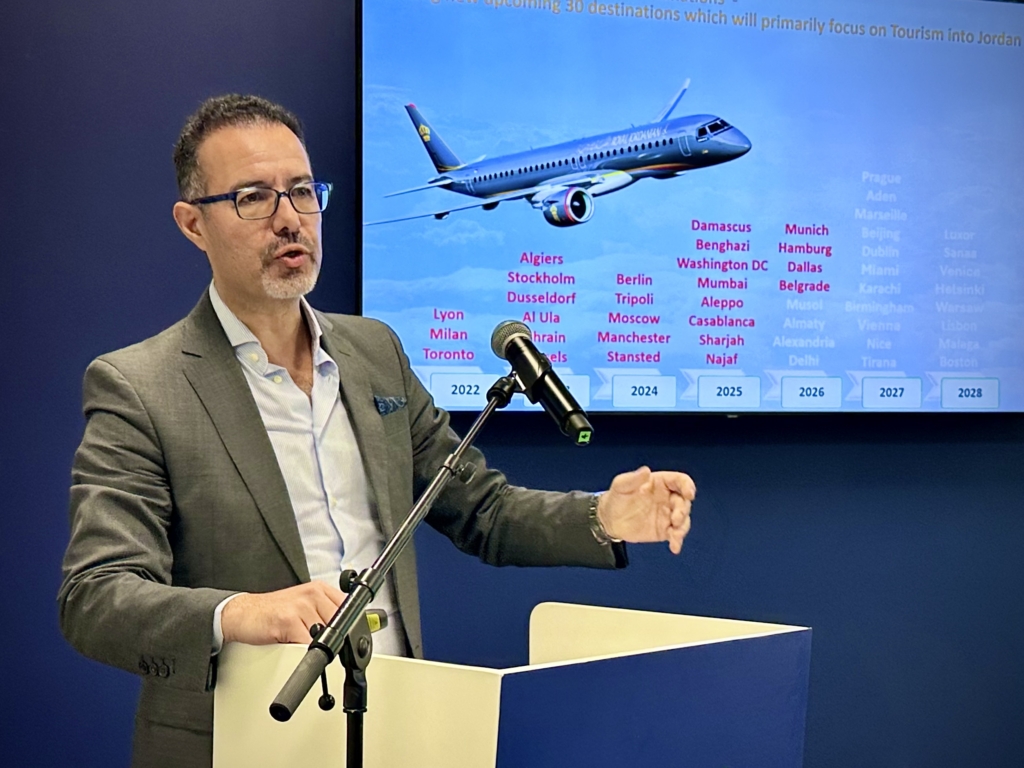
His remarks made one thing clear: the E2 is not being used the way Embraer originally imagined. Royal Jordanian is stretching it, deliberately, confidently, and with surprisingly strong results.
Discover more of our exclusive stories and interviews here
The Embraer E2: A regional jet that behaves like a narrowbody
Makhlouf does not mince words about how Royal Jordanian positions the aircraft.
“We can really say that the E2, in our configuration with 120 seats, is a narrowbody aircraft,” he told media at the show. For Royal Jordanian, this is not a marketing flourish; it is an operational truth.
The airline is now flying the E2 on sectors up to five and a half hours, including Amman–Madrid, a mission profile firmly associated with A320neo or 737-8 fleets.

“We use the aircraft up to five and a half hours… and this is a new dimension,” Makhlouf said. “Before, with an E1, you could maximum do two or three hours.”
From a passenger perspective, he insists the reception has been positive. Speaking to AGN he added: “People are maybe surprised at the beginning, but most people really like it, because it gives a nice feeling and the noise level is quite low.”
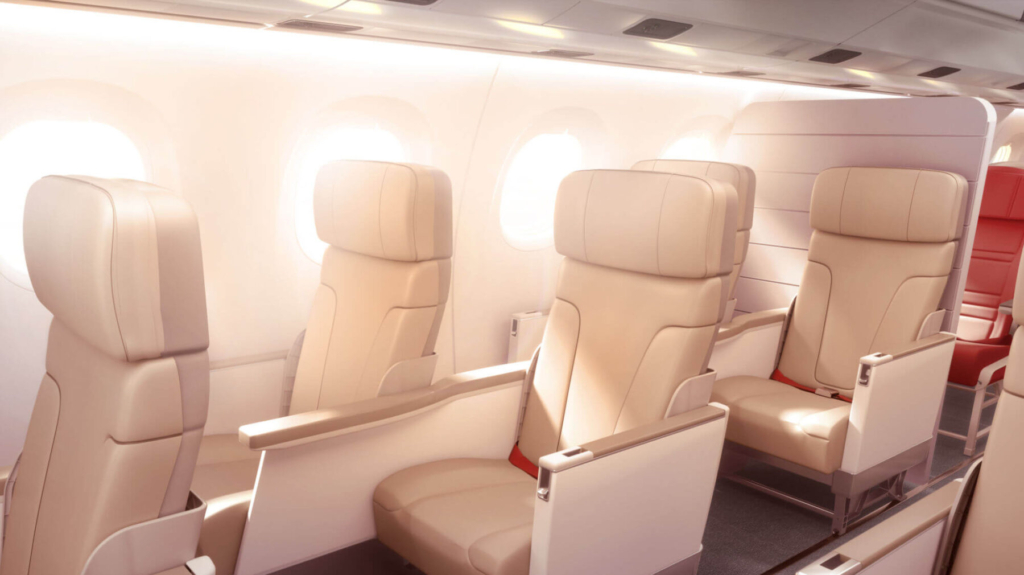
The airline launched the E2 with a modernised cabin, including staggered business seats and inflight Wi-Fi, a level of product consistency that helps the type sit naturally within Royal Jordanian’s boutique positioning.
How Royal Jordanian flies narrowbody missions at regional-jet cost
Makhlouf is adamant that the E2 delivers a structural cost advantage that the airline simply could not achieve with Airbus narrowbodies alone.
According to him, the E2 cuts trip costs by around 20% versus the A320neo on comparable missions, and around 33% versus the E1. That cost delta is transformative in the Middle East, where demand patterns are uneven, markets can be thin, and legacy narrowbodies often fly underfilled.
The operational performance is equally compelling. The E2 records 99.8% reliability in Royal Jordanian’s fleet and flies up to ten hours a day, a utilisation profile far more typical of a 737 or A320 family aircraft.
Airlines often speak about “sweating the assets”, but in this case, Royal Jordanian is sweating a right-sized jet harder and more efficiently than many large narrowbody fleets in the region.
A smooth entry into service, even with the Pratt & Whitney turbulence
The Pratt & Whitney GTF engine family has caused widespread disruption across multiple fleets globally, but Royal Jordanian’s E2 introduction avoided the worst of the turbulence.
“The GTF had a lot of problems, especially a year or two years ago,” said Makhlouf. “But I’m very happy that on our entry into service of the E2, we were quite prepared.”
Together with Pratt & Whitney, Royal Jordanian prepared its pilots, engineers and stockpiles for the introduction of the E2, and kept its E1s in reserve for times when its new aircraft would be on the ground. The results speak for themselves.
“Our last AOG is like nine months ago,” said Makhlouf. “We really managed it nicely.”

During the peak period, Royal Jordanian saw “three to four AOG days per aircraft per month”, which Makhlouf described as “manageable.”
Interestingly, long European missions actually improved GTF behaviour. Makhlouf noted that on extended cycles, “the engines relax a bit,” easing the toughest thermal and wear characteristics of the Middle Eastern environment.
That environment, of course, is among the harshest in global aviation. High temperatures, low humidity, airborne sand and significant erosion risk place sustained pressure on aircraft and engines. The fact that the E2 has achieved such a stable reliability rate in Amman’s operating conditions is more than anecdotal; it is a strong endorsement of Embraer’s durability claims.
The Embraer E2 is moving Royal Jordanian towards its ’boutique airline’ goals
Royal Jordanian uses the E2 to open routes that could never support a larger aircraft but are perfectly viable – and profitable – with the right-sized jet.
Makhlouf said the E2 had already enabled the opening of ‘a lot of routes’ this year from Amman, as part of the airline’s expansion plan. “The E2 helps you to develop new markets because it is the lowest cost narrowbody aircraft,” he noted.
The CEO praised the flexibility of the Embraer jet too, noting that it was just as comfortable “on ultra-short routes like Amman–Damascus, which is like 40 minutes, or on very long routes like Amman to Madrid, five and a half hours.”
But Royal Jordanian’s transformation plan has only just begun, and it’s incredibly ambitious.
The airline plans to double its fleet to 41 aircraft by 2028, with a long-term target of 52 aircraft by 2032. To support that growth, the airline must expand its network in a way that does not dilute yields or overextend its widebody fleet.
“Our strategy is to become a boutique airline,” Makhlouf explained. “We want to be the carrier of choice in the Levant region, offering a very personalised experience.”
He described Jordan as “super fascinating” and “very special as a country”, arguing that the airline’s growth will be driven as much by inbound tourism as by regional connectivity. “We believe Jordan is a destination by itself, so we want to promote inbound tourism,” he said.
In this model, the E2 provides exactly the kind of flexibility Royal Jordanian needs: right-sized capacity, long reach, and the economics to build frequency and choice without the financial burden of traditional narrowbodies.
A new model for Middle Eastern narrowbody operations
The Middle East is a region traditionally defined by widebody aircraft and hub-to-hub megaflows. Royal Jordanian is proving that a smaller, modern narrowbody, flown with the daily intensity of a single-aisle workhorse, can create a different kind of competitive advantage.

With long-range performance, exceptional reliability, and significantly lower trip costs than larger narrowbodies, the E2 has become a rare asset: a jet that lets Royal Jordanian grow like a network carrier, spend like a regional airline, and brand itself as a boutique operator.
For a carrier rebuilding at speed, that combination might be the most valuable runway of all.
Get all the latest commercial aviation news on AGN here.
Featured image: Joanna Bailey / AGN





![NASA's X-59 Quesst [registration N859NA '859'] is seen in-flight over California during the experimental supersonic aircraft's brief second test sortie on 21 March 2026. Image: NASA/Jim Ross](https://aerospaceglobalnews.com/wp-content/uploads/2026/03/X-59-Second-Flight-21-03-26-NASA-Jim-Ross-crop-scaled-640x0-c-default.jpg)