On this day: Concorde enters service with simultaneous takeoffs from Air France and British Airways

January 21, 2026
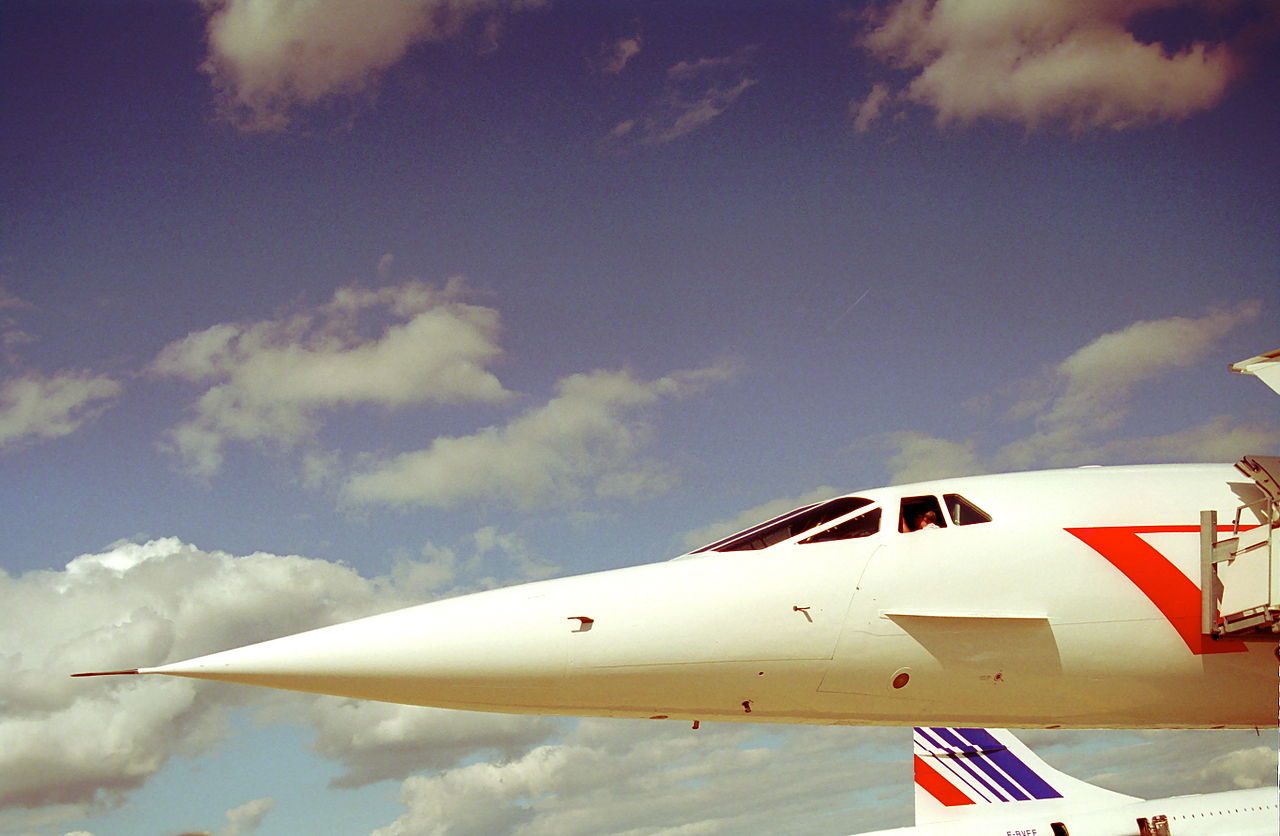
At around 11:40 on 21 January 1976, Concorde departed on its first commercial passenger flights. To mark the occasion, not one but two Concordes took off simultaneously, one from Paris Charles de Gaulle (CDG) and one from London Heathrow (LHR), heading for Rio de Janeiro and Bahrain, respectively.
The flights marked the start of 27 years of supersonic passenger air travel. Still regarded as a technical marvel nearly 23 years after its retirement, Concorde remains a cherished icon in the hearts of many aviation enthusiasts.
Aerospace Global News rewinds fifty years to examine the history of those first simultaneous flights and how they expanded the boundaries of air travel forever.
Marking 50 years since the first supersonic passenger flights
By the start of 1976, and after years of test flights and a lengthy certification process, almost everything was in place for Concorde to begin commercial services carrying fare-paying passengers.
With the necessary regulatory approvals in place from the British and French aviation authorities, British Airways and Air France could finally bring their new bird to life and begin the golden era of supersonic air travel.
With the planning process for Concorde’s entry into service stretching back several years, in October 1975, British Airways and Air France finally opened reservations for their first commercial services, which were slated to start in January of the following year.
The 21st was picked for the simultaneous commencement of flights, with both British Airways and Air France announcing the planned start of Concorde flights with much fanfare.

Despite a degree of anti-Concorde rhetoric and scepticism, anticipation was generally running high among the British and the French for the start of supersonic flights.
Concorde fares were established with the agreement of the International Air Transport Association (IATA) at the first class rate of the route on which they were to operate (Bahrain and Rio) plus a supplement of 20% to account for the time savings afforded by flying Concorde.
The USA says “no” to Concorde initially
One major obstacle which inhibited early Concorde services was the ban on Concorde using US airports – a ban which had been fuelled largely by US protest groups citing inadequate testing of the groundbreaking technology, pollution, and a fear of sonic booms damaging property.
However, many in the UK and France simply put these machinations down to jealousy that Concorde had not been produced in the US by a US-based aerospace company. Additionally, resistance from the US to allow Concorde to use its airports was also put down by some due to the cancellation of the Americans’ own supersonic transport (SST) aircraft project earlier in the decade.

Transatlantic Concorde services were intended to be the jewel in the crown for both airlines, with flights to Washington and New York JFK becoming Concorde’s flagship routes. Additionally, the aircraft had been specifically designed for these routes in terms of passenger capacity and range. The routes would not only be iconic in terms of prestige but also were forecast to be the most lucrative for both carriers.
Non-US flights needed to commence supersonic services
Without the approval to fly routes to the US, Concorde was at risk of becoming a sleek, advanced, but extremely expensive white elephant. With this in mind, both British Airways and Air France needed to find alternative routes for Concorde’s inaugural services.
Air France decided on a Paris to Rio de Janeiro route, which would feature a refuelling stop in Dakar, Senegal. This route had a lower traffic density than services to New York, but it proved to be sufficiently busy in the early days to justify it. Air France launched its first supersonic flights to Rio de Janeiro (GIG), via Dakar (DKR) on 21 January 1976 with two weekly flights using flight numbers AF025/026.
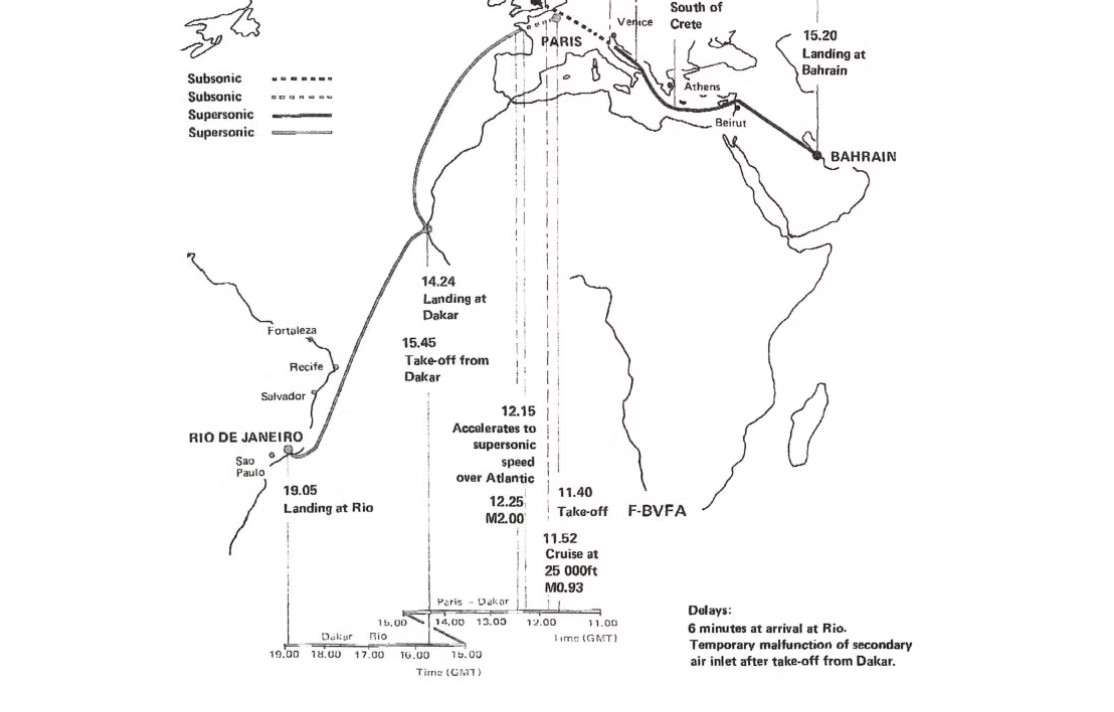
British Airways would open its own Concorde operations with the sub-optimal London to Bahrain service. This service would be a particularly tricky route for Concorde as it involved a long subsonic leg over mainland Europe, a curved supersonic dash over the eastern Mediterranean and then a need for precise navigation through a narrow corridor of airspace over the unstable Middle East.
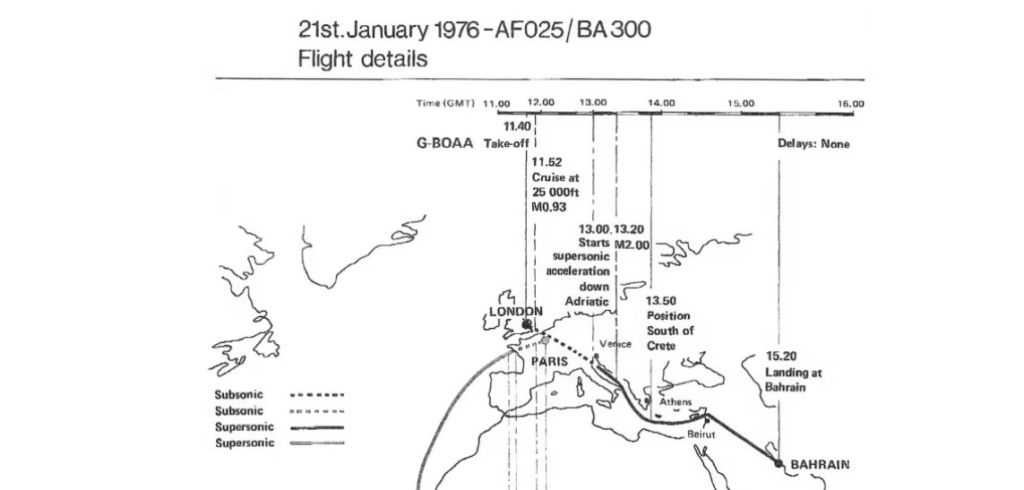
Yet, despite this, Concorde would still manage to complete the flight in just four hours compared to a subsonic aircraft, which took 6.5 hours to complete the same route. British Airways started its Bahrain supersonic services using flight number BA300. The plan at British Airways was that Bahrain service would eventually become part of a route that would take Concorde to Singapore and then onto Australia.
The day of the first flights arrives – 21 January 1976
With the planning all completed and revenue passengers booked, everything was in place for the start of supersonic air travel. At Paris-CDG airport and at London-Heathrow Airport on 21 January 1976 at 11:40, Air France Concorde F-BVFA and British Airways Concorde G-BOAA took off simultaneously in a set piece move that was filmed and shown live on television.
British Airways Concorde G-BOAA was crewed by Captain Norman Todd (who commanded the outward leg), Captain Brian Calvert (who would command the inbound leg), along with flight engineer Bob Lidiard.
Due to Civil Aviation Authority regulations surrounding the certification of the aircraft, a BAC observer had to be carried in the cockpit for the first seven commercial flights. For this first flight, it was Brian Turbshaw, the chief UK test pilot at BAC, who would act in this capacity.
Onboard G-BOAA was a sprinkling of the higher echelons of British society, as well as dignitaries from the British government and the aviation industry. These included HRH the Duke of Kent, Peter Shore, the UK Secretary of State for Trade and Sir George Edwards, the chairman of BAC.
Meanwhile, in Paris, F-BVFA also took off at 11:40, following its prescribed route to the western edge of Africa for the technical stop at Dakar, where it landed at 14:24 local time. While the aircraft was on the ground in Dakar, the first British Airways flight operated by G-BOAA arrived on time at Bahrain at 15:20 local time.
Le 21 janvier 1976, Air France effectuait son premier vol commercial en Concorde, à destination de Dakar et Rio de Janeiro.
— Air France Newsroom (@AFnewsroom) January 20, 2026
Cinquante ans plus tard, la compagnie célèbre cet héritage d’excellence, devenu mythique dans l’aviation française. https://t.co/WotF9hlPUV pic.twitter.com/6D7vBIFFgr
Air France flight AF025 then took off from Dakar at 15:45 for its final leg of the flight to Rio De Janeiro and arrived at its destination shortly after 19:00. Like the British Airways inaugural flight, F-BVFA was carrying several French government officials as well as higher-ranking individuals from the French aviation industry.
Inaugural flights were both safely completed
The inaugural flights were both safely completed and went entirely according to plan. Congratulatory messages were issued by the Queen of England and the French President to all those involved in getting the Concorde program this far.
January 21 1976 – Concorde´s 1st commercial Flight with Air France, connecting Paris to Dakar and Rio de Janeiro. Here is a video of the unmistakable SST landing in Brazil (Date unknown, likely from a 70s movie) pic.twitter.com/ZJFXhA262e
— Air Safety #OTD by Francisco Cunha (@OnDisasters) January 20, 2026
In her message, the Queen wrote, “On the occasion of today’s inaugural flight by Concorde aircraft of Air France and British Airways, I send you and the French people my warmest congratulations. Today’s flights mark the successful outcome of 14 years of close collaboration between our two nations. It is a source of pride that our countries have today inaugurated a new era in civil aviation.”
The US finally capitulates on Concorde
On 4 February 1976, just weeks after the Bahrain and Rio flights had commenced, the combined and exhaustive efforts of the UK and French governments, as well as British Airways, Air France and Concorde’s constructors to obtain landing rights at US airports for Concorde were rewarded by the US Secretary of Transportation, William T. Coleman.
The initial US approval would see British Airways and Air France operate two services per day to New York and one service per day to Washington for a trial period of 16 months. However, that was not the end of the matter.
Washington-Dulles Airport was operated by the Federal Aviation Administration (FAA), which was linked to the US Department of Transportation. However, as New York JFK Airport was owned by the Port Authority of New York, they continued to refuse landing rights to Concorde despite the Transportation Secretary’s ruling.
Additionally, despite flightpaths taking Concorde away from built-up areas around Long Island on its approach into JFK, the local community remained highly vocal against allowing Concorde to land there.
Concorde flights to Washington begin
With the necessary approval secured, flights between London and Paris to Washington-Dulles began on 24 May 1976. On that day, as with the first day of Concorde operations back in January 1976, both aircraft were planned to leave London and Paris at around the same time so that they would reach Washington simultaneously.
Upon landing, the two aircraft were ceremoniously taxied around the airport. Then they were parked nose to nose for a photo shoot, with both aircraft raising their noses and visors in a synchronised salute to the American people.
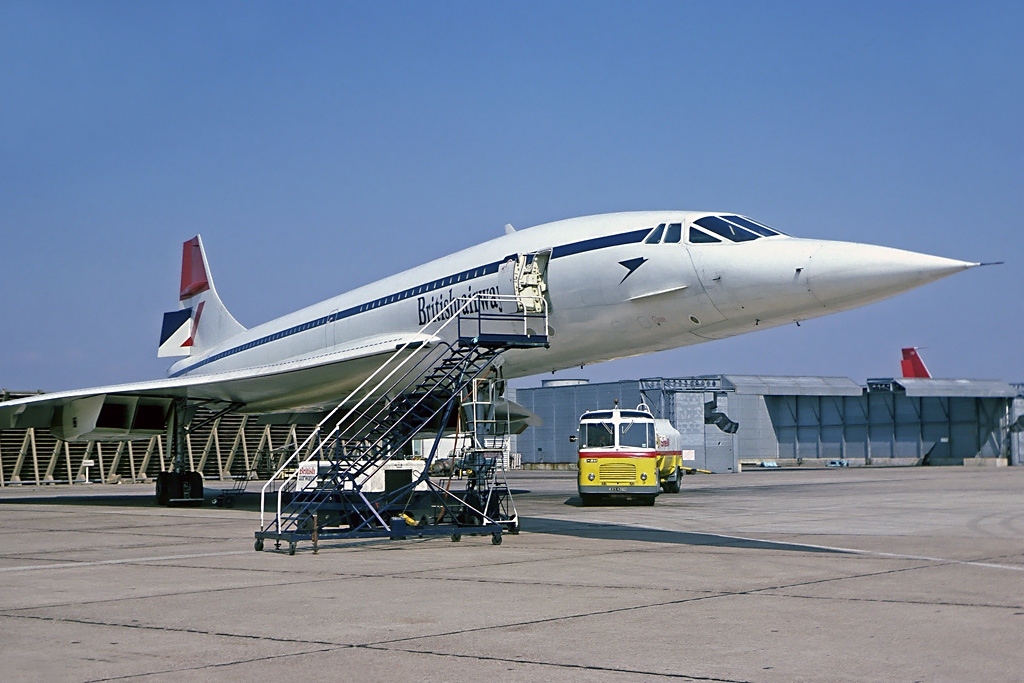
A special descent procedure was developed in order to comply with height restrictions into Washington, to comply with certain danger areas and to meet subsonic speeds after the supersonic ocean leg.
Flights would follow to New York JFK – eventually
Banning flights in and out of New York’s JFK was immediately challenged by the two airlines, which filed a lawsuit questioning the Authority’s right to do so. In response, the Port Authority of New York set out a requirement for the airlines to conduct a six-month study of Concorde noise at Washington, London and Paris.
This was despite data that was already readily available from Concorde’s flight test process, obtained from noise trials carried out at Casablanca (Morocco), leading to accusations of political manoeuvring being made by the two carriers.
British Airways and Air France subsequently produced a huge manual covering all known noise data noise assessments, which showed that normal take-off flights from Runway 31 Left or 22 Right at JFK would produce a noise pattern similar to that of a standard Boeing 707-320B, which already met New York’s JFK noise criteria.
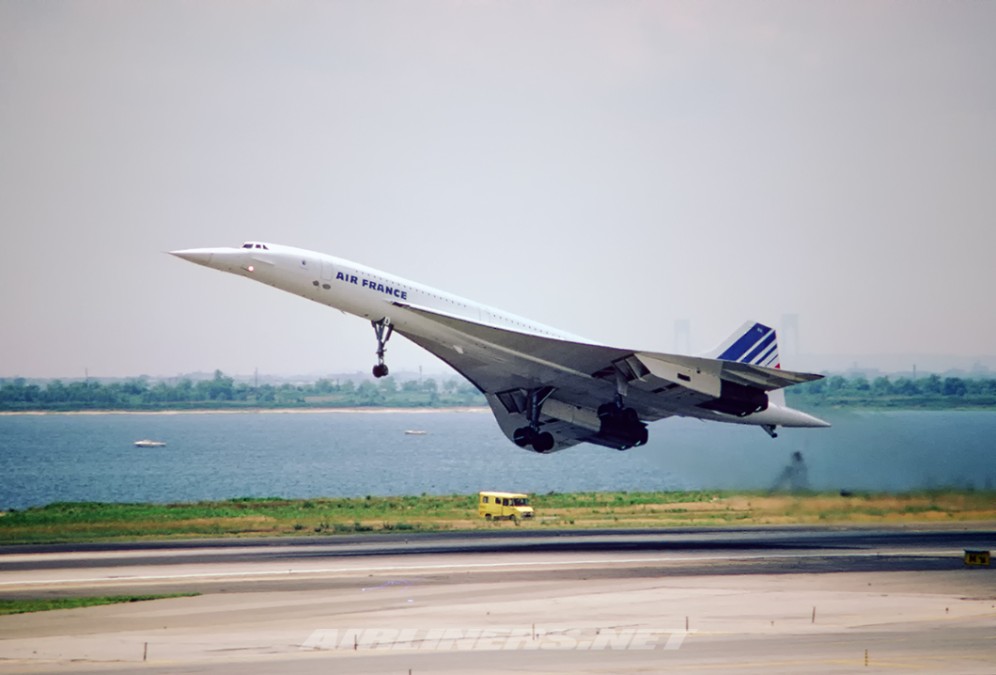
Then, in 1977, a US judge sitting at the Federal District Court ruled that the JFK ban on Concorde was illegal and should be lifted because banning the aircraft on noise grounds was “discriminatory, arbitrary and unreasonable”.
With restrictions finally lifted, regular Concorde services to JFK were preceded by a proving flight by the first production aircraft 201 (F-WTSB), on 19 October 1977. A joint crew from British Aerospace and Aerospatiale operated the flight, which was very much a test as the aircraft was subject to intense noise monitoring and measuring.
By using a carefully planned noise abatement procedure on take-off, the Concorde was able to keep its perceived noise down to a level which satisfied all but the most ardent of the protesters who were in attendance.
Regular Concorde services began to New York JFK on 22 November 1977, and both British Airways and Air France maintained services continuously to the city until late 2003, when all remaining Concorde were finally withdrawn from service and retired.
JFK became the mainstay for Concorde throughout the 1980s and 1990s
As was planned from the outset, JFK became the focal destination for Concorde throughout the two decades it was in service. The city would see up to four flights per day, with both British Airways and Air France offering twice daily flights.
With flights to New York reaching their peak in the early 1908s, along with the lengthy maintenance spells required after each Concorde transatlantic trip, other flights by the supersonic airliner were eventually cut back.
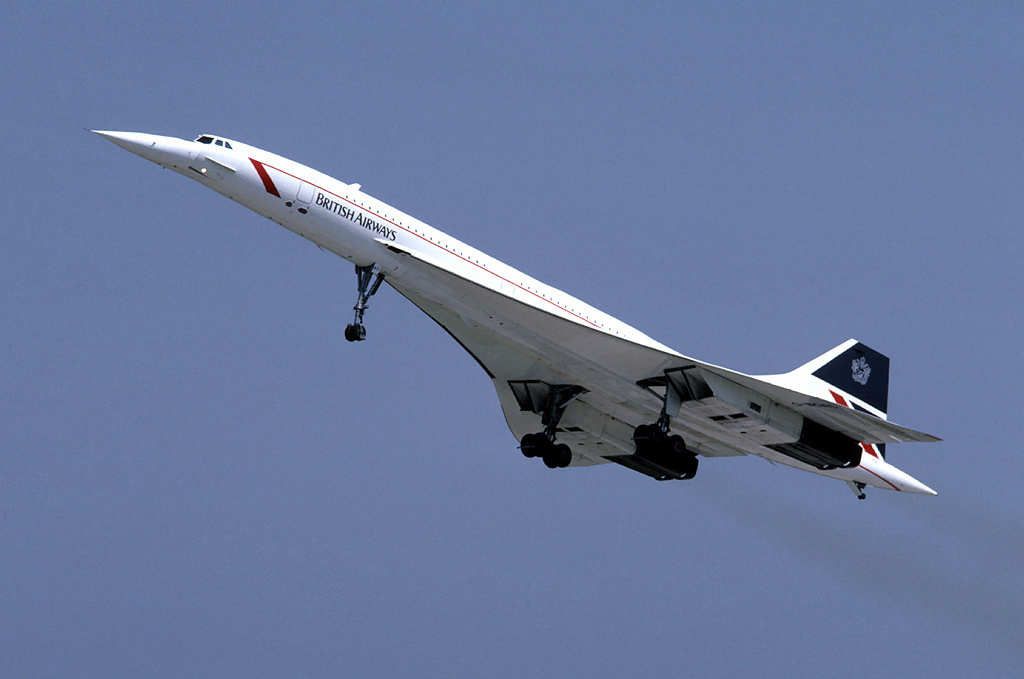
British Airways ended Concorde services to Bahrain in November 1980, while Air France discontinued its services to South America in 1982. Additionally, brief partnerships with Braniff Airways in the US to Dallas and Singapore Airlines to Singapore Changi Airport were also short-lived.
The London to Washington service by British Airways was to last until October 1994. By this time, an onward leg to Miami had been tagged onto the London to Washington flights, although these ended in 1991. Air France ended their Paris to Washington Concorde services in 1982.
Marking the 50th anniversary of Concorde’s first passenger flights
To mark the occasion of the 50th anniversary of Concorde’s first passenger flights, three retired Concorde aircraft will simultaneously lower their noses in salute to the passing of five decades since the type first carried revenue passengers.
The Concordes restored and on display at Aerospace Bristol (G-BOAF), the Runway Visitor Park at Manchester Airport (G-BOAC), and the Imperial War Museum Duxford (G-AXDN) will all drop their noses for visitors at 11:40, just as fans of the supersonic airliner all around the world celebrate Concorde’s entry into service 50 years ago.
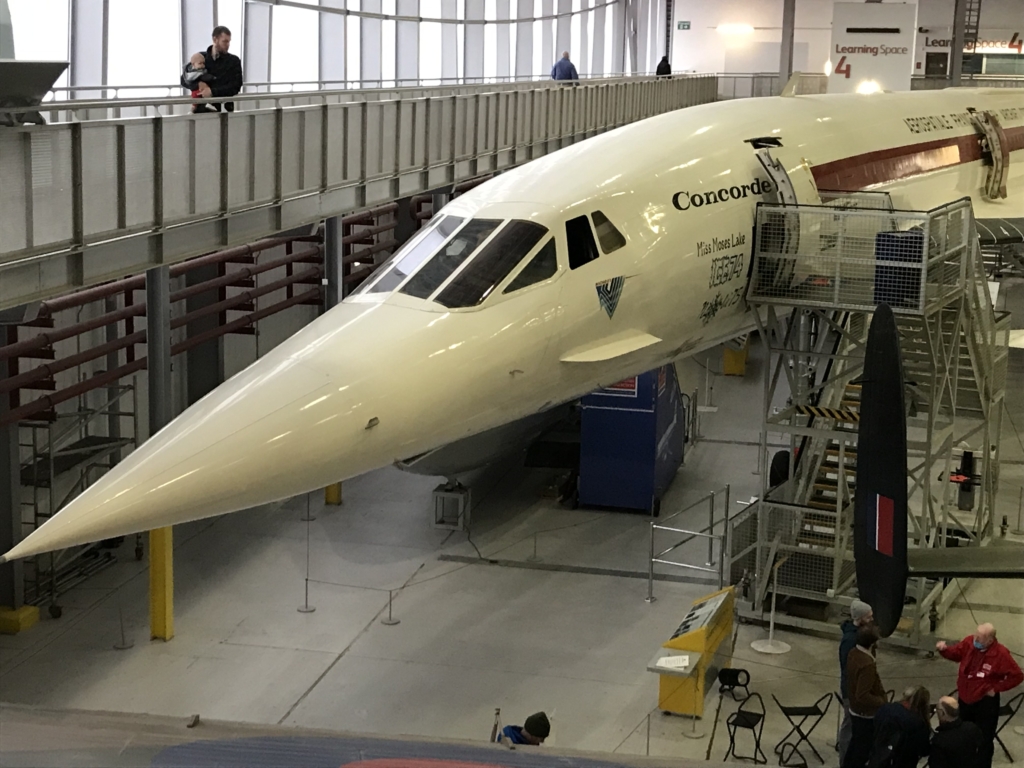
Concorde, although having been in retirement for almost 23 years, continues to enjoy iconic status among all those who see her. Even in her heyday, she was referred to differently.
Rather than observers stating that “there is a Boeing 747” or “look, a Douglas DC-10,” people would only ever refer to Concorde in the singular, as if there was only one. “Wow, there’s Concorde,” they would shout. Surely the mark of an undisputed flying legend.
Featured image: Aero Icarus / Wikimedia Commons