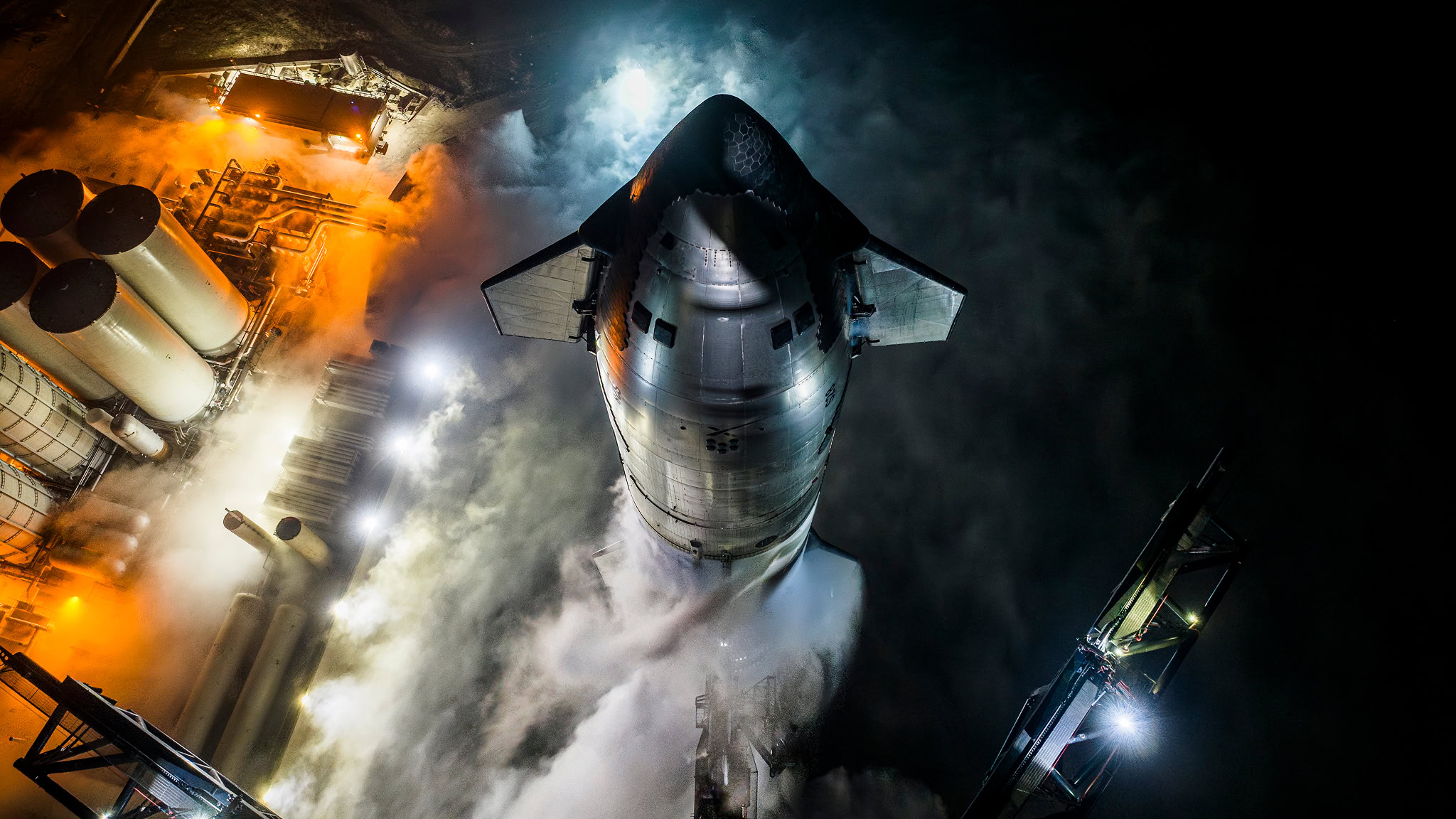
New Glenn success reshapes the commercial space race between Blue Origin and SpaceX

November 23, 2025
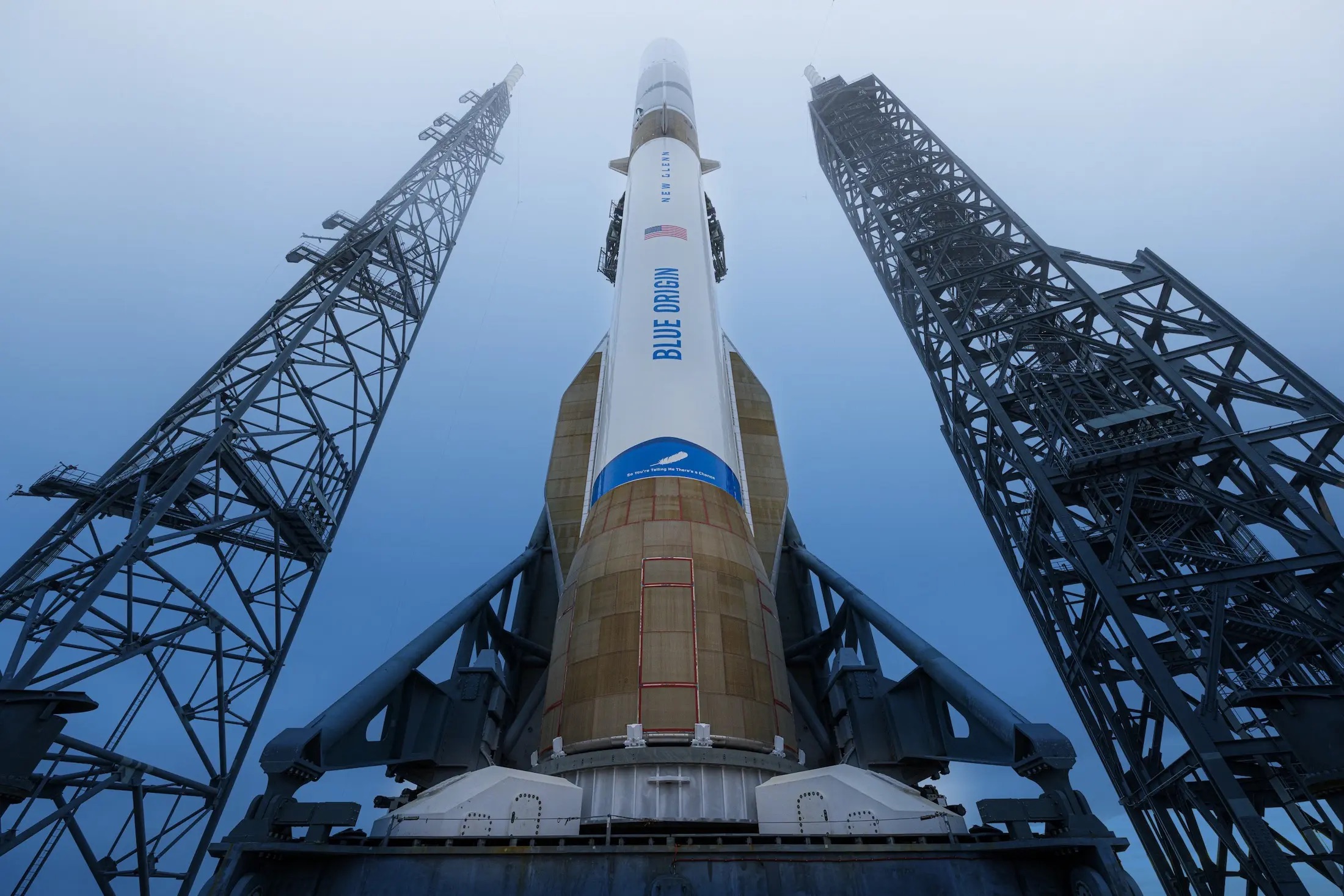
Two days after Blue Origin pulled off the most important launch in its twenty-five-year history, the aftershocks are still rippling through the space industry.
The 13 November flight of the New Glenn rocket, and crucially its flawless first-stage landing, has shifted the long-running rivalry between Jeff Bezos and Elon Musk into a sharper, more competitive phase.
For the first time, Blue Origin has delivered an orbital mission for NASA, recovered a heavy-lift booster at sea and demonstrated ambitions extending far beyond sub-orbital tourism. And with NASA reopening bids for its crewed lunar landing architecture, a programme SpaceX once looked set to dominate, the implications are immediate and difficult to ignore.
As one industry analyst observed, “This was the moment Blue Origin was waiting for… it showed its might to SpaceX.”
SpaceX vs Blue Origin: a rivalry sharpened by opportunity
Competition between the two companies has always been intense, but the stakes are changing fast. NASA had originally expected to lean heavily on SpaceX’s Starship for late-2020s lunar missions.
Development delays, high-profile test failures and schedule concerns have forced the agency to widen the field, creating the opening Bezos has been pursuing for more than a decade.
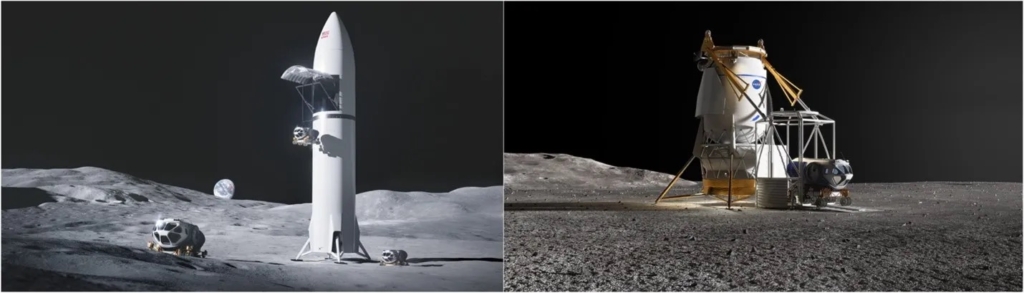
NASA and its partners are preparing for sustained exploration of the lunar surface under the Artemis programme. As part of that effort, NASA intends to award Blue Origin and SpaceX additional work under their existing contracts to develop cargo landers capable of delivering major equipment to the Moon.
The agency expects to assign demonstration missions to both companies to mature the designs of these large cargo landers, building on the 2023 request for cargo versions of their human landing systems now under development for Artemis III, IV and V.
“Damn that was exciting!” wrote Jared Isaacman, a close Musk ally and NASA administrator-designate under the Trump White House, as he congratulated Blue Origin on X.
Damn that was exciting! Congrats @blueorigin, @JeffBezos @davill and the @NASA team on the ESCAPADE launch and sticking the landing! pic.twitter.com/eEFkVGSryl
— Jared Isaacman (@rookisaacman) November 13, 2025
Musk himself added a public note of respect: “Congratulations @JeffBezos and the @BlueOrigin team!”
The praise was genuine, but also an acknowledgement: New Glenn has now entered the same league as Falcon Heavy and, in time, Starship.
New Glenn launch overcame weather delays and a major solar storm
The build-up to launch was almost as dramatic as the flight. Blue Origin scrubbed an attempt on the Sunday before due to poor weather at Cape Canaveral, then stood down again on Wednesday because of a powerful solar storm sweeping through Earth’s orbit.
The irony was obvious: the very conditions NASA’s ESCAPADE mission intends to study around Mars were disrupting its route off the launch pad.
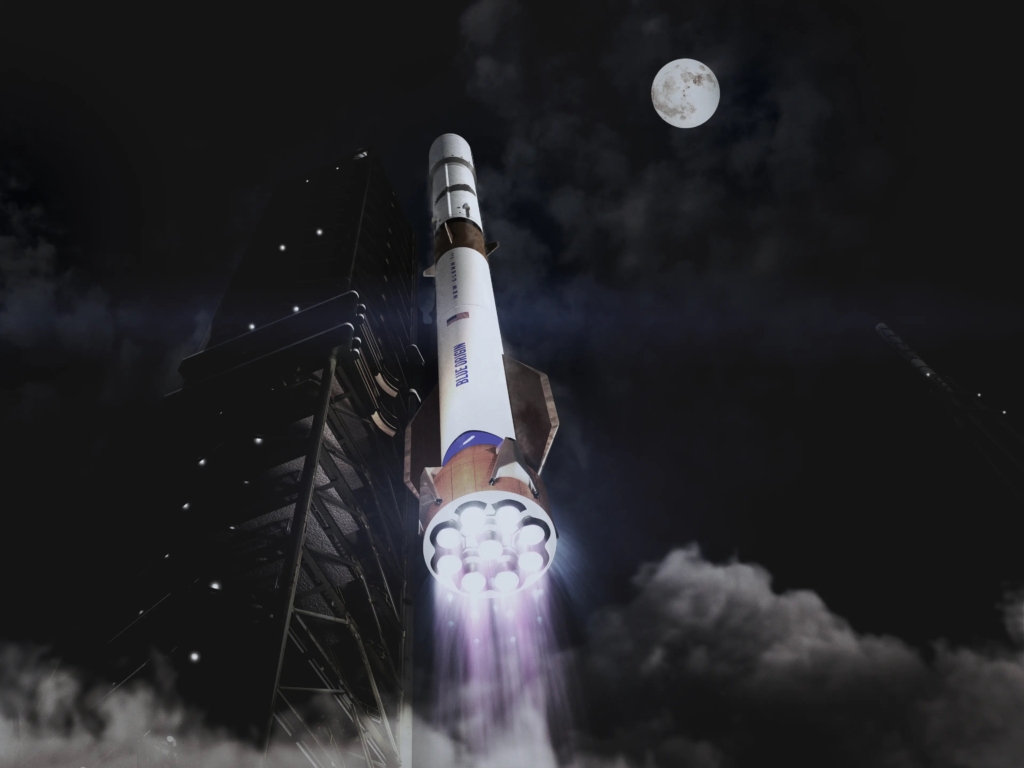
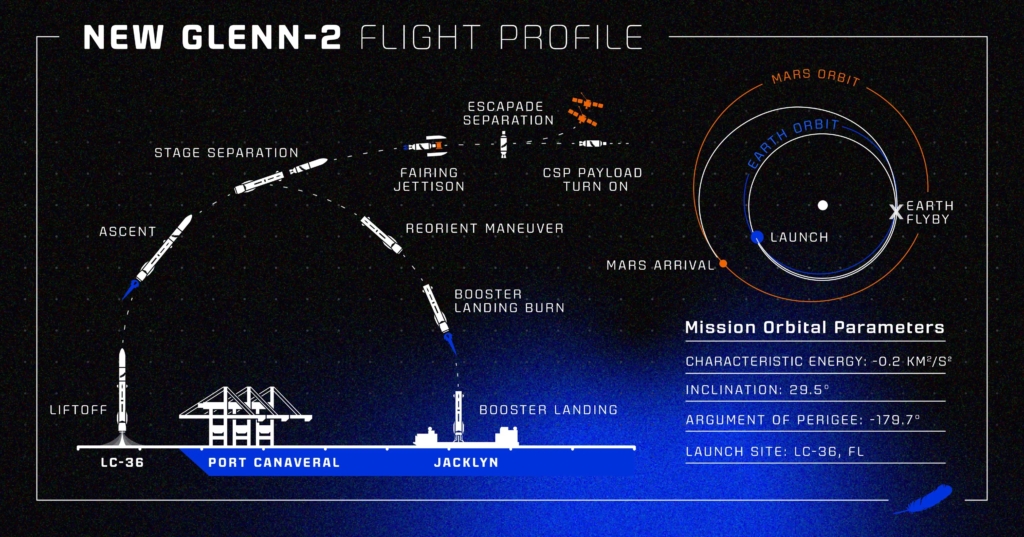
By Thursday afternoon, the conditions finally aligned. At 3:55 p.m. Eastern Time, the 98-metre-tall New Glenn lifted from Launch Complex 36, carrying the twin ESCAPADE spacecraft and a small Viasat communications payload.
Minutes later, Blue Origin achieved the milestone that had eluded it for years.
The reusable booster — christened Never Tell Me the Odds, in homage to The Empire Strikes Back — descended through cloud and touched down on the droneship Jacklyn in the Atlantic. Applause erupted inside mission control as the screen confirmed touchdown.
Until now, only SpaceX had landed an orbital-class booster.
What the New Glenn landing proves about Blue Origin’s BE-4 engines
Thursday’s flight was New Glenn’s second. The debut mission in January reached orbit and completed tests, but the booster was lost on descent.
This landing provided the missing proof point:
- The BE-4 engines now show the consistency required for NASA missions
The same engines power ULA’s Vulcan Centaur, critical for US national-security launches. - The heavy-lift booster recovery system works
New Glenn now sits ahead of every US launcher except Falcon 9 and Falcon Heavy. - Blue Origin can credibly bid for long-term NASA work
NASA paid about $18 million for Thursday’s launch — modest for a science payload — but performance, not price, was the story.
Blue Origin chief executive Dave Limp said: “We achieved full mission success today, and I am so proud of the team.”
NASA’s ESCAPADE: Two small spacecraft with a big mission
NASA’s ESCAPADE mission may not draw headlines like Perseverance, but it is scientifically significant. The twin spacecraft — Blue and Gold — built by Rocket Lab with instruments from UC Berkeley, will study how the solar wind interacts with Mars’ atmosphere and magnetic field.
Because Earth and Mars are currently on opposite sides of the Sun, ESCAPADE will not head directly there. It will first park near the Earth–Sun L2 point, then slingshot past Earth in 2026 before heading for Mars. Arrival is expected in September 2027.
Operating two identical spacecraft in coordinated orbits will offer simultaneous measurements — something scientists have never had before.
The same solar storm that produced vivid auroras across Europe and North America posed risks to ESCAPADE during early commissioning. Elevated radiation levels could have damaged instruments, prompting NASA to wait.
| Category | Details |
|---|---|
| Nation | United States of America (USA) |
| Mission Location | Mars |
| Spacecraft | ESCAPADE (two identical orbiters) |
| Spacecraft Mass |
Dry: 209 kilograms (460 pounds) each Fueled: 535 kilograms (1,179 pounds) each |
| Launch Vehicle | Blue Origin New Glenn 2 |
| Launch Date and Time | 13 November 2025, 3:55 p.m. EST |
| Launch Site | Launch Complex 36, Cape Canaveral Space Force Station |
| Mission Duration |
Prime Science Mission: 11 months Total (including cruise phases): 3 years, 7 months |
| Scientific Instruments |
Electrostatic Analyzer (UC Berkeley) Magnetometer (NASA Goddard) Langmuir Probe (Embry-Riddle Aeronautical University) |
| Student Instruments | Visible and Infrared Cameras (Northern Arizona University) |
Joseph Westlake, a heliophysicist at NASA, explained during the webcast: “The spacecraft first need to find a benign, safe parking orbit so they can make their initial measurements here near Earth.” Only once the storm passed did NASA give the green light.
A step into a different future for Blue Origin
Blue Origin has long lived in SpaceX’s shadow. Until this year, its only operational vehicle was New Shepard, a sub-orbital capsule for tourism and microgravity experiments.
Meanwhile, SpaceX has completed nearly 280 Falcon launches in two years, operates the dominant Starlink network and is testing the fully reusable Starship system.
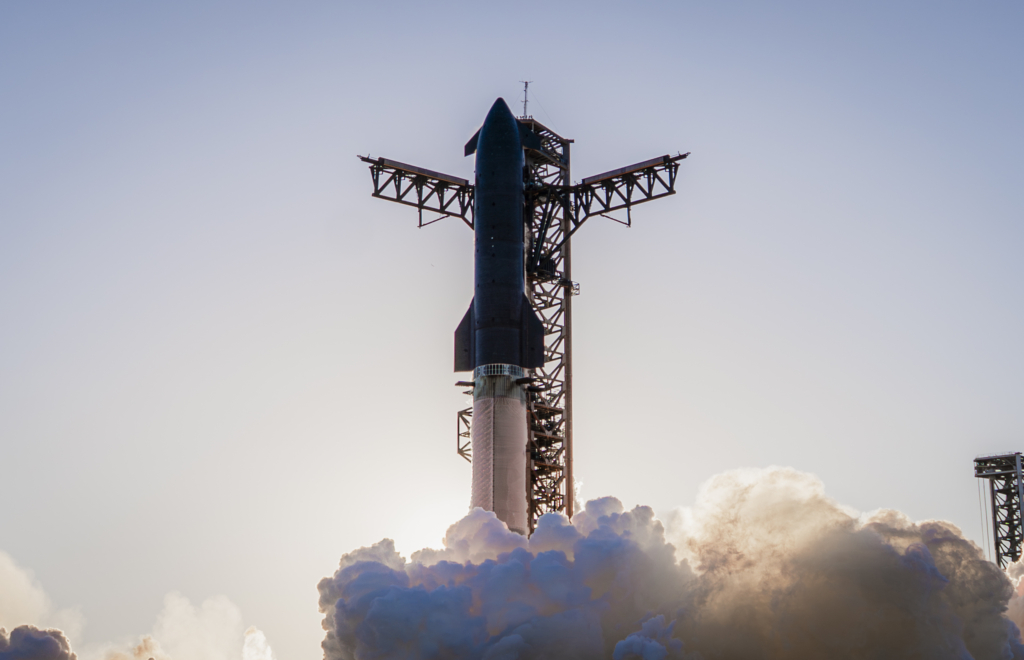
The 13 November mission does not erase that gap — but it narrows it. Delivering NASA spacecraft, carrying a commercial payload and recovering a booster on a single mission demonstrates Blue Origin can operate at the scale expected of a national launch provider.
George Nield, a former FAA associate administrator and early Blue Origin passenger, called the launch an “indicator” of the company’s maturity.
What New Glenn’s success means for NASA’s Artemis lunar lander plans
With political pressure mounting to accelerate Artemis and outpace China, NASA’s strategy is shifting. Starship remains central, but delays and performance uncertainties have forced the agency to diversify.
Blue Origin’s success arrives at the perfect moment. The company is already developing a crewed lunar lander as part of NASA’s multi-contract architecture. Thursday’s mission strengthens its claim that it can deliver.
Two years ago, the idea of Blue Origin matching SpaceX in orbital capability seemed distant. Today, after a New Glenn booster settled onto a barge named after Jeff Bezos’ mother, the picture looks different.
SpaceX still dominates launch cadence, satellite infrastructure and deep-space systems. But for the first time, the competition feels real.
Blue Origin will need repeated successes to prove Thursday wasn’t a singular triumph. But as analysts assess the implications, one conclusion stands out clearly:
The commercial space race between Musk and Bezos has now truly begun.