LaGuardia crash draws attention to pressure on US air traffic controllers and near-misses

March 24, 2026
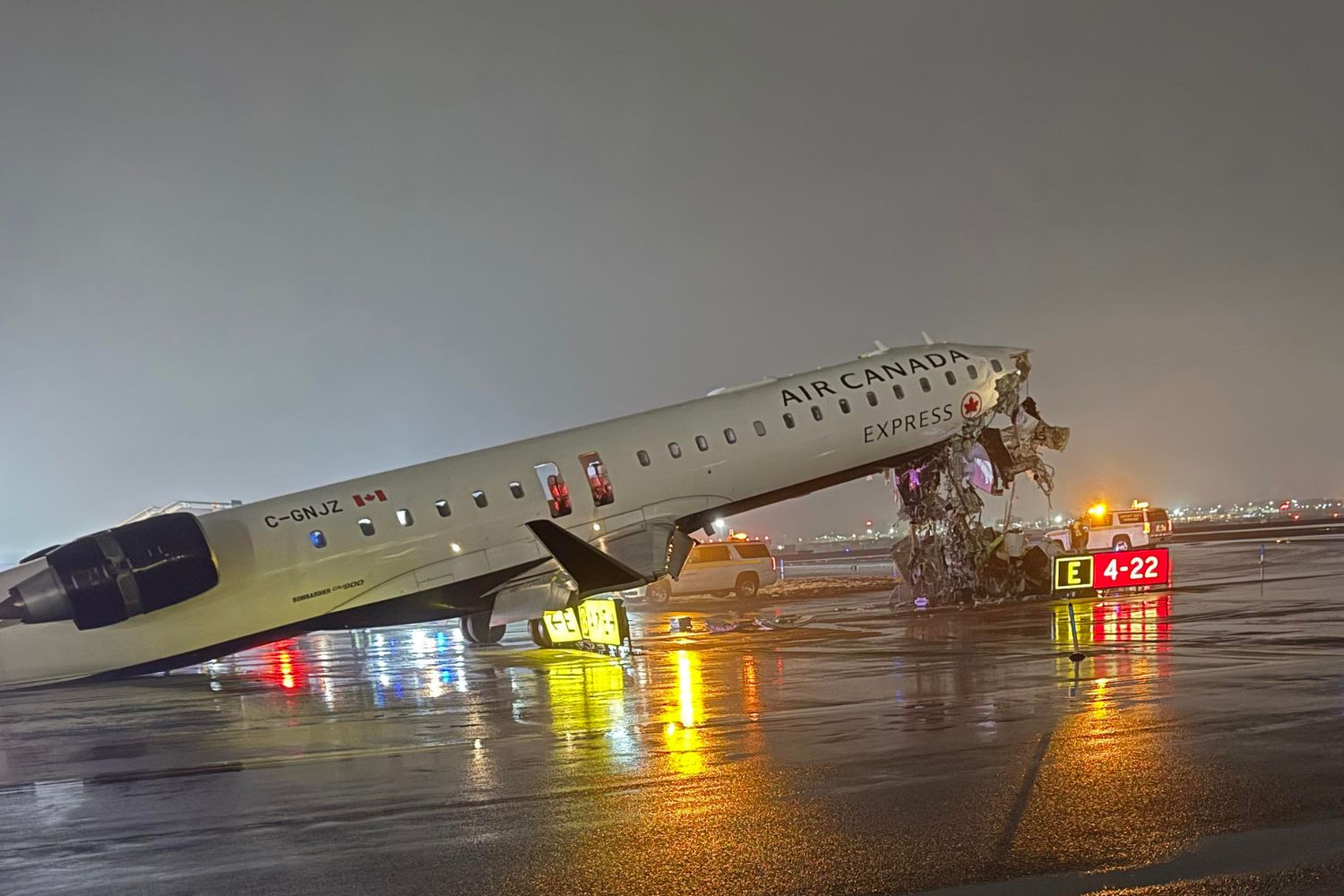
A fatal runway collision at LaGuardia Airport has drawn fresh attention to the pressure US air traffic controllers face managing increased workload amid a staffing shortage, and the persistence of near-miss runway incursions at major US airports.
Two pilots died, and dozens of passengers were injured when an Air Canada Express CRJ-900 struck a Port Authority fire truck on Runway 4 late Sunday night while arriving from Montreal. The vehicle was responding to a separate aircraft issue on the airfield.
Investigators from the National Transportation Safety Board (NTSB) are now examining the incident and will likely delve into the role of the on-duty controller and the operating environment in the control tower as part of their investigation.
ATC audio points to extreme workload
Audio recordings from the LaGuardia tower indicate that one controller was managing both ground control and local tower operations at the time of the accident. The incident unfolded as emergency vehicles were responding to a separate aircraft issue on the airfield.
The controller had cleared the fire truck to cross the runway while also managing an incoming aircraft. When the controller realised the conflict, he made urgent radio calls telling the vehicle to stop, but the jet struck the truck moments later.
The air traffic controller cleared the fire truck onto the runway. Seconds later, the same controller screamed “stop, stop, stop.” The plane was doing 93 to 105 mph.
— Aakash Gupta (@aakashgupta) March 23, 2026
Both pilots are dead.
Everyone will frame this as controller error. One controller was simultaneously managing a… https://t.co/gceiqdvAES
This type of dual-position workload can significantly increase cognitive demand, particularly at complex airports like LaGuardia, where aircraft, service vehicles and emergency responders share tight runway and taxiway infrastructure.
LaGuardia crash puts controller staffing shortages under scrutiny
The crash is also intensifying scrutiny of air traffic control staffing levels and workload management at major US airports.
Ground controllers manage aircraft taxiing and vehicle movements across taxiways and runways, while tower controllers oversee aircraft taking off and landing. Combining the two positions is permitted during quieter periods, but the workload can become challenging if traffic increases or unexpected events occur.
“In the best of times, air traffic controls and air traffic controllers are under a great deal of stress,” Alan Diehl, a former federal crash investigator, told NBC News. “These are people with very high cognitive levels. They’re carefully selected, extensively trained. And one of the problems is there is a shortage of 3,000 of them in this country right now.”
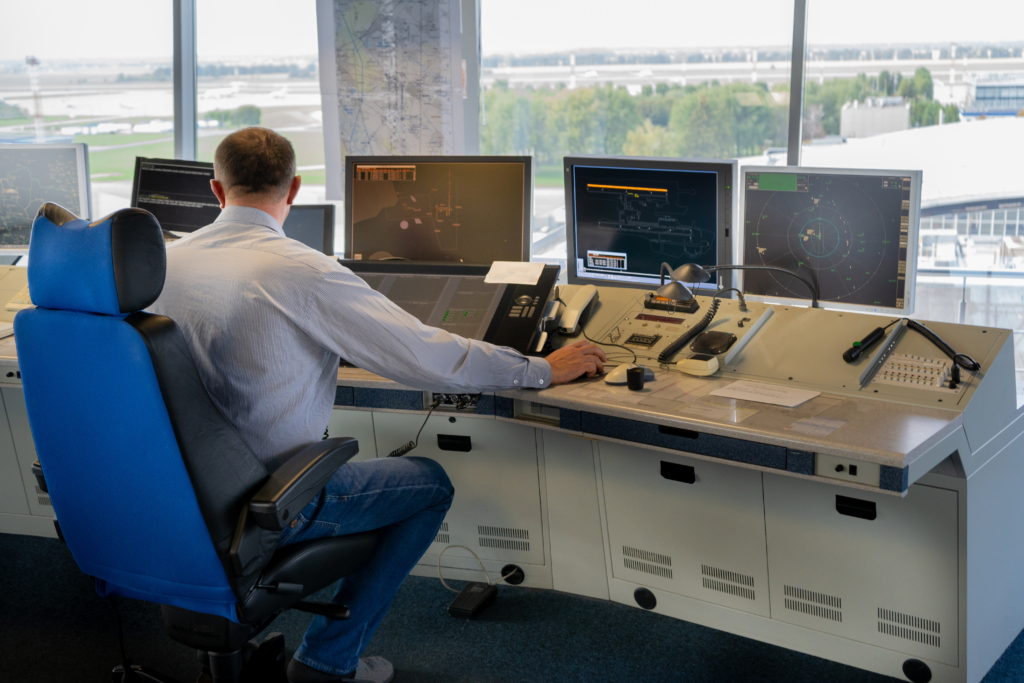
Some reports indicate the controller involved in the accident at LaGuardia may have continued working for a period after the accident because no immediate relief controller was available.
US Department of Transportation Secretary Sean Duffy described the airport’s tower as “well-staffed” during a press conference on Monday. Still, he confirmed that it was short of its target of 37 controllers, with 33 controllers assigned and seven more currently in training.
The airspace over LaGuardia is among the busiest and most complex in the US. Air traffic controllers must sequence aircraft arriving from multiple directions at the same time while coordinating ground movements within a confined airport layout.
NTSB investigations will likely examine the actions of the controller involved, as well as whether staffing levels, workload management, and operational procedures created conditions that made an error more likely.
A wider strain on the US aviation system
The accident comes as the US aviation system faces mounting pressure. Staffing shortages among air traffic controllers have been a persistent concern for several years.
The Federal Aviation Administration has acknowledged that many facilities operate below targeted staffing levels, forcing controllers to work overtime or handle multiple positions.

A 2024 report from the US Department of Transportation’s Office of Inspector General found that 77% of FAA air traffic control facilities were below the agency’s recommended staffing targets. The report warned that shortages could lead to increased air traffic controller workload and fatigue.
Recent federal budget standoffs leading to government shutdowns, during which the nation’s air traffic controllers must work unpaid, have added further stress. Air traffic controller resignations and training delays during these funding lapses make it harder for the FAA to meet the staffing shortfall.
A long history of near misses at LaGuardia
The crash is also renewing attention on a pattern of runway incursions and close calls at the airport.
Industry reporting by The Air Current found that multiple near-misses between aircraft and vehicles have occurred at LaGuardia in recent years. These are made more difficult to manage by the airport’s surface operational constraints, including two 7,000-foot runways built on a tight waterfront site, limiting options for expanding taxiways or separating aircraft flows.
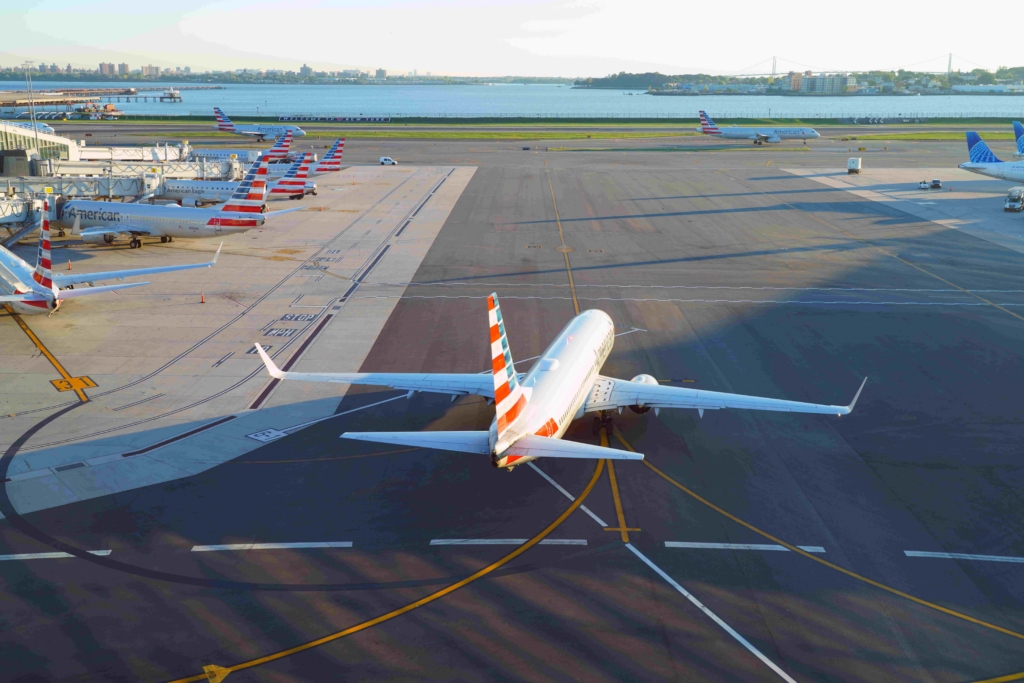
During irregular situations — such as medical emergencies or mechanical issues requiring emergency vehicles — controllers must coordinate additional vehicle movements across those same runways.
The airport’s compact layout means aircraft frequently must cross active runways while taxiing, increasing the number of potential points of conflict between aircraft and ground vehicles.
Airports with intersecting runways and tight taxiway layouts — such as LaGuardia — are inherently more complex to operate. FAA aviation safety guidance indicates that such designs require heightened situational awareness from controllers, pilots, and ground vehicles because intersecting runway operations are more prone to safety events than parallel runway layouts.
Runway incursions remain a persistent safety challenge in the US
The LaGuardia crash is also renewing focus on the broader issue of runway incursions across the United States.
A runway incursion occurs when an aircraft, vehicle, or person is incorrectly present on a runway designated for take-offs and landings. While most incidents are minor, the most serious categories involve situations where a collision is narrowly avoided.
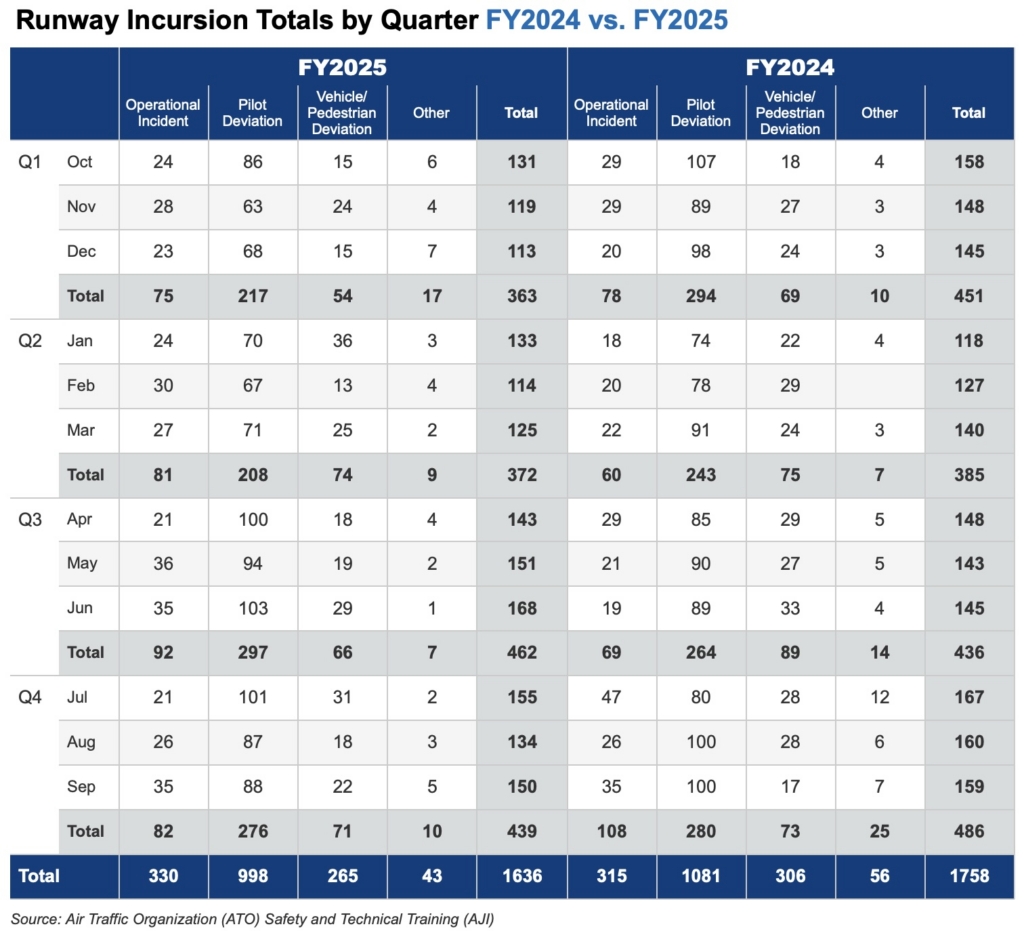
According to FAA data, 1,758 runway incursions were recorded across the United States in 2024, averaging just under five incidents per day. FAA data through 2025 show a moderate improvement to 1,636 incidents, but the level remains critical.
The LaGuardia crash draws attention to a critical need for increased air traffic controller staffing, technology improvements, and stronger runway safety protections in the US.
Featured Image: bradysego12 / X