IndiGo’s worst disruption in years: Is it FDTLs or the airline’s manpower strategy?

December 4, 2025
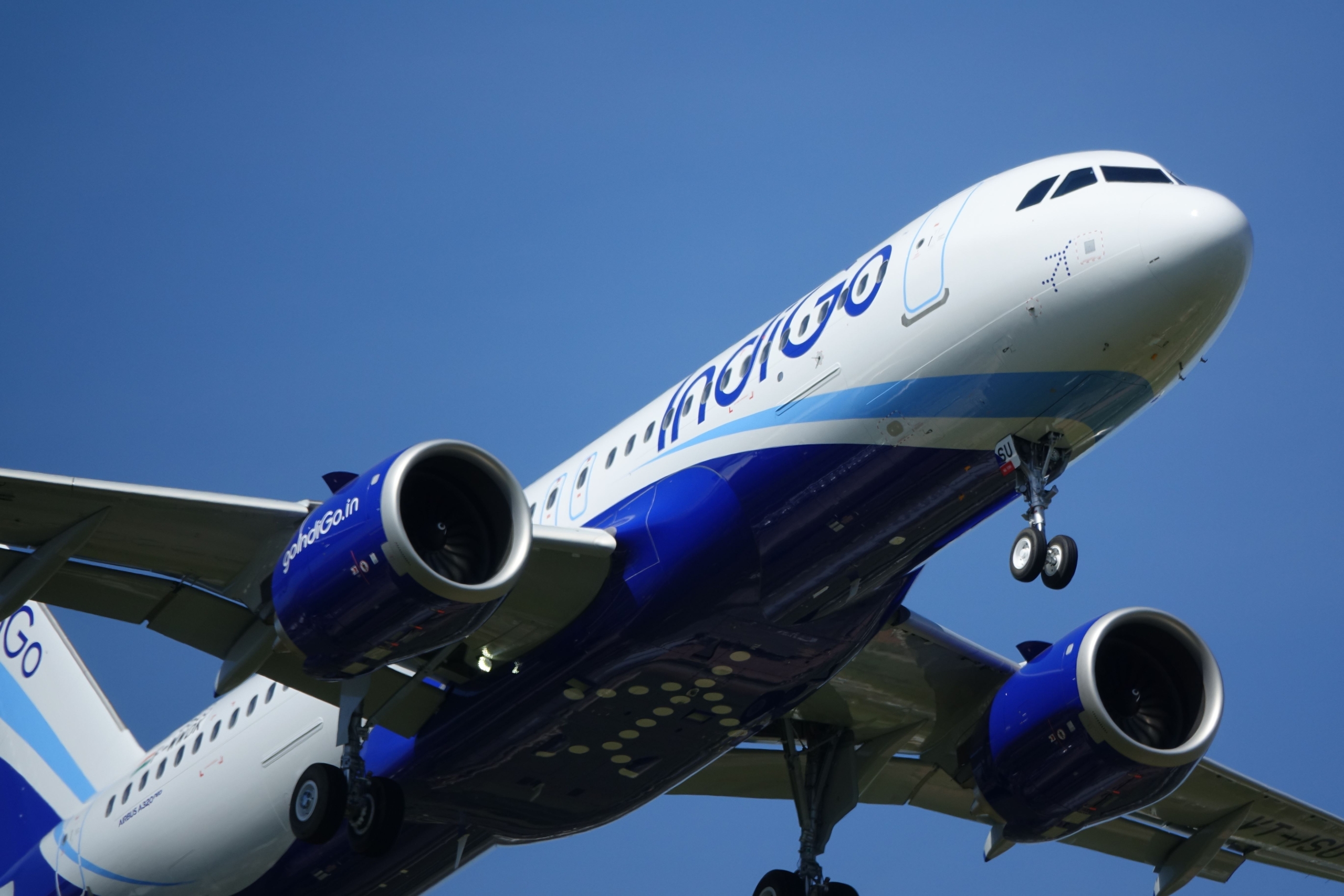
India’s largest airline is facing one of the worst network disruptions in its history, after a week of spiralling delays and cancellations that intensified sharply today. IndiGo has axed hundreds of flights across Delhi, Mumbai, Bengaluru and Hyderabad, leaving terminals crowded and schedules in disarray.
The airline has blamed a mix of “operational challenges”, including technical issues at airports and winter congestion. But the most contentious factor is the implementation of India’s revised Flight Duty Time Limitations (FDTL), which significantly restrict how pilots can be rostered, particularly for nighttime flying.
Do not fly IndiGo. Passengers are being left stranded for hours — even overnight — with zero information or support. The airline’s disregard for people is unacceptable, and it’s shameful that they face no accountability. @MoCA_GoI @DGCAIndia @IndiGo6E #indigo #mumbai #airport pic.twitter.com/SLjIMp6Yb6
— mmk666 (@mmk6664) December 4, 2025
IndiGo says the new rules sharply reduced crew availability, triggering a rolling series of grounded flights. Pilots, however, argue the meltdown was not caused by regulation but by long-standing workforce and scheduling mismanagement inside the airline.
What’s happened at IndiGo this week?
The crisis has been building since the start of the week, but hit a breaking point today as cancellations surged. Local media reports more than 200 flights cancelled in a single 24-hour period, with hundreds more delayed. Many passengers arrived at airports to find repeated gate changes, missing crew, or flights pushed back by several hours.
Apparently, India’s introduction of new roster regulations to combat pilot fatigue has taken IndiGo by surprise. Since December 3rd, IndiGo flights have been delayed and cancelled en masse, reportedly due to a shortage of pilots, compounded by bad weather and airport congestion.… pic.twitter.com/N3ZMu3oAZA
— Flightradar24 (@flightradar24) December 4, 2025
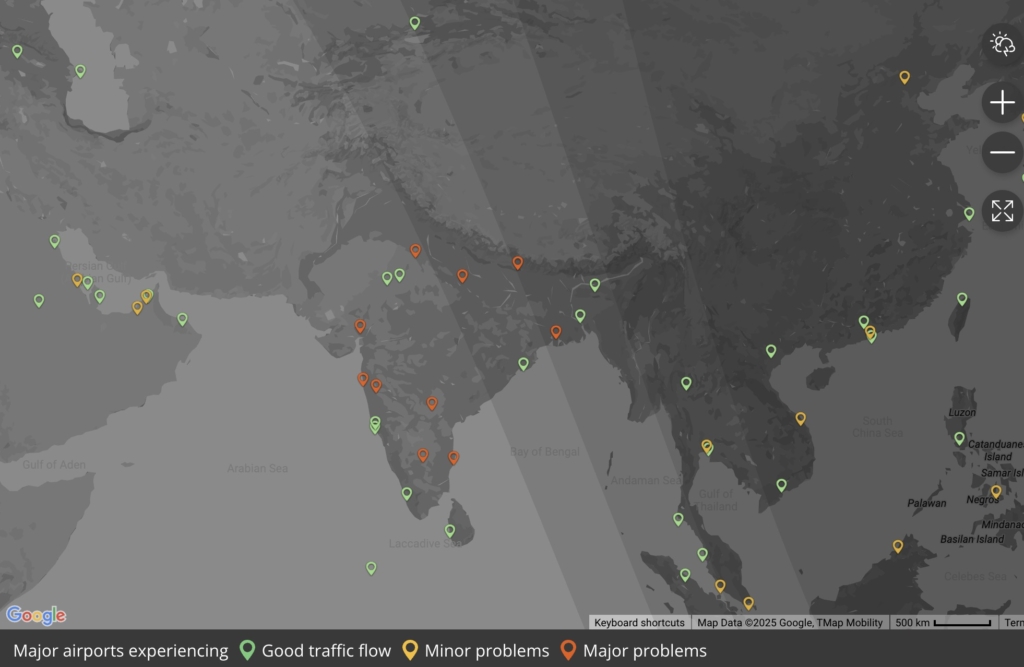
According to data from Flightradar24, Indian airports occupy six of the top 10 positions for most disrupted flights today. Hyderabad is the worst, with 94% of its departures delayed and an average delay of 130 minutes. Also suffering are Kolkata, Bengaluru, Mumbai, Ahmedabad and Pune.
India’s aviation regulator, the DGCA, has asked IndiGo for a formal explanation and a mitigation plan. The airline says operations will be “stabilised” within 48 hours, though insiders warn the crew-availability crunch may continue unless schedules are reduced.
What are FDTLs and why do they matter?
FDTL regulations govern how long pilots may fly, how much rest they must receive, and how many consecutive night duties they can perform. At the heart of the rules is a simple safety argument: fatigue is a critical risk, and airlines must build rosters that allow pilots adequate rest.
India’s revised FDTL framework came into full force on 1 November 2025, introducing several major changes:
- Weekly rest increased to 48 consecutive hours, making it harder for airlines to run continuous night-heavy rosters.
- Night-landing limits tightened from six to two permitted night landings per pilot within the defined night-duty window.
- Reductions in duty hours for early-morning and late-night schedules, which are typically high-volume segments for IndiGo.
- Stricter cumulative duty limits, forcing airlines to spread flying hours across a larger pool of crew.
| Parameter | Old norms | New norms (2025) |
|---|---|---|
| Weekly rest | 36 hours minimum | 48 hours mandatory within 7-day cycle |
| Night duty window | 00:00 – 05:00 hrs | 00:00 – 06:00 hrs (full WOCL) |
| Max flight duty per day | 10–12 hrs (depending on sectors) | 10 hrs if overlapping WOCL, stricter limits for multiple sectors |
| Cumulative duty (14 days) | 100 hrs | 95 hrs |
| Rest after night duty | 10 hrs minimum | 12 hrs or equal to previous duty time |
| Night landings allowed | 6 per roster period | 2 per roster period |
| Fatigue management | Basic compliance | Mandatory FRMS with predictive monitoring |
For an airline built on ultra-high utilisation, short turnarounds and dense night-time flying, the rules leave far less legal flexibility. As the new limits came into force, IndiGo’s crew availability fell sharply, especially on late-evening and red-eye routes, triggering widespread cancellations.
The DGCA pushed ahead with the revised FDTL package after sustained pressure from safety bodies, pilot representatives and international comparisons with fatigue-risk standards. The moves align India more closely with practices in Europe, the Middle East and parts of Asia, where regulators have tightened fatigue rules already.
For airlines, the shift means more pilots, more standby cover, and more conservative rostering — all adding cost to a market where margins are thin.
Pilots’ union hits back: This is not about FDTLs
But pilots reject IndiGo’s explanation. In a public statement reported by The Hindu, the Federation of Indian Pilots said the disruption was caused not by regulation, but by IndiGo’s “lean manpower strategy”, hiring freeze and “unorthodox” rostering practices.
They argue other carriers have complied with the same FDTL changes without a meltdown, and accuse IndiGo of failing to plan for the new regime despite months of warning. The pilots also allege the airline expanded its winter schedule without securing enough trained crew to operate it.

IndiGo’s immediate priority is stabilising operations, but the broader issue is strategic. The FDTL rules are not temporary, and the regulator shows no sign of softening them. That means India’s largest airline must now adjust its scheduling model, expand its pilot workforce or permanently trim night-heavy flying.
The DGCA’s findings will be critical. If it rules that the disruption stemmed from poor planning rather than regulation, IndiGo may face pressure to rethink not just its rosters, but its underlying manpower strategy.