Indian Army selects Shield AI’s V-BAT drones to advance artificial intelligence battlefield operations

February 2, 2026
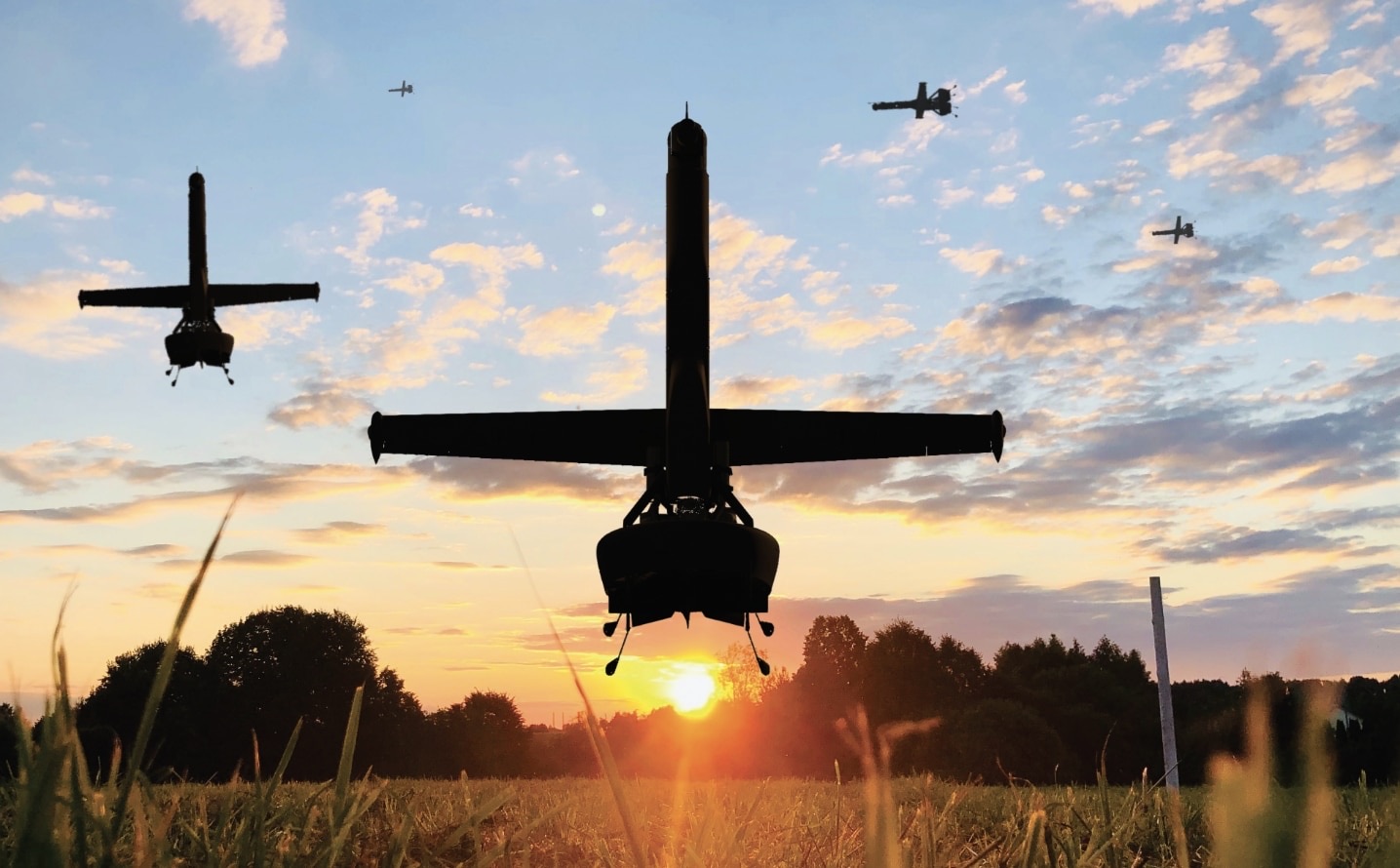
The Indian Army has signed a deal with US defence technology firm Shield AI for the procurement of V-BAT vertical take-off and landing (VTOL) unmanned aerial systems, marking one of India’s most consequential steps yet towards autonomous, AI-enabled military operations.
The agreement covers not only the supply of V-BAT aircraft but also licences for Shield AI’s proprietary Hivemind autonomy software, which will be integrated into the platform. Significantly, the deal includes access to the Hivemind software development kit (SDK), enabling Indian partners to develop autonomous mission capabilities tailored to local operational requirements.
For the Indian Army, the induction addresses a long-standing operational gap, persistent intelligence, surveillance and reconnaissance (ISR) in environments where runways are unavailable, logistics are constrained, and communications or GPS signals may be denied.
The Indian Army’s selection of Shield AI’s V-BAT signals a shift towards autonomous warfare
Indian Army planners have increasingly focused on unmanned systems capable of operating across high-altitude terrain, island territories and contested border regions without reliance on fixed infrastructure.
The V-BAT’s ability to launch and recover vertically from a 12-by-12-foot area, combined with more than 12 hours of endurance, positions it as a tactical ISR asset rather than a niche surveillance drone.
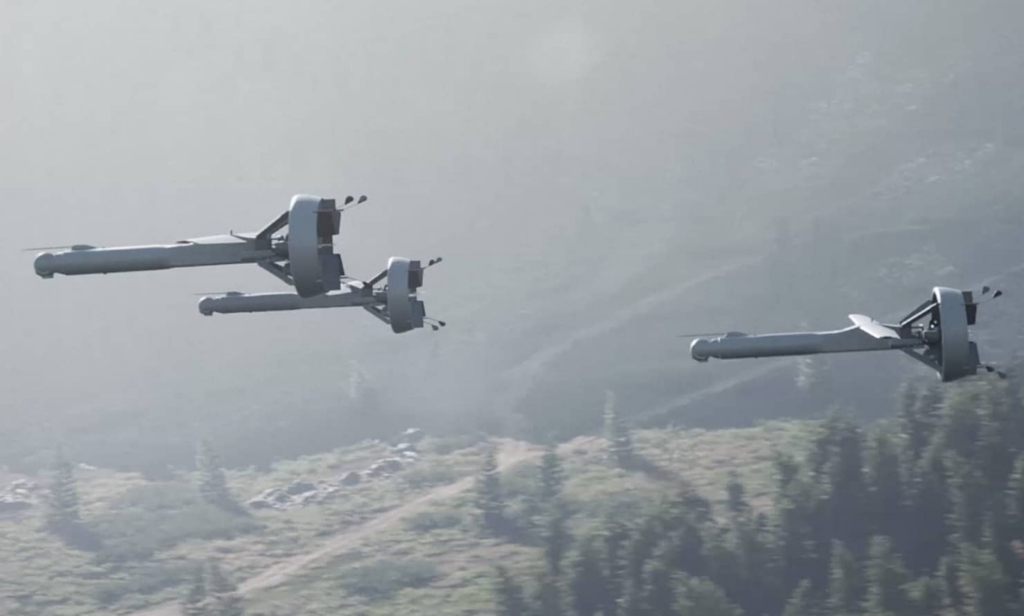
Powered by a heavy-fuel engine and built around a patented ducted-fan design, the Group 3 V-BAT can operate from ship decks, forward posts, rooftops and austere clearings. Its enclosed rotor configuration improves safety and reliability in confined or maritime environments while reducing logistical complexity.
More fundamentally, the Indian Army’s decision signals growing acceptance that autonomy, rather than remote piloting alone, will be essential for future operations in contested airspace.
Shield AI’s Hivemind artificial intelligence enables V-BAT operations beyond GPS and communications
At the core of the programme is Hivemind, Shield AI’s AI-driven autonomy stack that allows unmanned platforms to sense their environment, make decisions and complete missions with limited or no human input.
According to the company, Hivemind enables beyond-visual-range operations and allows aircraft to continue flying even when datalinks are jammed or lost, a critical requirement given the proliferation of electronic warfare capabilities along India’s borders.

The inclusion of the Hivemind SDK is a strategically important element of the deal. It allows Indian developers and selected defence partners to build, test and deploy mission-specific autonomy applications locally, rather than relying on imported black-box software. This approach closely aligns with India’s push for technological sovereignty in artificial intelligence and unmanned systems.
“India’s selection of V-BAT and Hivemind reflects a clear understanding of the resilient, expeditionary autonomy modern militaries now require,” said Sarjan Shah, Shield AI’s managing director for India, noting that the platform is suited for operations “from the Himalayas to India’s oceanic borders”.
Indian Army V-BAT programme anchors manufacturing in India
The Army induction builds on Shield AI’s strategic partnership with JSW Defence, under which V-BATs will be manufactured in India.
In December 2025, JSW Defence commenced construction of a dedicated next-generation unmanned aerial systems facility at EMC Maheshwaram, Hyderabad. The project involves an investment of approximately $90 million and includes provisions for technology licensing, workforce training and the creation of a local supply chain.

Manufacturing is expected to begin by the final quarter of 2026, with the facility designed not only to meet Indian Armed Forces requirements but also to serve as a global production hub for exports. The programme is being positioned as an integrated ecosystem covering manufacturing, assembly, testing, operator training, maintenance, repair and overhaul (MRO), and long-term innovation.
For India, the project represents one of the most substantial transfers of advanced unmanned systems technology undertaken to date, combining hardware production with access to high-end autonomy software.
Combat use of Shield AI’s V-BAT in Ukraine underpins Indian Army confidence
Shield AI’s growing international profile has been driven in part by the V-BAT’s performance in real combat environments, particularly in Ukraine. After early deployments exposed vulnerabilities to Russian electronic warfare, the company accelerated the integration of Hivemind autonomy into the platform.
Subsequent operational testing reportedly demonstrated the aircraft’s ability to fly and complete missions in heavily jammed airspace without GPS or continuous communications.

According to the company, V-BATs in Ukraine have conducted dozens of missions, identifying hundreds of targets, including air defence systems, headquarters and drone control nodes.
This operational experience has been a key factor in the platform’s international traction, particularly among militaries concerned about survivability in electronic warfare-intensive environments.
Global adoption of Shield AI’s V-BAT highlights changing ISR requirements
Beyond India, the V-BAT is already deployed with multiple armed forces. The aircraft has operated with United States Marine Corps expeditionary units and has been selected by the Japan Maritime Self-Defence Force as its first shipborne ISR unmanned system, strengthening maritime surveillance in the Indo-Pacific.
The platform has also been employed by Frontex for border security missions, while Brazil was among its earliest foreign customers. Shield AI has described Japan as a critical ally in regional deterrence efforts, underlining the system’s growing role in coalition and allied operations.

The company has additionally introduced “V-BAT Teams”, a swarming capability allowing a single operator to command multiple autonomous aircraft over large areas, aligning with emerging doctrines that emphasise mass, attrition-tolerant unmanned systems.
Strategic implications for India’s unmanned and AI military roadmap
For India, the V-BAT and Hivemind programme arrives at a moment when unmanned systems and artificial intelligence are reshaping modern warfare. Indigenous development of comparable capabilities would require significant time and investment, making combat-proven, locally manufactured platforms an attractive interim solution.
The combination of operational induction, domestic manufacturing and access to autonomy software development tools positions India to move beyond simple drone acquisition towards building an adaptable unmanned systems ecosystem.
As global military demand for autonomous platforms accelerates, the Hyderabad production hub is also expected to place India more firmly within international unmanned supply chains, not merely as a buyer, but as a producer and exporter.
Featured image: Shield AI