Two IAF pilots killed after Su-30MKI fighter crashes during training mission in Assam

March 6, 2026
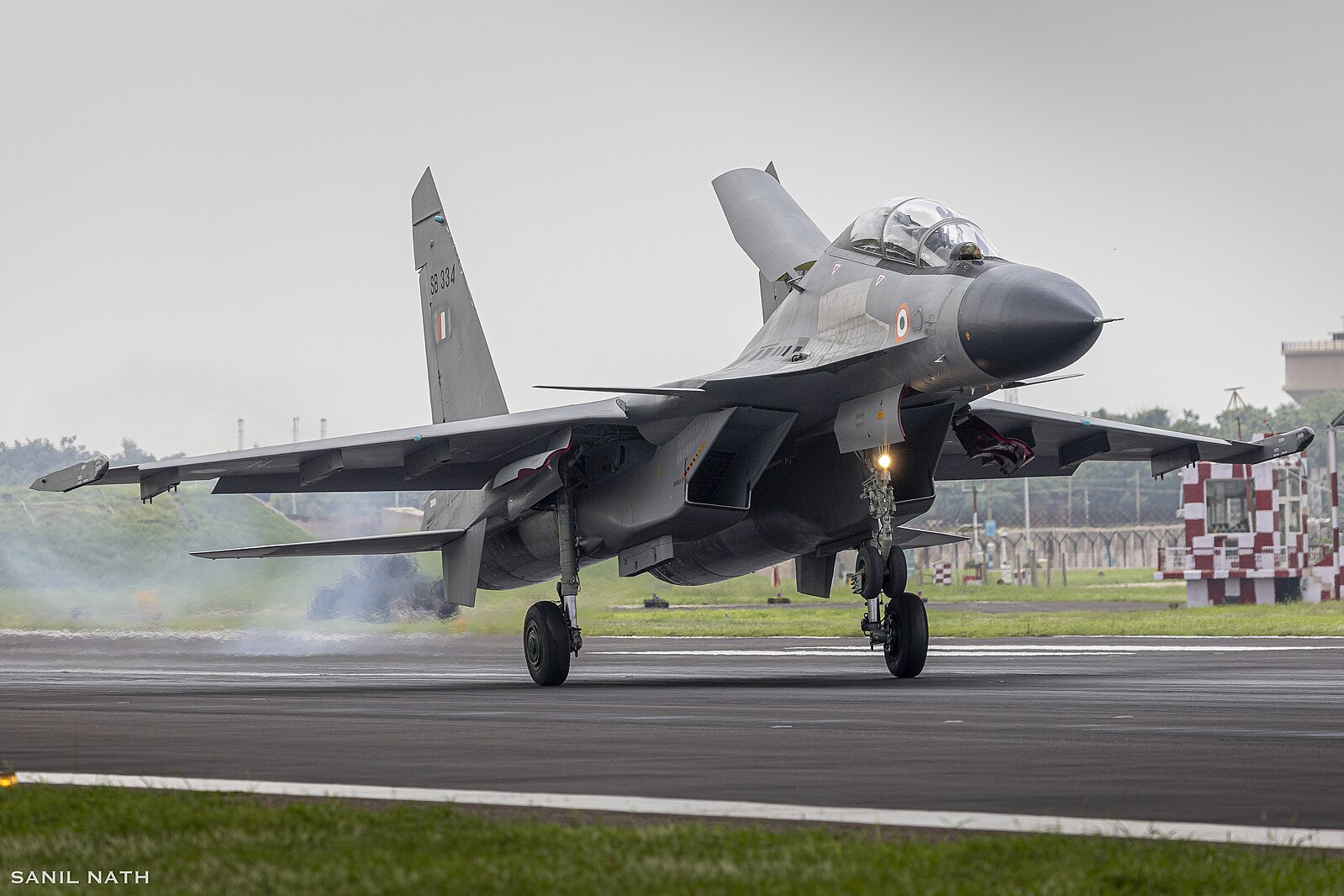
Two Indian Air Force pilots were killed after a Sukhoi Su-30MKI fighter aircraft crashed in north-east India’s Assam state during a training mission on the evening of 5 February, bringing renewed focus to the operational demands placed on the IAF’s frontline heavy fighter fleet.
The aircraft, which had taken off from Jorhat airbase in upper Assam, lost contact with ground control shortly after departure.
According to the Indian Air Force, radar communication with the fighter jet was last established at around 7:42 pm local time, after which the aircraft was reported overdue.
Search and rescue teams were immediately dispatched to locate the aircraft and its two crew members. The wreckage was later found in a remote hill area of Karbi Anglong district, approximately 60 kilometres from Jorhat.
The Su-30MKI which was on a training mission, crashed in the area of Karbi Anglong, Assam, approx 60 km from Jorhat. Search operations are underway.@DefenceMinIndia@SpokespersonMoD@HQ_IDS_India@adgpi@indiannavy https://t.co/64Ii5V2fiZ
— Indian Air Force (@IAF_MCC) March 5, 2026
The IAF later announced that the pilots – Squadron Leader Anuj and Flight Lieutenant Purvesh Duragkar – had sustained fatal injuries.
“The IAF acknowledges the loss of Sqn Ldr Anuj and Flt Lt Purvesh Duragkar, who sustained fatal injuries in the Su-30 crash. All personnel of the IAF express sincere condolences and stand firmly with the bereaved families in this time of grief,” the service said in a statement.
xTwo pilots, Squadron Leader Anuj and Flight Lieutenant Purvesh Duragkar, have been killed in the Su-30MKI crash in #KarbiAnglong district of #Assam, the Indian Air Force (IAF) confirmed on Friday.
— Hate Detector 🔍 (@HateDetectors) March 6, 2026
Expressing condolences to the bereaved families, they acknowledged the deaths on… pic.twitter.com/03SinYjVFr
Local residents reported hearing a loud explosion near the Nilip block area around the time communication with the aircraft was lost, suggesting the jet may have impacted terrain shortly after the incident.
Authorities have launched an investigation to determine the cause of the crash.
Su-30MKI crash occurred shortly after take-off from Jorhat airbase in Assam
Initial information from defence officials indicated that the aircraft was undertaking a routine training sortie from the IAF’s Jorhat airbase, one of the key fighter and transport hubs in India’s northeast.
Soon after take-off, the aircraft lost radar and radio contact with ground controllers.
STORY | IAF Su-30MKI crash in Assam: Both pilots killed
— Press Trust of India (@PTI_News) March 6, 2026
Two pilots of the Indian Air Force (IAF) were killed in a crash of a Su-30 MKI fighter jet in Assam's Karbi Anglong district. The IAF confirmed on Friday the deaths of Squadron Leader Anuj and Flight Lieutenant Purvesh… pic.twitter.com/R5nZnwtu4e
“An IAF Su-30MKI is reported overdue. The aircraft had taken off from Jorhat, Assam and was last in contact at 7:42 pm. Further details are being ascertained. Search and Rescue mission has been initiated,” the Air Force said earlier, while the aircraft was still missing.
The crash site was later located in a forested and mountainous area of Karbi Anglong, a region known for difficult terrain and limited road access.
Emergency teams were deployed overnight to search for the aircraft and its crew.
Su-30MKI fighter remains the backbone of the Indian Air Force fleet
The aircraft involved in the crash was a Sukhoi-30MKI, a twin-engine, two-seat multirole fighter that forms the backbone of India’s combat aviation capability.
Jointly developed by Russia’s Sukhoi Design Bureau and India’s Hindustan Aeronautics Limited (HAL), the Su-30MKI was specifically customised for the Indian Air Force and combines technologies from several countries, including Russia, India, Israel and France.
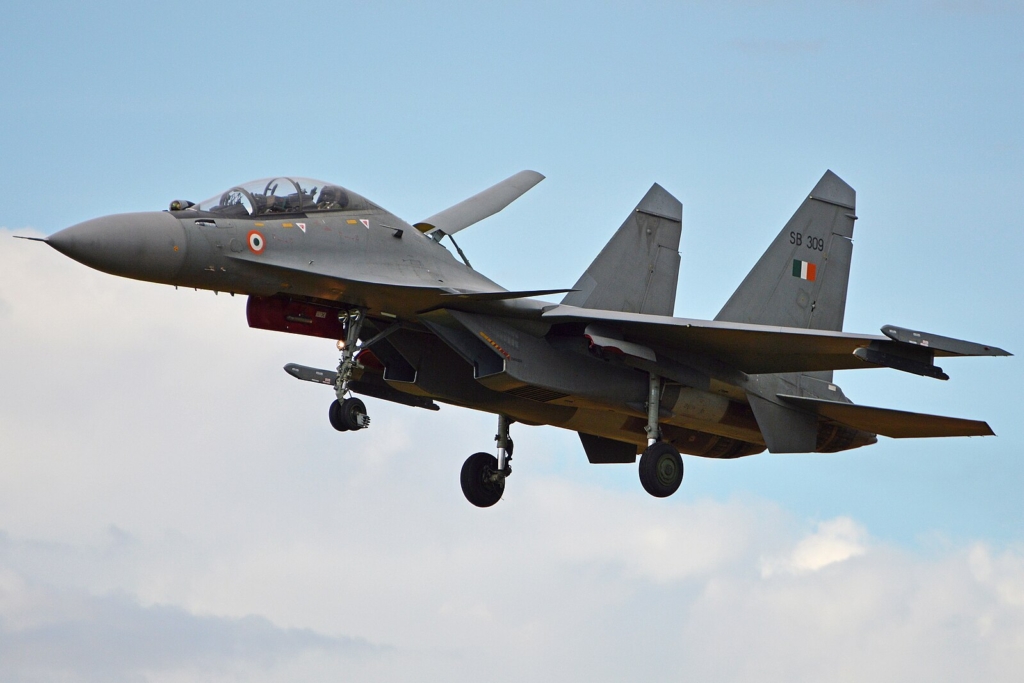
The development of the aircraft for India began in the mid-1990s, with the first prototype flying in 1997 and the aircraft entering service with the IAF in 2002. Production was later transferred to HAL’s facility in Nashik, where the aircraft has been assembled under licence for the Indian Air Force.
Today, the IAF operates more than 260 Su-30MKI fighters, making it the largest combat aircraft fleet in Indian service.
The aircraft’s large payload capacity, long range and ability to operate as both an air-superiority and multirole strike fighter have made it central to India’s air combat doctrine.
Su-30MKI capabilities: India’s long-range multirole fighter
The Su-30MKI is among the heaviest and most capable fighters currently in Indian service.
The aircraft has a maximum take-off weight of 38,800 kilograms and can carry more than 8 tonnes of weapons and external stores across twelve hardpoints.
Powered by two AL-31FP thrust-vectoring turbofan engines, the aircraft can reach speeds of Mach 1.9 and climb at a rate of around 300 metres per second.
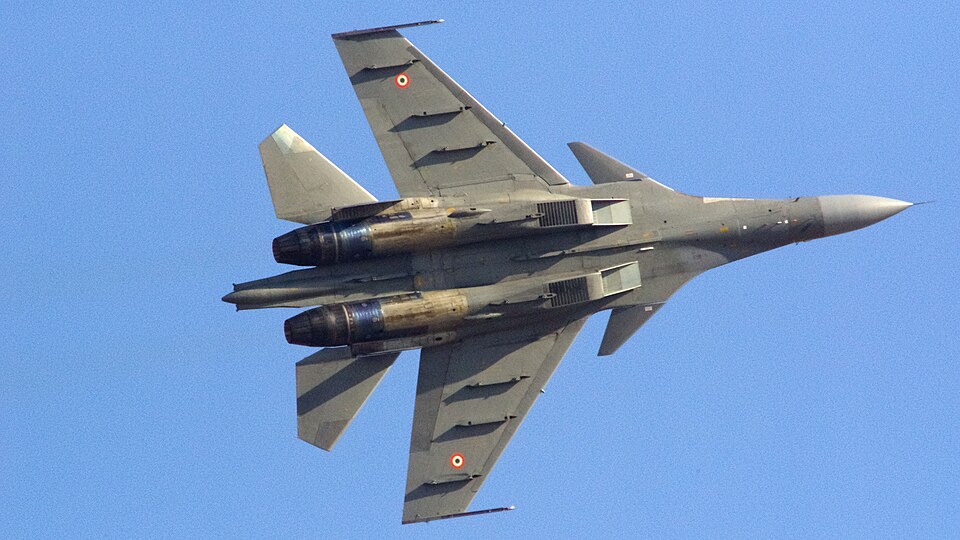
Its range is one of its defining characteristics. With internal fuel, the aircraft can fly roughly 3,000 kilometres, and with aerial refuelling, the endurance can extend to 10 hours of flight time.
The Su-30MKI’s avionics suite includes the N011M Bars passive electronically scanned array radar, capable of detecting targets at distances of up to 400 kilometres, alongside an infrared search and track system that allows the aircraft to detect other aircraft without using radar emissions.
The fighter can carry a wide variety of weapons, including air-to-air missiles, air-to-surface missiles, laser-guided bombs and the BrahMos supersonic cruise missile, which provides long-range strike capability.
These capabilities have made the aircraft central to India’s deterrence posture and its ability to conduct both air-defence and strike missions across long distances.
India upgrades Su-30MKI fleet with new radar and avionics
Despite being in service for more than two decades, the Su-30MKI fleet remains a major focus of India’s military aviation modernisation.
India has been working on a comprehensive upgrade programme for the aircraft to extend its operational life and improve its combat performance.
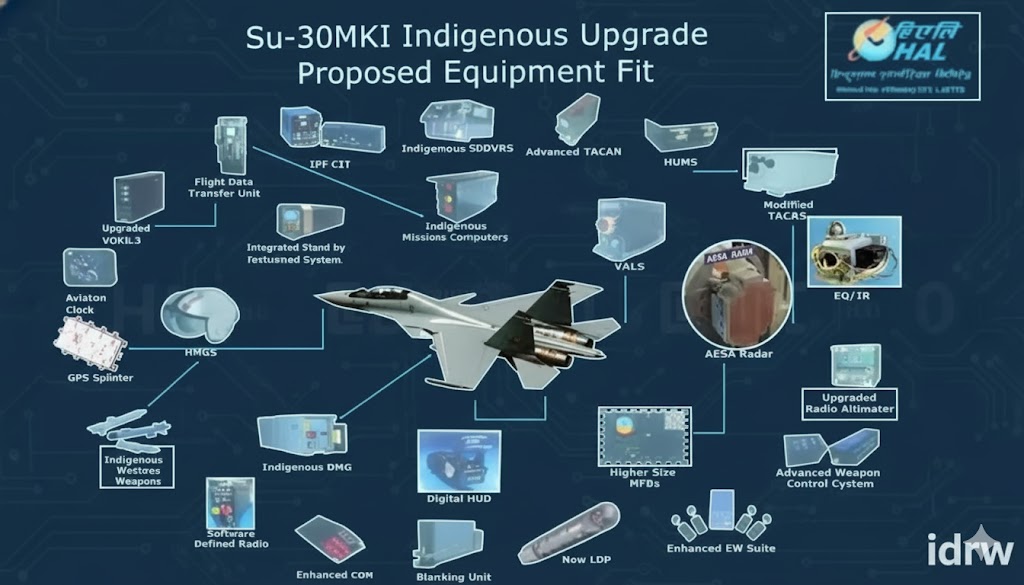
Under the planned modernisation programme, dozens of aircraft will receive new avionics, electronic warfare systems and an indigenous AESA radar known as Virupaakhsha, which is expected to significantly increase detection ranges and enable the aircraft to employ longer-range weapons such as the Astra Mk-III missile.
The upgrades are part of a broader effort to enhance domestic defence manufacturing capabilities and reduce reliance on imported systems.
India has also signed contracts with HAL for the production of additional AL-31FP engines and spare parts, while new Su-30MKIs continue to be manufactured domestically to replace aircraft lost in accidents and maintain fleet strength.
Previous Su-30MKI crashes highlight operational pressures on the fleet
The Assam crash is the latest in a series of accidents involving the Su-30MKI fleet in recent years.
In June 2024, another Sukhoi-30 aircraft crashed in Maharashtra’s Nashik district during a test flight. Earlier, in January 2023, a similar aircraft went down shortly after taking off from Gwalior airbase.
While the Su-30MKI remains one of the most capable aircraft in India’s inventory, maintaining such a large and complex fleet presents significant operational and maintenance challenges.
Investigators will now examine flight data, maintenance records and possible technical factors to determine what caused the latest crash.
Featured image: Sanil Nath / Wikimedia