Rocket-sled success: India tests indigenous fighter jet ejection seat at 800 km/h

December 4, 2025
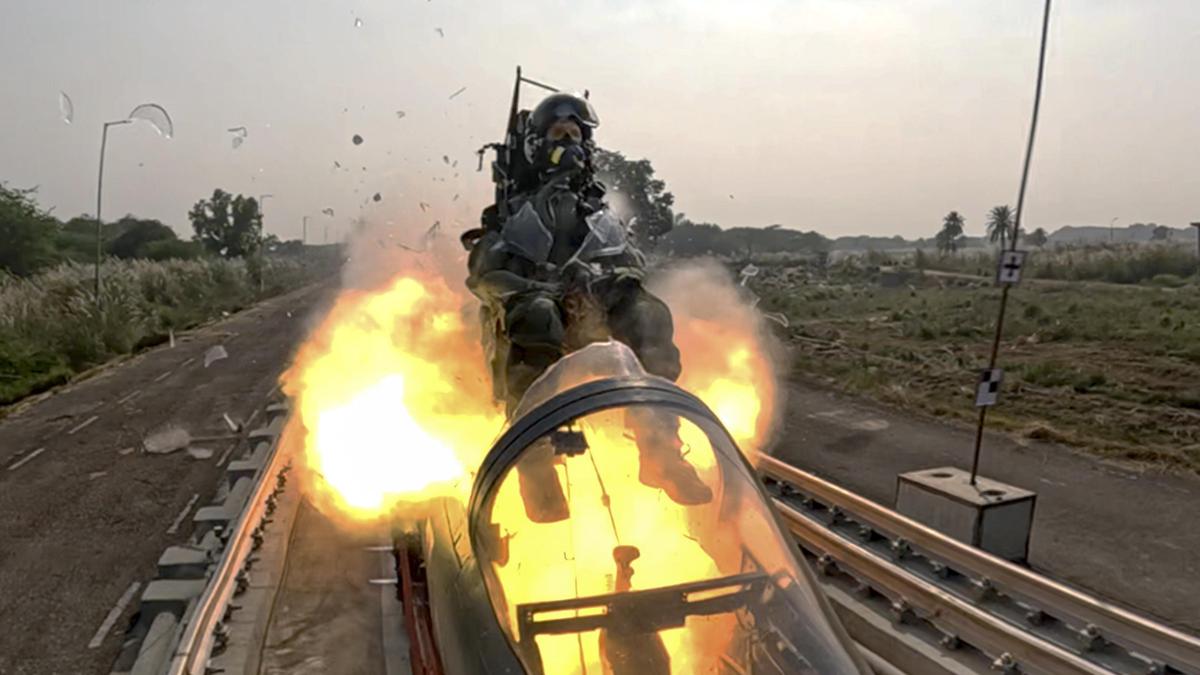
India has taken a major step forward in safeguarding its combat aircrew, completing a high-speed rocket-sled test of a fighter aircraft escape system designed for future indigenous jets.
Conducted by the Defence Research and Development Organisation (DRDO) at the Rail Track Rocket Sled facility in Chandigarh, the trial demonstrated that the complex ejection mechanism can function safely and precisely under conditions that closely simulate a real in-flight emergency.
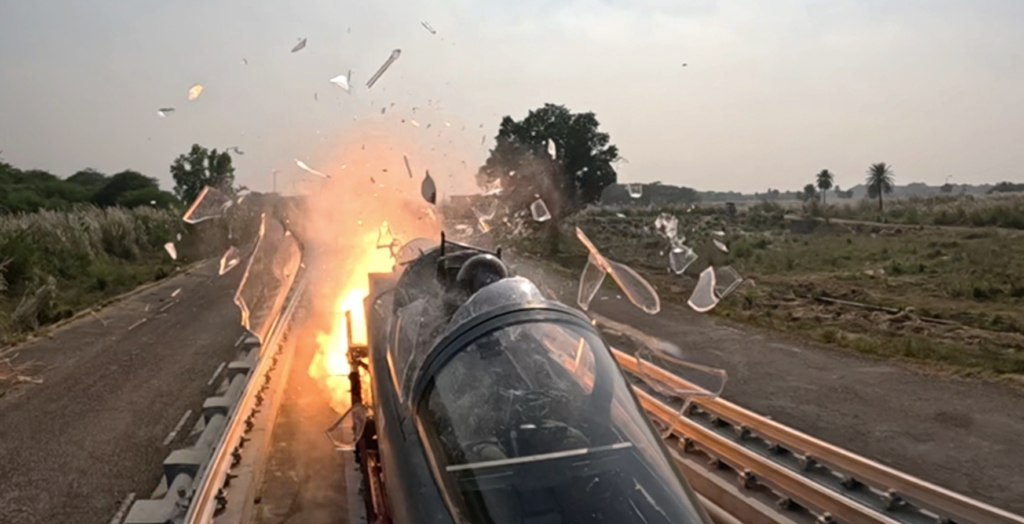
Senior officials from the Indian Air Force and the Institute of Aerospace Medicine observed as the system shattered the canopy, propelled the seat clear of the fuselage and executed a full recovery sequence, all within seconds.
Defence minister Rajnath Singh congratulated DRDO, the Indian Air Force, ADA and HAL, calling the trial a significant milestone in India’s push toward aerospace self-reliance.
Dynamic testing confirms safe canopy separation and ejection sequencing
Unlike static “zero-zero” trials, dynamic ejection tests recreate the speed, aerodynamic forces and violent motion a pilot experiences when abandoning a fighter in flight.
A dual-sled rig carrying the forward fuselage of a Light Combat Aircraft (LCA) was accelerated by multiple solid-propellant motors to a controlled velocity of roughly 800 km/h. High-speed imaging and onboard sensors validated canopy fragilisation, firing timing, safe pilot clearance and parachute deployment.
Defence Research and Development Organization (DRDO) has successfully conducted a high-speed rocket-sled test of fighter aircraft escape system at precisely controlled velocity of 800 km/h- validating canopy severance, ejection sequencing and complete aircrew-recovery at Rail… pic.twitter.com/G19PJOV6yD
— रक्षा मंत्री कार्यालय/ RMO India (@DefenceMinIndia) December 2, 2025
An instrumented anthropomorphic test dummy acted as the pilot, capturing load and acceleration data essential for certifying that an aircrew could survive the forces generated during escape.
With this test, India joins a select group of nations operating advanced dynamic ejection-testing infrastructure.
Protecting the most vital component of air power: the pilot
Modern ejection seats are among the most complex survival systems ever engineered, comprising thousands of components, multiple explosive devices, rockets, sensors, restraints and parachutes that must operate in a perfectly timed sequence.
A pilot typically experiences 15–20 g during ejection, enough to injure the spine or neck if posture is not perfect. At high speeds, debris and slipstream forces can be lethal if canopy clearance fails.
That makes domestic testing essential. “Every millisecond counts,” a DRDO engineer involved in the programme told AGN privately. “If even one step misfires, the pilot’s life is at risk.”
Ejection systems remain critical lifesaving technology for fighter pilots
Even in the most modern aircraft, an ejection is never routine. Pilots often describe the moment of pulling the handle as the most difficult decision of their career — an acceptance that the aircraft cannot be saved.
Once activated, the body is subjected to forces exceeding 20 g, strong enough to compress vertebrae if posture is slightly misaligned. In only three to four seconds, the seat must clear the cockpit, stabilise the pilot and deploy a parachute, all while keeping them conscious and breathing.
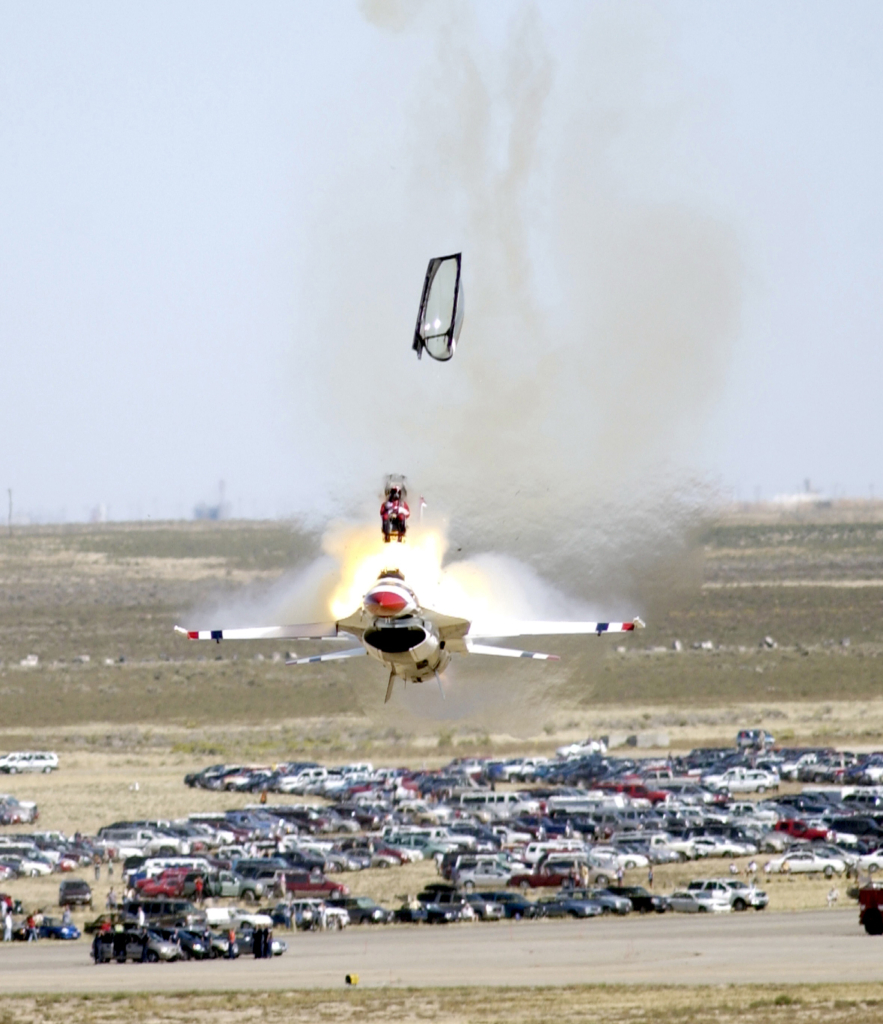
Ejection-seat engineering, therefore, sits at the intersection of aviation design and human survival science. Crews undergo rigorous training at the Institute of Aerospace Medicine in Bengaluru to learn correct posture and understand the physiological effects of high-speed escape. Every element — from leg restraints to parachute sequencing — must function flawlessly, as the margin between survival and fatal injury is measured in milliseconds.
Strengthening India’s indigenous fighter ecosystem
The test was conducted with the Aeronautical Development Agency (ADA) and Hindustan Aeronautics Limited (HAL), with the technology destined for future Indian combat aircraft, including:
- Tejas Mk2
- AMCA (Advanced Medium Combat Aircraft)
- TEDBF (Twin-Engine Deck-Based Fighter)
India currently uses British-built Martin-Baker seats on Tejas Mk1 and Mk1A. The firm is supplying 108 IN16G seats for 83 Mk1A aircraft and offering its latest Mk18 seat for both AMCA and TEDBF.
DRDO’s successful dynamic test marks progress toward reducing long-term reliance on foreign suppliers for critical pilot-safety systems, giving India sovereign control over integration, upgrades and certification.
Advanced escape technology enhances India’s frontline combat readiness
Every year, a small number of military pilots worldwide are forced to eject due to battle damage, system failure or mid-air collisions. Ejection systems exist to save a life at the moment everything else has failed.
India’s ability to validate and certify ejection performance domestically — from canopy-severance mechanisms to rocket-assisted thrust — strengthens both operational confidence and combat preparedness.
The Ministry of Defence said the achievement “advances the broader goal of building a secure, self-reliant military aerospace capability.”