HAL excluded from India’s AMCA stealth fighter jet as private consortia take the lead

February 5, 2026

Hindustan Aeronautics Limited’s absence from India’s flagship fifth-generation fighter programme has sent ripples through the country’s defence industrial ecosystem, but officials and analysts alike say the development reflects a deliberate restructuring of execution rather than a retreat from ambition.
Defence Ministry sources have confirmed that HAL has not progressed to the next stage of evaluation for the Advanced Medium Combat Aircraft (AMCA) programme, India’s long-planned stealth fighter initiative led by the Defence Research and Development Organisation’s Aeronautical Development Agency (ADA).
Of the seven public and private consortia that submitted expressions of interest, only three have met the mandatory technical and financial criteria to advance to the cost-bid stage for building five prototypes and a structural test article.
Defence Secretary Rajesh Kumar confirmed that three bidders remain in contention following the initial technical screening.
“We were surprised by the private sector response. We’ve done the initial pre-qualification and there are three remaining,” he told CNBC-TV18. “Thereafter, you can expect the RFP to be issued to all three companies for submitting cost bids for production of five prototypes of the AMCA aircraft.”
While the Defence Secretary did not name the shortlisted firms, sources said the final contenders are private sector-led consortia, including Tata Advanced Systems Limited; Larsen & Toubro in partnership with Bharat Electronics Limited and Dynamatic Technologies; and Bharat Forge, which has teamed up with BEML and Data Patterns.
Why HAL did not make the AMCA shortlist
HAL, which bid in partnership with two smaller firms, did not qualify under the evaluation framework laid down by ADA, marking the first time the state-owned aerospace major will not be involved in one of India’s most significant combat aircraft programmes.
Officials familiar with the evaluation process said key criteria included technical capability, financial strength, existing order book, and the ability to absorb the risks associated with developing a fifth-generation combat aircraft.
HAL’s existing commitments and its order book, which is understood to be nearly eight times its annual turnover, were cited as a factor that raised concerns over capacity and execution bandwidth.
Who bid for India’s AMCA next-gen fighter jet programme?
According to officials aware of the developments, the companies and consortia in the front running for the AMCA project are:
- Hindustan Aeronautics Limited (HAL)
- Larsen & Toubro
- Adani Defence and Aerospace
- Tata Advanced Systems Ltd (TASL)
- Kalyani Strategic Systems (Bharat Forge)
- A consortium led by BrahMos Aerospace Thiruvananthapuram Ltd (BATL), with Goodluck India Ltd, and Axiscades Technologies
Each bidder had proposed a partnership structure often in the form of consortia, combining expertise across airframe manufacturing, electronics, avionics, propulsion systems and systems integration.
HAL had proposed a joint venture model where it will retain a 50 per cent stake and induct four private partners to handle specific aircraft sections such as the front fuselage, wings, rear fuselage and centre fuselage.
HAL responds to reports of exclusion from AMCA programme
Responding to widespread reporting, an HAL spokesperson told AGN that the company has received no formal communication regarding its exclusion from the AMCA programme and therefore cannot comment on the matter at this stage.
“HAL has not received any official communication in this regard and, therefore, is not in a position to comment on these reports,” the spokesperson said. “HAL remains committed to keeping all stakeholders fully informed of all developments.”

The company was also keen to underline its broader industrial position, pointing to a confirmed order book extending to 2032 and a production pipeline anchored by multiple high-value defence and civil aviation programmes.
HAL is currently advancing the LCA (Tejas) Mk1A, the forthcoming LCA Mk2, the Indian Multi-Role Helicopter (IMRH) and the Combat Air Teaming System (CATS), while expanding into civil platforms such as the Dhruv NG helicopter, Hindustan 228 commuter aircraft and the SJ-100 regional jet.
HAL’s crowded production pipeline and execution constraints
Industry analysts argue that HAL’s non-selection should be seen against the backdrop of unprecedented programme concurrency rather than institutional sidelining.
Akash Pratim Debbarma, Aerospace & Defence Analyst at GlobalData, describes the development as a “pragmatic realignment” that reduces execution risk across India’s combat aviation roadmap.
HAL is currently responsible for delivering more than 180 LCA Mk1A fighters, supporting the flight-test and development phase of the LCA Mk2, assembling GE F414 engines in India, and sustaining multiple legacy fleets.

Recent experience with the LCA Mk1A programme, which saw delivery delays linked to engine availability, illustrated how external bottlenecks can cascade across parallel programmes, Debbarma noted.
“A fifth-generation platform like AMCA introduces far greater systems-integration complexity,” he said. “Decoupling AMCA execution from HAL’s already dense workload reduces competition for production bandwidth, infrastructure and supplier attention, lowering overall programme risk.”
Why private-sector consortia are leading the AMCA programme
The AMCA programme is being executed under an industry partnership model approved by the Ministry of Defence in 2024, with equal opportunity extended to public and private players.
The framework requires shortlisted firms to demonstrate the ability to establish a full-scale manufacturing facility, manage prototype development, flight testing and certification within an eight-year window.
According to the Defence Ministry official, three private-led consortia have now advanced to the final evaluation phase, with cost bids expected to be submitted shortly and the contract likely to be awarded within months.
The first AMCA prototype is expected to fly in 2029, with development completion targeted for 2034 and series production beginning around 2035.
The Indian Air Force plans to induct approximately 120 AMCA aircraft across six squadrons, forming the backbone of its future air combat capability.
Analysts argue that private-sector leadership could introduce greater agility in project management, supply-chain discipline and manufacturing innovation, areas where large, complex aerospace programmes have historically faced delays.
Strategic urgency driving India’s AMCA fighter jet programme
The AMCA programme carries strategic urgency for India. China has already operationalised the J-20 stealth fighter, is flight-testing the J-35, and has unveiled two next-generation designs designated J-36 and J-50.
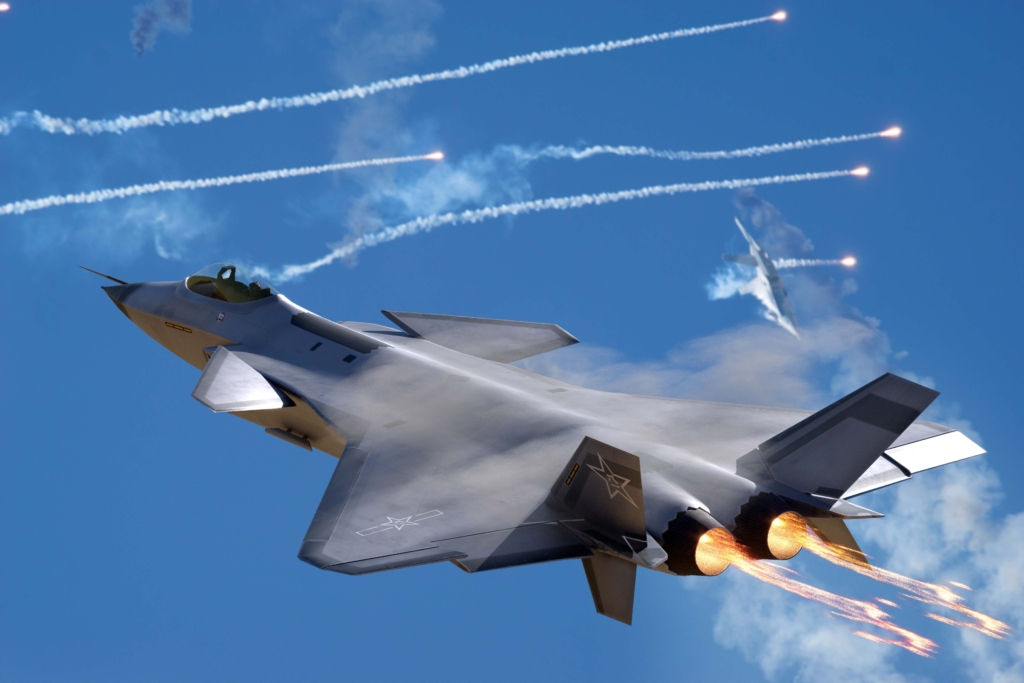
Pakistan has signalled interest in acquiring the J-35, adding further pressure on India’s force-modernisation timeline.
In 2024, the Cabinet Committee on Security approved INR150 billion ($1.65 billion) for AMCA’s design and prototype development.
AMCA: India’s leap into fifth-generation fighter capability
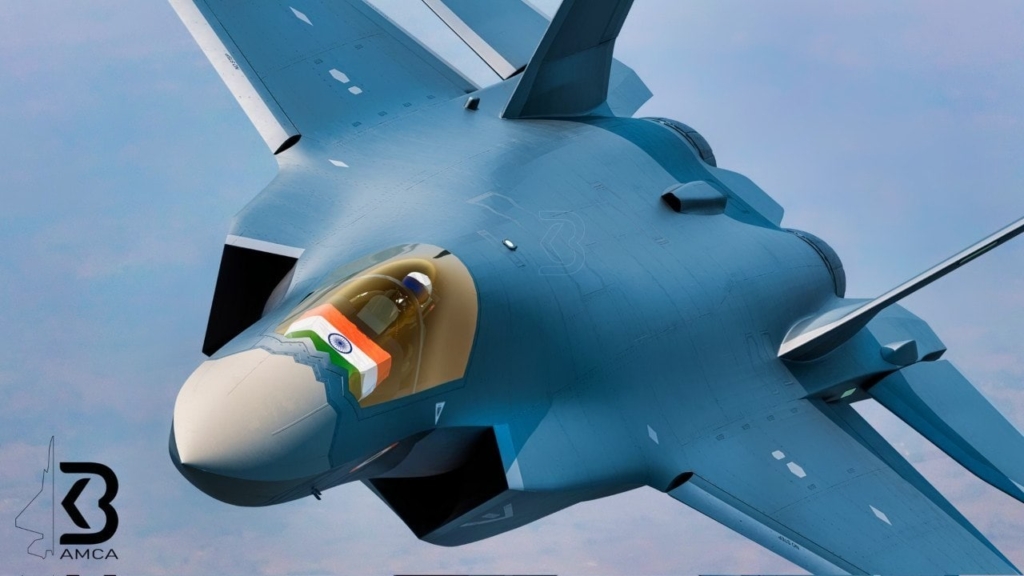
The AMCA will be a 25-tonne class twin-engine stealth fighter being designed with supercruise capability, internal weapons bays, advanced avionics, AI-assisted mission support, and stealth shaping. It will be developed in two variants:
- AMCA Mk-1, powered by American GE F414 engines.
- AMCA Mk-2, featuring a 120-kilonewton engine jointly developed by France’s Safran and India’s GTRE, aimed at complete engine indigenisation.
“This aircraft will not be noticed on enemy radar; that is the stealth feature of this aircraft,” said AMCA Project Director Krishna Rajendra earlier this year.
HAL’s role in India’s combat aircraft programmes is evolving
Despite stepping aside from AMCA execution, HAL remains central to India’s aerospace ecosystem, particularly in serial production, systems integration and sustainment. Analysts note that the company’s experience will remain indispensable as AMCA moves into later production phases.
Debbarma emphasised that freeing HAL from overlapping development pressures may ultimately strengthen the programme’s prospects.
“By empowering capable private players to lead AMCA development, India can expand its aerospace industrial base, deepen its supplier ecosystem and improve on-time delivery,” he said.
“HAL’s continued focus on production-heavy programmes preserves its strengths while allowing AMCA to proceed with a dedicated execution model.”
Rather than signalling institutional decline, HAL’s absence from AMCA reflects a broader shift in India’s defence-industrial policy, one that prioritises distributed capability, competitive execution and long-term scalability.
If successful, the AMCA programme could mark the first time India delivers a fifth-generation fighter through a private-sector-led industrial framework, reshaping how future combat aircraft are designed, built and sustained.
Featured image: