DHRUV-NG takes to the skies as HAL steps into India’s civil helicopter market

December 30, 2025
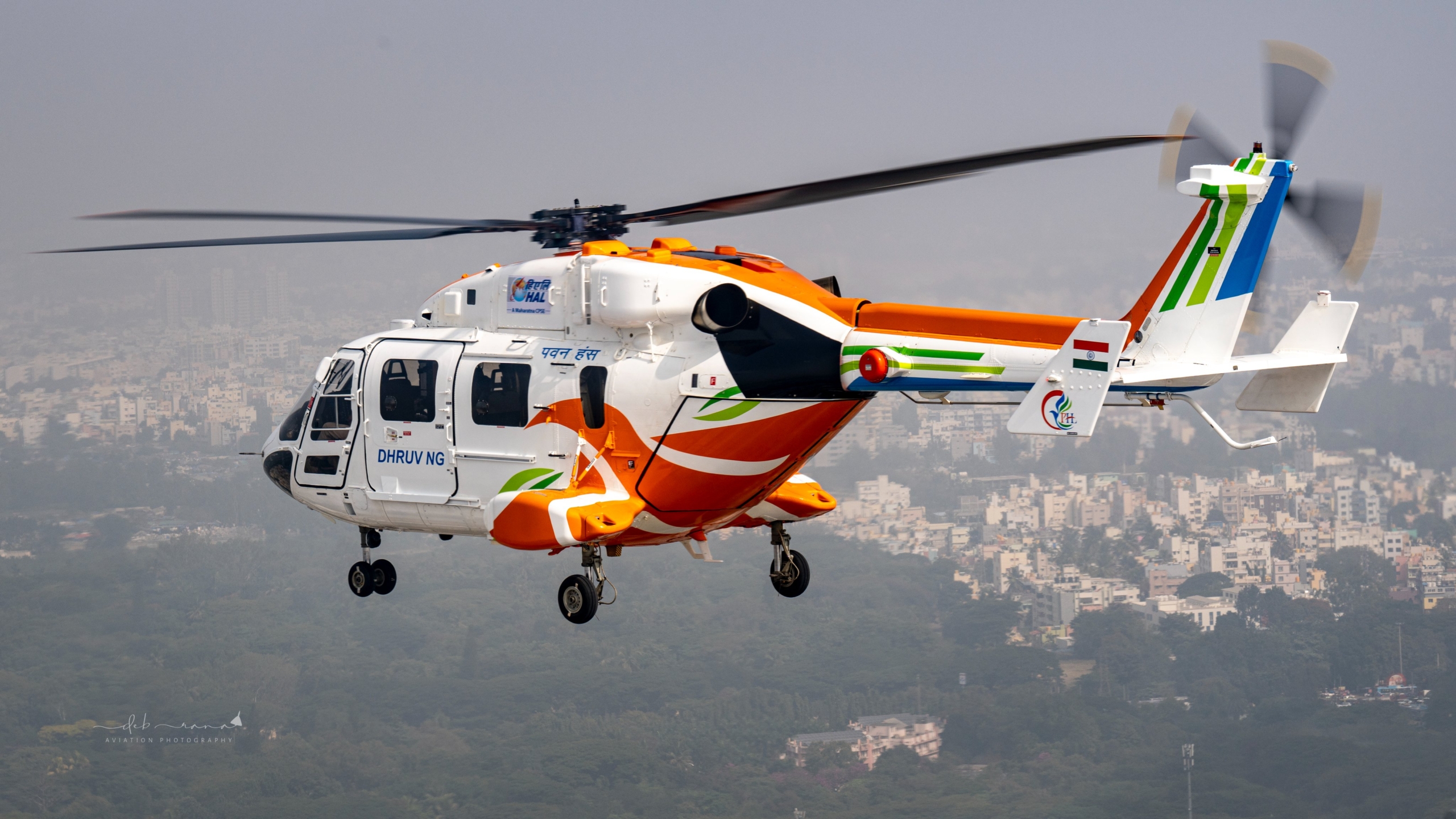
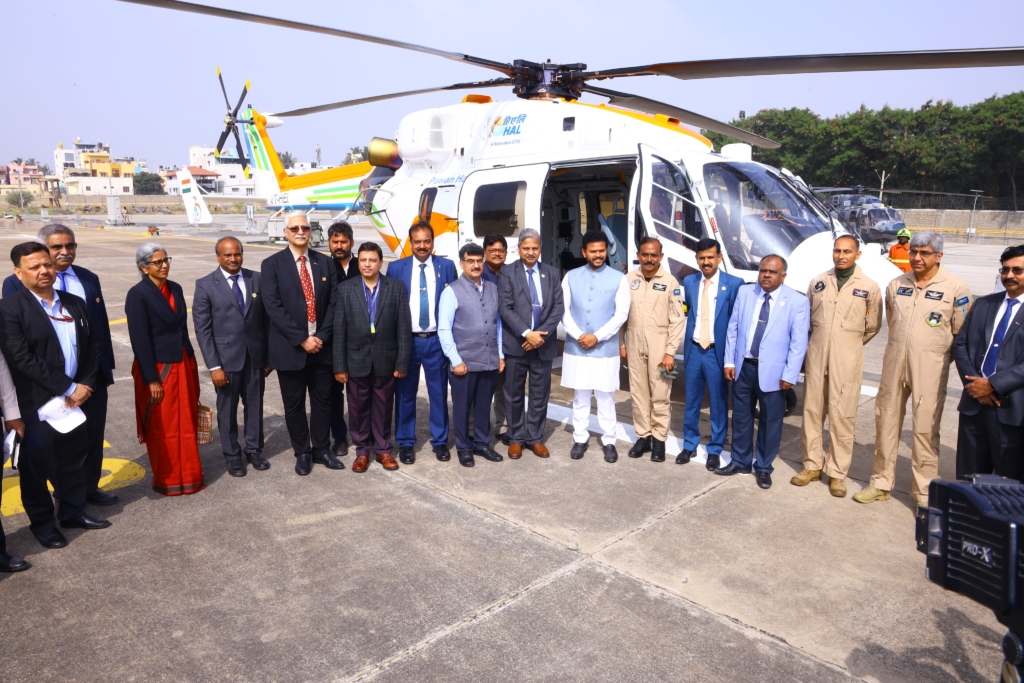
Hindustan Aeronautics Limited (HAL) has carried out the maiden flight of its DHRUV-NG helicopter, marking a significant milestone not only for the company but for India’s long-developing ambitions in civil rotorcraft.
The flight, conducted at HAL’s Helicopter Division in Bengaluru, signals the public-sector manufacturer’s formal entry into the civilian helicopter market, a segment long dominated by imported platforms.
The inaugural sortie was flagged off by Civil Aviation Minister K. Ram Mohan Naidu, with senior officials from the Directorate General of Civil Aviation (DGCA), HAL and Pawan Hans in attendance.
Indian Hindustan Aeronautics Limited (HAL) today inaugurated the DHRUV-NG, a 5.5-tonne helicopter at its Bengaluru facility in the presence of country's leadership.
— FL360aero (@fl360aero) December 30, 2025
Powered by Shakti 1H1C engines, the helicopter has a maximum take-off weight of 5,500 kg, a top speed of 285 km/h,… pic.twitter.com/nVfyngxYtK
Together, the helicopter’s first flight and the DGCA certification of an indigenous civil engine mark one of the clearest attempts yet to reduce India’s dependence on imported helicopters and build a sustainable domestic civil rotorcraft industry.
At its core, the DHRUV-NG represents HAL’s effort to adapt a proven military airframe to the realities of the civil aviation market, where certification discipline, reliability and operating economics matter as much as raw performance.
DHRUV-NG civil helicopter programme built on a proven Dhruv airframe
The DHRUV-NG is a 5.5-tonne light twin-engine helicopter designed and manufactured by HAL.
While it draws on the Dhruv family that has served the Indian armed forces for years, HAL says the NG civil variant has been specifically upgraded to meet international civil certification standards and the expectations of commercial operators.
According to the company, the earlier civil Dhruv Mk-1 platform has accumulated more than 24,000 flight hours. The DHRUV-NG builds on that experience with refinements aimed at safety, passenger comfort and maintainability, areas where earlier Indian civil helicopter programmes struggled to gain sustained market traction.
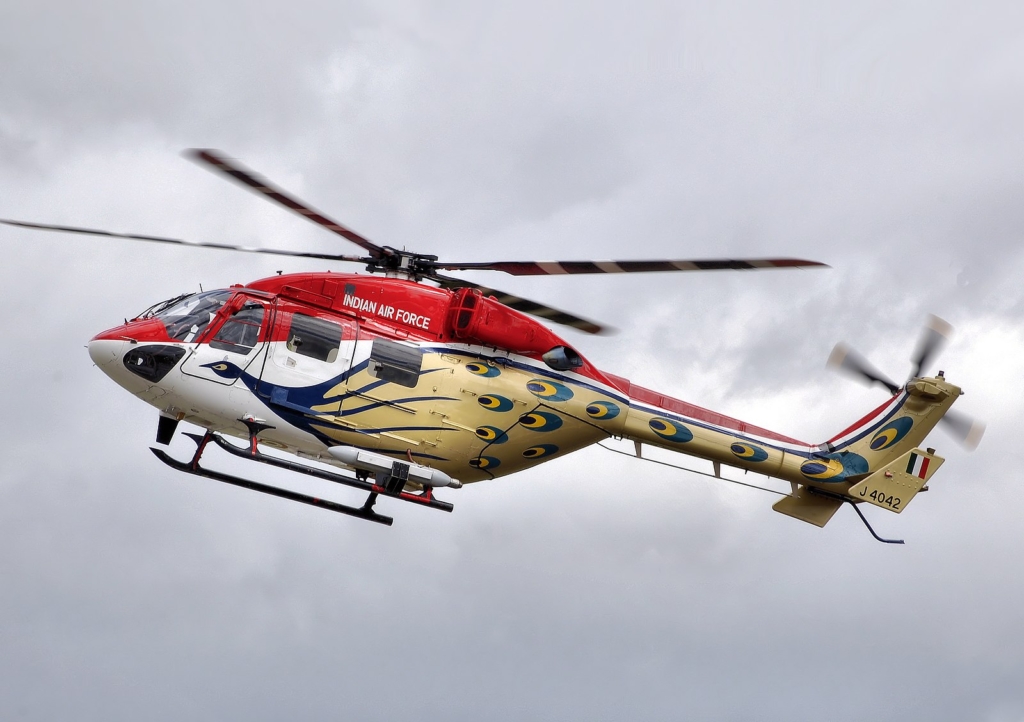
The helicopter is intended for a wide range of civilian roles, including passenger transport, VIP operations, emergency medical services, offshore logistics, law enforcement, and search and rescue. HAL argues that this operational flexibility is essential in a country where demand varies sharply by region, altitude and mission profile.
DGCA certifies indigenous Shakti engine for civil helicopter operations
Running in parallel with the helicopter’s first flight was another development with long-term significance for India’s civil aviation industry.
During the event, HAL received certification from the DGCA for the indigenous manufacture of the Shakti civil helicopter engine. This marks the first time India’s aviation regulator has certified an aero engine for domestic civil production.
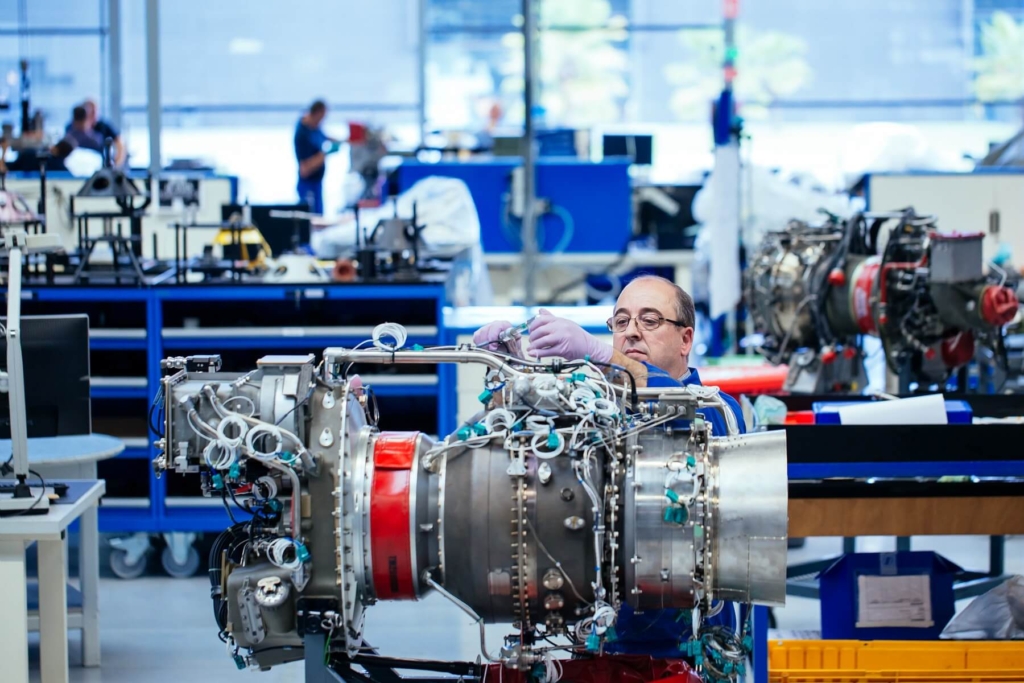
Achieved in coordination with Safran Engines and the regulator, the certification clears the Shakti 1H1C engine for use on civil platforms, including the DHRUV-NG.
For policymakers, this step is as important as the helicopter itself. Engines remain among the most complex and tightly controlled components in aviation, and domestic certification opens the door to greater self-reliance in maintenance, spares and lifecycle support, historically major cost drivers for Indian helicopter operators.
DHRUV-NG certification timeline and civil flight test programme
HAL says the DHRUV-NG is now progressing towards full civil certification, which is expected within the next three to four months.
Before that, the company plans to conduct around 130 test flights using two prototypes to demonstrate compliance across performance, systems and safety requirements.
The helicopter features a civil-certified glass cockpit compliant with AS4 standards, alongside a modern avionics suite designed to improve pilot situational awareness.
Safety features include crashworthy seats, self-sealing fuel tanks and twin-engine redundancy, an important consideration for offshore and high-altitude operations. Advanced vibration control systems are intended to improve ride quality, particularly for medical evacuation and VIP missions.
Designed for Indian operating conditions and global civil helicopter markets
HAL says the DHRUV-NG has been engineered to operate across India’s diverse conditions, from hot and humid coastal environments to high-altitude Himalayan regions.
With a service ceiling of around 6,000 metres, a maximum speed of roughly 285 km/h and a range of about 630 km with reserves, the helicopter is positioned to cover most domestic civilian mission profiles.
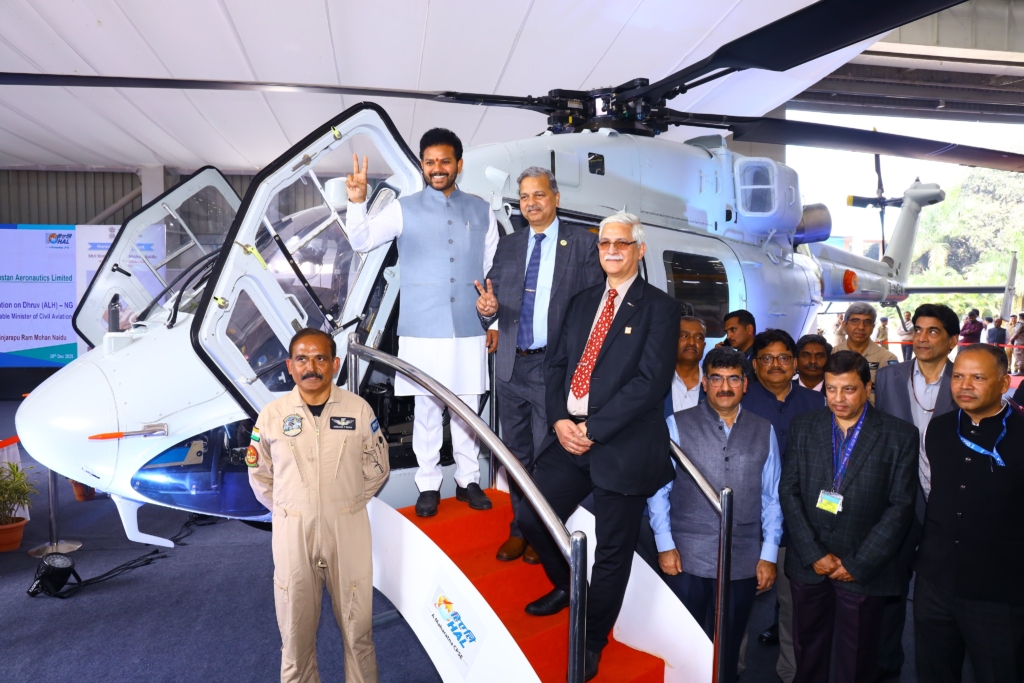
The configurable cabin offers around 7.33 cubic metres of space and can be adapted for multiple roles. In high-density layouts, it can seat up to 14 passengers, while VIP configurations prioritise comfort. Emergency medical service variants can accommodate four stretchers alongside medical staff.
Cost competitiveness is central to HAL’s pitch, positioning the DHRUV-NG as a domestic alternative to imported light twin-engine helicopters that dominate India’s civil fleet.
India’s civil helicopter market faces rising demand and limited domestic supply
India currently operates around 300 helicopters across civilian and government fleets, but policymakers estimate demand could rise to more than 1,000 aircraft over the next decade.
Growth is expected from offshore energy projects, regional connectivity, tourism and emergency services. Government schemes such as UDAN 5.1, which extends viability gap funding to helicopter operations, are intended to make short-haul rotorcraft services more affordable.
However, repeated operator failures have highlighted persistent structural challenges, including high acquisition costs, dependence on foreign spares and thin operating margins. HAL’s challenge will be to demonstrate that a domestically built helicopter can deliver predictable costs, strong after-sales support and regulatory credibility.
From maiden flight to commercial reality for the DHRUV-NG
State-owned operator Pawan Hans is expected to be among the early users of the DHRUV-NG, with plans to deploy the helicopter for offshore logistics, including operations supporting the Bombay High oil fields.
For HAL, success in the civil sector will depend less on the symbolism of a maiden flight and more on sustained reliability, certification rigour and customer support, areas where international competitors have long set the benchmark.
The DHRUV-NG’s first flight does not, by itself, transform India’s civil helicopter landscape. It does, however, represent a concrete step towards reducing reliance on imported platforms and building an indigenous rotorcraft ecosystem that extends beyond defence.
Featured image: HAL