Troublesome tiltrotor: V-22 Osprey safety flaws went unaddressed for almost a decade

December 15, 2025

The U.S. Government Accountability Office has uncovered a stark flaw in the V-22 Osprey programme. Some of the aircraft’s most serious safety risks have sat unresolved for an average of nine years.
The GAO does not argue that the Osprey is inherently unsafe. Instead, it suggests something more unsettling. The oversight system built to keep the aircraft safe has moved too slowly, handled information inconsistently and struggled to close out risks that were well understood, sometimes for nearly a decade.
V-22 Osprey accident rates rise as unresolved safety risks build up
The report comes after two difficult years for the Osprey community. Serious accidents in fiscal years 2023 and 2024 were significantly higher than long-term averages for both the Marine Corps and Air Force fleets. Only the Navy’s CMV-22B escaped that trend.
The most high-profile loss occurred in November 2023, when an Air Force CV-22B crashed off Yakushima, Japan, killing all eight personnel on board. That accident triggered a worldwide grounding and renewed pressure from Japan, the aircraft’s only foreign operator, which has repeatedly paused its own Osprey operations following U.S. mishaps.
Across the programme’s life, reporting shows hundreds of accidents of varying severity. The GAO’s latest analysis doesn’t sensationalise these numbers, but it does make the link clear. When serious hazards linger for years, there is a greater chance they will eventually feed into real-world events.
Why Osprey crashes keep happening, according to investigators
The GAO avoids retelling individual accidents, yet its conclusions line up closely with what investigators have seen for years.
Some mishaps stem from mechanical failures, often involving the propulsion or drive-train system. The proprotor gearbox has been a repeated concern, most notably in the fatal Yakushima accident, where investigators concluded the aircraft suffered a catastrophic transmission failure.
Others arise from human-factor issues, such as procedural mistakes, training inconsistencies or maintenance errors. In a number of cases, both mechanical and human elements have played a role, especially in demanding flight conditions.
A separate Navy review released the same week adds weight to these findings. Ordered after a run of serious accidents, the review concluded that the V-22 remains airworthy but that its overall risk posture has grown steadily over time.
Mechanical issues, including drivetrain and gearbox faults, were linked to more than half of the most serious mishaps in recent years, while lapses in procedures and training contributed to others. The review identified 32 actions to improve safety and readiness across all three services.
It also noted that some technical fixes, particularly for gearbox components, will take years to work through the fleet, meaning that interim measures such as inspections and procedural updates remain essential. In effect, the Navy’s findings mirror the GAO’s: the Osprey’s problems are not new, and they have accumulated faster than they have been resolved.
GAO finds broken oversight system behind long-standing Osprey safety issues
This is the heart of the GAO’s criticism. The Osprey flies in three U.S. services, yet each uses slightly different processes, data systems and reporting chains. Safety information does not always flow where it needs to go. Multi-service forums have lapsed for years at a time. Maintenance findings in one fleet have not always reached crews in another.
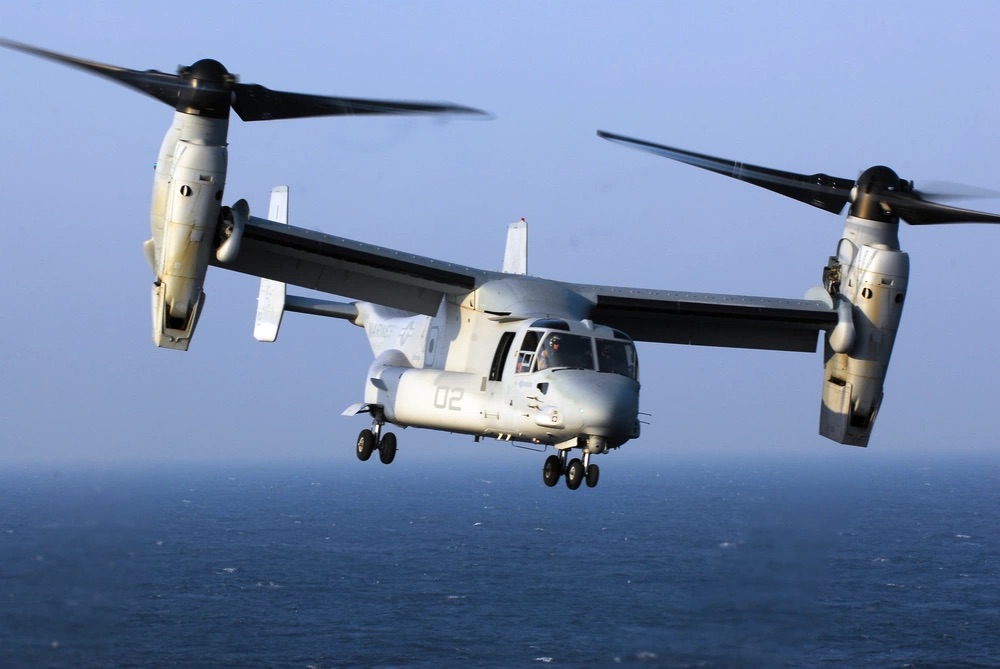
The result is a slow and uneven approach to fixing problems. Risks are identified, logged and then remain open for extraordinary lengths of time. The nine-year median is not an outlier. It is a sign of a system that struggles to analyse, prioritise and resolve hazards with the urgency a complex aircraft demands.
The Navy’s review reached similar conclusions, warning that long-standing risks had been allowed to build up over time and that corrective action often lagged behind emerging hazards.
Can the Pentagon fix the safety issues with the V-22 Osprey?
The Department of Defense has accepted all of the GAO’s recommendations. These include rebuilding the risk-management framework, setting clearer oversight roles and re-establishing proper information-sharing between the Marine Corps, Air Force and Navy.
None of these changes will be instant. Some mechanical fixes, such as improvements to gearbox components, will take time to work through the fleet. Cultural and organisational changes will take longer still.
But for the communities that fly and maintain the Osprey every day, the GAO report offers something useful: clarity. The aircraft’s issues are not a mystery. They are not even new. What’s needed now is a safety system that moves as quickly as the risks demand.
As the Osprey enters its third decade of service, the question is no longer whether the platform can do the job. It already has. The real challenge is whether the system around it can respond to problems before they repeat — not nine years later.