A ‘gamechanger’ for African aviation: Free Route Airspace goes live across West and Central Africa

December 11, 2025

The African Airlines Association (AFRAA) has hailed Free Route Airspace (FRA) as a “game-changer” for the continent’s airspace.
After two years of trials, FRA is now operational across the West and Central African (WACAF) region. A shift that AFRAA says “will reshape African aviation” for years to come.

What is Free Route Airspace?
FRA enables airlines to plan and fly direct User Preferred Routes (UPRs), ensuring more efficient and environmentally friendly air travel.
Rather than having to fly fixed conventional routes, UPRs allow pilots to fly the most fuel-efficient and timely paths based on current conditions and subject to airspace availability. Pilots also benefit from increased flexibility and the ability to adjust to various factors, including weather and wind conditions.
While flights remain subject to air traffic control across West and Central African (WACAF) airspace, air navigation service providers have committed to approving newly requested UPRs within 48 hours. From mid-2026, no approvals will be required for UPR requests.

Describing the implementation of FRA as a “game-changer” for African aviation, Abderahmane Berthe, AFRAA’s Secretary General, said:
“This is a testament to what we can achieve through collaboration. By cutting flight times and fuel consumption, we are not only boosting the competitiveness and profitability of our airlines but also making a significant contribution to environmental sustainability.”
How Africa collaborated to deliver continent-wide Free Route Airspace
Multiple stakeholders have been involved in realising the vision of FRA.
These include:
- Afreximbank
- Agence pour la Sécurité de la Navigation Aérienne en Afrique et à Madagascar (ASECNA)
- Ghana Civil Aviation Authority (GCAA)
- Nigerian Airspace Management Agency (NAMA)
- Régie des Voies Aériennes (RVA)
- Roberts Flight Information Region
- International Air Transport Association (IATA)
- International Civil Aviation Organization (ICAO)
- Civil Air Navigation Services Organisation (CANSO)
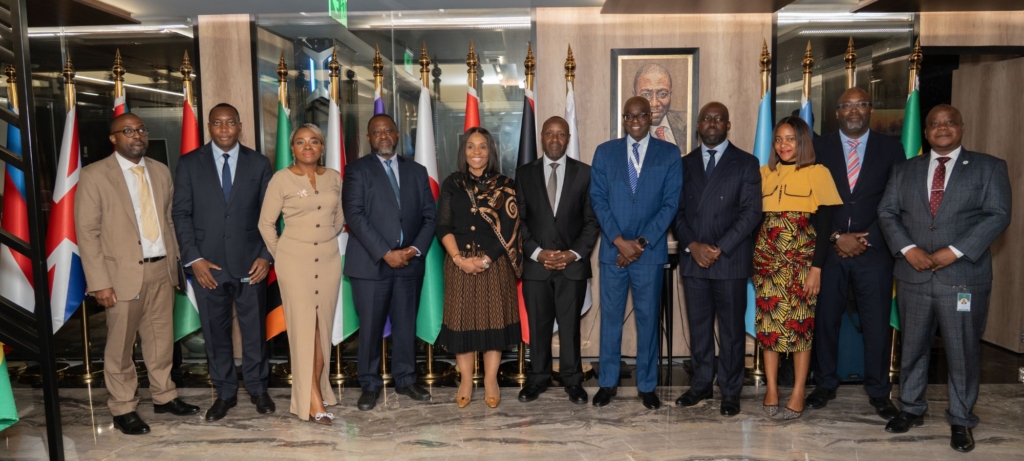
Kanayao Awani, executive vice president at Afreximbank, underlined the bank’s unwavering support for FRA. “Efficient, safe and well-regulated air services are critical to facilitating intra-African trade, tourism and connectivity in line with the objectives of the Single African Air Transport Market (SAATM) and the African free Continental Trade Area (AfCFTA),” she said.
How Free Route Airspace benefits African airlines
According to Eurocontrol, FRA is already in place across more than three-quarters of European airspace. The wider rollout in Africa will provide African carriers with multiple benefits.
By selecting the most efficient route based on wind, weather, traffic levels, and aircraft performance, airlines will benefit from lower fuel burn and operating costs . For African carriers, many of which face tight margins, even small route shortening can save thousands of dollars per flight.
FRA also supports reduced CO2 emissions with aircraft able to fly shorter routes and optimise altitude profiles. It will also support better use of airspace and less congestion by reducing choke points near major hubs and enabling more predictable operations as well as smoother traffic flows.

In terms of improved competitiveness against non-African carriers (many of which already benefit from FRA in Europe and the Middle East), FRA could help shorten flight times from Africa to Europe, the Middle East and Asia, improve fleet utilisation and increase schedule reliability.
How ATMs and ANSPs benefit from Africa’s Free Route Airspace
Implementing FRA requires harmonisation between states as well as upgrades to air traffic management (ATM) systems and enhanced surveillance.
Once in place, the move from fixed routes to free routes brings notable gains. For air navigation service providers (ANSPs), these include more predictable traffic flows thanks to stable planned trajectories and better conflict detection with modern ATM tools.
Slightly reduced controller workload is another benefit, as evidenced in Europe, where fewer radio transmissions, monitoring and tactical coordination are needed.

Eurocontrol also notes that controllers operating in free route airspace environments are adamant they don’t want to return to a fixed ATS route network.
Six African airlines now operating Free Route Airspace across WACAF
In Africa, six local carriers – Ethiopian Airlines, Kenya Airways, EgyptAir, RwandAir, ASKY Airlines and Royal Air Maroc – have been approved to operate UPRs connecting 30 major city pairs.
These new flexible routes are projected to generate significant annual returns, including saving over 1,393 hours of cumulative flight time, slashing 5,000 metric tonnes of fuel burn and avoiding around 16,000 metric tonnes of CO2 emissions, as a reduction in annual fuel costs of about $15 million.

Africa’s FRA roadmap: extending Free Route Airspace across the continent
With FRA now active in West and central Africa, AAFRA’s focus will shift to East and Southern Africa.
“FRA is widely accepted as a good way forward to manage airspace more efficiently and sustainably,” says Kamil Alawadhi, IATA’s regional vice president for Africa and the Middle East. “It’s about getting the right people around the table to make it go across all of Africa. It just needs time and resources and the right stakeholders around the table.”