Behind the scenes: How Farnborough International Airshow keeps its flying display safe

8 min read
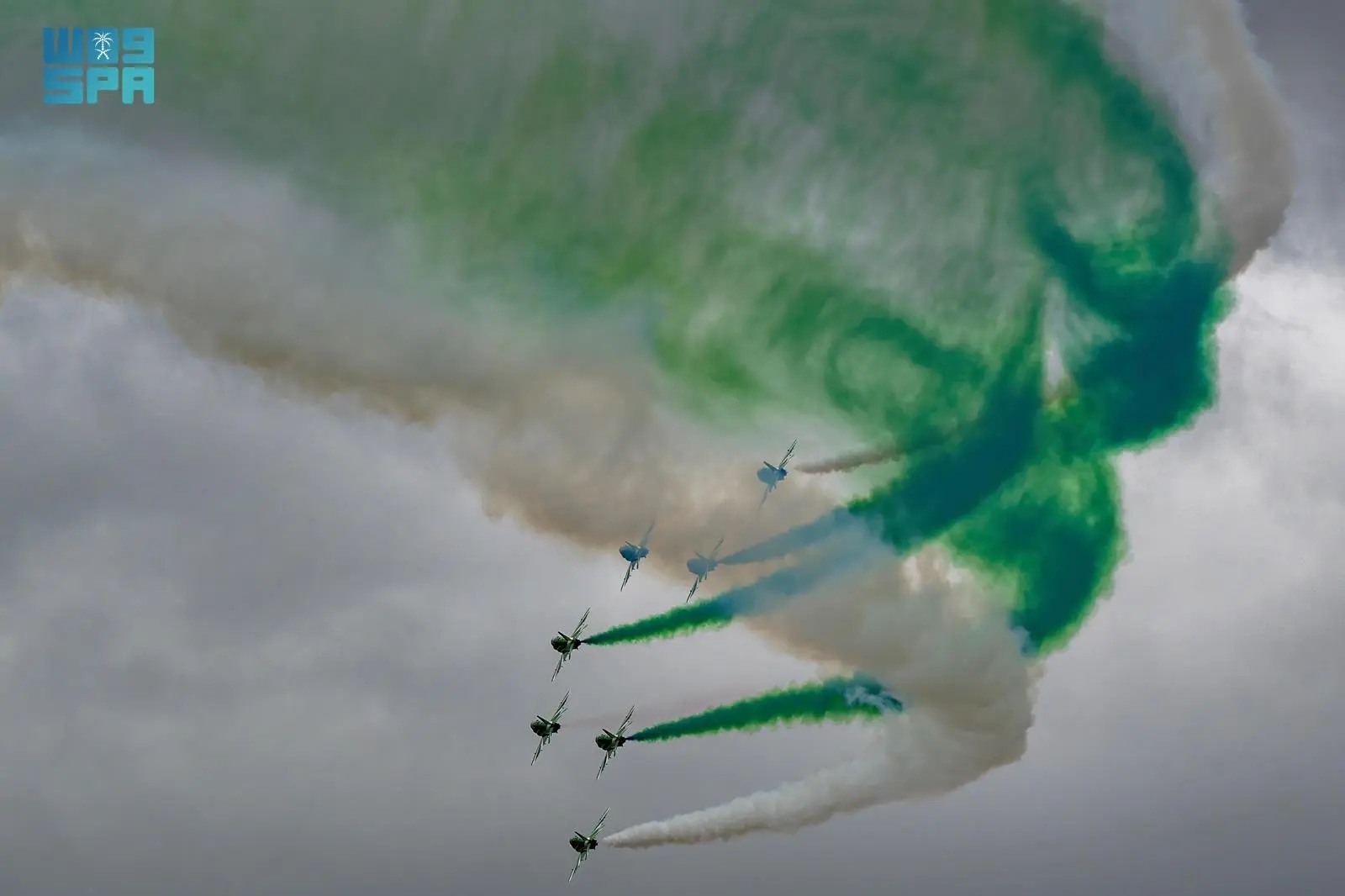
For visitors, the Farnborough International Airshow flying display begins when the engines start and the first aircraft appears over the runway.
Behind the scenes, preparations begin almost as soon as the previous show has finished.
“Safety is the foundation of everything we do at Farnborough Airport,” said Liz Arnold, air traffic services manager for NATS at Farnborough Airport. “The event brings together display aircraft, business aviation, commercial traffic operating in nearby airspace and local airspace users, so there is a huge amount of preparation involved.”
The challenge is not simply to keep fast jets, airliners, helicopters and experimental aircraft safely separated. Farnborough sits within a particularly complex part of the UK’s airspace system, close to traffic serving Heathrow and Gatwick and surrounded by other active airports and airfields.
Commercial traffic continues to move through the wider network during the show, while Farnborough Airport must also accommodate its normal business aviation operation outside the flying display periods.
Delivering the display requires close coordination between regulators, air traffic controllers and airport teams. Military operators, event organisers, pilots and surveillance specialists also play roles in the wider safety operation.
CAA provides the regulatory oversight
The UK Civil Aviation Authority, naturally, plays a major part in overseeing the safe delivery of the flying display.
“We are responsible for the regulatory framework and the safety oversight of the flying display,” said Giancarlo Buono, the CAA’s Group Director of Safety and Airspace Regulation and an executive board member. “We also issue flight permits for specific aircraft that are flying, and we have a role in the coordination or approval of the airspace changes necessary to make the flying display possible at Farnborough.”

The regulator’s involvement at this year’s event will also extend beyond its formal safety duties. The CAA is holding one of its board meetings at Farnborough during the show.
“This is to demonstrate our commitment to enabling the industry and protecting consumers,” Buono said.
The CAA’s work provides the regulatory foundation, but turning those requirements into a functioning airshow operation involves months of detailed planning.
NATS works with Farnborough Airport, Farnborough International, the CAA, neighbouring airports, military operators and colleagues across the UK air traffic network.
Together, they develop procedures covering rehearsals, protected display areas, temporary airspace arrangements, contingency planning and daily coordination during the show.
Protecting the display without stopping the network
When a flying display begins, a dedicated block of airspace is activated around Farnborough. This gives participating aircraft a protected environment in which to perform while keeping unrelated traffic clear.
“The key is careful separation and coordination,” Arnold said. “During display periods, a dedicated block of airspace is allocated for the flying display.”
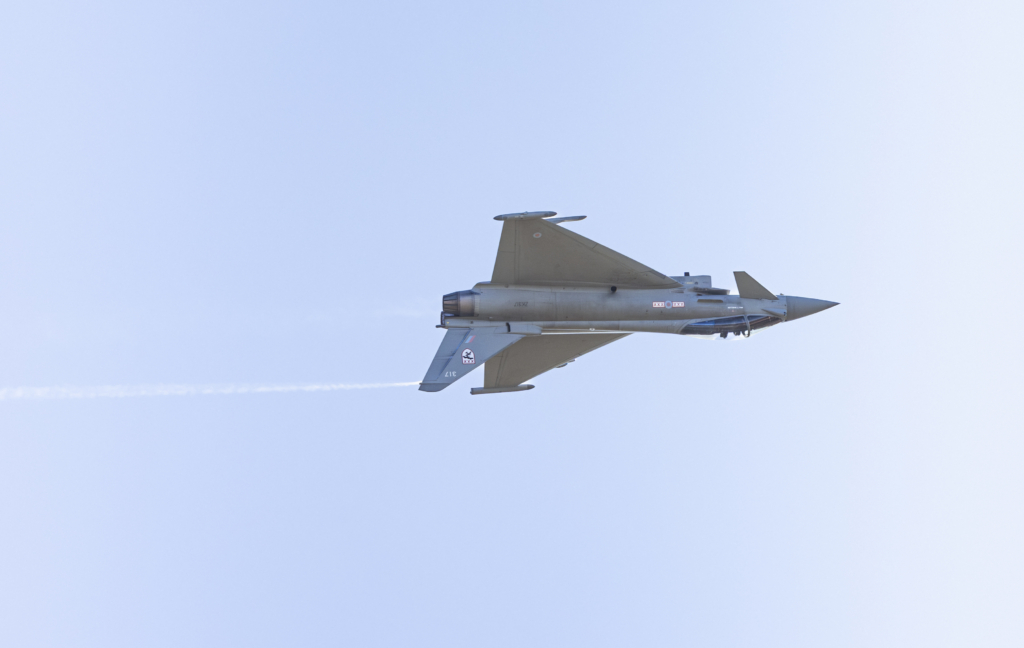
Away from that protected block, air traffic around the airshow continues as normal.
“What many people don’t realise is that the UK’s wider air traffic network continues operating throughout the airshow,” Arnold explained. “Aircraft are still arriving and departing from major airports, including Heathrow and Gatwick, and business aviation continues to use Farnborough Airport outside the display periods.”
Routes may be temporarily adjusted and specific procedures introduced to manage traffic around the display area. Farnborough’s controllers remain in contact with the NATS control centre at Swanwick and neighbouring air traffic units throughout the operation.
The protected airspace is activated only when needed, helping to limit the effect on other users while maintaining a safe environment for the display.
“We maintain constant communication so that airspace can be used as efficiently as possible while protecting the display activity,” Arnold added. Procedures are also in place to respond if an unexpected aircraft movement takes priority.
“If there is ever a situation where another aircraft needs priority access to the airspace, we have procedures that allow us to pause or terminate a display safely,” Arnold said.
It is a carefully controlled balancing act. The display must remain protected, but it cannot be planned in isolation from the thousands of other flights moving through southern England.
The hardest week comes before the show
The public sees the finished performance, but many of the most demanding flying movements take place before the show opens.
Display pilots must rehearse and validate their routines while Farnborough Airport continues handling its normal traffic. Controllers must identify suitable slots, accommodate visiting aircraft and manage the interaction between rehearsals and routine business aviation movements.
“The week before is the most challenging, as controllers mix our regular operation with validation and practice of the displays,” Arnold said. “We have to ensure a normal service for traffic wanting to use the airfield, as well as using available slots for rehearsals.”

Additional air traffic control resources are brought in for the event and controllers receive specialist briefings. Each display pilot must also meet the required safety standards before being granted permission to perform.
This process allows routines to be assessed, adjusted and approved before they are flown in front of the public.
“The biggest challenge is balancing two very different operations at the same time,” Arnold explained. “On one hand, you are hosting a very busy event, with complex flying displays, rehearsals and high-profile aircraft movements. On the other hand, you are continuing to provide a safe and efficient service for everyday airport operations and the wider aviation network.”
Creating a digital picture of the display
Alongside regulatory oversight and air traffic control, surveillance technology provides another layer of situational awareness.
Fortem Technologies, which supported the 2024 airshow and has returned for Farnborough 2026, uses radar and artificial intelligence to monitor aircraft within the display environment.
Its system creates a digital model of the airspace, including the horizontal boundaries and altitude limits within which aircraft are permitted to operate.
“We carefully monitor the restrictions in the airspace and create rules within our system,” said Magnus Wallmark, Fortem Technologies’ executive vice president of sales and business development. “We create a map showing exactly where pilots are allowed to display the aircraft and where it is safe to do so.”
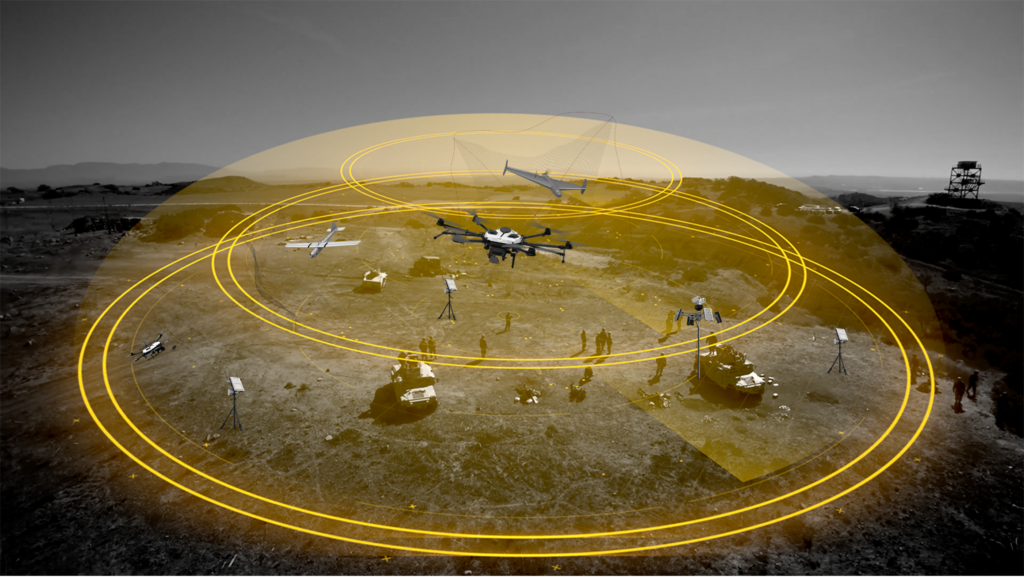
Aircraft tracks can then be monitored against those approved areas. If an aircraft crosses a defined boundary, the system records the event and generates an alert.
“Any violation triggers an alarm,” Wallmark said. “The pilot can then be debriefed after the display so they know exactly where it happened and can correct it for the next round.”
The information gives pilots, air traffic control and display safety teams a detailed record of each flight path. This supplements visual observation and makes it possible to identify precisely where an aircraft approached or crossed a restriction.
It is a demanding environment for radar. Buildings, vehicles, crowds, helicopters and fixed-wing aircraft all generate movement and potential returns around the site.
Fortem uses AI to filter that background activity and focus on the objects relevant to the flying display.
“It is a very complicated environment around Farnborough Airport,” Wallmark explained. “You have buildings, people, a lot of moving cars and aircraft being displayed. The radar sees everything, but artificial intelligence helps us show exactly what we want to see and track the display aircraft in a very busy environment.”
Fortem has also used data gathered during its previous Farnborough deployment to refine the system for 2026.
“We looked at tracking aircraft from hovering and standing still in the air all the way up to roughly Mach 1,” Wallmark said. “What we learned from the previous airshow has helped us update the AI and our radars for this year.”
Watching for unauthorised drones
The same surveillance picture can help identify objects that should not be inside the protected airspace.
An unauthorised drone operating near a display aircraft could create a collision risk, disrupt a routine or force flying activity to be suspended. Smaller drones at low altitude may also be difficult to identify using conventional aviation surveillance systems.
“The challenge is that some drones are difficult to detect using traditional aviation surveillance systems, particularly at lower levels,” Arnold said. “To mitigate that risk, a combination of airspace restrictions, monitoring technologies, operational procedures and close collaboration with the authorities is used throughout the event.”
Fortem’s radar uses micro-Doppler signatures to help distinguish between different categories of objects rather than presenting every detection as an unidentified return.
“We have micro-Doppler signatures for different types of aircraft, helicopters, fixed-wing aircraft, multicopter drones, fixed-wing drones and birds,” Wallmark said. “We use artificial intelligence, machine learning and deep learning to create libraries of those signatures and distinguish between different types of objects.”
This means an object entering the monitored area can be classified and tracked, giving the airshow’s safety teams information about what it is, where it is and how it is moving.
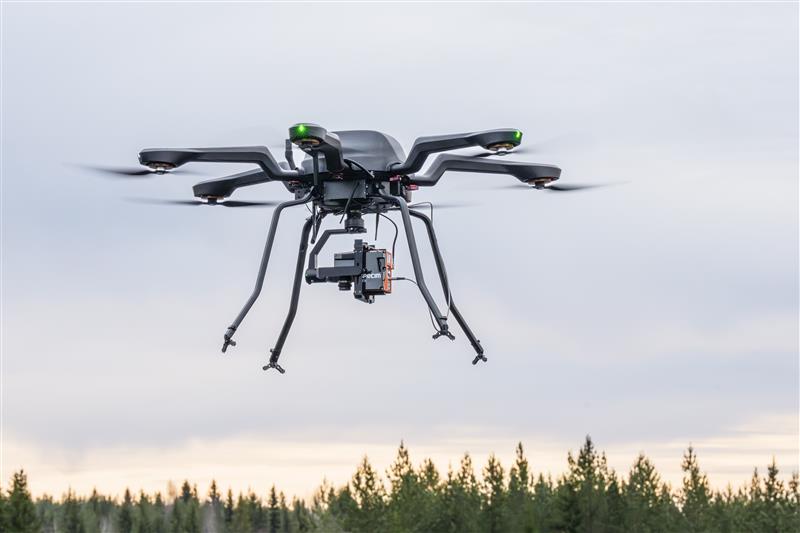
Fortem’s role at Farnborough is surveillance and airspace monitoring rather than physically intercepting an intruding drone.
“During this airshow, our task is to ensure air safety and airspace monitoring, so we would provide the information to the police or another authority to deal with the drone,” Wallmark explained.
The company does, however, offer an interception capability for use in other environments. Its DroneHunter system uses a fully autonomous interceptor aircraft equipped with net guns to capture drones, ranging from small systems to much larger threats.
At Farnborough, any decision over how to respond to an intrusion would rest with the police or another authorised body. Wallmark did not indicate that DroneHunter would be deployed at the show.
Many organisations, one safety system
No single organisation is responsible for every aspect of safety at Farnborough. Alongside companies like the CAA, NATS and Fortem Technologies, dozens of other stakeholders are instrumental in achieving a fun and safe display.
“The display itself only represents part of the challenge,” Arnold said. “Behind the scenes, there is a huge amount of coordination required between controllers, airport teams, event organisers, neighbouring airfields and the national air traffic network.”
For spectators, the result is a precisely choreographed flying display.
In reality, every manoeuvre rests on months of planning, repeated rehearsals, regulatory oversight, real-time surveillance and constant communication across one of the busiest areas of airspace in the country.
Sign up for our newsletter and get our latest content in your inbox.



More from


October 11, 20263 min read