FAA grounds entire MD-11 fleet after fatal UPS crash in Kentucky

November 9, 2025
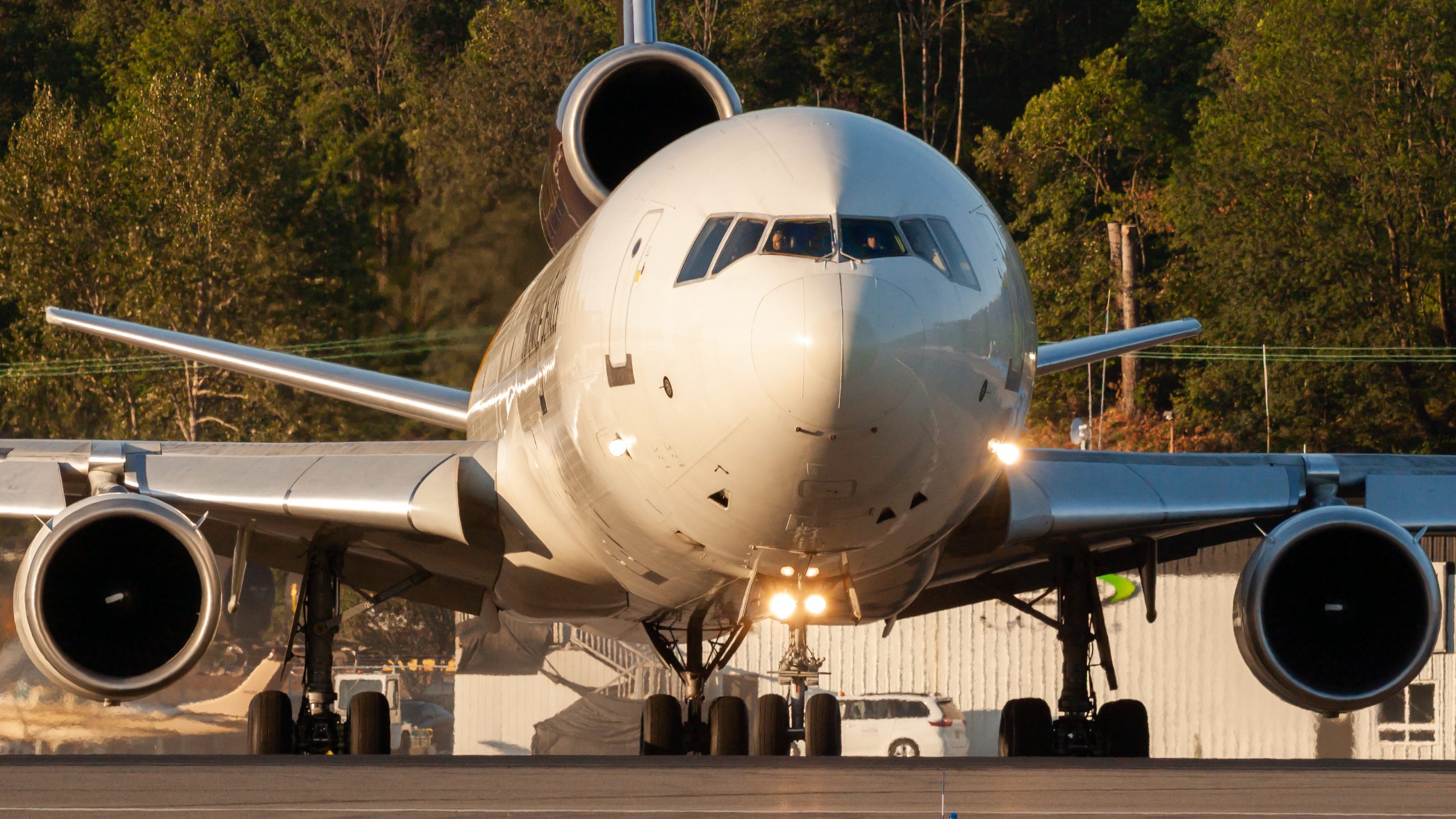
The United States Federal Aviation Administration (FAA) has grounded all McDonnell Douglas MD-11 and MD-11F aircraft following the catastrophic crash of a UPS freighter in Louisville, Kentucky, that killed at least 14 people.
The emergency airworthiness directive, issued late on 7 November, prohibits any further flights until detailed inspections of engines and pylons are completed.
The regulator cited an “unsafe condition” that could compromise flight safety, confirming investigators had verified that the aircraft’s left-hand engine and pylon detached during take-off.
“This condition could result in loss of continued safe flight and landing,” the FAA stated, describing the order as an “interim action” pending the full investigation.
The decision was made effective immediately due to the risk to public safety.
Operators stop flying the MD-11
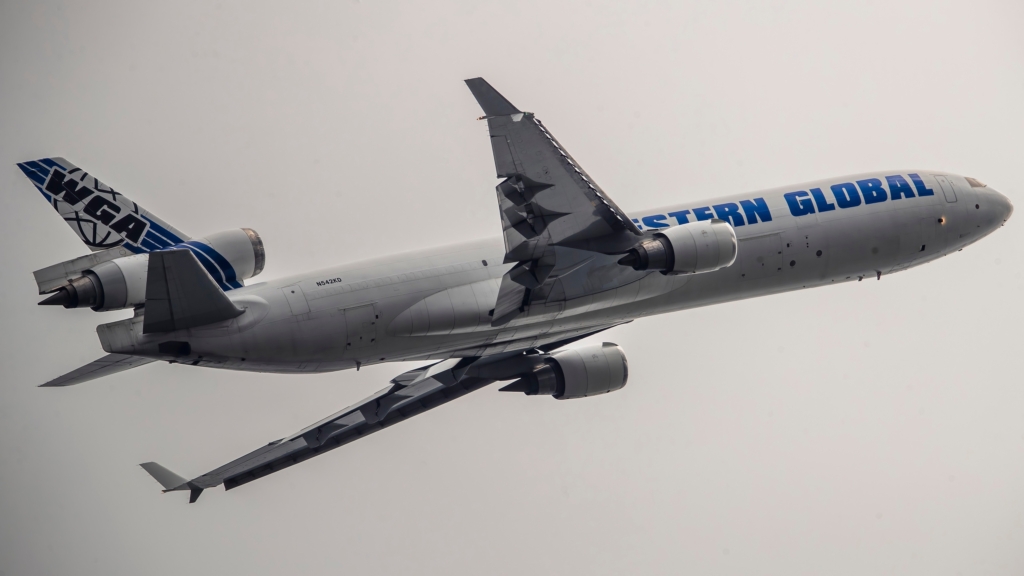
UPS and FedEx Express — which together operate more than 50 MD-11 freighters — said they had already grounded the type following Boeing’s recommendation earlier in the week. Western Global Airlines is also expected to comply with the FAA directive.
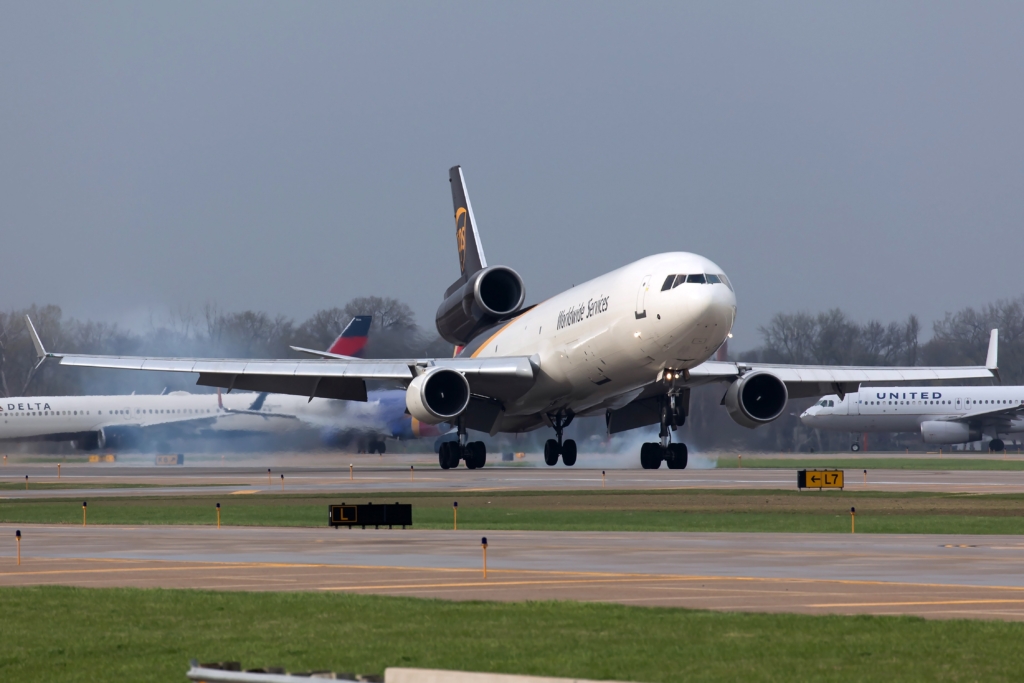
“Out of an abundance of caution and in the interest of safety, we have made the decision to temporarily ground our MD-11 fleet,” UPS said in a statement, adding that contingency plans are in place to maintain reliable service.
FedEx said it had activated backup measures to minimise disruption, noting that “safety remains our top priority.”
Boeing, which absorbed the MD-11 programme through its 1997 merger with McDonnell Douglas, confirmed it supported the FAA’s action.
“With safety as our top priority, we recommended suspension of operations while further engineering analysis is conducted,” the company said.
Investigations confirm UPS MD-11 engine fell off
The grounding order follows preliminary findings from the National Transportation Safety Board (NTSB), which confirmed that the left engine of UPS Flight 2976 separated from the wing during take-off on 4 November.
The 34-year-old MD-11F was departing Louisville Muhammad Ali International Airport for Honolulu when it veered off course and exploded beyond the runway perimeter.
Security footage reviewed by investigators shows the engine detaching during the take-off roll; it was later recovered roughly 8,700 feet from the end of the runway.
NTSB board member Todd Inman said the aircraft had recently undergone a heavy maintenance check in San Antonio and clarified earlier reports that it reached 475 feet were inaccurate — data now shows it climbed only about 100 feet before impact.
UPDATE TO MEDIA BRIEFING: During yesterday’s media briefing, the preliminary information reported was that FAA ADS-B data indicated a GPS altitude of 475 feet. When considering how FAA ADS-B altitude is reported, this equates to approximately 100 ft above ground level. Data from…
— NTSB Newsroom (@NTSB_Newsroom) November 7, 2025
“A warning bell sounded in the cockpit, and the pilots tried to regain control,” Inman said. “The voice recorder captured about 25 seconds of their efforts before impact.”
Witnesses reported seeing flames trailing from the left wing moments before the crash.
Fuel from approximately 38,000 gallons of Jet A ignited, destroying two nearby businesses.
Louisville Mayor Craig Greenberg confirmed 14 fatalities, including all three crew members, describing it as “an incredibly sad day for our city and for the UPS family.”
FAA and NTSB focus on structural integrity and maintenance history of MD-11
Investigators are examining whether the engine separation stemmed from structural fatigue or maintenance error.
The aircraft underwent major maintenance just weeks before the crash at ST Engineering’s facility in San Antonio, Texas. The company confirmed it provides airframe support for UPS but declined further comment while the investigation continues.
Both flight recorders are now at the NTSB laboratory in Washington D.C., where specialists expect to retrieve usable data despite heat damage.
NTSB investigators open the crash survivable memory unit of the cockpit voice recorder recovered from the UPS MD-11 freighter that crashed Tuesday in Louisville, Kentucky. The work was performed in the NTSB vehicle recorder laboratory in Washington. (Source: NTSB) pic.twitter.com/3yrSGf2Y9O
— NTSB Newsroom (@NTSB_Newsroom) November 6, 2025
A 2019 repair to a pylon crack on the same aircraft is also under review, according to reports from WAVE3 News, raising questions about long-term fatigue or inspection procedures.
The FAA’s inspection order is expected to focus on the MD-11’s engine pylons and mounting assemblies. Any signs of corrosion, metal fatigue, or improper installation could prompt broader design reviews or additional directives.
MD-11: ageing freighter faces renewed scrutiny
The MD-11, introduced in 1990 as a stretched evolution of the DC-10, was produced until 2000 with 200 units built. Passenger versions were retired a decade ago, leaving the type as a cargo workhorse for UPS, FedEx and Western Global.
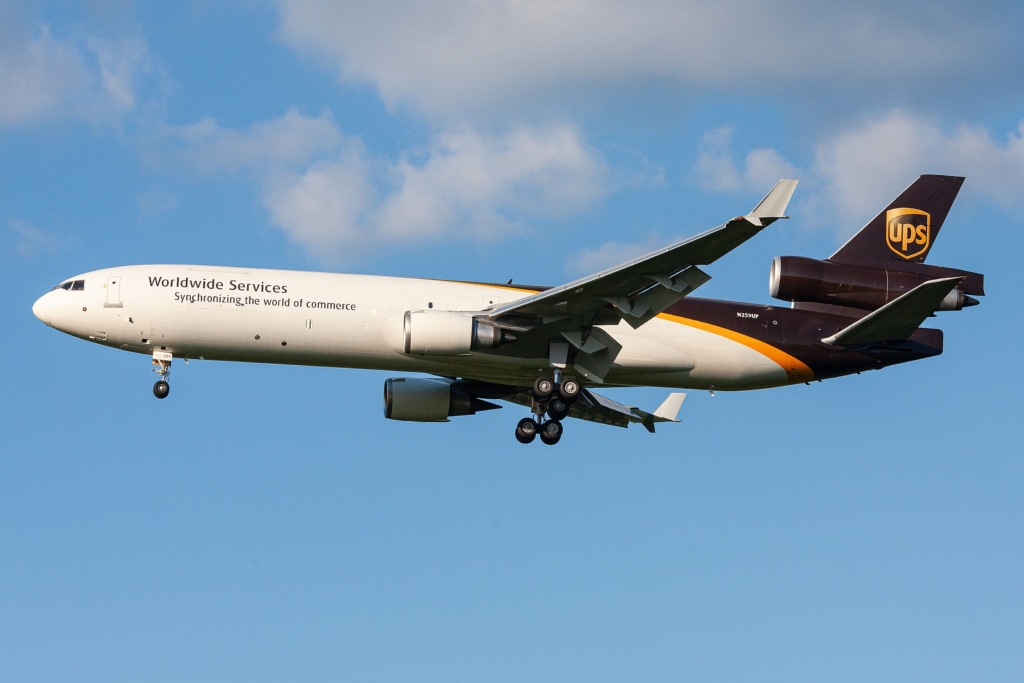
Despite a respectable safety record overall, the MD-11 has featured in several high-profile accidents, largely tied to its demanding flight-control characteristics and high landing speeds. The Kentucky crash is the first known case of a complete engine detachment on take-off.
About 70 MD-11s remain in service worldwide. Operators will now be required to complete structural inspections before any return to flight, potentially accelerating the type’s phase-out.
Impact on UPS and FedEx operations expected to be limited
Both UPS and FedEx have indicated that overall network performance remains stable.
The majority of their lift is provided by Boeing 747-400F and 767-300F aircraft, allowing both carriers to reallocate capacity and protect priority shipments such as medical and pharmaceutical freight.
FedEx said its “integrated air and ground network allows flexibility to maintain service continuity,” while UPS added that customer service commitments “remain unaffected.”
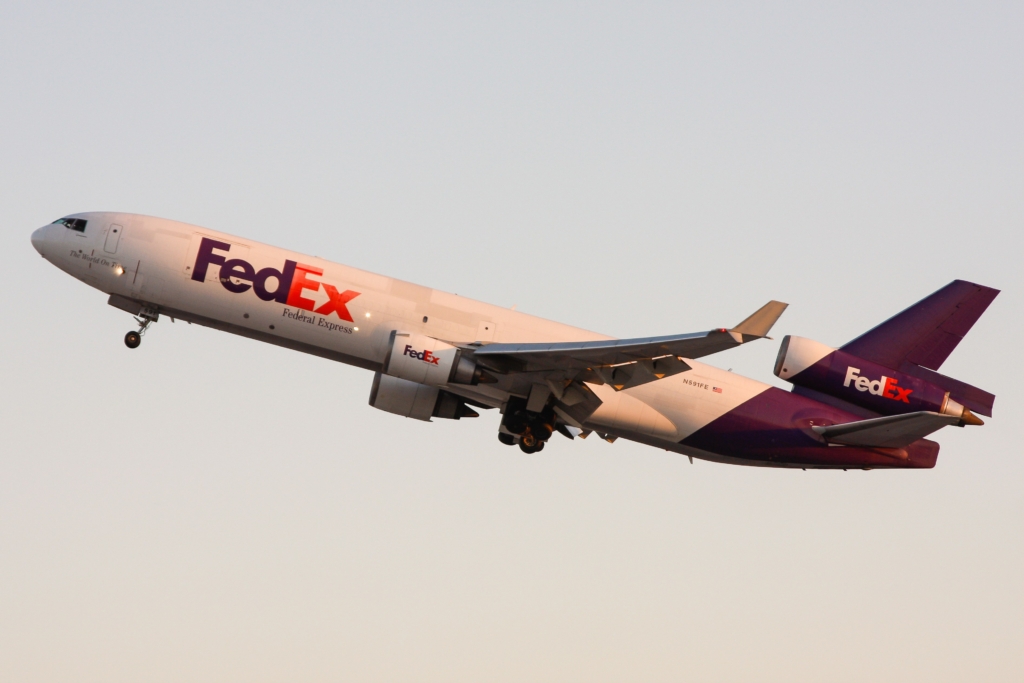
As investigators continue to sift through wreckage scattered across half a mile of industrial land near Louisville Airport, the community is mourning the victims.
Mayor Greenberg pledged city support for affected families and emergency workers.
The NTSB’s preliminary report is expected later this month, with a full investigation likely to take 12 to 24 months.
Depending on findings, the FAA may issue additional structural-inspection mandates or approve modifications before clearing the MD-11 fleet to fly again