Delta’s first quarter loss of $289 million fails to dampen airline’s outlook for the rest of 2026

April 9, 2026
Despite recording a first-quarter net loss of $289 million, Delta Air Lines is remaining bullish regarding its full-year performance. Increasing ancillary baggage charges and reducing network capacity are just two ways that the carrier intends to protect itself from the fallout from the Iran War, as the airline continues to capitalise on strong demand across its cabins.
Delta remains positive despite first-quarter loss
Atlanta-based Delta Air Lines is remaining upbeat regarding its outlook for 2026, despite recording a first-quarter loss of $289 million. This figure compares to recorded profits of $320 million the previous year. The airline’s operating revenue increased from $14 billion between January and March 2025 to $15.9 billion for the latest quarter.
The airline said that it is “best positioned to navigate” the ramifications of the Iranian conflict and is taking measures to mitigate its losses through a series of cost-cutting measures. Despite seeing fuel expenses in the first quarter come in at $2.6 billion, up 8% year-on-year, the company recorded revenues of $14.2 billion, up 9.4% over the same period in 2025.
Looking ahead, Delta projects revenues to grow in the second quarter of 2026 in the “low teens,” with operating margin in the 6% to 8% range and adjusted earnings per share from $1 to $1.50. Shares in the carrier jumped nearly 10% on the announcement, also buoyed by the latest news of the temporary ceasefire between the US and Iran.
Speaking about the airline’s latest fiscal performance, Ed Bastian, CEO of Delta, said that the company was “best positioned to navigate” the fallout from the Iranian conflict, with a strong balance sheet, a leading brand, healthy revenue figures, and positive demand for travel throughout 2026. He added that premium revenue grew by 14% compared to a year ago, with loyalty and related revenue climbing 13%.
Despite the airline facing its toughest challenge since the COVID-10 pandemic, Bastian said that the carrier was taking “actions to protect margins and cash flow” that would further protect it from the uncertainty that prevails in the marketplace. This includes “meaningfully reducing capacity growth, with a downward bias until the fuel environment improves, and moving quickly to recapture higher fuel costs,” said Bastian.
The network cuts will result in a 3.5% reduction in passenger capacity over the next three months, with domestic routes where multiple daily flights are likely to be most hit. Elsewhere, the airline will increase its checked baggage fees for the first time in two years. A $10 increase will see the first checked bag go up from $35 to $45, while the second will rise from $45 to $55.
How Delta has mitigated against high jet fuel prices
Delta expects that the carrier’s jet fuel bill will equate to $2 billion more between April and June 2026 than last year, based on a fuel price of around $4.30 a gallon.
The airline walked away from fuel hedging around ten years ago, joining a group of other major US carriers that did likewise, potentially increasing its exposure to sudden price hikes.
However, the airline has retained a partial buffer through its ownership of the Trainer refinery located near Philadelphia, which can supply a portion of its fuel needs at production cost. By owning its own oil refinery, Delta said it saves around $300 annually.
By owning its own refinery, Delta can benefit when the gap widens between the price of crude oil and refined products, as it has the ability and capacity to produce refined products like jet fuel on its own without external factors playing a part.
Delta’s CEO remains hopeful for 2026
“Delta’s results underscore the power of our brand and the durability of our financial foundation. We delivered earnings that were more than 40% higher than last year, even with a significant increase in fuel costs and operational disruptions across the industry,” said Bastian.
“In the June quarter, we expect to lead the industry with $1 billion of profit. And while the recent fuel spike is currently impacting earnings, I am confident this environment ultimately reinforces Delta’s leadership and accelerates long-term earnings power,” he added.

As reported by the Financial Times, Bastian said the airline had not yet updated its financial guidance for the rest of the 2026 fiscal year as this would be “premature given all the uncertainty” around the conflict in Iran and the repercussions of the 14-day ceasefire.
Other highlights of Delta’s first quarter
In terms of operational performance and despite the Iran War, Delta was named as North America’s most on‑time airline by Cirium for the fifth consecutive year.
On-time performance and fleet reliability are expected to improve further over the coming years following the carrier placing an order for 95 new aircraft, which includes 34 Airbus A321neos single-aisle jets, 31 A330neo and A350 widebody aircraft and 60 Boeing 787-10 Dreamliners, with all orders being placed during the first quarter of 2026.
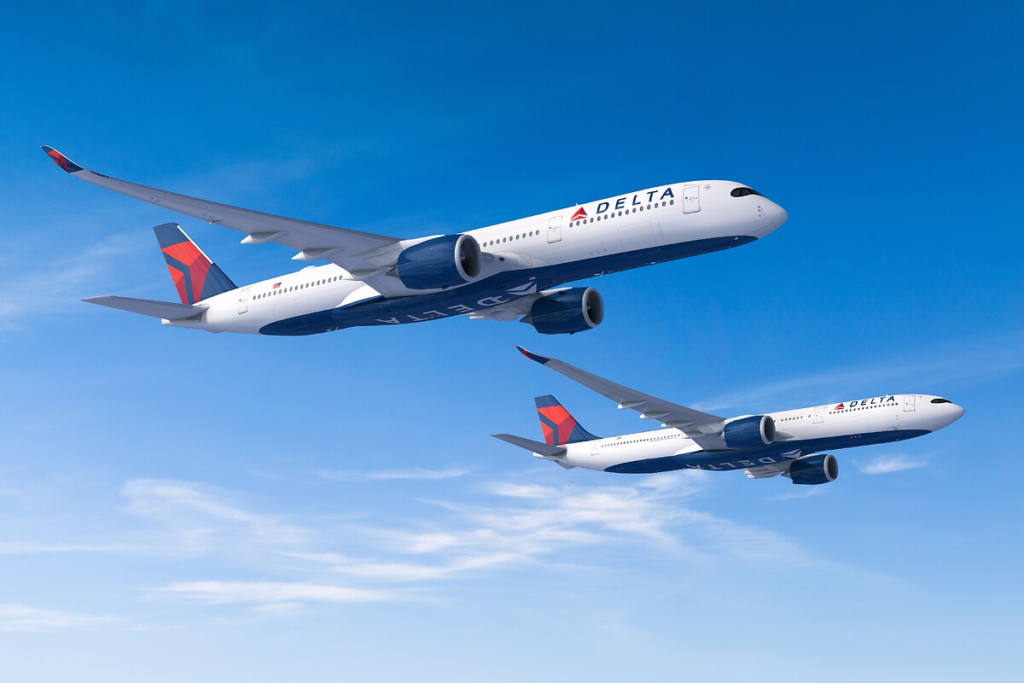
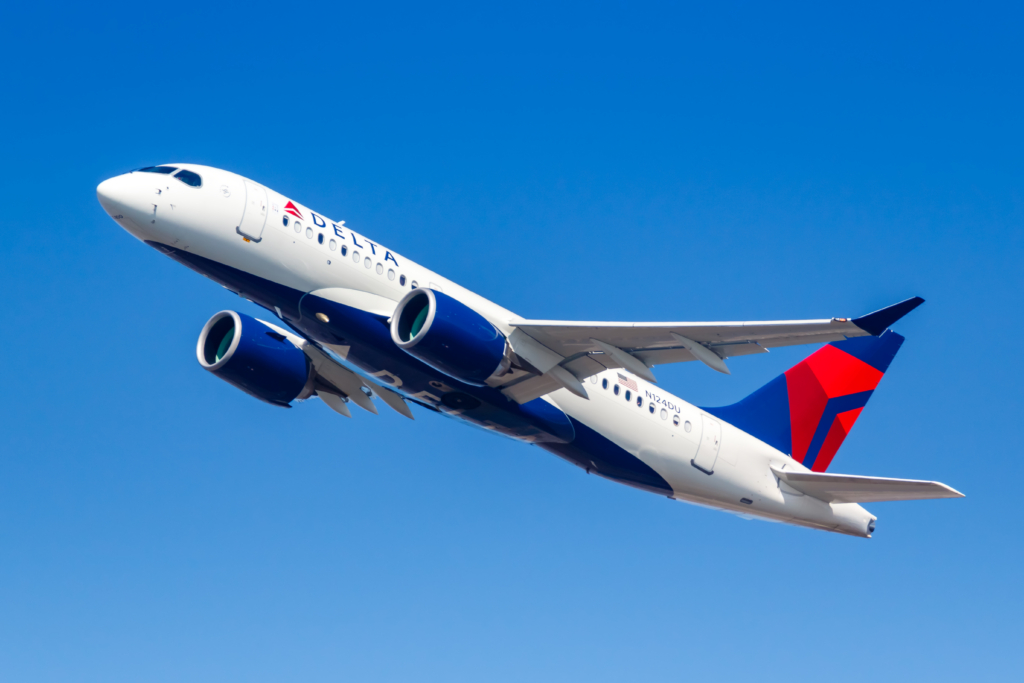
The new aircraft are expected to allow for the replacement of older, less-efficient aircraft, network growth and margin expansion through fleet commonality and synergies. The airline took delivery of eight new aircraft in the March quarter, including A321neo and A220-300 aircraft.
Other milestones reached by Delta during the first quarter of 23026 included Delta TechOps became the first and only North American airline MRO with full overhaul capability across both the LEAP-1A and LEAP-1B engines.
Elsewhere, the carrier announced new daily services between Austin (AUS) and Phoenix (PHX) and expanded service from Austin to Bozeman (BZN) beginning in winter 2026/27, bringing the total number of destinations served from Austin to 30 by December 2026.
Delta also announced an expanded service from Los Angeles (LAX) to Florida starting next winter, including Palm Beach (PBI), Tampa (TPA), and Orlando (MCO), all operated by the carrier’s fleet of Airbus A321neos, while Delta also announced new nonstop services between New York-JFK and John Wayne Orange County (SNA) starting May 7, 2026, operated by aircraft equipped with the carrier’s premium Delta One cabin.
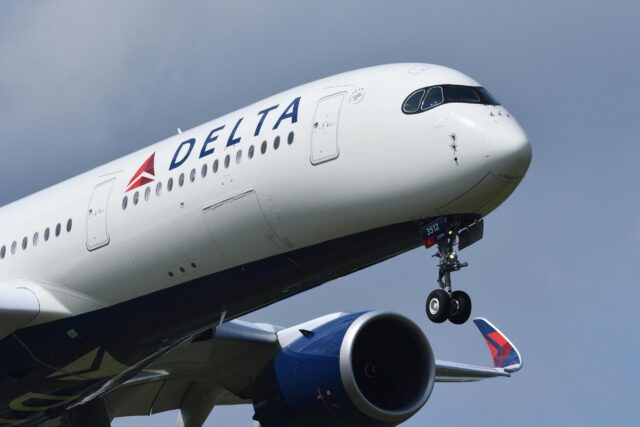
Featured image: Ian Dewar Photography / stock.adobe.com