Is it dangerous for airline passengers to switch seats before take-off?

November 16, 2025
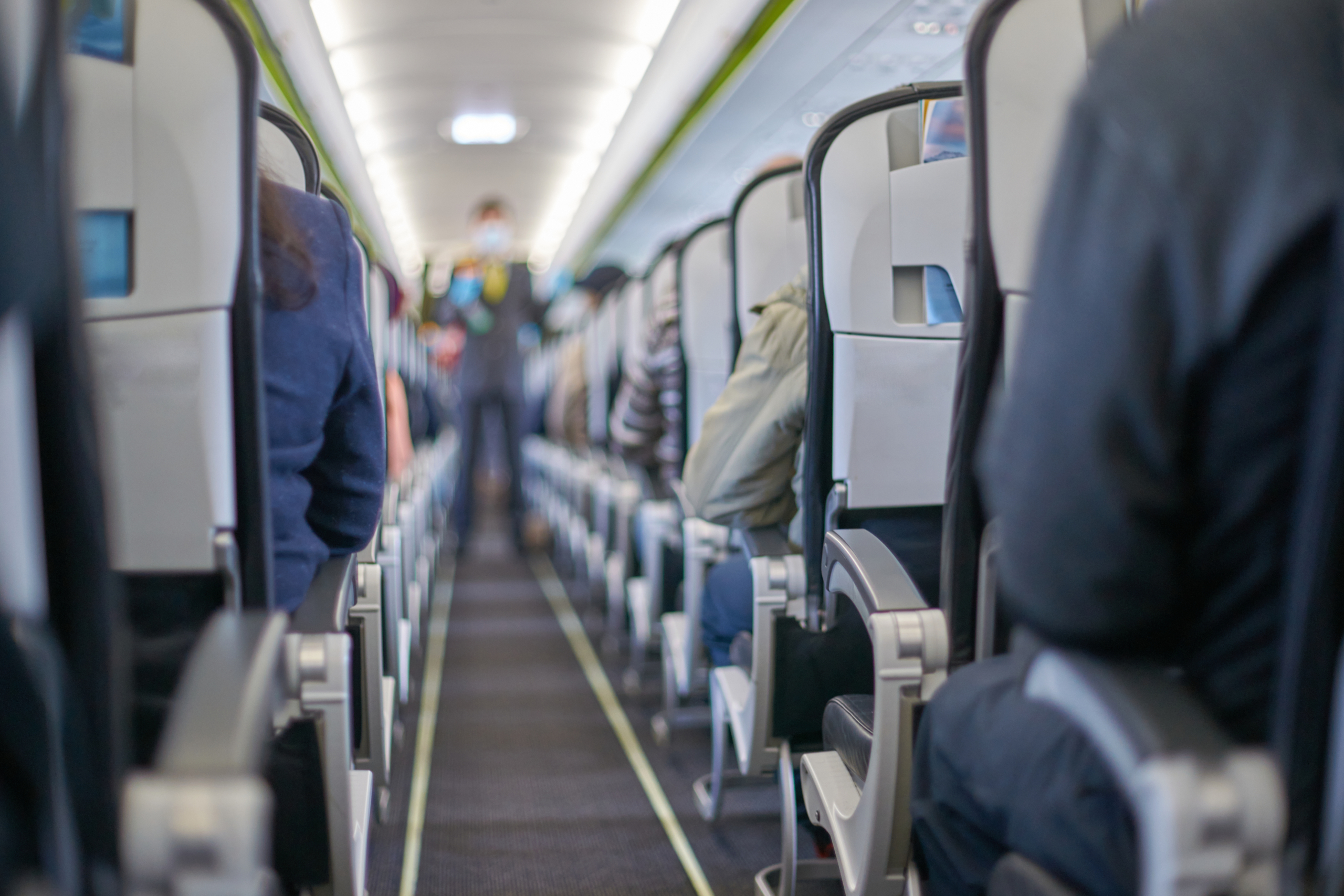
When boarding a flight, passengers may feel tempted to slide into an open seat with more legroom or sit with a friend. Many may think that switching seats before takeoff does little harm. However, changing seats without asking first can create safety and operational problems. That is why flight attendants consistently discourage it.
A balancing act in the sky
Weight-and-balance calculations performed before every flight are based on airline seat assignments. Pilots and airlines plan the distribution of passengers, luggage, and cargo to keep the aircraft’s centre of gravity within a specific range as required by the aircraft type. If it shifts too far forward or backwards, the plane may handle unpredictably — particularly during take-off and climb, when stability margins are tightest.

On large, widebody jets, one or two passengers moving may not make much difference. But on smaller aircraft — especially regional jets or turboprops — the effect can be significant. A single person changing seats can alter the centre of gravity enough to require a recalculation. That’s why crews sometimes ask passengers to move even after boarding, particularly on light-load flights, to properly balance the aircraft.
Even when the impact on balance is minor, sudden seat changes can disrupt pre-departure checks. During boarding and taxi, cabin crew are responsible for securing galleys, conducting safety demonstrations, and verifying that each passenger is seated with their seat belt fastened. Unplanned passenger movements can cause confusion or delay — and in aviation, delays can cascade quickly.
Why seat assignments matter for emergency response and investigations
Seat assignments are more than a convenience; they form part of the aircraft’s official documentation. Every flight manifest records names and assigned seat numbers. That data becomes vital in emergencies and in accident investigations.
If an evacuation occurs, cabin crew rely on accurate seat maps to verify which passengers have exited and which may still be on board. Rescue teams on the ground also use that information to cross-check survivors and account for those missing. Inaccurate seating information can delay search-and-rescue operations and cause distress for families waiting for news.

In post-accident investigations, seating data helps agencies such as the US National Transportation Safety Board (NTSB) and the European Bureau d’Enquêtes et d’Analyses pour la sécurité de l’aviation civile (BEA) reconstruct what happened inside the cabin. Investigators compare passenger injuries and survival outcomes with their recorded seat locations to understand impact forces, restraint performance, and cabin break-up patterns.
If passengers swap seats without telling the crew, the accuracy of the record breaks down. What seems like an innocent move can complicate evacuation coordination, delay victim identification, and obscure the clues investigators need to determine what went wrong.
Airline policies on seat changes vary
Airlines take different approaches to managing seat changes, but nearly all agree on one thing: don’t do it without permission. Some carriers explicitly state in their conditions of carriage that passengers must remain in their assigned seats until the doors are closed and the crew gives clearance to move. Others allow limited flexibility once boarding is complete and the weight distribution is finalised.
Japan’s Peach Aviation, for instance, tells passengers: “You are kindly requested not to change seats after boarding under any circumstances. This is also due to weight balance of the aircraft which could affect flight safety.”

In its Terms and Conditions, American Airlines warns passengers, “If you sit in a seat other than the one assigned, you may be asked to move.”
Delta Air Lines states, “If you’d like to move to an unoccupied seat within your ticketed cabin/seat product during the flight, please ask a flight attendant — changes are at the crew’s discretion and depend on safety considerations.”
When changing seats might be allowed
There are times when changing seats is acceptable — but only if the flight crew approves it. Once boarding is complete and the doors are closed, attendants can determine whether the aircraft’s balance allows for a seat move. They might permit passengers to spread out if there are empty rows, especially on longer flights.

Crew members are also more likely to approve a move for legitimate reasons, such as a broken seat, a non-functioning screen, mobility needs, or parents wanting to sit with their children. In each case, the key is communication. Asking politely shows respect for the crew’s authority over the cabin.
Some airline crews may allow seat changes once the aircraft is airborne and at cruising altitude. However, travellers should avoid sitting in premium sections they haven’t paid for.
Is switching your seat actually dangerous?
On a typical large commercial airliner, changing the seats of one or two passengers is unlikely to pose a measurable safety issue. Modern large jets have wide margins for centre-of-gravity variation. But the operational principle remains: the crew must know where everyone is seated.

On smaller aircraft, the risk is greater. Regional jets, turboprops, and other small aircraft operate with narrower weight-and-balance tolerances. As passengers move forward or aft, the center of gravity can move outside the certified limits. This can impact rotation speed and pitch. Therefore, some operators physically reseat passengers before takeoff or restrict boarding until the manifest matches the final seating arrangement.
Even when safety margins aren’t breached, moving without permission can cause confusion in the cockpit, complicate emergency plans, and introduce unnecessary risk. It also violates airline policy and, in some jurisdictions, could constitute non-compliance with crew instructions—an offence under aviation law.
The safest seat is the one you’re assigned
For most passengers, the desire to swap seats stems from comfort rather than defiance — a wish to sit together, stretch out, or find a window view. But those small acts of convenience can ripple through an aircraft’s tightly managed system of safety, balance, and accountability.
As a rule, the safest approach is for passengers to remain in their assigned seats until the crew says otherwise. Those who prefer to move should ask the crew politely once boarding is complete. Passengers who really want a better seat should book it in advance or pay for the upgrade.
Every flight relies on precision — from fuel calculations to passenger counts. Even one unplanned seat change can throw that precision off. What seems like a minor concession for comfort could complicate a carefully choreographed operation designed to keep everyone safe: in aviation, every seat matters.
Featured Image: elenavolf | stock.adobe.com