Autonomy moves airside as Changi Airport deploys driverless baggage tractors

January 21, 2026
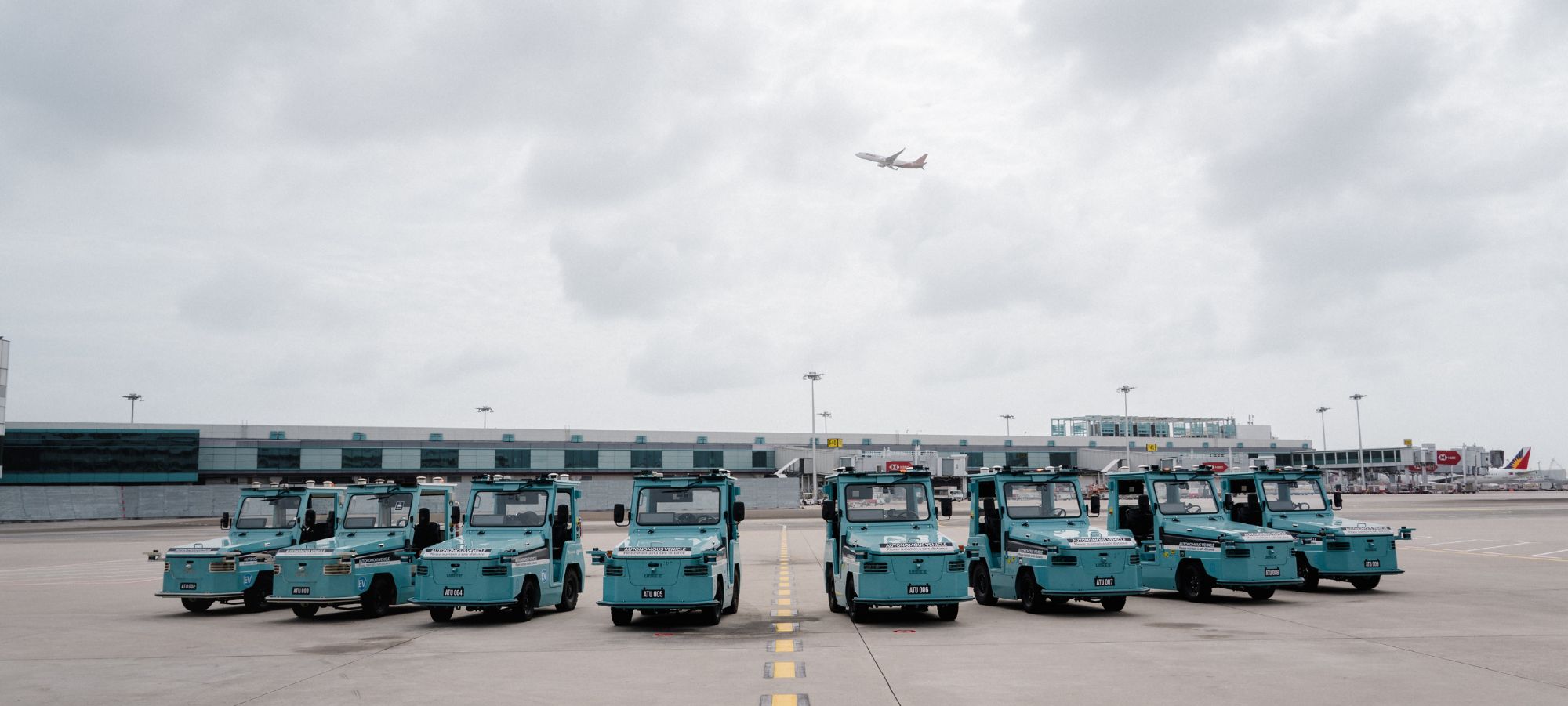
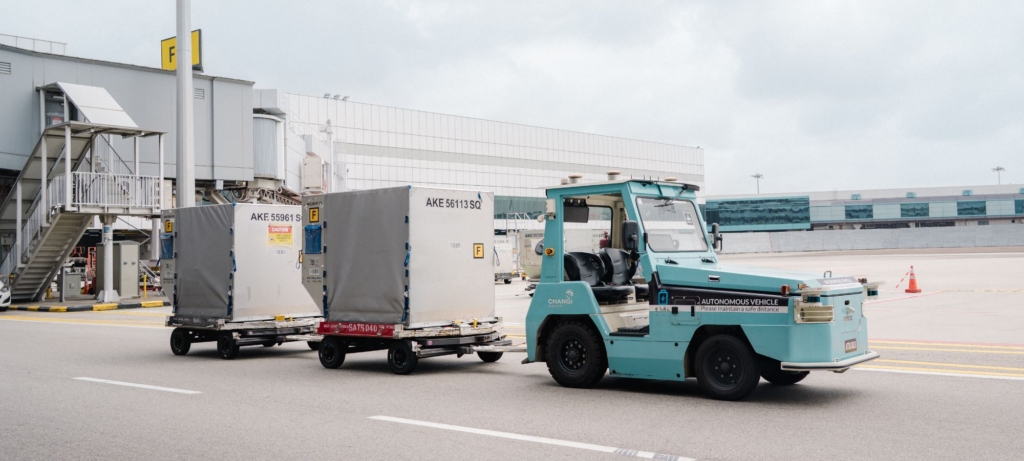
Two autonomous baggage tractors have been deployed at Changi, with six more to follow later this year.
Singapore’s Changi Airport has taken an autonomous leap into the future, introducing fully driverless autonomous tractors to transport passenger baggage between Terminals 1 and 4.
While the deployment of Changi’s autonomous fleet of ground support equipment (GSE) raises questions over what this means for baggage and ground handling staff, Changi is adamant it will only enhance airside operations. In addition to pushing operational efficiency, the airport says the rollout of its autonomous GSE fleet will “raise manpower productivity, allowing staff to be deployed to higher-skilled roles, while enhancing safety and reliability.”
Changi Airport partners with Chinese firm on autonomous baggage tractors
The deployment of this first fleet of fully driverless vehicles follows nearly a year of rigorous trials and over 5,000 test trips. The tractors are manufactured by Chinese company Uisee, whose autonomous buses and other vehicles are also in use at Hong Kong Airport.
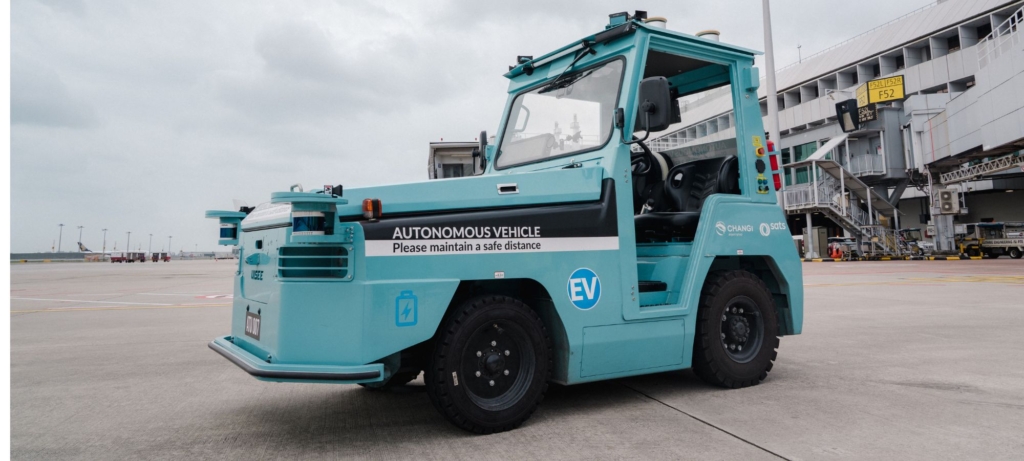
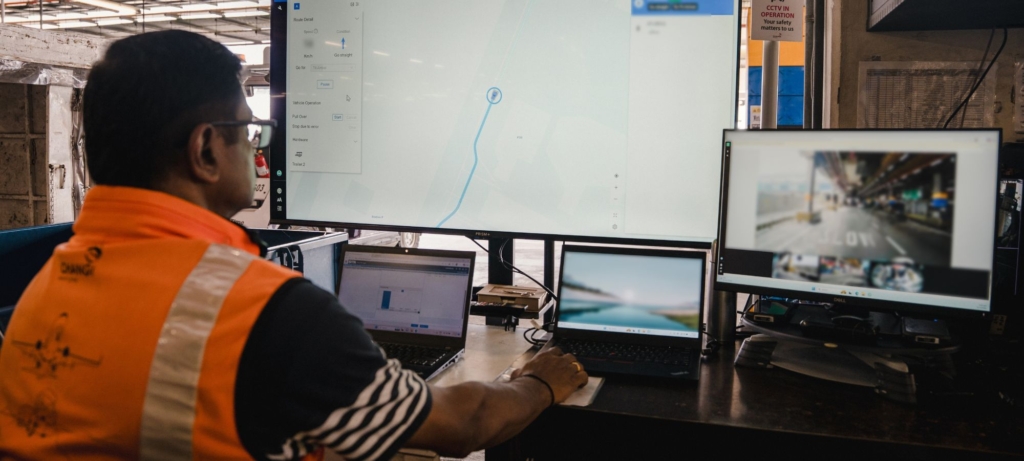
Changi, which is the world’s fourth busiest airport is currently using two of the driverless tractors in live operations. Each tractor is monitored by more than 10 sensors and cameras, while operations are also overseen by a control centre with remote operators able to step in should human intervention be required. Clear autonomous vehicle (AV) zone markings have also been painted airside and clear labels attached to all Avs to ensure the driverless tractors operate safely alongside workers.
Later this year a further six autonomous vehicles will be rolled out on a different route between Terminal 2’s baggage handling area and aircraft stands. By 2027, the airport’s fleet of autonomous tractors is expected to number 24, with the GSE being used to tow cargo and other equipment, as well as passenger baggage.
What autonomous baggage tractors mean for airside operations
Liu Yanling, Changi Airport’s senior vice president, airport operations strategy and transformation, described the operation of autonomous tractors as a “huge step forward” for the airport.
By collaborating with airport partners to reshape the airport’s working environment, she added that Changi is creating a “future-proofed environment where autonomous vehicles can function safely and seamlessly with other human-driven vehicles, while workers focus on last-mile operations.”
One such partner is SATS Apron Services, with senior vice president Kuah Boon Kiam, adding that the deployment of autonomous vehicles is aligned with efforts to “redesign jobs and ensure our employees remain future-ready while providing a safe working environment for our people.”
How Singapore is blazing a trail for autonomous operations
The initiative also supports SATS’ Hub Handler of the Future programme, where the integration of automation into airside operations is a core focus to uplift service quality and boost turnarounds as well as airside safety. “For travellers. This translates into more reliable baggage handling and smoother aircraft turnarounds, supporting on-time departures and a seamless airport experience,” added Kiam.
Singapore’s aviation sector aims to elevate its workforce in the coming years, with up to 30% of the existing manpower experiencing job redesign and transformation over the next five years. Most of these jobs are expected to be in the ground handling sector, where roles are often cited as physically demanding, requiring heavy lifting and long sometimes unsociable hours in all weather conditions.
According to Angela Ng, director of aviation at the Civil Aviation Authority of Singapore (CAAS), which has co-funded the autonomous baggage transportation project, “The scaled deployment of autonomous tractors allows CAAS, Changi Airport Group, SATS and our unions to work together to implement the technology, develop new systems and protocols and set up job redesign programmes to help our workers adopt technology and transition to higher-value work.”
Lessons learned here, she added, will be useful for the sector’s wider technology adoption and job transformation efforts.
Other autonomous trials at airports worldwide
Changi first trialled driverless autonomous vehicles in 2020 in collaboration with French GSE manufacturer TLD and EasyMile, the autonomous vehicle company, before partnering with Aurrigo in 2023 to trial its Auto Dolly and Auto DollyTug.
The airport joins a growing group of airports trialling autonomous vehicles airside, including Kansai International Airport in Osaka, which has conducted trials with Level 4 autonomous baggage tow tractors in collaboration with EZTow driverless vehicles on the ramp.
At Al-Maktoum Dubai World Central (DWC) dnata currently operates six electric tractors to move baggage between aircraft and the terminal.

Meanwhile, in Germany, Frankfurt Airport, in partnership with Fraport, has tested autonomous baggage and cargo tractors on controlled apron routes and in Switzerland, Zurich Airport has piloted autonomous ground handling solutions with Swissport and Aurrigo.