This new technology could turn industrial carbon emissions into jet fuel

January 29, 2026
For aviation, decarbonisation remains one of the hardest problems to solve.
Long-haul aircraft cannot realistically rely on batteries, hydrogen infrastructure is still nascent, and demand for sustainable aviation fuel (SAF) continues to outstrip global supply.
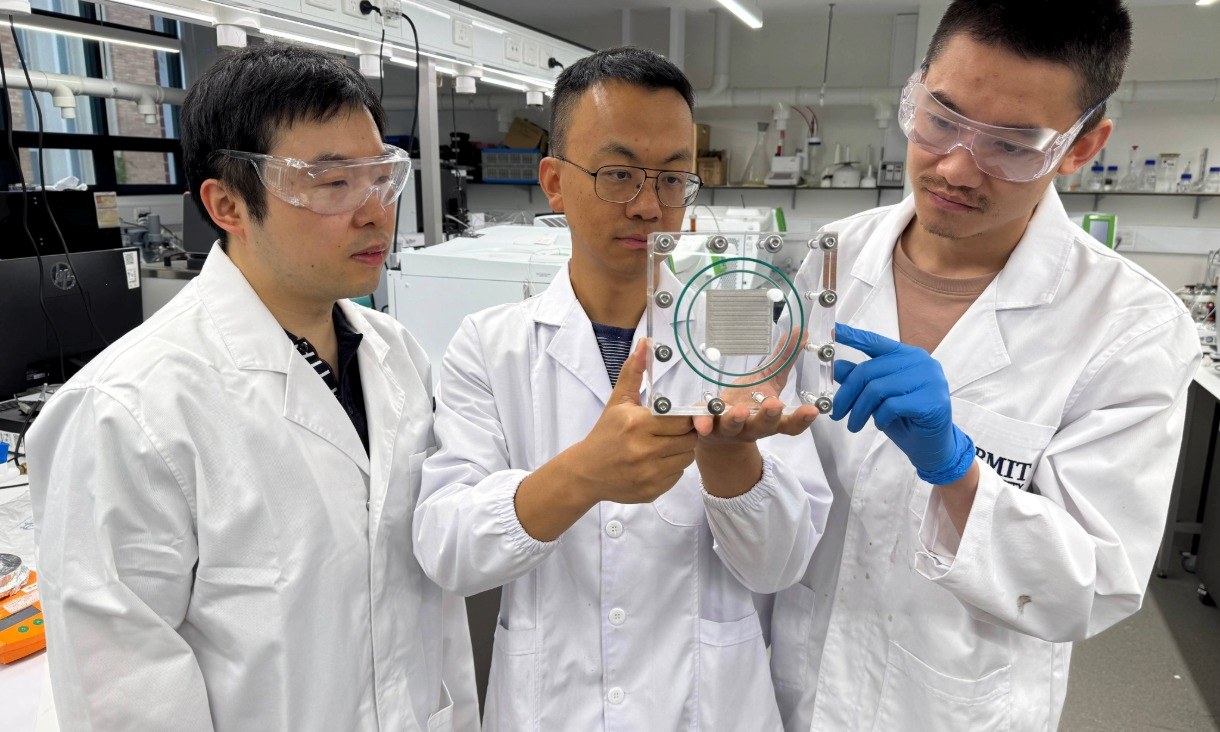
Against that backdrop, researchers at RMIT University are advancing a technology that could help widen the pool of future jet fuel feedstocks by rethinking how carbon dioxide from industrial exhausts can be recycled.
The team has developed a carbon-conversion system that combines carbon capture and conversion into a single, integrated process.
Rather than treating each step separately, the approach simplifies the pathway from waste CO₂ to useful chemical building blocks that can ultimately be upgraded into low-emissions jet fuel and other carbon-based products.
Professor Tianyi Ma, from RMIT’s School of Science, said traditional carbon-conversion systems have struggled to move beyond the laboratory because of their complexity and energy demand.
“Carbon conversion has often been treated as separate steps, which increases cost and slows progress,” Ma said. “Current approaches have often been inefficient and energy-intensive. By bringing the steps of conversion together, we have been able to simplify the process and reduce unnecessary energy losses.”
From industrial CO₂ to jet fuel ingredients, not fuel yet
The RMIT system does not produce jet fuel directly. Instead, it converts carbon dioxide into basic chemical ingredients, the same types of building blocks already used by industry to make fuels and other materials.
That distinction matters. By stopping short of fuel synthesis, the technology is designed to slot into existing industrial value chains rather than compete with them. The converted carbon can be upgraded using established processes, reducing the need for entirely new infrastructure.
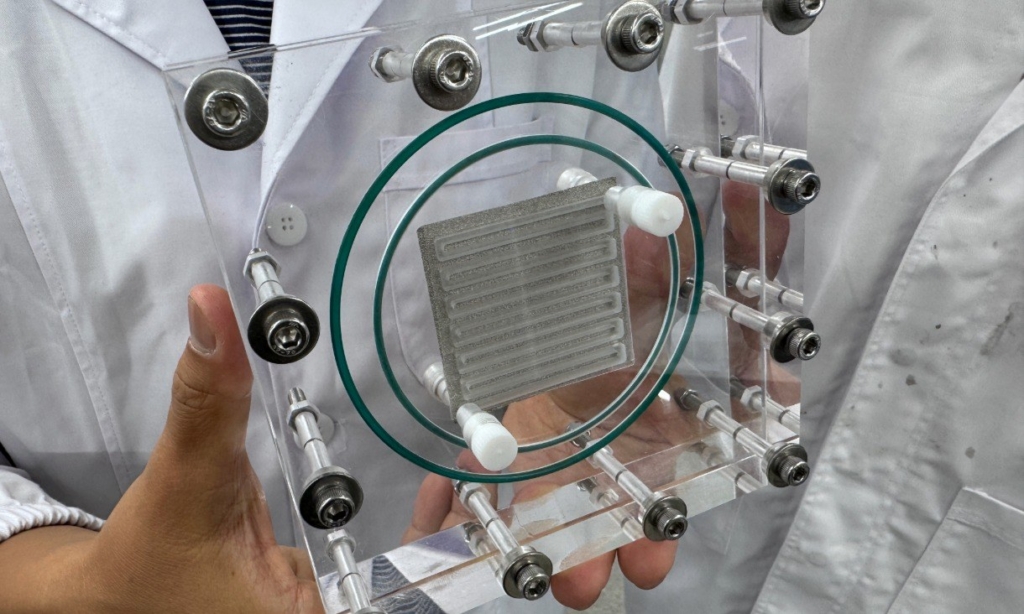
Dr Peng Li, the study’s lead author, said the focus was deliberately on practicality rather than theoretical efficiency.
“Our approach has reduced the number of processing steps and lowered energy demand compared with conventional systems,” Li said. “The RMIT system operates without the need for highly purified carbon dioxide, which is important in real industrial environments.”
In many factories, exhaust gases contain impurities that complicate carbon capture. Systems that require highly refined CO₂ often struggle outside controlled settings.
By working with less-pure gas streams, the RMIT technology is aimed squarely at deployment near large, hard-to-abate industrial emitters.
Why this matters for sustainable aviation fuel
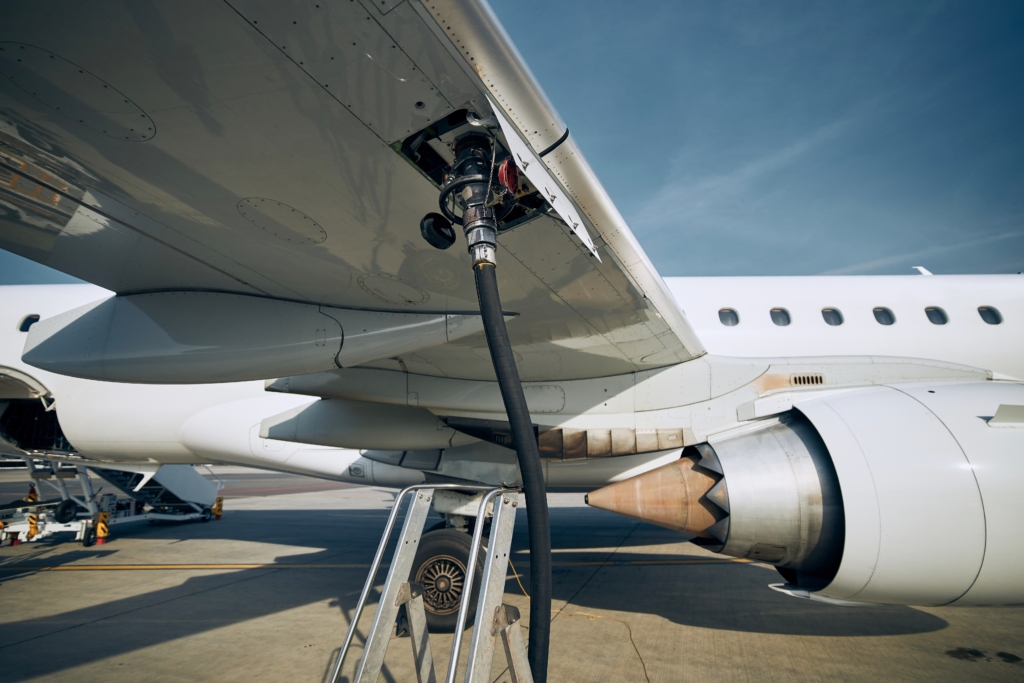
For the aviation sector, the relevance lies in feedstock diversity. Sustainable aviation fuel can be made through multiple pathways, but all depend on a reliable supply of carbon-based inputs. Today, those inputs are limited, contributing to high costs and constrained availability.
The RMIT system offers a complementary route, converting industrial emissions into inputs for fuel production rather than relying solely on biomass or fossil-derived carbon. In effect, it could allow emissions from one sector to support decarbonisation in another.

Independent expert Dr Federico Dattila, from the Polytechnic University of Turin, noted in Nature Energy that the work brings industry closer to fully integrated, low-energy carbon-conversion systems.
His commentary highlighted the importance of reducing both process complexity and energy loss, two of the main barriers to commercial adoption.
Moving beyond the lab, RMIT’s carbon-conversion prototype is ready
Crucially, the RMIT work is no longer confined to benchtop experiments. The researchers have already designed and completed a three-kilowatt prototype to test how the system performs under conditions closer to those found in industry.
The next step is more ambitious: a 20-kilowatt pilot system that will be used to further validate performance, durability and integration with real industrial emission sources. That scale-up effort is being shaped in parallel with industry partners rather than after the fact.
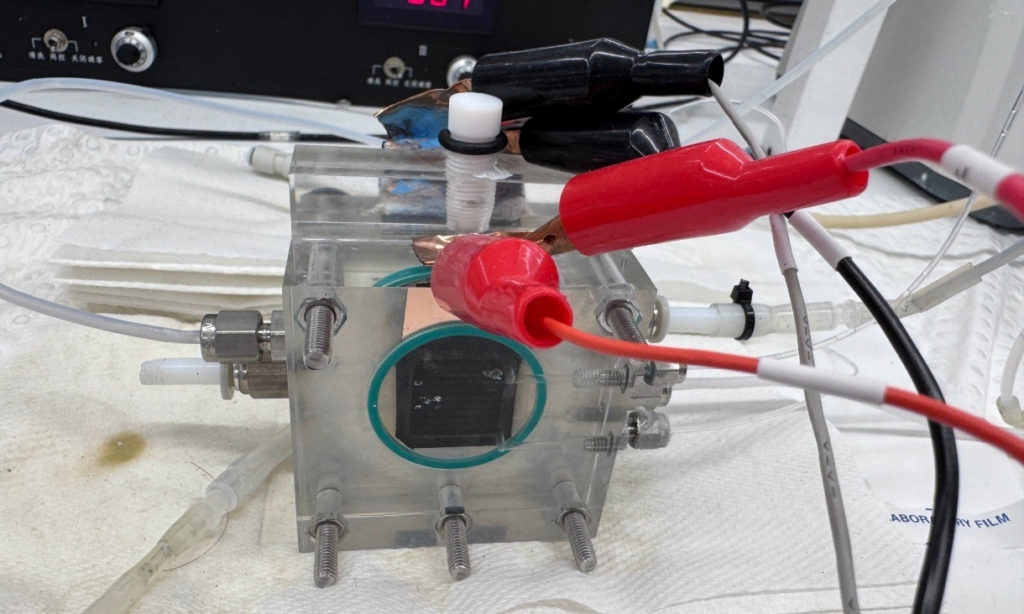
RMIT is working with a range of companies and organisations, including Viva Energy, Hart Bioenergy, T-Power, Aqualux Energy, CO2CRC, ViPlus Dairy and CarbonNet. The aim is to ensure the technology aligns with existing infrastructure, operational constraints and emissions-reduction strategies.
“Scaling up has to happen hand in hand with industry,” Ma said. “That is the only way to understand what would work in practice and what still needs improvement.”
A measured pathway to commercial carbon-conversion systems
The development timeline reflects that realism. The team is targeting a 100-kilowatt demonstration system within five years, with commercial-scale readiness around six years from now.
That staged approach is intended to allow time to assess cost, reliability and long-term performance, factors that often derail promising climate technologies when they move too quickly.
Hart Bioenergy chief executive Doug Hartmann said the technology’s appeal lies in its balance between environmental and operational considerations.
“This innovation has shown how emissions reduction could go alongside cost efficiency and better energy use,” Hartmann said. “It points to production processes that can benefit the environment without ignoring economic realities.”
With growing interest from industry and investors, the researchers are also progressing plans for a spin-off company from RMIT to explore commercial pathways and deployment models.
Not a silver bullet, but a useful tool for aviation decarbonisation
The team is careful to frame the technology as one part of a broader transition rather than a single solution to aviation’s emissions challenge.
“This is not a silver bullet,” Ma said. “It is about developing practical tools that could help industries and governments reduce emissions while making use of existing systems during the transition to cleaner fuels.”
For aviation, that pragmatism may be the most important feature. The sector’s path to net zero will likely depend on multiple technologies working in parallel, from new aircraft designs to alternative fuels and smarter use of existing infrastructure.
Featured image: RMIT