How Boom is using laser beams to perfect its supersonic engines for Overture

January 5, 2026
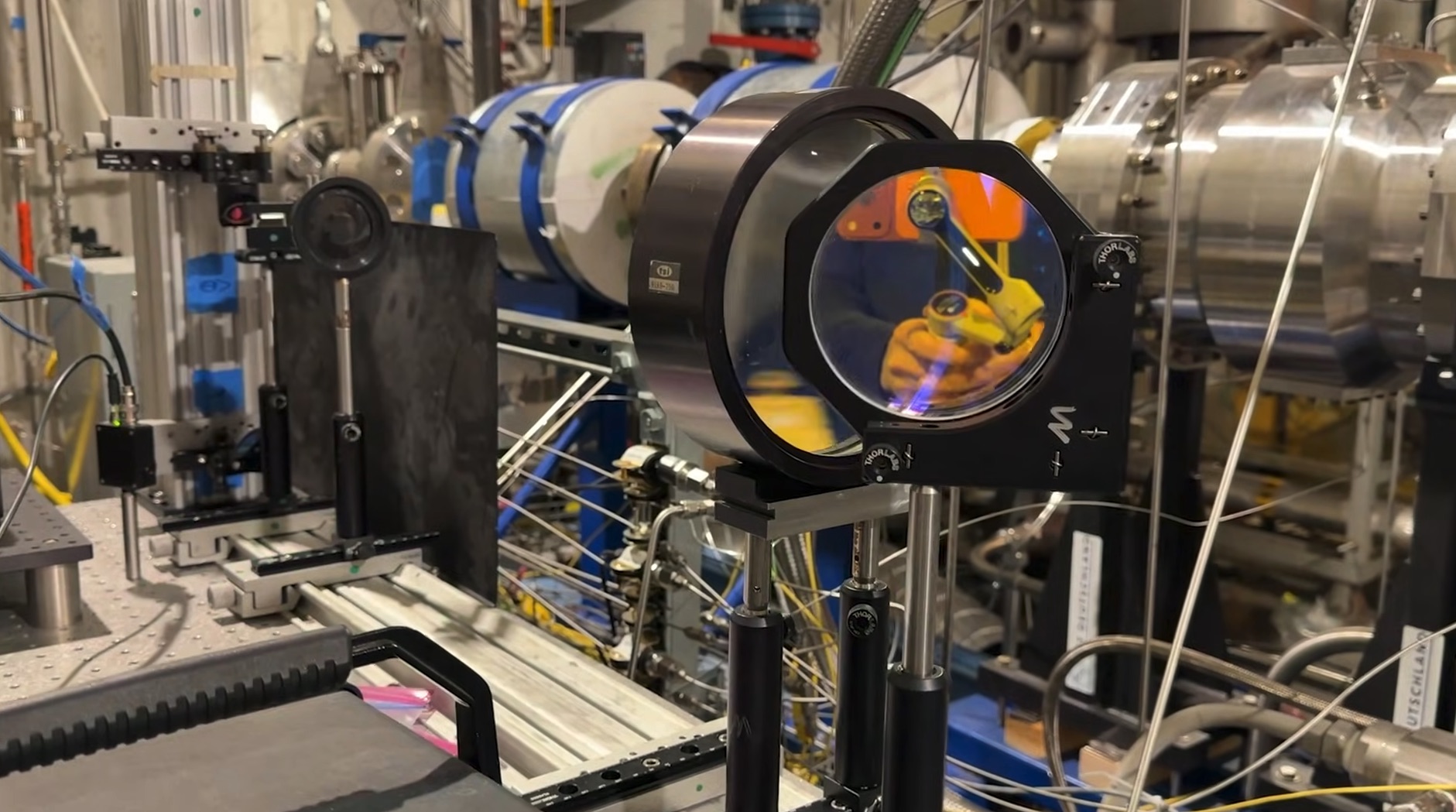
Developing a supersonic jet engine leaves little margin for error, particularly in the combustor, where fuel, air, heat, and pressure converge. To refine that process, Boom Supersonic is turning to laser-based diagnostics to better understand exactly how fuel behaves once it enters the engine.
At a combustion test facility in the US, Boom engineers are using high-powered lasers and high-speed cameras to visualise fuel spray and flame behaviour in extraordinary detail. The work supports the development of Symphony, the company’s supersonic engine for Overture, but also feeds into Superpower, a derivative gas turbine being developed for high-efficiency AI data centres.
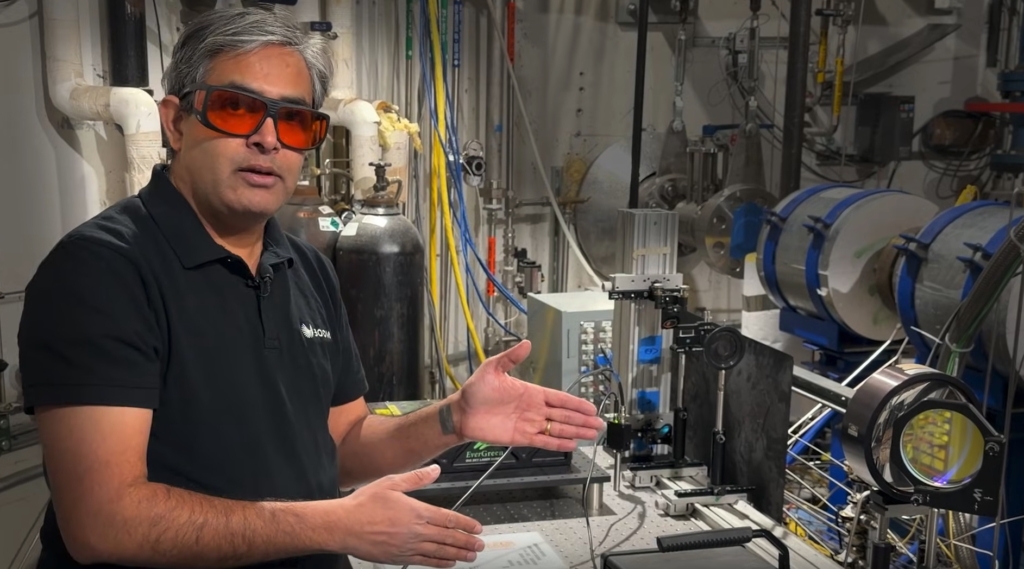
“The testing that we are doing here is very significant,” explains Nishant Jain, a senior propulsion engineer at Boom. “It’s one small step that will lead us to the Sprint Core, which will then lead us to Symphony and then to Overture.”
How Boom is using laser beams to test its engines
The testing is taking place at the Ben Zinn Combustion Laboratory at Georgia Tech, using a single fuel nozzle representative of the company’s engine designs.
“What we are looking at is the spray diagnostics,” explains Jain. “In this rig, we have a single fuel nozzle that we use for our Symphony engine or for the Sprint Core test. That will test the high-pressure compressor, high-pressure turbine, and the combustor.”
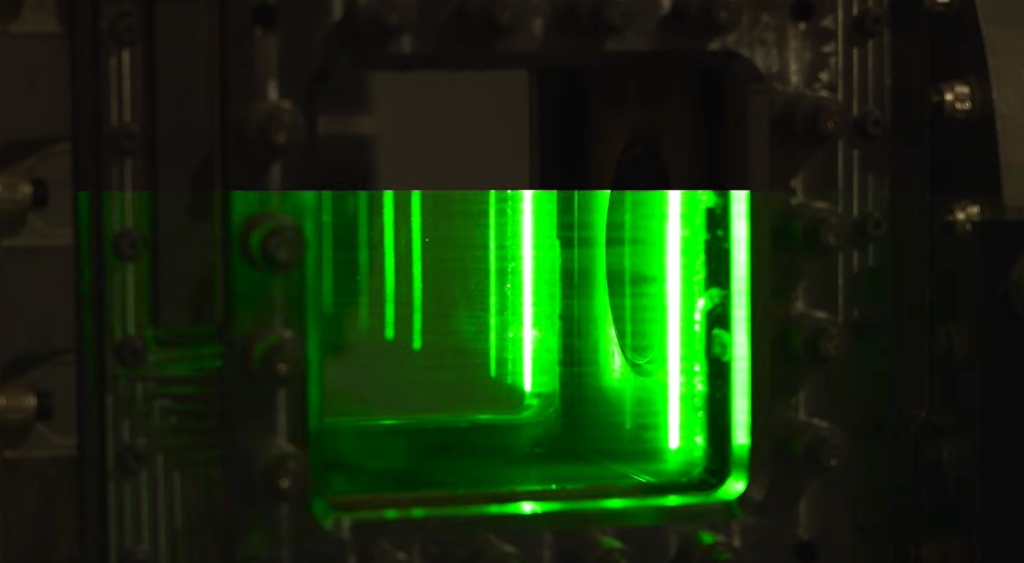
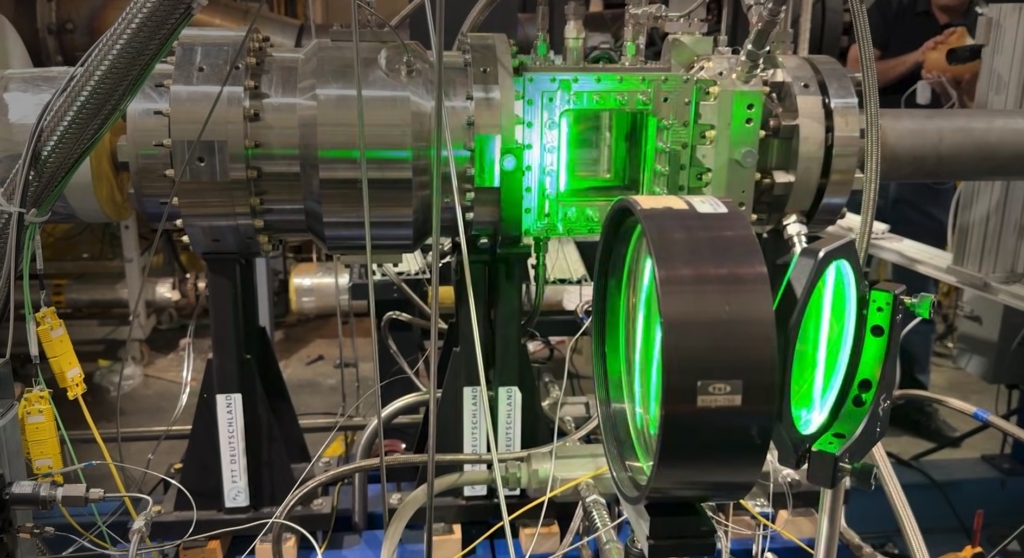
A laser beam is shaped using a series of mirrors and cylindrical and spherical lenses to form a thin sheet of light. That laser sheet passes through the fuel spray emerging from the nozzle.
“The way we do that is we take a circular beam and convert it into a thin light sheet,” Jain explained. “Any fuel droplets that pass the laser sheet, they scatter light.”
This phenomenon, known as Mie scattering, allows engineers to directly observe droplet size, spray distribution, and uniformity. High-speed cameras capture thousands of frames per second, producing a real-time visual map of how evenly fuel is being atomised.
“We study the scattering of light from the fuel droplets, mainly to quantify our droplet distribution and the uniformity of the fuel spray,” Jain said.
Why laser diagnostics are important for supersonic engine development
Uniform fuel spray is not just a refinement exercise; it is fundamental to engine durability and efficiency.
“It’s important to have a uniform fuel spray to have a uniform heat release in a sector inside an engine,” Jain explained. “When there is non-uniform fuel spray, you could have non-uniform heat release.”
Uneven combustion can result in temperature gradients at the exit of the combustor, creating hot spots that place asymmetric thermal loads on turbine blades. Over time, that can reduce component life or constrain operating margins.
“If the combustor exhaust temperature is a non-uniform profile, that could lead to durability issues for the turbine blades,” Jain said.
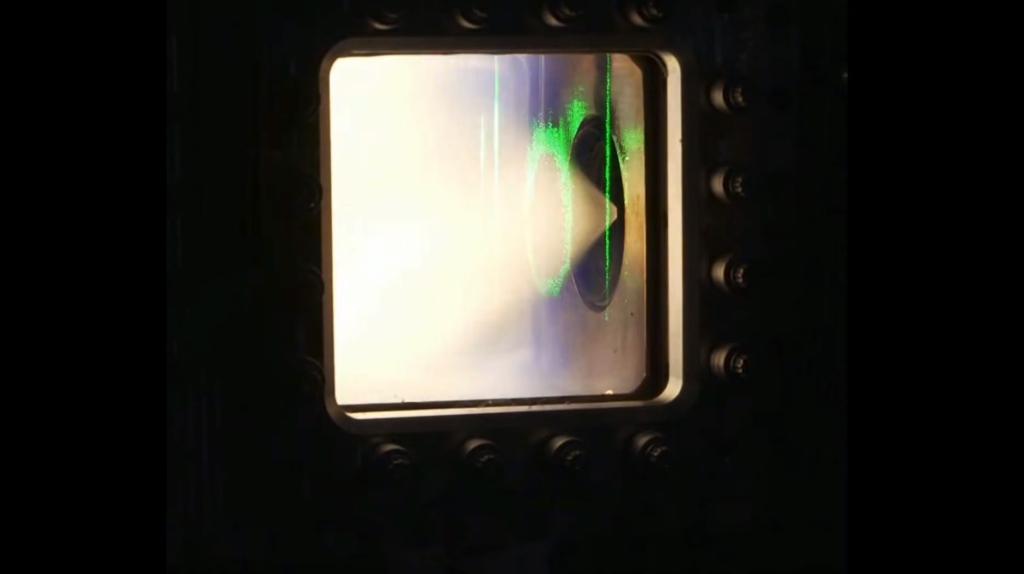
In addition to spray visualisation, Boom uses optical filters to image flame location directly, showing where heat release is occurring inside the combustor. Engineers can quickly identify whether one side of a nozzle is under- or over-performing.
“If there is a difference in brightness from top to bottom or side to side, that shows that one side of our fuel nozzle is not spraying as well,” Jain noted. “We want a nice, uniform, hollow cone of fuel spray.”
Developing Symphony to advance the return of supersonic passenger flight
The laser diagnostics work is part of Boom’s broader propulsion roadmap, which moves from component-level testing to full engine validation.
Sprint Core, Boom’s forthcoming core demonstrator, is expected to validate the thermodynamic heart of the Symphony engine before full engine assembly and flight testing later in the decade.
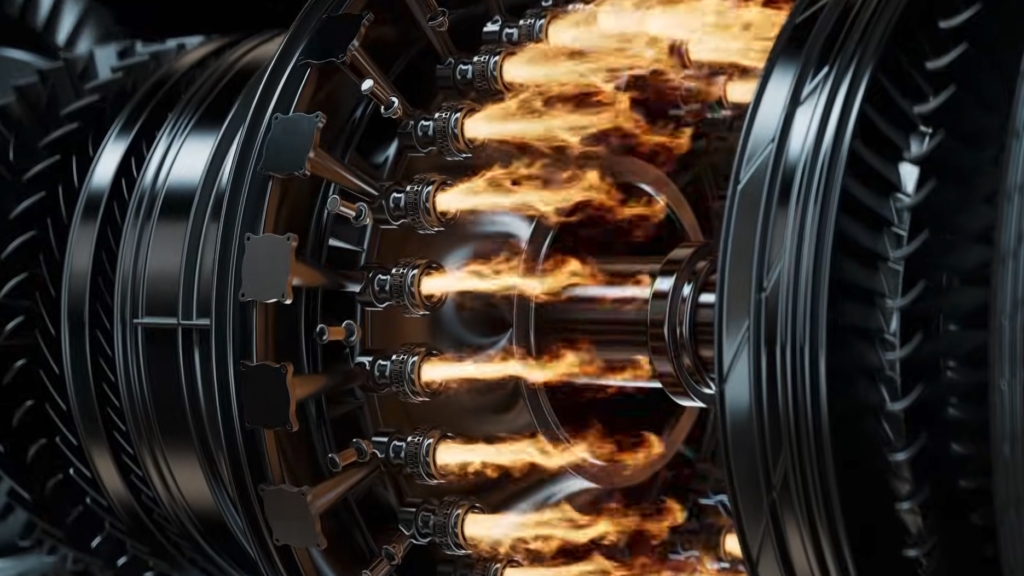
Importantly, this work is not limited to aviation alone. The same combustion, efficiency, and durability insights are also being applied to Superpower, Boom’s gas turbine designed for AI data centres, where efficiency, thermal management, and reliability are equally critical.
“At Boom, we have an agile mentality to be able to test and develop and build the product fast,” Jain said. “The way we are doing it is by testing as early as we can in the design stage and using that data to guide our design decisions.”
While lasers may make the lab look dramatic, the goal is deliberately unglamorous: retire risk early, validate assumptions with data, and ensure that when Symphony eventually flies, its most complex systems have already been seen, measured, and understood in fine detail.
Featured image: Boom Supersonic