Aircraft icing breakthrough? New sensor system could detect dangerous icing sooner

January 28, 2026
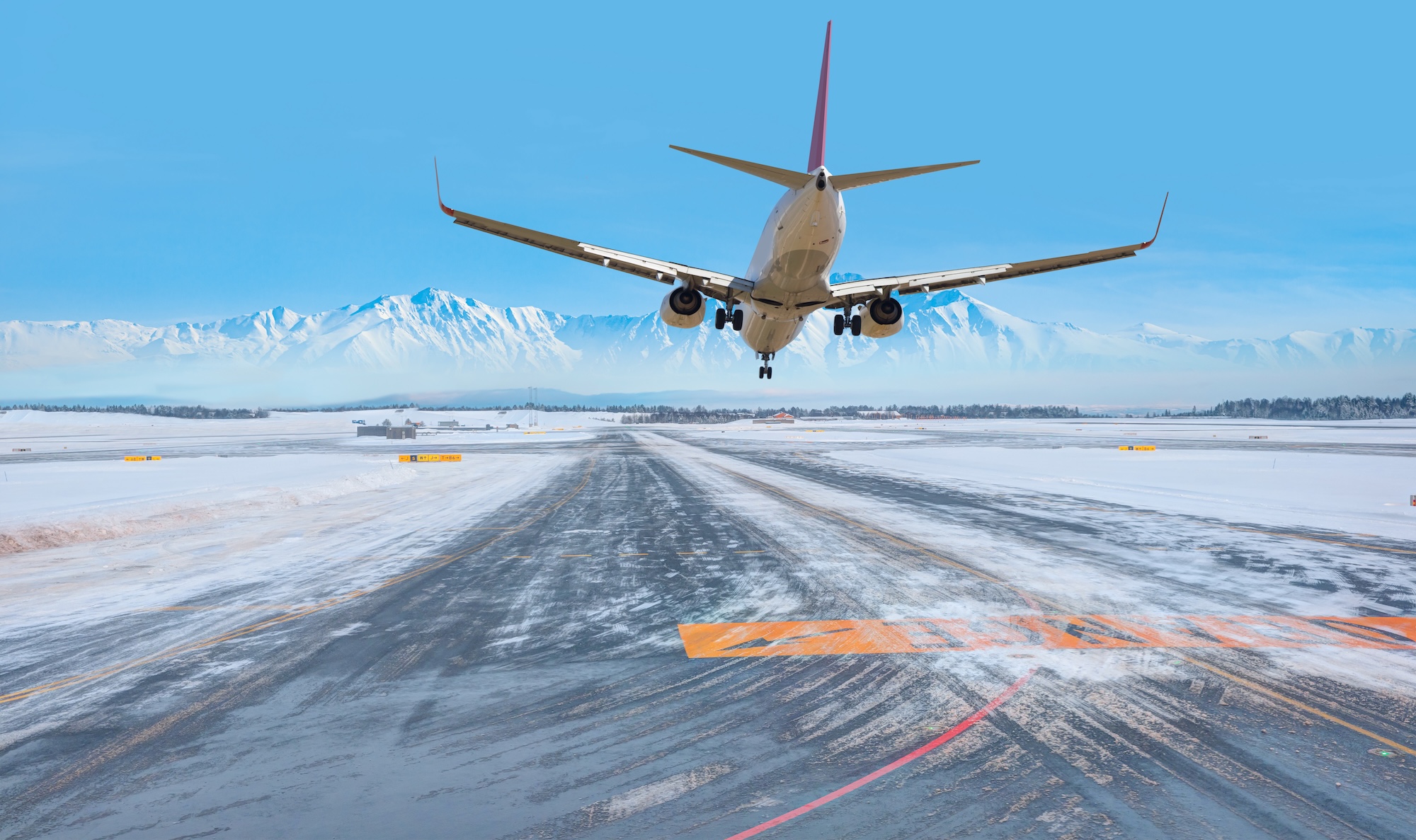
Aircraft icing is one of aviation’s most stubborn cold-weather risks, and it can escalate fast. Despite certified ice-protection systems, pilots can still encounter situations in which ice builds up beyond protected areas, compromising lift and controllability before crews are fully aware of the danger.
A study published in Nature details an experimental Icing Detection System (IDS) that could help close that gap by doing two things at once: detecting ice forming on the aircraft, and identifying whether the atmosphere ahead contains high-risk icing conditions, including the most problematic category, supercooled large droplets (SLD).
Instead of simply telling crews that ice is present, the system flags what type of icing environment the aircraft is facing and how serious it may become, in time for pilots to respond.
Why icing is still a threat, even with modern aircraft
Icing occurs when supercooled water droplets — liquid water below 0°C — strike an aircraft and freeze on impact. Over time, that ice changes the shape of wings and stabilisers, increasing drag and reducing lift.
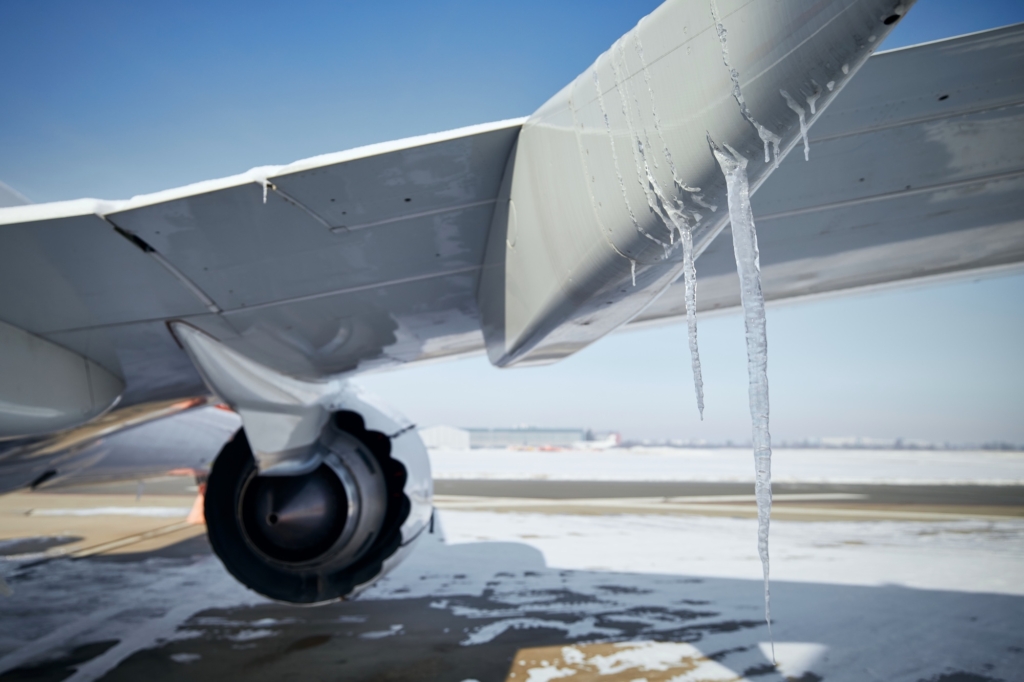
The real danger comes when droplets aren’t just “typical” cloud water, but SLD icing such as freezing drizzle or freezing rain. These larger droplets can flow farther back across a wing before freezing, sometimes forming ice outside protected zones and creating “runback” icing that’s harder for the aircraft’s de-icing systems to counter.
Modern certification rules have expanded beyond traditional standards to include these more severe and complex icing envelopes.
Appendix C vs Appendix O: What these icing categories mean
In aircraft certification, Appendix C conditions (in 14 CFR Part 25) describe the “classic” in-cloud icing environment around which aircraft have long been designed. It generally involves small supercooled liquid water droplets that build ice mainly on leading edges — such as wings, tailplanes, engine inlets and sensors — where conventional ice protection systems are focused.
The main difference between the two classifications is droplet size. Appendix C generally considers Median Volume Diameter (MVD) up to about 40 microns (µm).
Appendix O covers SLD conditions, where droplet sizes are larger, and ice can form beyond protected areas. These are the encounters pilots and engineers most often worry about, because they may produce more unpredictable ice shapes that could seriously degrade aircraft performance.
How the new “icing detection system” works
The system described in the report would be a next-generation icing detection and classification package, designed to improve the speed and confidence of pilot decisions, such as:
- activating anti-ice or de-ice systems
- leaving icing conditions sooner
- recognising high-risk SLD environments early
The researchers describe an IDS made up of two separate sensing units:
1) A sensor embedded in the aircraft skin to detect ice accretion
The first element is a Microwave Resonator Unit (MRU) — a flush-mounted sensor that detects ice accumulating directly on the airframe.
It works by measuring changes in a microwave resonator’s behaviour: when ice forms, its resonance frequency shifts because ice has different dielectric properties than air.
The report says the MRU can detect ice layers thinner than 0.3 mm, a threshold often used as a marker of early ice accretion.
Because it’s flush to the surface, the MRU can potentially be placed where ice formation matters most — rather than relying entirely on forward probes that don’t always reflect what’s happening on wings or tail surfaces.
2) An optical unit that looks ahead into the cloud to assess icing threat
The second element is an Optical Icing Detection Unit (OIDU), designed to analyse icing potential ahead of the aircraft using a three-band optical approach across shortwave infrared/near-infrared wavelengths.
According to the report, the OIDU aims to estimate:
- whether the cloud contains liquid, ice, or mixed-phase particles
- droplet size (including MVD)
- overall water content (including TWC)
In the tested setup, the OIDU measures conditions about 50 metres ahead of the aircraft and samples a cloud volume of roughly 8.3 m³.
That could give crews a better sense of what they are about to fly through, not just what’s already accreting on the airframe, enabling them to adjust their flight path in time to avoid the more serious weather hazard.
The key feature: spotting Appendix O / SLD conditions within seconds
The report highlights the system’s ability to discriminate between Appendix C icing and Appendix O (SLD) conditions.
The researchers note that when MVD exceeds around 40 µm, the environment indicates SLD-type risk.
The optical unit uses a ratio-based parameter (α) to distinguish Appendix C from Appendix O conditions, and the report suggests this discrimination can occur within seconds of entering the cloud.
In practical terms, it’s the difference between simply recognising “there is icing” and recognising “this could be the kind of icing that escapes standard protections.”
Flight-tested on an Embraer Phenom 300
The team tested the IDS during flight trials on an Embraer Phenom 300, alongside scientific reference sensors intended to measure droplet properties for comparison.

The report says the OIDU detected icing conditions within seconds of cloud entry.
- The system identified liquid or mixed-phase water in all tested icing encounters.
- The combined package showed potential to detect ice accretion and classify the icing regime.
The authors also note that comparisons have inherent limitations, since reference probes sample small volumes very close to the aircraft, while the OIDU samples a larger volume farther ahead.
Why new icing detection could matter for airlines and pilots
In-flight icing systems meet certification requirements that are based on Appendix C conditions. But dangerous encounters can involve transitions into SLD regimes, where icing may form outside the “expected” protected zones.
The report suggests a system like this could improve operational safety by enabling faster recognition of high-risk icing conditions, more confident decisions to activate protections sooner, and earlier cues to exit icing environments before aircraft performance degrades.
A safety advance that is not quite ready for a real-world rollout
The researchers stress that the IDS still needs refinements before it can be a certifiable aircraft system.
Among the issues researchers listed:
- The optical unit appears sensitive to temperature drift, suggesting it may require a stabilising heater.
- The microwave unit needs improved resistance to RF noise for better discrimination performance.
- More calibration and validation work is needed, including controlled testing such as icing wind-tunnel evaluations.
Even so, this research points toward a future in which aircraft icing response is better informed and faster. It will not only detect ice on the airframe, but also identify whether the aircraft is facing standard Appendix C icing or a potentially more dangerous Appendix O/SLD environment.
If the concept can be matured and certified, it could reduce exposure time in icing by tightening the pilot decision-making chain from entering the cloud, detecting hazard type, activating protection and exiting dangerous conditions. It could give pilots the icing visibility they need to fly safely in the coldest weather.
Featured image: muratart / stock.adobe.com