Airbus A350F advances with ground testing as Boeing freighter rivalry intensifies

March 31, 2026
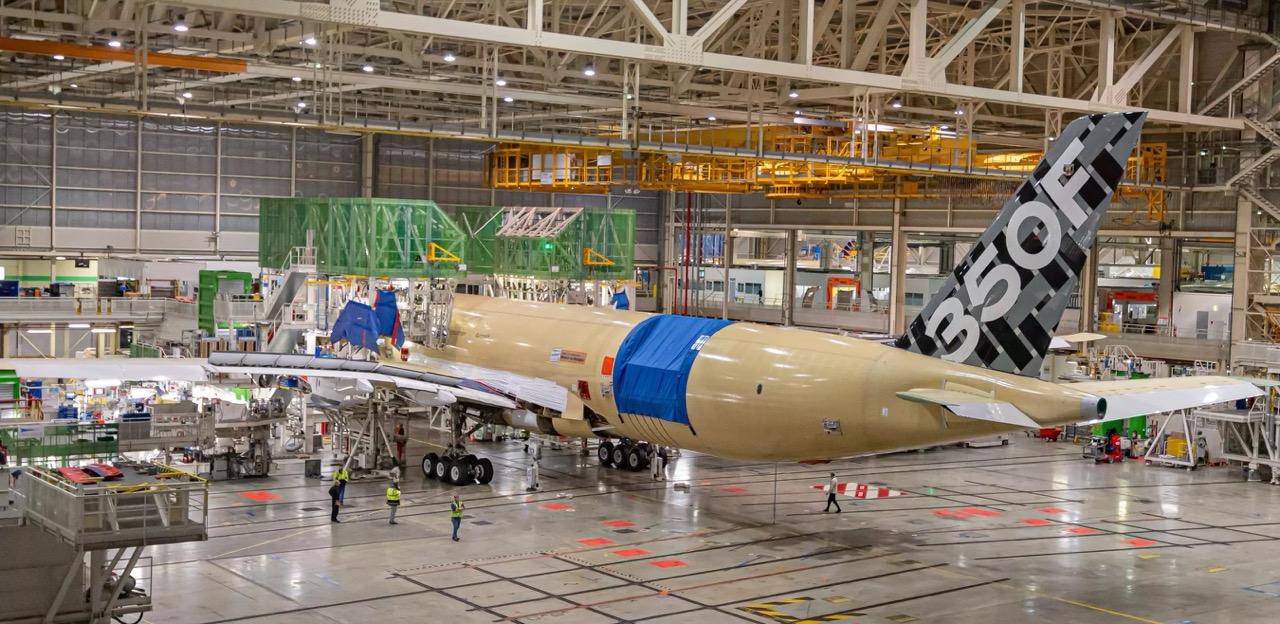
Airbus has begun ground testing for the A350F, marking a significant milestone for the manufacturer’s next-generation freighter programme as it moves toward flight testing and certification.
Airbus A350F ground tests underway at Toulouse FAL
The tests are now underway at the final assembly line in Toulouse. They will validate the new systems developed specifically for the cargo variant, including the main-deck cargo loading system, main cargo door, drainage and environmental systems, and a dedicated courier area with seating for up to 10 occupants.
The campaign also checks the aircraft’s anti-tail-tipping protection and onboard monitoring technologies before the aircraft proceeds to flight testing.
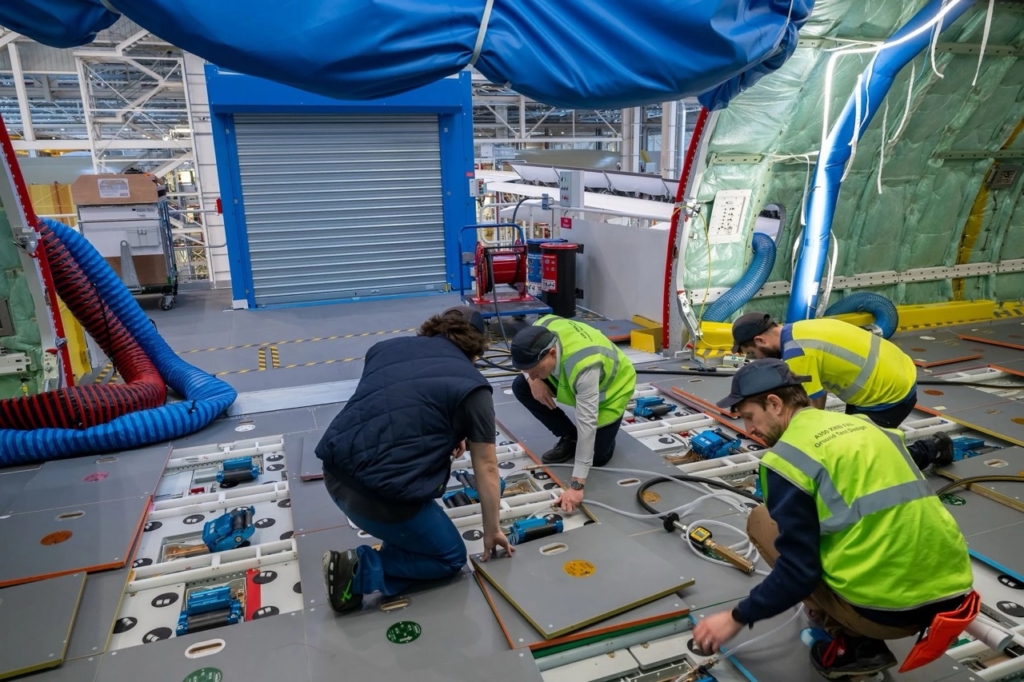
Ground testing is a critical stage in the certification process because it verifies that the physical aircraft matches the digital design and that systems operate correctly before flight trials begin.
Airbus is targeting a first flight in 2026 and entry into service in 2027 for the A350F programme.
“As early as 2021, at the A350F’s definition phase, close collaboration was initiated between the FAL Ground Test Design and Chief Engineering teams,” says Airbus’ Guillaume Terrien, who leads the ground test design activities for the new A350F.
“The goal was to share FAL testability constraints so they could be taken into account from the preliminary aircraft design stage, thus facilitating future ground tests at the FAL stations. This approach is known as ‘co-design’.”
New systems testing is designed specifically for the A350 freighter variant
Although the aircraft is a derivative of the passenger A350 platform, Airbus says the freighter introduces substantial structural and systems changes requiring specialised testing, particularly around the cargo deck.
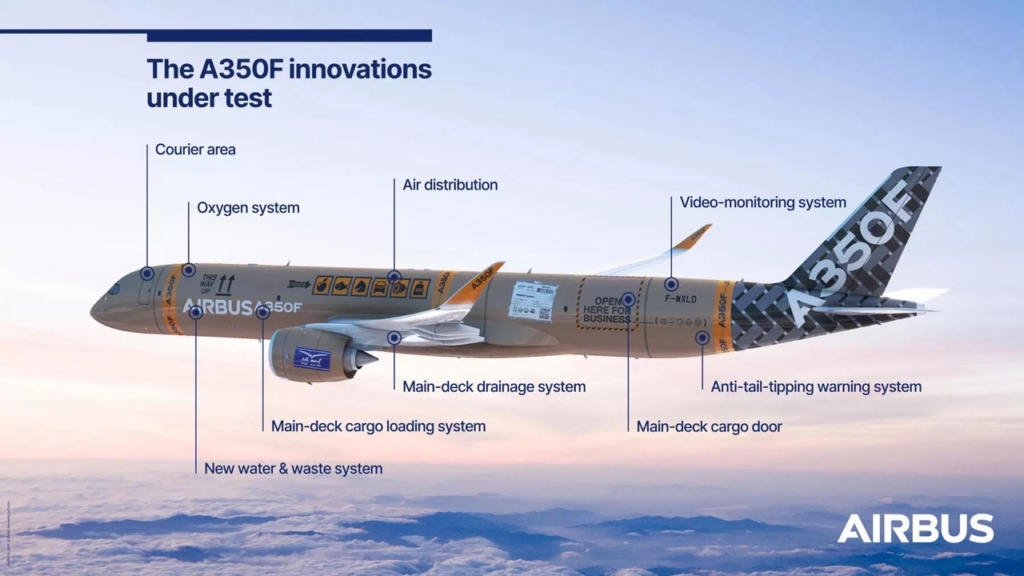
Among the systems now being tested are:
- The main deck cargo loading system.
- Drainage system.
- The large main-deck cargo door (MDCD)
- Environmental and air distribution systems
- Water and waste systems
- Onboard monitoring and “Smart Freighter” connectivity
- Anti-tail-tipping warning and protection systems
The programme includes both serial ground tests and one-off development testing on two dedicated flight-test aircraft, MSN 700 and MSN 701.
200 serial ground test instructions—40% specific to A350F
There are around 200 serial ground test instructions (GTI) to complete for an A350 passenger aircraft, with up to 40% of them specific to the A350F variant.
For example, to verify the system, sensor, and alerts during the FAL cycle, the Main Deck Cargo Door Cycling test requires repeatedly cycling the MDCD, both manually and electrically.
There is also a separate “development and certification testing” campaign that includes one-off performance tests required for V&V by regulatory authorities, such as EASA. The Ground Test Design team of FAL and the Engineering Design Office collaborate to plan and prepare 55 of these “Ground Test Requirements” for the A350F.
The Max Payload Test, for example, verifies the aircraft’s sequence and functionality during MDCD operations by loading its maximum payload of 111 tonnes.
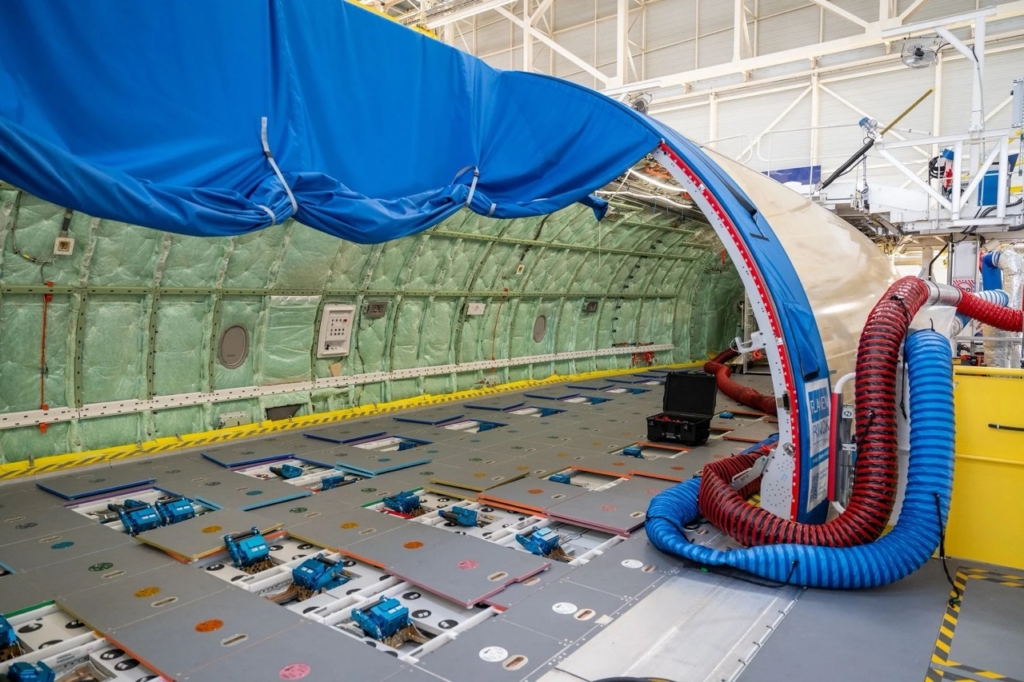
A one-time Pressurisation Development Test campaign complements standard pressurisation tests conducted in serial production. A microphone and displacement sensors on the MDCD monitor the cabin door during the cabin pressure cycle.
Airbus engineers have introduced automated testing processes to manage more complex and time-consuming tests. For example, automated cockpit-initiated checks of the cargo loading system, which includes hundreds of electrical components embedded in the floor. It can validate more than 1,300 wires within minutes during final assembly.
“The CLS will also undergo functional checks in serial production with various ULD containers up to 500 kilograms,” Airbus states.
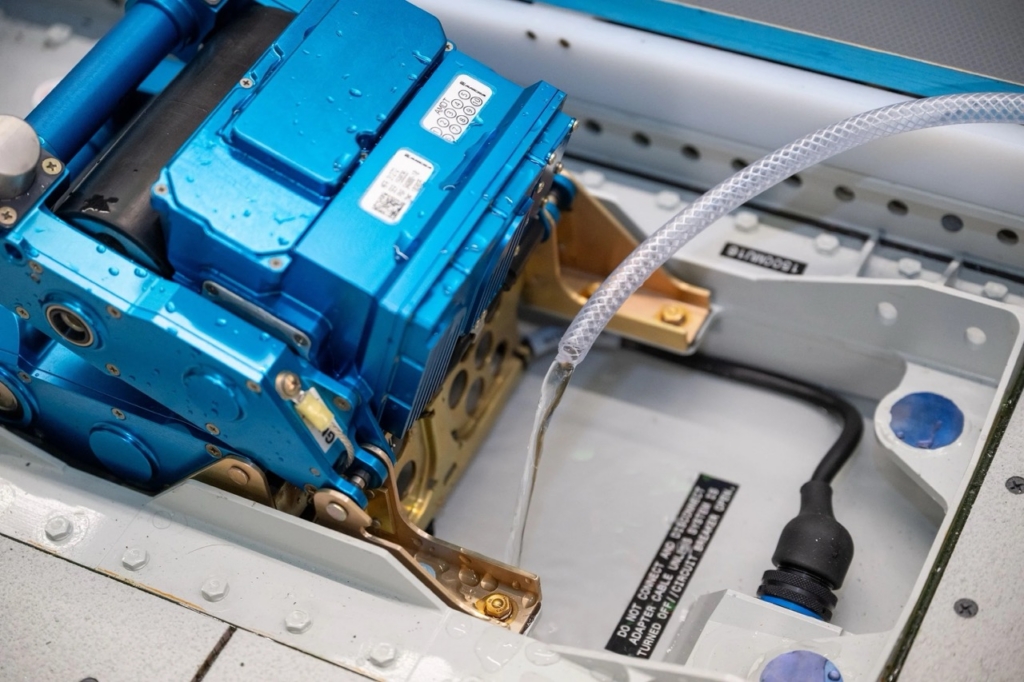
Some tests require more cleanup than others. The drainage system test involves demonstrating that the main deck can drain both melted snow and cleaning water, so none remains stagnant in the airframe.
During this test, the system is flooded with over 180 litres of water to check tightness and ensure proper evacuation from the 50m-long main compartment, with the aircraft floor at a 0° inclination.
A350F designed for new cargo market demands
The A350F represents Airbus’s first all-new widebody freighter in decades and is built on the A350-1000 airframe.
The aircraft will carry up to about 111 tonnes of payload over roughly 4,700 nautical miles, allowing operators to serve major long-haul cargo routes such as Asia–Europe or trans-Pacific sectors.

More than 70% of the airframe is made of advanced composite materials, reducing weight and improving fuel efficiency compared with older freighters.
Airbus also highlights that the aircraft meets the ICAO CO₂ emissions standards coming into force in 2027, a sustainability requirement that also impacts the next generation of cargo aircraft.
The race with Boeing’s 777-8F
The A350F is entering a competitive segment that Boeing has dominated for decades. Its primary rival is the Boeing 777-8F, a new freighter based on the 777X passenger aircraft.
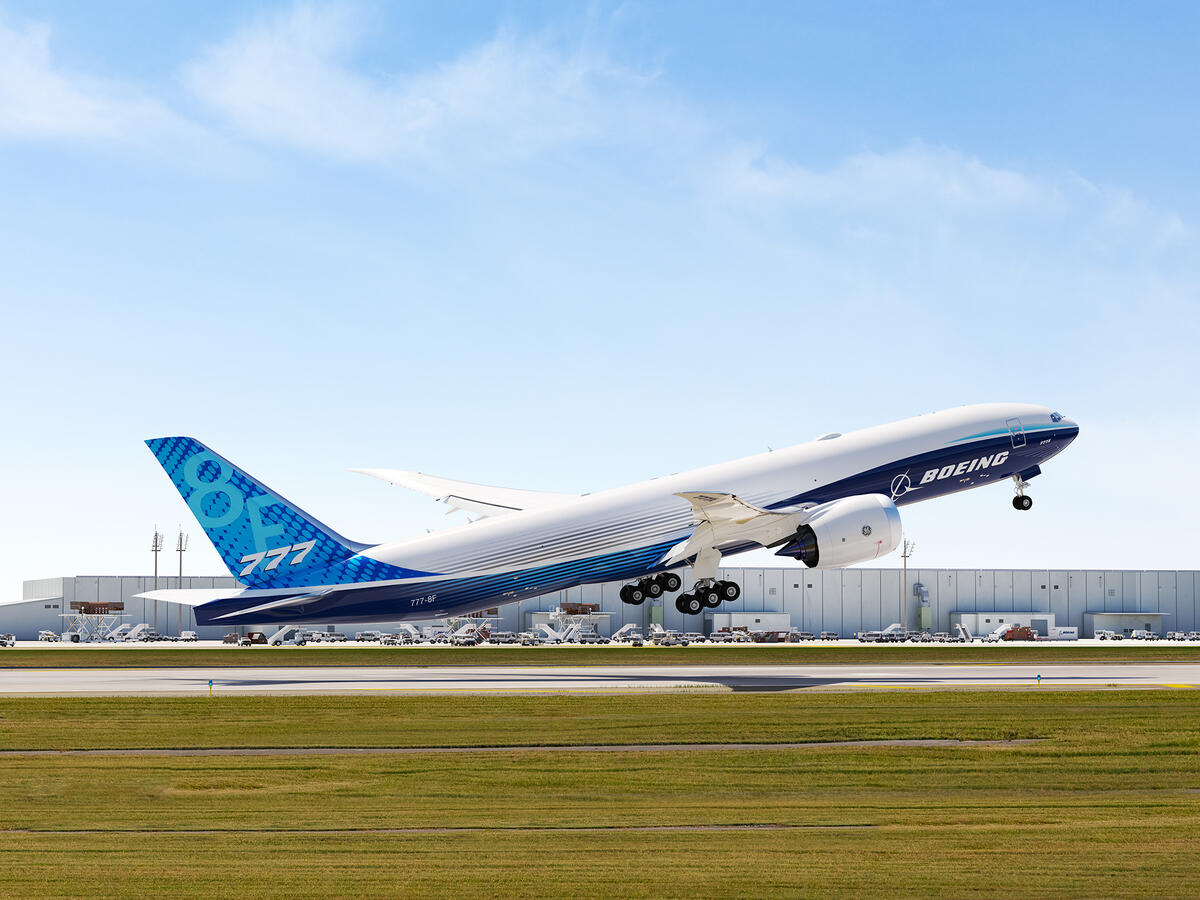
Both aircraft will replace ageing large freighters such as the Boeing 747-400F and older 777 cargo jets.
Comparing the two new freighters’ specifications:
- Airbus A350F: about 111 tonnes payload, 4,700 nm range
- Boeing 777-8F: about 112 tonnes payload, roughly 4,410 nm range
The Boeing aircraft offers slightly greater payload and cargo volume, while Airbus emphasises longer range and a lighter composite structure.
The 777-8F also inherits features from the 777X passenger aircraft, including its large wing and folding wingtips, designed to improve aerodynamic efficiency.
Which new freighter will arrive first?
Timeline differences have become a key talking point in the next-gen cargo aircraft competition.
Airbus currently targets an entry into service in 2027 for the A350F, following a one-year delay due to supply chain challenges.
Boeing’s 777-8F programme has also slipped, with service entry now expected around 2028, which could allow Airbus to bring its aircraft to market sooner.
Both aircraft have attracted significant interest from cargo airlines and lessors, as the global freight fleet will need modern replacements with older aircraft approaching retirement.
Why the aircraft ground testing phase matters
Ground testing may attract less attention than the first flight, but it represents one of the most critical stages of aircraft development, as it proves many of the systems required for the aircraft to take off.
For Airbus, the start of this testing phase demonstrates that the A350F programme is transitioning from assembly into full system validation before flight tests and certification.
With the global air cargo market eager for a next-generation freighter aircraft, progress on the A350F is critical in the long-running Airbus-Boeing rivalry for widebody cargo jets.
Featured Image: Airbus