Boeing withdraws T-7A from US Navy jet trainer replacement contest

3 min read


Boeing has bowed out of the competition to replace the US Navy’s T-45 Goshawk jet trainers. This means that the next Navy trainer will not be a variant of the Red Hawk and is now likely to be either a variant of the M-345 or the purpose-built SNC Freedom Jet.
Boeing withdraws T-7A from Navy’s jet trainer replacement
Boeing has joined Lockheed Martin (partnered with KAI) and dropped out of the competition for the US Navy’s Undergraduate Jet Training System (UJTS).

Boeing was offering a variant of the Air Force’s T-7A Red Hawk as the replacement for the Navy’s ageing fleet of T-45 Goshawk jet trainers.
In a statement, Boeing said, “After careful evaluation, we have determined the T-7A does not meet the U.S. Navy’s Undergraduate Jet Training System requirements. We have therefore informed the Navy that we will not bid on the current RFP. “
Boeing added, “We remain committed to delivering the T-7A as a modern, growth-oriented training solution for 4th, 5th, and 6th generation pilots as requirements evolve. We look forward to providing and sustaining both current and future capabilities for the Navy.”
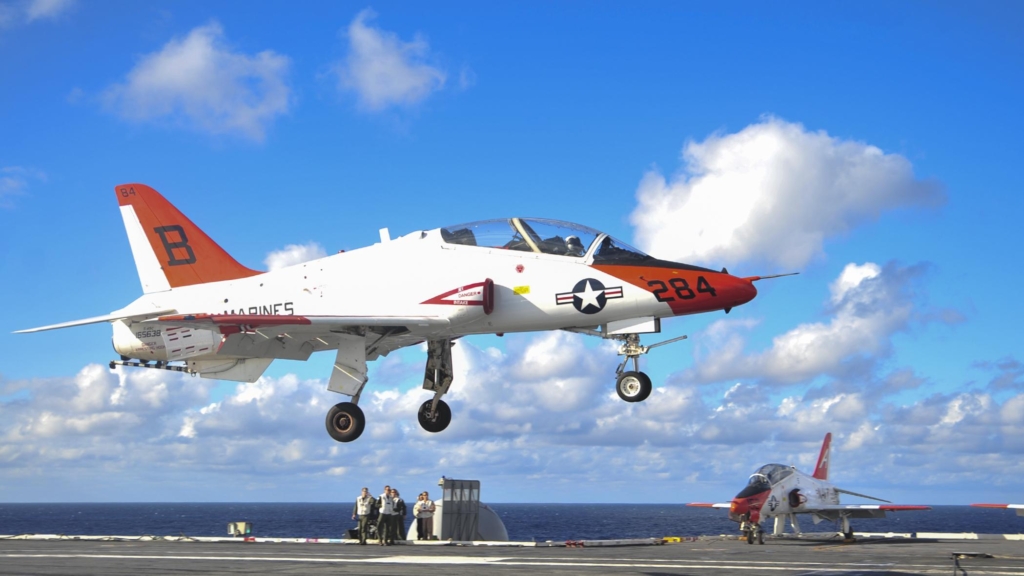
The decision was related to the Red Hawk’s single General Electric F404 turbofan, which would need a long cycle of development work to adapt it to Navy requirements.
This was the same engine that powers the single-engined TF-50N that Lockheed and KAI were offering; it’s unclear if the engine is also related to their decision to drop out in April.
Get the latest aerospace defence news here on AGN.
M-346N and SNC Freedom Jet left in US Navy trainer contest
The remaining competitors are Sierra Nevada Corporation (partnered with Northrop Grumman and General Atomics) and a partnership with Textron and Leonardo.
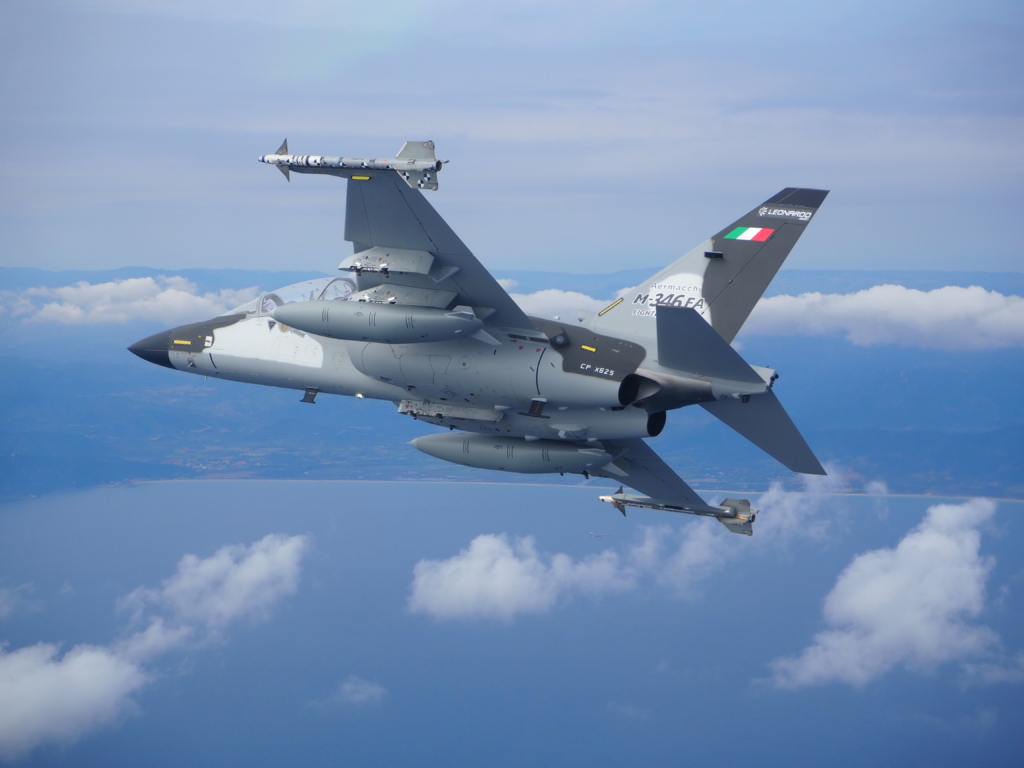
Leonardo’s and Textron’s Beechcraft M-346N is powered by a part of Honeywell F124 turbofans, while SNC’s Freedom Jet is powered by two Williams FJ44-4M turbofans.
The Beechcraft M-346N is a variant of the Alenia Aermacchi M-346 Master jet trainer and light combat aircraft. The M-346 is in service with Greece, Israel, Italy, Poland, Qatar, Singapore, and Turkmenistan. More are on order by Austria, Canada, and Nigeria.
Highlighting how large the US contract is, the total number of M-346s currently ordered by these ten countries is around 165 examples, which is less than the number of trainers the Navy is expecting to order.
SNC’s Freedom Jet is notable for being the only clean-sheet design to compete for the Navy’s next-generation trainer.
US Navy seeks replacement for ageing T-45 Goshawk fleet
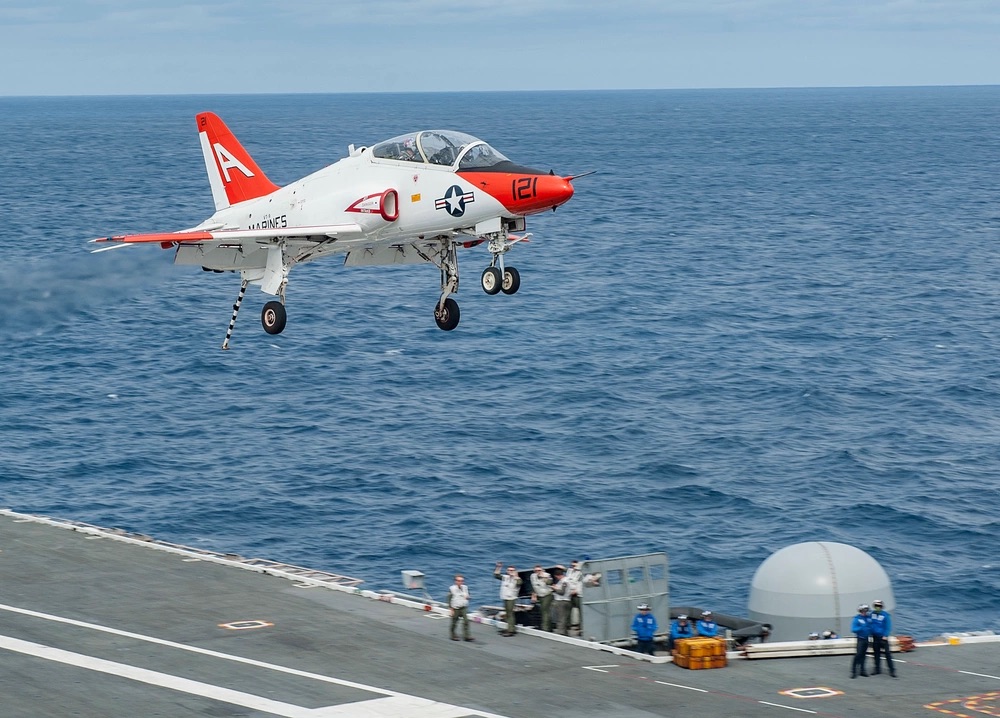
The Navy’s McDonnell Douglas (now Boeing) T-45 Goshawk is a modified version of the British BAE Systems Hawk trainer. The Goshawk is an aircraft carrier-capable trainer. The first entered service in 1991, with the final example being delivered in 2009.

The Navy wants to acquire 216 new jet trainers to replace the just under 200 Goshawks it currently has in inventory.
According to reporting by The War Zone, the new Navy trainer is no longer required to conduct carrier qualifications or simulated touch-and-go carrier landings at bases on land.
The Freedom Jet was designed to be tailor-made to meet the now-defunct requirements to perform carrier qualifications and simulated carrier touch-and-gos at base on land.
Still, SNC has chosen to build an aircraft able to meet those requirements and offer the Navy important capability and flexibility should it want it in the future.
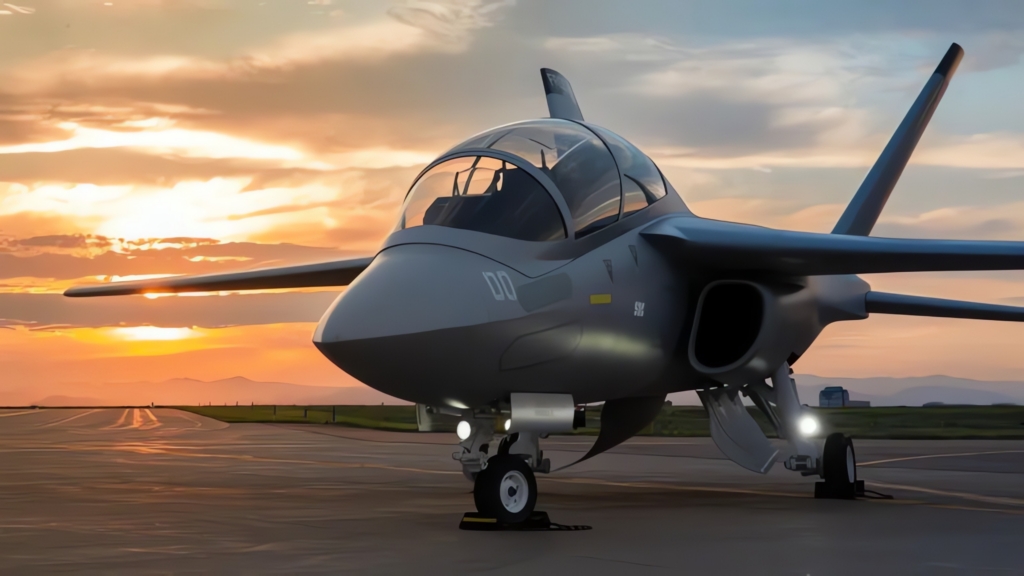
SNC says, “SNC’s Freedom FoTS is the only training solution capable of 35,000 carrier touch-and-go and Field Carrier Landing Practice (FCLP) to touchdown with a 16,000-hour airframe life.”
Featured Image: Boeing
Sign up for our newsletter and get our latest content in your inbox.