


Why British Airways is offering pilots $100,000 a year not to fly its aircraft

5 min read
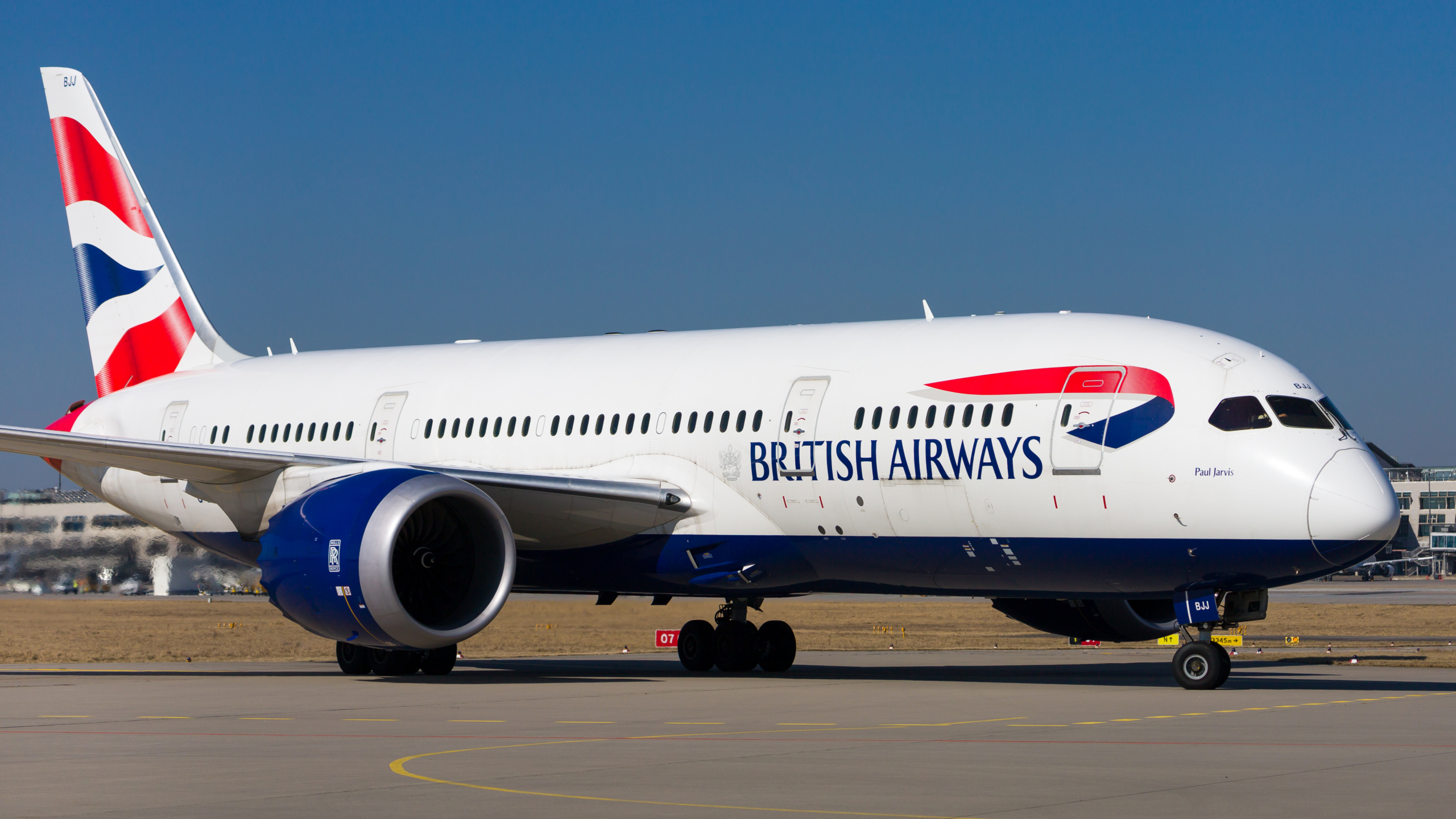
British Airways is recruiting pilots who will be paid for not flying the airline’s aircraft. Rather, the new position calls for qualified pilots to taxi the carrier’s Boeing 777 and 787s from one terminal to another, due to the unique way that the company operates at Chicago O’Hare Airport.
Offering a six-figure salary, the opportunity is thought to be one of the only ‘flying’ jobs in the world where the pilot never leaves the ground in the course of their duties.
British Airways offers a six-figure sum for pilots to stay grounded
British Airways is offering qualified commercial pilots the opportunity to earn up to $100,000 to taxi its aircraft around on the ground. The unique job calls for those with the proper qualifications to effectively ‘repark’ its Boeing 777s and 787s that operate into Chicago O’Hare Airport (ORD) on flights from London Heathrow Airport (LHR).
The job is aimed at either recently retired pilots who are no longer legally permitted to fly a commercial aircraft in US airspace, or pilots looking towards retirement who are seeking an easier-paced way of life.
The job of ‘taxi crew’ has become available due to the unique way in which British Airways manages its operations at Chicago O’Hare Airport (ORD). The airline’s three daily flights from London arrive at the airport’s Terminal 5, the main international terminal at the airport, where US Customs and Immigration are based to process passengers arriving in the country from overseas.
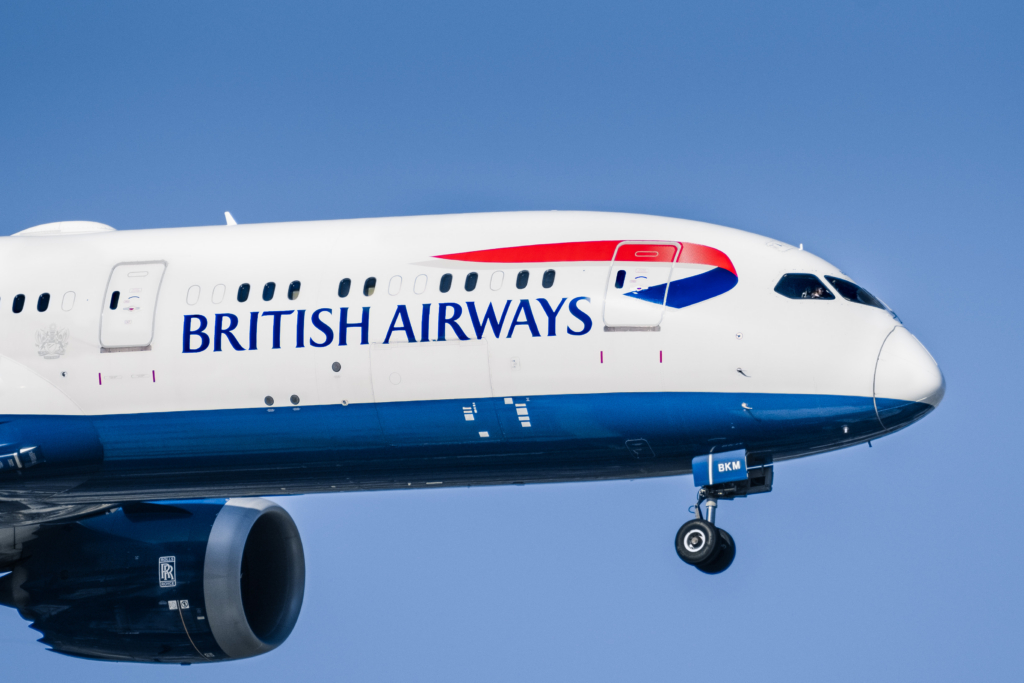
However, once these flights have disgorged their passengers at Terminal 5, the aircraft requires repositioning to Terminal 3. This terminal is the main hub terminal for American Airlines, with which British is a codeshare partner, and the two carriers operate a transatlantic alliance.
Having its aircraft repositioned to Terminal 3 serves multiple purposes. Firstly, having the aircraft at Terminal 3 facilitates simplified connections between American’s domestic flight network and the British Airways London operations.
Secondly, having both operations within a single terminal reduces the number of misconnecting passengers, which can result in huge expenses for both airlines involved.
Upon analysis, British Airways has clearly decided that misconnects cost the airline more than it would to employ crew to reposition the aircraft from Terminal 5 to Terminal 3.
Why does British Airways simply not use a tug and ground crew?
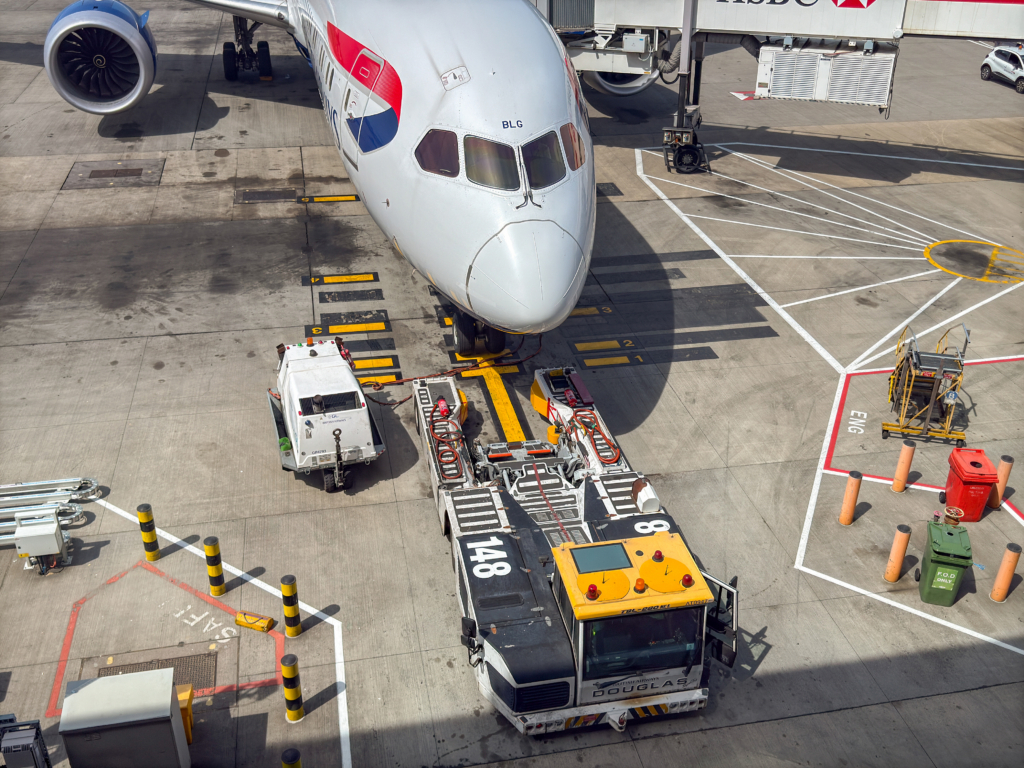
As reported by travel website PYOK, while at most airports, ground engineers would tow the aircraft using a tug from one part of the airport to another, such operations are prohibited at O’Hare.
However, the airport is unique in generally prohibiting ground movements using ground crews and tugs. Tugs move aircraft much more slowly than using the aircraft engines, and at busy airports such as O’Hare, where time is of the essence and space is limited, to avoid bottlenecks on the ground, aircraft repositioning themselves is far more common. Equally, using a tug takes up more space and removes flexibility from the ground operation.
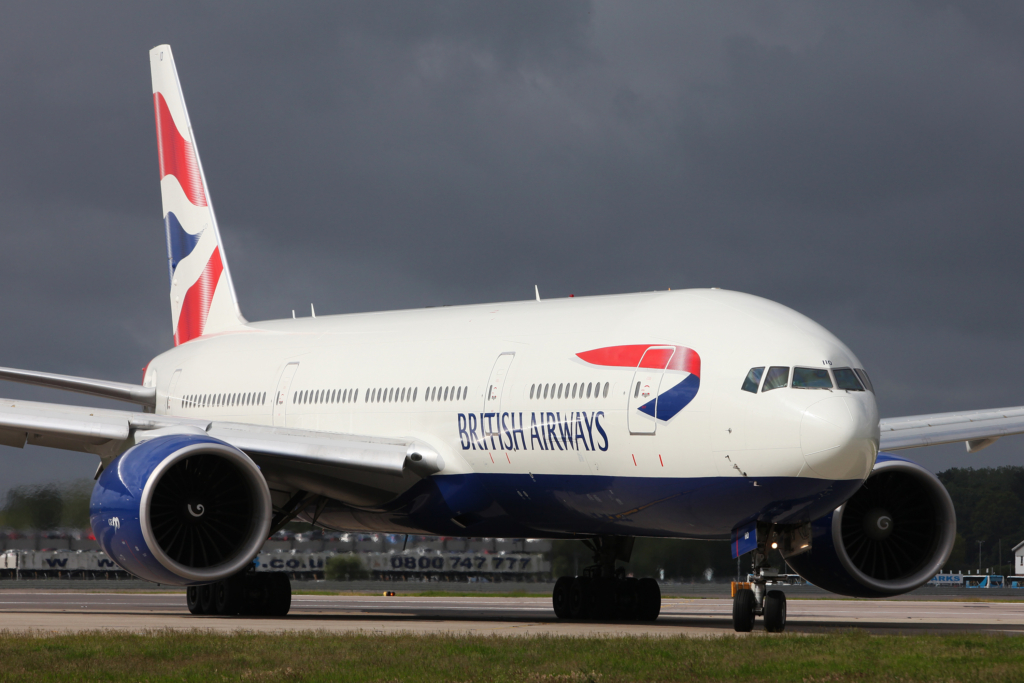
In addition to that, every towing movement in controlled areas requires coordination with air traffic control. Ground crews must get clearance and stay in communication with ATC. At O’Hare, where movements happen every few seconds, adding lots of tug movements would significantly increase controller workload and complexity.
Additionally, some airport layouts, like O’Hare’s multiple terminals and taxiways, already create congestion that has the potential to delay departures.
With an aircraft under tow, it cannot react quickly to avoid hazards and depends entirely on the tug and ground crew. They also involve reduced steering limits and visibility constraints, rendering aircraft harder to control on the ground.
Ultimately, Chicago Airport believes that taxiing and aircraft under their own power is faster and requires fewer people.
There is no need for specialised equipment or coordination beyond normal ATC instructions, and it keeps ground operations simpler and more scalable.
British Airways seeks pilots who are willing not to fly
As a result, British Airways is seeking applications from qualified pilots simply to take its planes and move them from Terminal 5 to Terminal 3, a distance of less than a few hundred meters. Successful applicants will need to be holders of an Air Transport Pilot Licence with recent experience of the Boeing 777 or 787 Dreamliner widebody jets.
Additionally, applicants will need to be familiar with the complexities of operating on the ground at Chicago O’Hare Airport, which is notoriously difficult, and be able to comply with all current safety guidelines.
According to the airline’s recruitment material, “You will play a critical role in helping achieve On Time Performance by safely ground taxiing British Airways Boeing 777 and 787 aircraft between terminals at Chicago O’Hare airport.
The base salary range for this position is $90,000 to $100,000 per year, depending on experience, skills, qualifications, and location.”
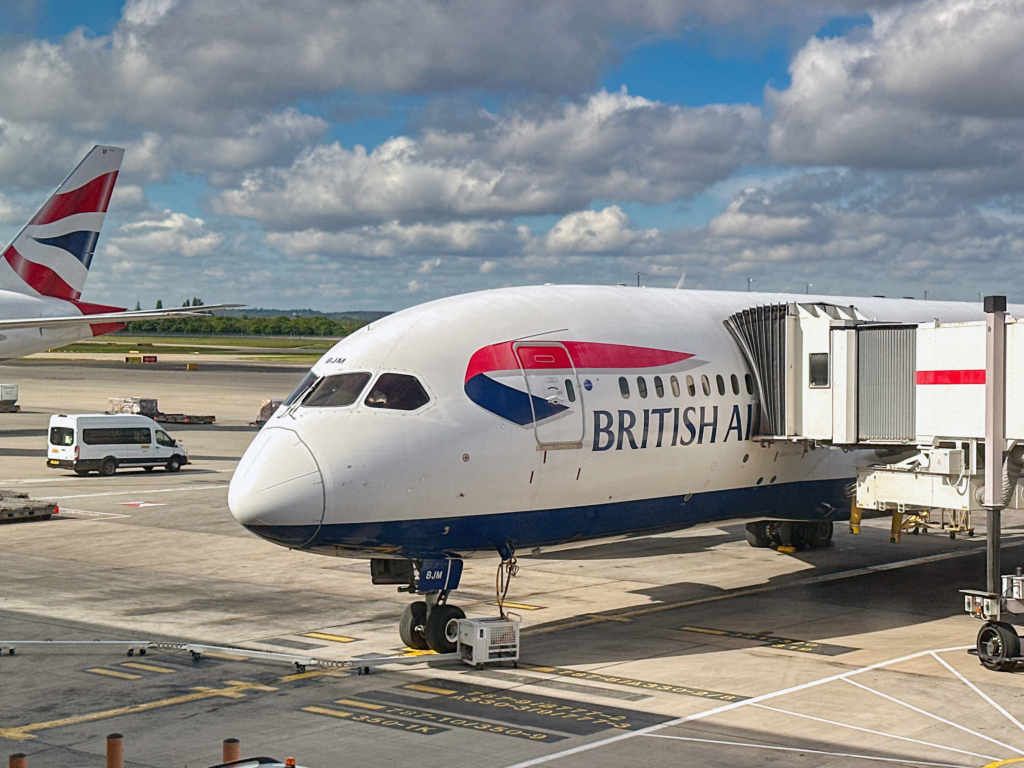
As reported by Yahoo News, the six-figure salary on offer by British Airways to act as taxi crew falls behind what five major US airlines are currently paying their first officers in their first year, according to data compiled by the ATP Flight School.
According to the data available, American Airlines, Delta Air Lines, United Airlines, Alaska Airlines and Southwest Airlines all pay upward of $117,000.
Although the salary may not sound like a great deal for a highly qualified commercial pilot position, the matter of moving three aircraft per day from one parking spot to another, it may just be the job for someone who is winding down their flying career or can no longer fly due to medical or other reasons.
For a job that is likely to take no more than a couple of hours per day, the airline believes that it might just be the perfect job for the right candidate.
Featured image: Christian Palent / stock.adobe.com


