


Iran Air reimagined: the fleet and network of a post-regime future

13 min read
Many believe the Islamic Republic of Iran is on its last legs. The regime, in place since the 1979 revolution, is on the verge of collapse after a swing of nationwide protests revealed the government’s weakening grip on the population.
As protests continue in Tehran and other key cities, airlines have suspended flights to the country. Last weekend, after several thousand protestors were killed by the Iranian Revolutionary Guards, most foreign carriers suspended flights to and from the country. Beyond that, airlines have also rerouted flights that overfly Iranian airspace, such as Lufthansa’s flights from Germany to Mumbai and Hyderabad, for example.
As the regime falls, the son of the last Shah of Iran and Crown Prince Reza Pahlavi has reemerged, believing he is “uniquely positioned” to takeover. Currently in exile in the United States, Pahlavi has promised renewal on all fronts including a return to relations with the West, opening the country to trade and innovation, and ensuring free and fair elections.
What could this mean for the aviation industry? In an ideal scenario, Iran would benefit from an expansive fleet of modern jets flying to destinations as distant as the US East Coast, according to network and fleet planning expert, Behramjee Ghadially who is ironically a Zoroastrian himself.
In an interview with Aerospace Global News, he calculates the country’s ideal roadmap for the future. From taking advantage of its geography to navigating human resource challenges, his blueprint balances sound commercial strategy with the realities of a post-regime Iran. He draws on his experiences at a range of airlines, including Gulf Air, Arik Air, Kuwait Airways and Air Senegal.
Iran’s aviation industry is outdated
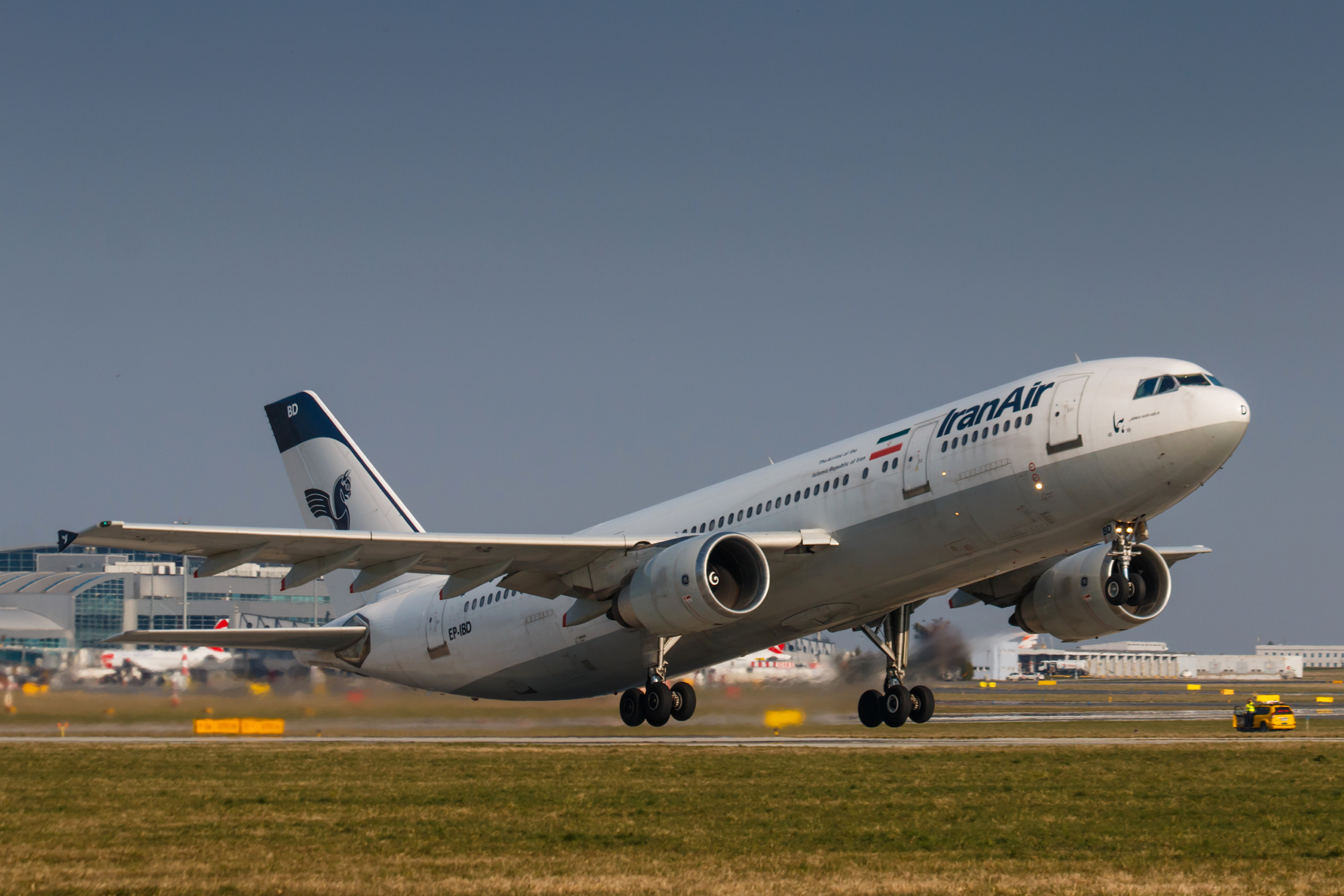
The average commercial fleet age in Iran is over 20. With a mix of ageing Airbus A340, A320 and Boeing 777s, as well as a handful of other aircraft, the fleet needs a complete makeover. The country is home to some of the world’s oldest aviation machines.
Iran’s ability to operate its aircraft for so long despite Western sanctions hampering the procurement of spare parts and new aircraft, is a testament to the quality of its engineering manpower.
The current network is equally as limited. “The main routes right now that these three airlines fly are within the Middle East and Turkey,” Ghadially explains.
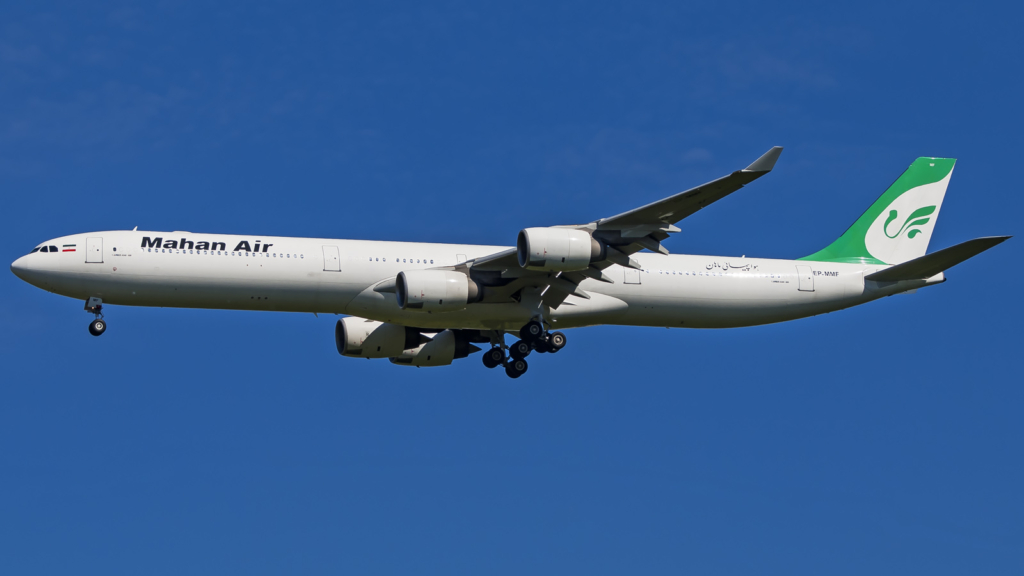
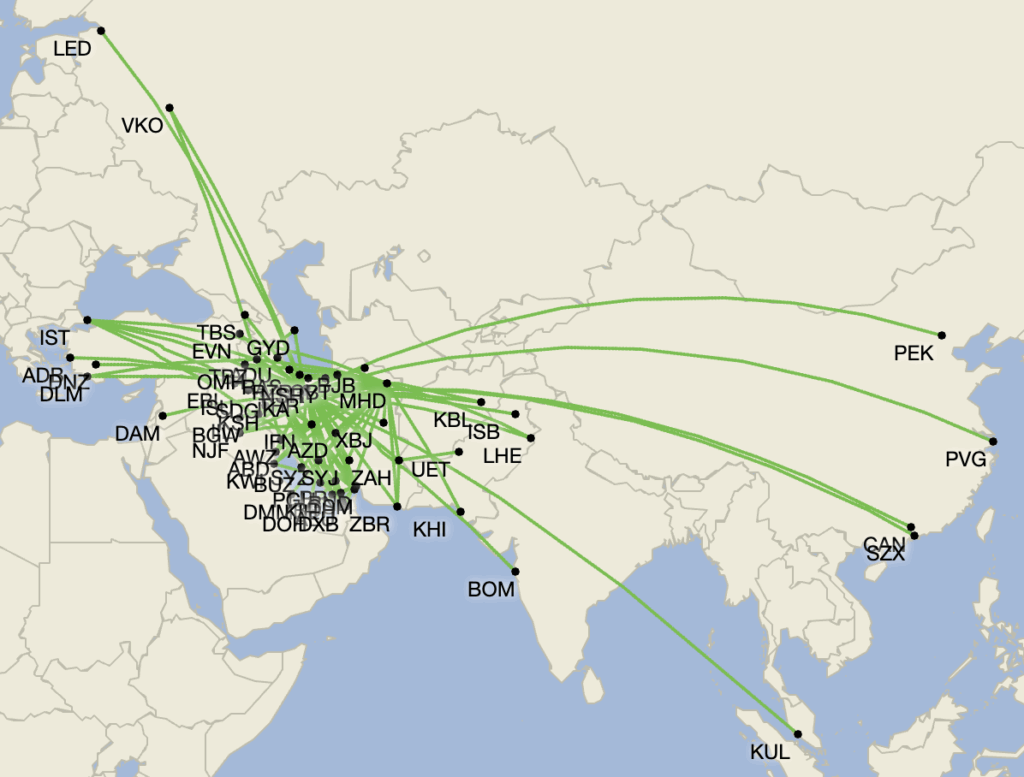
“But apart from the Middle East and Turkey, they don’t fly anywhere in Africa.” Iran Airtour Airlines operates to Kuala Lumpur with an Airbus A310, while Mahan Air operates an Airbus A340 on services to Chinese cities shown below. Ghadially highlighted that the Asian network is quite small. Routes to Bangkok and Kuala Lumpur were suspended by Iran Air, though the Malaysian capital returned in late-2025.
Iran’s immense market potential is driven by VFR traffic and an advantageous geographical location
Iran’s diaspora is spread across the world. There are a considerable number of Iranians in the United States, Canada, Germany, United Kingdom, France, Scandinavia and Australia. Nearby Kuwait, Turkey, the United Arab Emirates and Bahrain are also home to a large Iranian population.
This in turn fuels demand for airline routes. Several carriers connect the surrounding region with Iran, including both to Tehran and few secondary cities. Beyond that, however, the supply is limited.
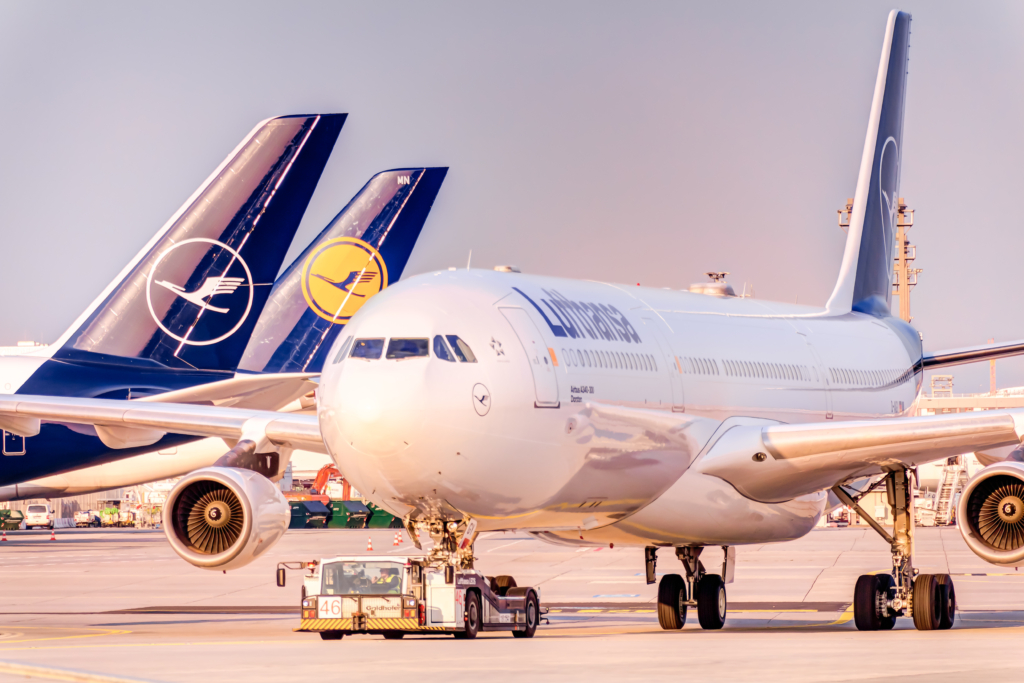
The ban on Iranian airlines flying to the European Union means that most of this demand is forced to travel via established hubs. This includes Istanbul with Turkish Airlines, Dubai with Emirates and flydubai and Doha with Qatar Airways. Lufthansa and Austrian Airlines are some of the few European carriers that continue to operate to Iran.
“If the regime falls within a few months the market will open up big time. You will see, a lot of airlines adding capacity to take advantage of the surge in demand. Iran will also attract thousands of Western and Asian tourists,” Ghadially explains.
Iran’s geographical position – very much at the crossroads of Asia and Europe – make it an ideal stopover point. Similar to what Dubai is to Emirates, Doha is to Qatar Airways and Abu Dhabi is to Etihad, Tehran could leverage its location to meet ever-growing demand for travel between the two continents. Asked whether there is space in the market for a new hub and spoke player in the broader Gulf region, Ghadially highlighted that Iran’s niche lies in its proximity to Central Asia.
“Iran Air needs to position itself as the airline of choice for Central Asia for the world. Because right beside it lies Iraq, all the Central Asian cities of Astana, Baku, Tbilisi, Kabul, etc. The biggest advantage it has is the high amount of point-to-point traffic for Iran itself versus its neighbouring states.”
| Region | Cities (Round-trip passengers 2024) |
|---|---|
| Middle East | Dubai (643,000), Istanbul (625,000) |
| Europe | London (115,000), Frankfurt (104,000), Paris (101,000), Moscow (96,000), Hamburg (68,000), Amsterdam (63,000), Vienna (58,000), Düsseldorf (54,000), Stockholm (52,000), Milan (47,000), Munich (43,000), Berlin (38,000), Copenhagen (32,000) |
| North America | Toronto (128,000), Los Angeles (82,000), Montreal (43,000) |
| East Asia | Shanghai (70,000), Guangzhou (66,000), Beijing (56,000) |
| South Asia | Delhi (33,000) |
| Oceania | Melbourne (40,000), Sydney (33,000) |
| Southeast Asia | Phuket (32,000) |
How should Iran’s potential and current reality inform network decisions?
With an old fleet and three national airlines, Ghadially believes a simplification process needs to be undertaken on several fronts. This includes:
- Airline consolidation: merging the three state-run carriers into a single Iran Air entity to simplify brand structures
- Fleet expansion: as developed upon below, the new fleet strategy should involve ambitious growth, fuelled by airline partnerships in the short-term and manufacturers in the long-term. To take immediate advantage in the first two years of pent-up demand and to get around the EU ban, Iran Air would need to ACMI/wet lease wide body aircraft from a reputed carrier. This in turn will also allow the airline to prepare itself internally when the time comes to induct new aircraft and get re-certified by EASA and FAA.
- Rethinking the airport strategy: Tehran boasts two main airports, the Imam Khomeini facility (used for international flights) and Mehrabad (used for domestic flights). This separation needs to be undone to enable seamless connections from internal destinations to stations outside of Iran.
- Renegotiate bilateral frameworks: ensure a fair playing field for renascent Iranian carriers against much larger foreign entities (with deeper pockets) looking to capitalise on demand for flights to Iran. For example, if the new Iran Air can only sustain seven weekly flights to a given country, don’t allow fourteen per the bilateral agreement to avoid foreign entities flooding the market with capacity supply and predatory pricing.
- Revise visa policy, airport and overflight fees: provide visa on arrival to the vast majority of countries and charge a minimal amount ($25-$40 payable upon arrival into Iran at the airport) to allow foreign exchange into the country along with using the visa fees to modernise the aviation infrastructure. The visa on arrival tool is highly essential to realise the enormous economic benefits of the pent-up demand surge. Reduce airport taxes especially for transiting passengers to improve appeal of stopping over / transit in Iran. It is also worth increasing overflight navigation fees by 10% given the huge revenue potential.
Iran Air’s post-regime fleet growth: avoiding past mistakes and future-proofing expansion plans
Iran is in desperate need of new aircraft. This was partly evidenced by Iran Air’s jaw-dropping order for nearly 200 aircraft in 2016 from both Boeing and Airbus.
It signed for Airbus A320, A330neos, A350, Boeing 737 MAX, 777 and 777X aircraft. It initially wanted Airbus A380s as well but dropped this when it finalised the agreement in December that year.
“It was more or less like kids going into a candy store and ordering every different type of candy flavor that was available,” Ghadially believes. “There is no legal, financial, or commercial justification for Iran Air at that time to have ordered these many planes nor such a diverse mix. That is absolute Disneyland-type airline fleet planning. It makes no sense whatsoever and to be fair both the OEMs are equally to blame for not guiding them properly.”
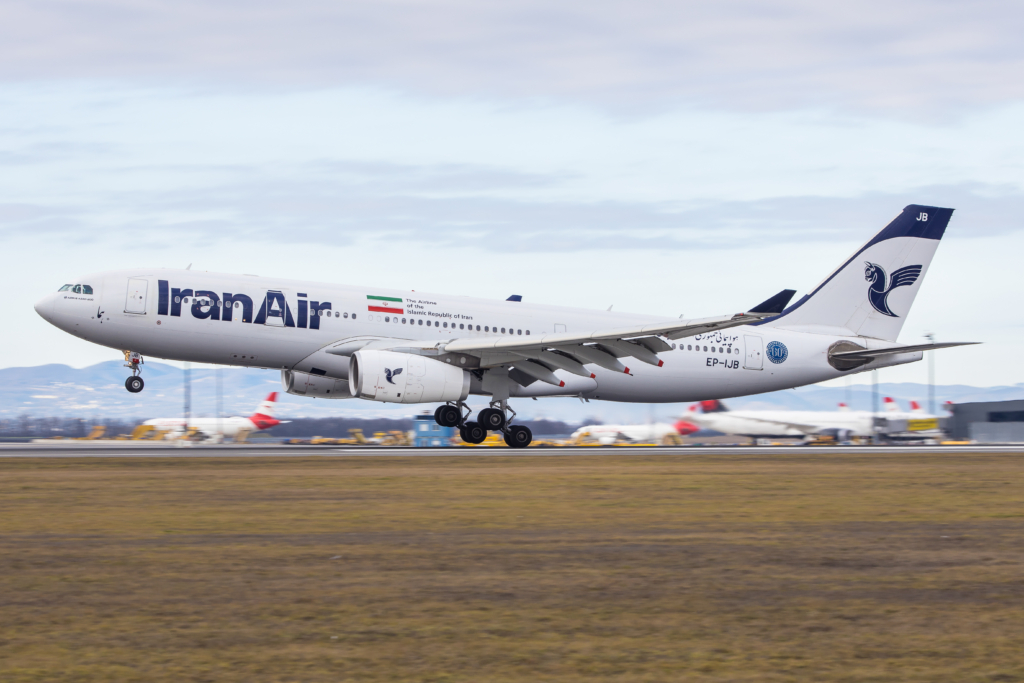
His counterproposal streamlines the future Iran Air fleet, reducing complexity and ensuring maintenance and associated operational costs remain low. Operating several different aircraft types requires additional sets of crews and maintenance professionals, increasing costs and causing operational headaches.
“When you have only ten, twenty units of each aircraft type, it doesn’t really make sense to diversify,” he adds.
| Units needed | Type | Configuration | Core markets | Notes |
|---|---|---|---|---|
| 30 | Boeing 787-9 | 270Y + 28J* | Long-haul. Nonstop service to North America and Australia. Dense services also to London, Paris, Germany, East Asia. Belly cargo is also important for such services, of which the 787 boasts sufficient space. | If demand outstrips expectations, can upgrade some units to B787-10 which can fly to Toronto and New York nonstop. The Airbus A350 is both too big and too expensive in comparison. |
| 10 | Airbus A321XLR | 156Y + 16J* | Flights up to nine hours with minimal risk and no payload penalties, to help build the hub-and-spoke model. Singapore, Phuket, Vietnam, China Tier 2 cities. | Airbus selected for narrowbody to balance political expectations along with Iran Air/Mahan Air already operating A320 family planes. |
| 30 | Airbus A321neo | 156Y + 16J* | Ideal for regional routes, Western Europe, Central Europe, India, Pakistan and Central Asia (Baku, Almaty, Astana…). Also useful for high-volume domestic routes. | |
| 20 | Embraer E195 E2 | 112Y + 12J | For Iranian domestic connectivity, Iraq, Middle East and Central Asia. Warsaw, Prague, Budapest, Athens, Ahmedabad, Multan and Sialkot are all viable options. | With “unbeatable” economics, these planes are perfect for high frequency domestic and regional routes. A few planes may also be based out of Mashad Airport, Ghadially suggests, for high volume religious tourism to the GCC, India, Pakistan, Iraq, Lebanon, Jordan, Syria and domestic Iran, |
| 10 | Embraer E190 E2 | 84Y + 12J | ||
| 5 | Freighter aircraft | European and Asian markets. | ACMI leases to increase freighter volumes. | |
Having flat-bed business class products on all Airbus A321s and Boeing 787s ensures there is premium product consistency for higher-yielding passengers that might connect via Tehran as well.
For the Boeing 787s, there is at least a five year wait for any additional factory-fresh aircraft. Delta Air Lines just recently signed for up to 60, with deliveries beginning in 2031. The Airbus A320neo aircraft meanwhile also require a lot more time, with delivery by around 2032.
The Embraer E2 planes do not face as much restriction timeline-wise. The manufacturer could envisage delivery by the end of 2028, if orders are placed now.
All manufacturers might also help negotiate delivery slot swaps with other airlines or source other aircraft in the interim. Leasing firms might also be a way around the delivery delay, with Iran Air paying a premium for their aircraft on earlier delivery slots or if an airline defers their originally intended delivery slots, it could be snapped up at a bargain price.
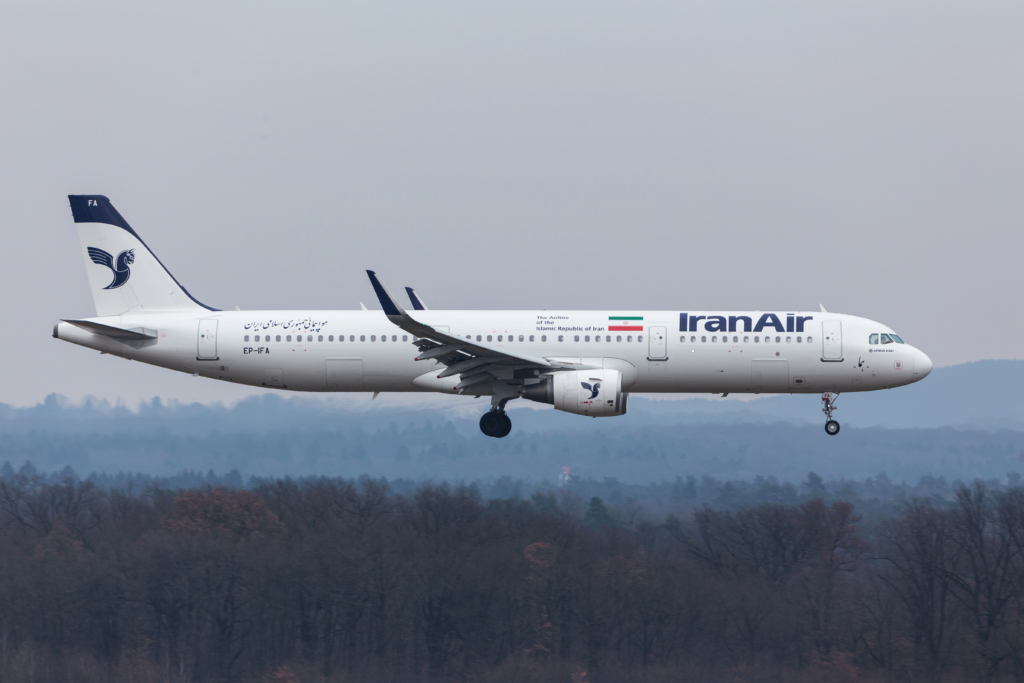
“The main issue will be getting, seats in economy class and business class to the specification that Iran Air would ideally like,” Ghadially explained. “So if they’re a bit more flexible and prefer normal standard flatbed business class rather than customised designs, then it would help.”
Otherwise, the wait could be more than two years.
The fastest way to get aircraft is to engage in wet leasing airplanes as long as it makes financial sense. Ghadially states: “The initial five years of restart are not about making net profits but rather building a modern and solid foundation base to reap the long-term benefits.”
“Over the short term although the airline will make a big net loss with large scale investments, Iran’s tourism sector economy overall shall benefit with thousands of foreigners visiting, spending money in hotels, restaurants, sightseeing and shopping hence the bigger picture needs to be looked at”.
Ghadially also stresses the crucial role that having a freighter fleet would provide Iran Air in the long run as the country was a big importer and exporter prior to 1979. Tehran’s geographical position plays a key part here too as cargo demand between Asia and Europe/North America continues to rise.
He refers to how successful neighbouring Silkway Airlines of Azerbaijan has been flying with a large Boeing 747/B777 freighter fleet leveraging Baku’s strategic location between East and West.
How might airline partnerships help reinvigorate the Iranian aviation industry?
With help from deep-pocketed neighbours in the Gulf, the refreshed Iran Air could get a head-start. Securing more modern aircraft as it awaits deliveries for new planes will be crucial to both begin refreshing the fleet and also expanding the network with the fall of the regime.
“Qatar Airways has quite a few 787-9s on order. Or they could give Iran Air – in the initial stage – a few of their old 787-8s. Another option is Turkish Airlines putting some of their older Airbus A330-200/300s on secondment duty to Iran Air” he suggests, as both governments maintain cordial historic relations with Tehran.
In terms of codeshare partners and alliances, Ghadially recommends Iran Air avoid the latter with all its rules and requirements, at least for the interim stage. Instead, partnering with Star Alliance carriers like Lufthansa, United Airlines and Air Canada would open up European markets and onward connections to North America.
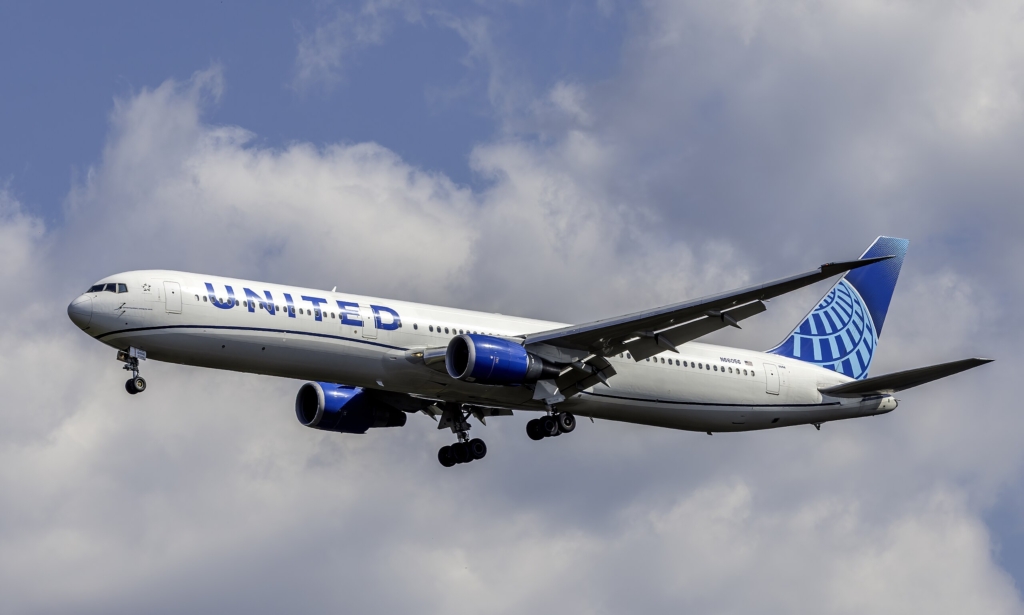
“Iran Air should not fly to North America for the first two years until it first develops its Indian subcontinent and regional network fully. In addition, the FAA audit process takes at least two full years to complete before Tehran airport and Iran Air are authorized to fly nonstop to USA. It cannot rely on point-to-point traffic on an ultra-long haul flight. So, for the initial stage to get North America traffic, they should interline or codeshare with a friendly carrier via Europe.”
The human resource challenge
One of the other major challenges that Ghadially believes Iran will face is that of human resources. The country does not have enough skilled aviation labour as many have immigrated to the Middle East or further afield to better opportunities. From pilots to trained engineers, supporting a fleet of 100+ aircraft is no easy feat.
Attracting foreign labour or encouraging skilled Iranian labour to return to the country after working in other airlines, will therefore prove crucial.
“In order to encourage a massive amount of foreign airlines foreign pilots and engineers and commercial staff to work for the airline, they will have to offer a rotation cycle,” he believes. “The airline needs to also invest in housing infrastructure for its local flight crew and full-time future expat staff to realize cost and operational efficiencies”
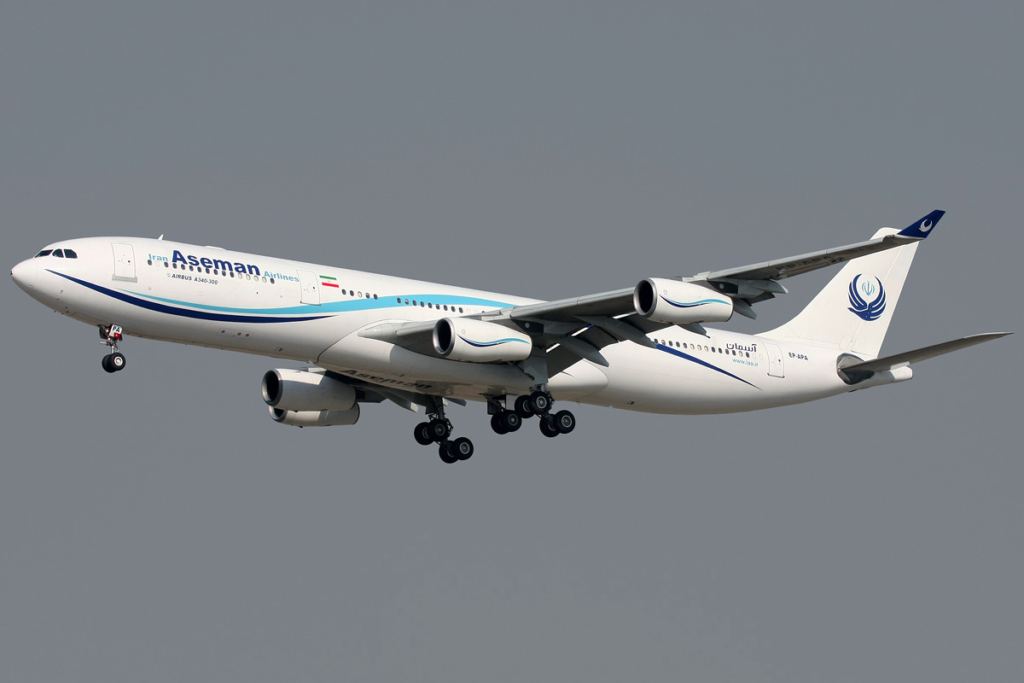
There’s plenty to be done in Iran. Revising the network, attracting skilled labour and renewing the fleet is no easy task.
Ghadially concludes on a happy note: “The only industry that does not need a major uplift in Iran is the food and restaurant industry.”
Featured image: rebius | stock.adobe.com.
With thanks to Behramjee Ghadially for his calculations and for speaking to Aerospace Global News. He can be contacted by email (behramjee82@gmail.com) and on WhatsApp (+1 (416) 854-5711).
Sign up for our newsletter and get our latest content in your inbox.


More from

October 4, 20264 min read

October 3, 20267 min read


