Ready for Africa: How Deutsche Aircraft’s D328eco is positioned for the world’s toughest aviation market

Africa’s regional aviation market is approaching a pivotal moment. Boeing’s most recent commercial outlook forecasts that Africa’s passenger traffic will grow around 6% annually through 2044, driving the continent’s commercial fleet to more than double over the next two decades.
As demand accelerates, much of today’s regional flying still relies on 25 to 35-year-old turboprops and regional jets whose capabilities and economics no longer match Africa’s growth trajectory.
Against that backdrop, Deutsche Aircraft believes its forthcoming D328eco arrives at exactly the right time. Speaking to AGN on the sidelines of the Dubai Airshow, Reinhard Schwaiger, Sales Director for Africa, the Middle East and parts of Europe, said the company sees a clear unmet need.
“There is a genuine gap in the market,” he told AGN. “Operators have larger aircraft which, at one end, are no longer in production, while the region is stuck with aged 30- to 40-seat aircraft at the other, with very few modern and economical solutions available to replace them. The D328eco is designed to fill that gap by offering operators a truly modern alternative.”
D328eco is uniquely positioned for the African market
Africa’s regional network is dominated by legacy ATR and Dash 8 fleets, many of which are ageing and in need of replacement. New production slots for ATRs remain constrained, and there is no new-generation 40-seater currently on the market. Schwaiger noted that the continent’s demographics alone create a compelling case for a new platform.
“You’re seeing significant population growth, rising GDP, and fleets that will have to double,” he said. “The need for replacement and right-sized aircraft is already visible.”
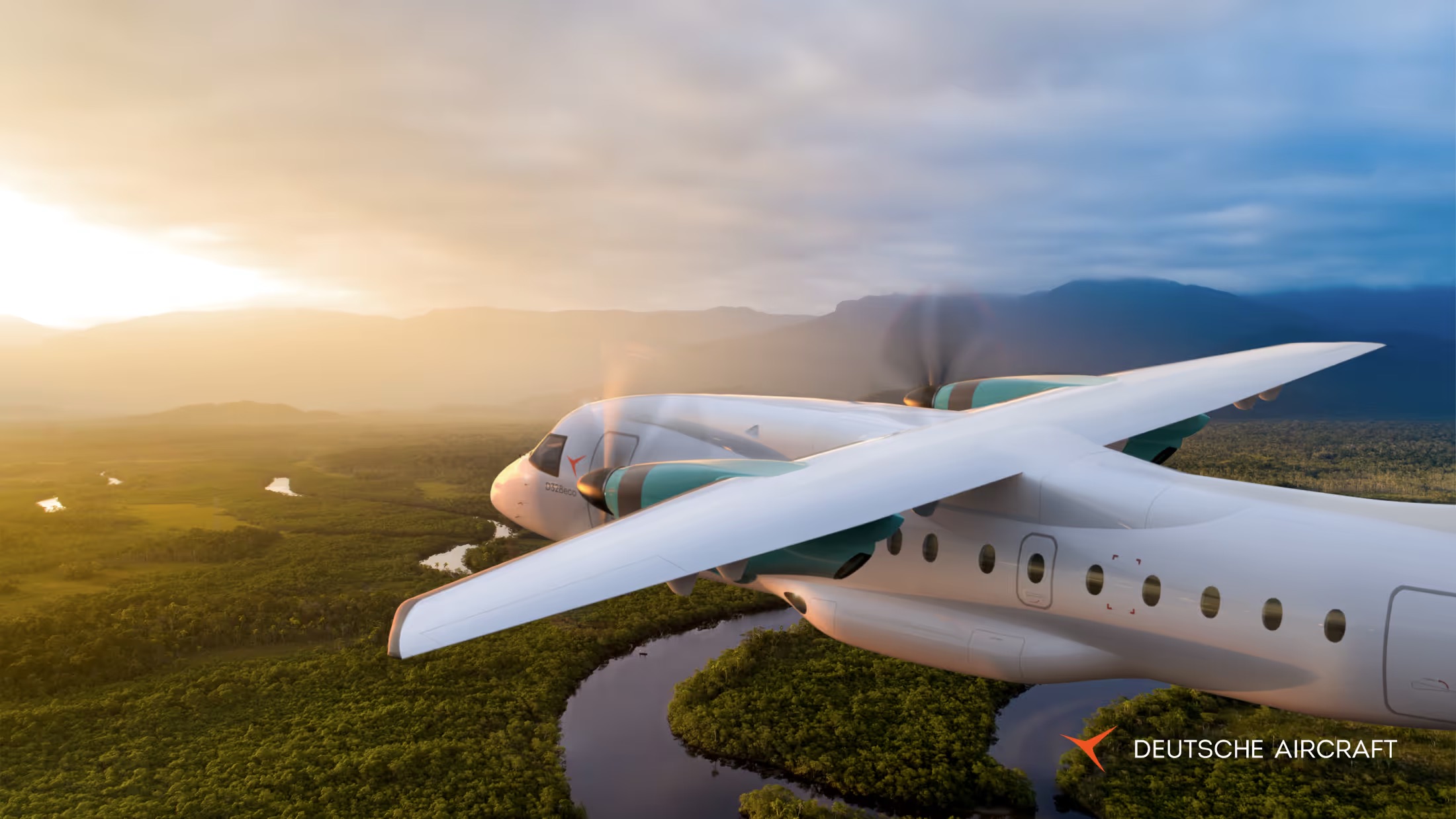
Deutsche Aircraft frequently describes the D328eco as the first turboprop built in the 21st century, a line Schwaiger echoed when discussing the programme’s positioning. “All the other aircraft in this category were designed decades ago,” he said. “This is a clean, modern aircraft built to meet today’s regional requirements.”
The D328eco also benefits from its lineage. As a stretched, re-engineered evolution of the Dornier 328, the aircraft retains the type’s strong performance profile while introducing new systems, avionics, materials and engines. For Africa’s mix of remote strips, thin routes and dispersed communities, that combination of heritage and modernisation is particularly persuasive.
Why the D328eco is the right plane for Africa
For Schwaiger, the most important point is simple: regional flight is essential infrastructure.
“In many parts of Africa, flying is not a choice,” he said. “There is often no viable alternative by road or rail. Reliable regional aircraft are absolutely vital to connect communities and support economic activity.”
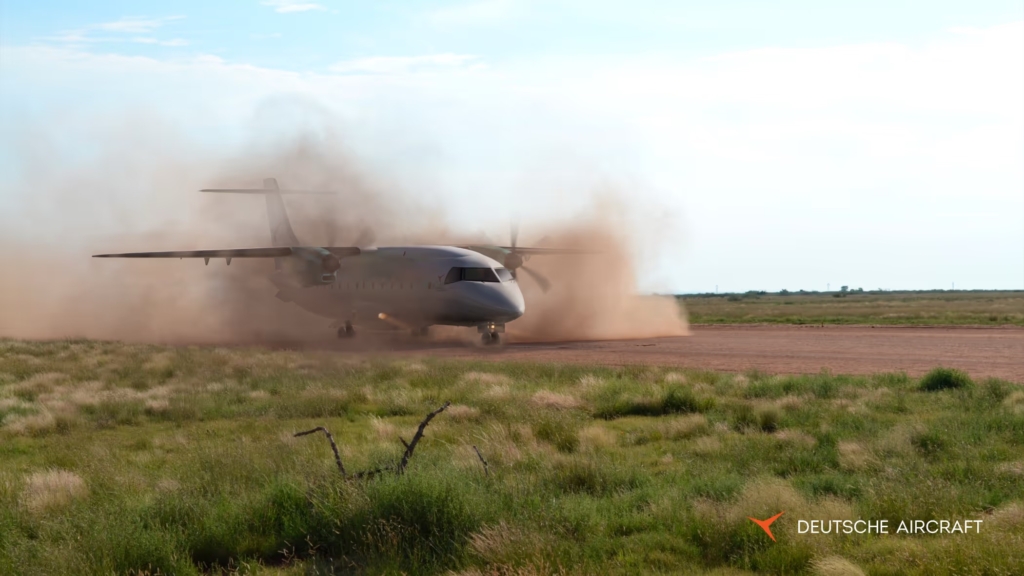
The D328eco’s performance envelope aligns closely with that reality. The aircraft is engineered for:
- Hot-and-high operations, common across East Africa and the Horn of Africa
- Short and semi-prepared runways, including remote airstrips used for tourism, humanitarian missions and mining logistics
- Strong climb performance, supporting operations from elevated terrain
- Improved resilience in dusty or harsh environments, a recurring challenge for regional fleets
But modern performance is only part of the equation. Economics will shape the next generation of African fleets more than anything else, and here Schwaiger believes the D328eco can deliver step-change improvements.
“We expect around a 30% reduction in operating costs compared with legacy turboprops,” he said. “Against regional jets, the saving is closer to 50%. That comes from lower fuel burn, lower maintenance costs and a more efficient design overall.”
Much of that efficiency comes from the PW127XT-S, a new variant of Pratt & Whitney Canada’s PW100 series featuring improved fuel burn and extended time-on-wing.
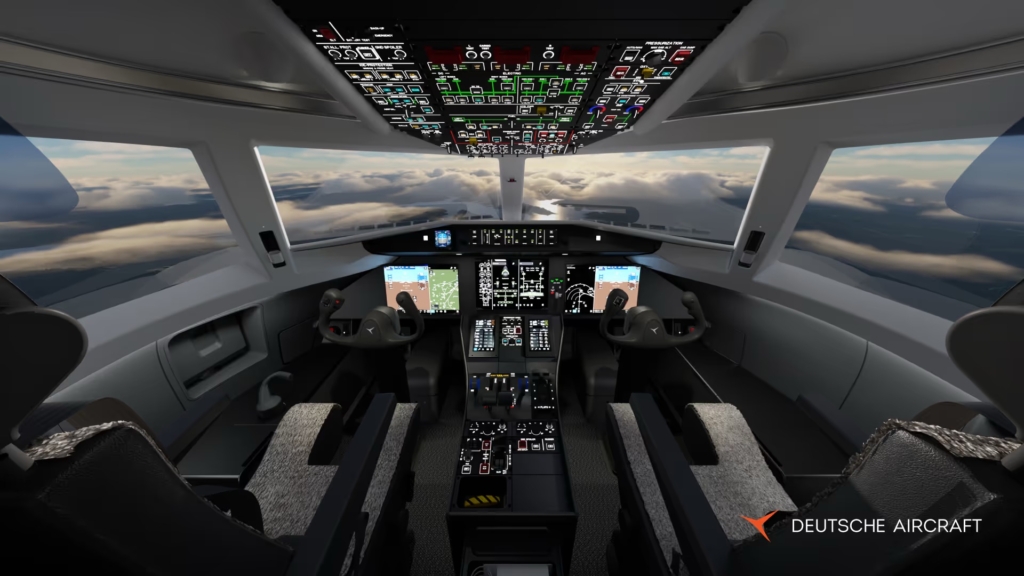
The aircraft’s avionics suite, based on Garmin G5000 technology, is designed to reduce training and maintenance overheads while providing a modern flight deck familiar to pilots progressing from Garmin-equipped training aircraft.
“Pilots who trained on Garmin systems can transition quickly,” Schwaiger said. “And from a maintenance perspective, the new avionics architecture requires only a fraction of the upkeep associated with older analogue or hybrid systems.”
Helping African airlines finance fleet modernisation
Fleet renewal in Africa is rarely limited by aircraft availability. The real barrier is financing. Schwaiger is direct about the challenge.
“For many operators, financing is as crucial as the aircraft itself,” he said. “It determines whether an airline can grow, replace ageing aircraft or even keep a route open.”
To address that, Deutsche Aircraft is building financing solutions into its sales campaigns from the outset.
“We engage with lessors early so that conversations become three-party discussions rather than just OEM and operator,” Schwaiger explained. “That creates more realistic pathways for funding the aircraft.”
The company is also working closely with Germany’s export-credit agency Euler Hermes, which provides guarantees and risk-sharing tools that can make it easier for African carriers to secure aircraft financing.
“Support from Euler Hermes is an important part of our strategy,” he said. “It can de-risk investment for lenders and give regional airlines access to modern aircraft they would otherwise struggle to finance.”

After-sales support is another major driver of aircraft adoption.
“The first aircraft is sold by sales, but the second is sold by after-sales, which emphasises the importance of establishing a solid support ecosystem,” Schwaiger said. “Operators need confidence that parts, service, and expertise will be available whenever and wherever they need them.”
The company is therefore scaling its parts distribution network and service infrastructure as the D328eco approaches certification.
What’s next for the D328eco?
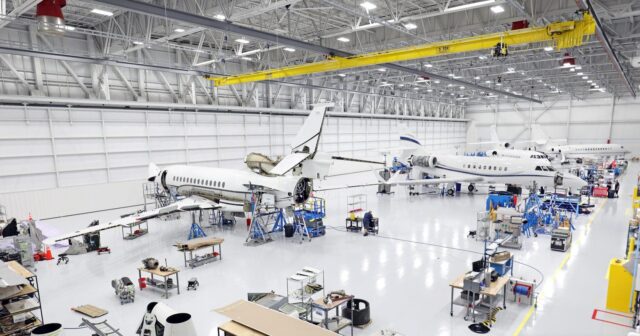
The D328eco’s industrial build-up is now accelerating. A new €100 million carbon-neutral final assembly line in Leipzig is under construction, designed to produce up to 48 aircraft per year using paperless manufacturing and renewable energy. The first test aircraft is in assembly, with first flight targeted for 2026.
Certification is progressing under a hybrid strategy that blends updates with legacy rights. The original Dornier 328 type certificate allows Deutsche Aircraft to pursue approval under grandfathering provisions, while still introducing a fundamentally renewed aircraft.
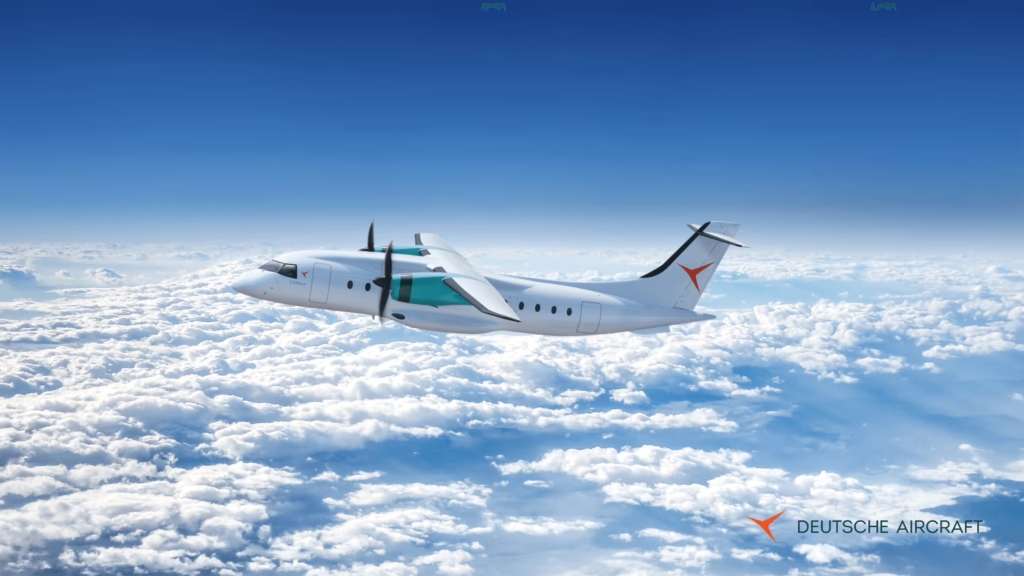
“While we are using the existing type certificate, around 80 to 90% of the aircraft is new,” Schwaiger said. “The interior, the flight deck, the landing gear, the engines – all of the key systems have been redesigned or upgraded.”
Looking ahead to 2026, Deutsche Aircraft expects to reach several programme milestones, including completion of the Leipzig factory, rollout of the first test aircraft and the beginning of flight testing. Sales campaigns, particularly in Africa, are expected to intensify as operators evaluate replacement and growth opportunities across their regional networks.
For Schwaiger, the goal is clear: an aircraft that supports Africa’s growth and remains economically sustainable for operators.
“We need to make sure the aircraft performs, but also that it supports viable business models,” he said. “In the end, airlines must be able to make money with it. That is what will drive long-term success.”
Featured image: Deutsche Aircraft