


Turkiye closer to rejoining the Lockheed Martin F-35 club, but S-400 removal remains non-negotiable

4 min read

Two decades after joining the F-35 Joint Strike Fighter programme as one of its original international partners, and six years after being expelled in a rupture unprecedented within NATO, Türkiye is once again inching toward the aircraft it once helped build.
Washington has confirmed that it is in “fruitful” talks with Ankara on a possible return to the F-35, a development few would have predicted when Türkiye took delivery of Russian S-400 air-defence missiles in 2019.
“The United States is in ongoing discussions with Türkiye regarding their desire to rejoin the F-35 programme and their possession of the Russian-made S-400 air defence system,” Tom Barrack, US Ambassador to Türkiye, wrote on X.
The United States is in ongoing discussions with Türkiye regarding their desire to rejoin the F-35 program and their possession of the Russian-made S-400 air defense system. As laid out in U.S. law, Turkiye must no longer operate nor possess the S-400 system to return to the F-35…
— Ambassador Tom Barrack (@USAMBTurkiye) December 9, 2025
This reopening of dialogue reflects a rare alignment of strategic need, political timing and mutual dependence. Yet it also underscores the uncompromising conditions that the United States has placed on Türkiye’s re-entry, and the difficult choices Ankara must make if it wants to reclaim its place inside the fifth-generation fighter ecosystem.
How Türkiye was ejected from the F-35 Joint Strike Fighter programme
Türkiye joined the F-35 programme in 2002 as the seventh international partner, committing $175 million to development and securing a long-term industrial role that integrated Turkish suppliers into the aircraft’s global production chain. Ankara planned to buy at least 100 F-35s, and its first jets were delivered in 2018.
The partnership unravelled as soon as Türkiye insisted on acquiring the Russian-made S-400. Washington warned that operating a Russian radar capable of tracking stealth aircraft would compromise NATO security.
When Türkiye accepted its first S-400 deliveries in 2019, the United States took an unprecedented step: removing a NATO ally from the F-35 programme, halting delivery of aircraft that Türkiye had reportedly already paid $1.4 billion for, and imposing CAATSA sanctions.
The message from Washington was clear: a country cannot operate an advanced Russian air-defence system and simultaneously field the West’s most sensitive fifth-generation fighter.
Why Ankara turned to the Eurofighter Typhoon after losing F-35 access
Türkiye’s expulsion triggered a rapid and costly search for alternatives. The Turkish Air Force, reliant on ageing F-16s and even older F-4s, faced a widening capability gap as regional rivals modernised.
Ankara explored Eurofighter Typhoon purchases — eventually signing for 20 aircraft — and doubled down on KAAN, its indigenous fifth-generation fighter project. KAAN became the centrepiece of long-term ambitions, presented as proof that Türkiye could thrive outside Western supply chains. But officials quietly acknowledge that the aircraft will not be operational before 2030 at the earliest, and that it still lacks a domestic engine.

Even Turkish strategists concede that the Eurofighter is, at best, a stopgap; an industrial bridge to prevent the fleet sliding into obsolescence.
More urgent still is Greece’s formal acquisition of F-35s, which could tilt the regional air-power balance decisively. Remaining outside the F-35 programme as its main rival inducts the aircraft has become strategically untenable.
Why Türkiye needs the F-35
For all the national pride invested in KAAN and the Typhoon order, the F-35 remains the only platform capable of addressing Türkiye’s immediate strategic needs: stealth, sensor fusion, networked warfare, and integration into NATO’s next-generation air architecture.

Turkish officials have repeatedly stressed that Ankara’s removal inflicted a double penalty — a loss of combat capability and a loss of the industrial participation Turkish firms had built over two decades.
Türkiye is now caught between long-term ambition and short-term vulnerability. KAAN cannot arrive fast enough. The F-16 is reaching the limits of upgradeability. The Eurofighter cannot fully replace what the F-35 provides.
US conditions for Türkiye’s F-35 return: the S-400 remains the red line
Against this backdrop, Washington’s recent tone is notably more conciliatory.
“The positive relationship between President Trump and President Erdogan has created a new atmosphere of cooperation, which has led to the most fruitful conversations we have had on this topic in nearly a decade,” Barrack said. “Our hope is that these talks will yield a breakthrough that meets the security requirements of the United States and Türkiye.”
But the core American position has not shifted an inch. As Barrack stated: “Türkiye must no longer operate nor possess the S-400 system to return to the F-35 programme.”
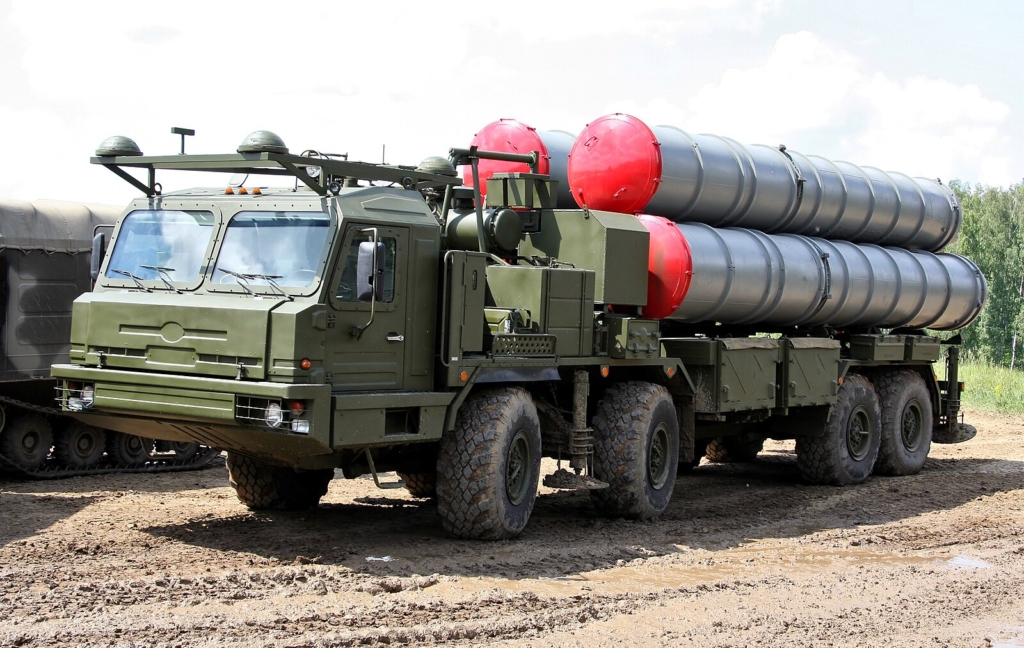
This remains the immovable red line: Türkiye must remove or dismantle the S-400 — not warehouse it, not promise never to activate it, not place it under monitoring. It must cease to exist inside Türkiye’s borders.
The US has repeatedly rejected Ankara’s proposals to store the S-400 under verification or to keep it permanently inactive. Publicly, Türkiye continues to insist that the S-400 remains a sovereign requirement for national air defence. Privately, officials concede that a compromise may be unavoidable. With sanctions still in place, fighter availability declining, and KAAN years from serial production, Ankara is running out of options.
Featured image: Tech. Sgt. Nicolas Myers / USAF


