


Megahubs: The top 5 biggest airports in development around the world

5 min read
The global commercial aviation outlook suggests that the world’s commercial fleet is expected to double in the next 20 years. Airbus states that the passenger and freighter fleet will grow from the existing 24,730 aircraft to 49,210 aircraft by 2044.
The increase would represent growth in commercial aircraft while also driving the crucial replacement of older, less fuel-efficient fleets.
Similarly, Boeing projects that the commercial fleet will approach 50,000 active commercial aeroplanes by 2044. This number will represent nearly a two-fold increase from the 2024 fleet.
Boeing states that the next decades will likely bring uncertainty and obstacles due to ongoing supply chain and other issues. However, there will be many drivers supporting further connectivity and growth in air transport.
Megahubs around the world continue to expand their operations and facilities. On the other hand, newer airports are under development to cater to the forecasted demand. We look at the biggest airport projects under development.
1. King Salman International Airport, Saudi Arabia
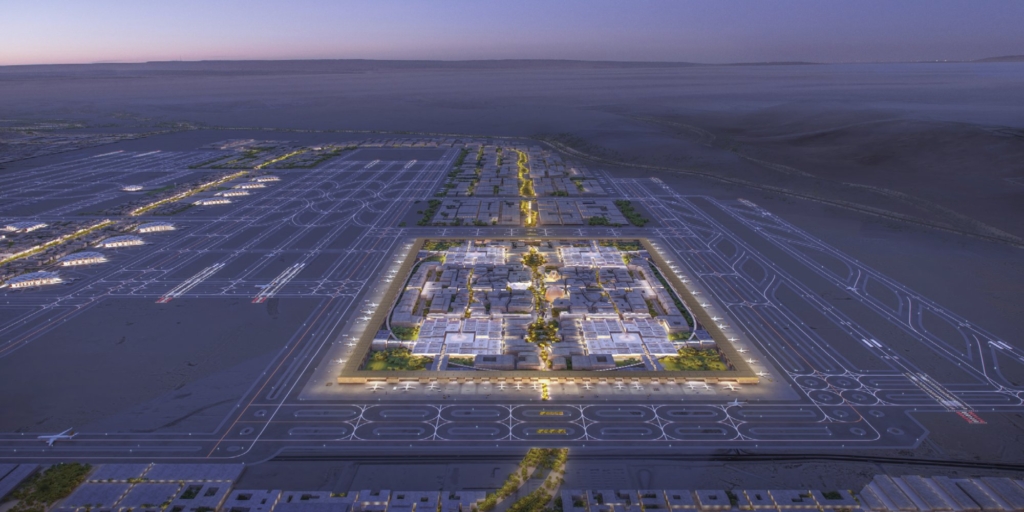
King Salman International Airport (KSIA) is a massive airport project under development in the north of the capital city of Riyadh, Saudi Arabia. Set to succeed the existing King Khalid International Airport (RUH), the new megahub will be built adjacent to the existing airport.
The Crown Prince of Saudi Arabia, His Highness Mohammad bin Salman, announced the project in November 2022. The mega airport will cover an area of 57 square kilometres (22 square miles) and become one of the world’s largest airports. The development is part of Saudi Arabia’s Vision 2030, boosting tourism and socio-economic activities.
According to the Public Investment Fund (PIF), a sovereign wealth fund of Saudi Arabia,
“KSIA is one of the ambitious projects to support Saudi Arabia’s Vision 2030 to take advantage of its strategic geographical location, as it is a link between Asia, Africa, and Europe, and makes Riyadh a global destination for transportation, trade, and tourism.”
Six parallel runways with multiple terminals within a single concourse will handle millions of passengers daily. There will be plenty of space for offices and retail stores. Moreover, the airport will house a private aviation terminal and a space to handle 3.5 million tons of cargo per year. The airport is expected to handle up to 100 million passengers by 2030, further increasing to 185 million by 2050.
2. Noida International Airport, India
Noida International Airport (DXN) is a development project set to turn into India’s largest airport upon completion. Currently under construction, the airport will handle 12 million passengers annually in phase 1, growing to 120 million by 2050 in subsequent phases.
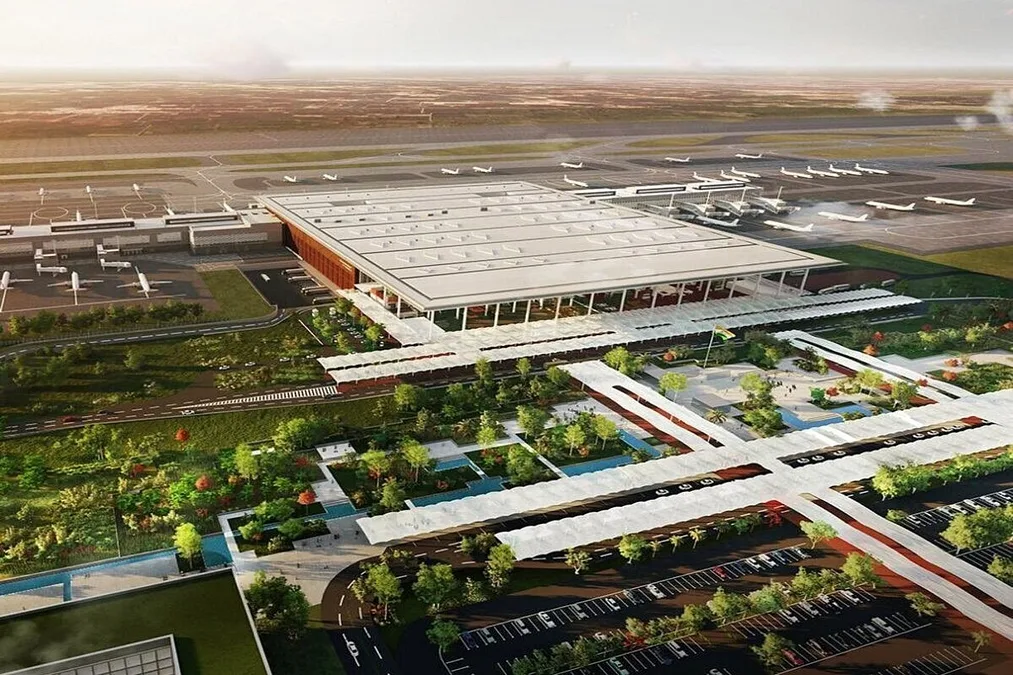
As the third commercial airport in the Delhi NCR region, the airport is set to open its doors to the public early next year. Currently, a single 100,000-square-metre terminal as well as one 3,900-metre runway is ready to handle domestic and international passengers. The airport is committed to a net-zero emissions goal, supported by sustainable airport design and operational processes.
3. Long Thanh International Airport, Vietnam
Long Thanh International Airport (LTH) is Vietnam’s most expensive infrastructure project. It is set to turn into a megahub, serving over 100 million passengers annually. Located 40 km (25 miles) east of Ho Chi Minh City, the ambitious new gateway covers 38,800 acres.
Vietnam’s existing Tân Son Nhat International Airport (SN) has exceeded its capacity of 30 million passengers. The first phase of the new airport will feature a single 4,000-metre runway and one terminal. Upon completion, it will allow handling of 25 million passengers and 1.2 million tonnes of cargo per year. The first phase is set to be completed in early 2026.
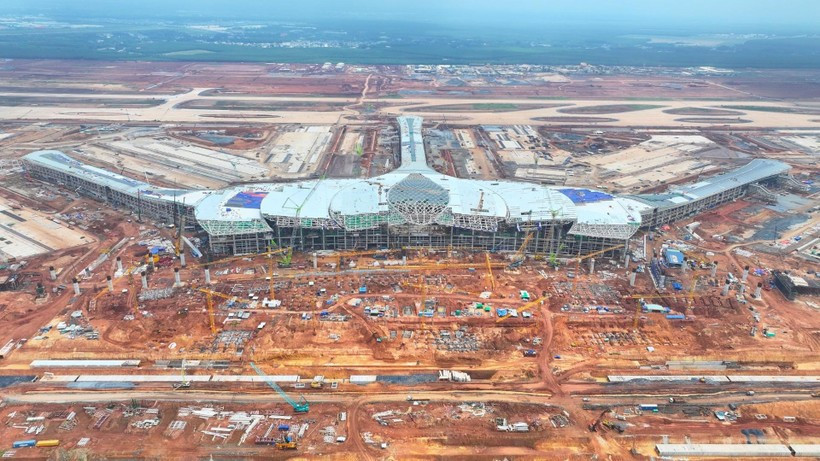
During the transition period, the existing Tan Son Nhat Airport will handle domestic flights while the new Long Thanh Airport will serve all international flights. Another proposal calls for Tan Son Nhat to continue serving domestic flights while maintaining short-haul international routes. On the other hand, Long Thanh will handle all long-haul international flights and some domestic flights, primarily used for transfers.
The remaining three phases will be completed by 2035 at a cost of an additional US$18.7 billion. The airport will have four runways and four terminals, increasing passenger capacity to over 100 million passengers. High-speed trains will connect the airport to the capital, as well as major areas of southern Vietnam.
4. New Manila International Airport, Philippines
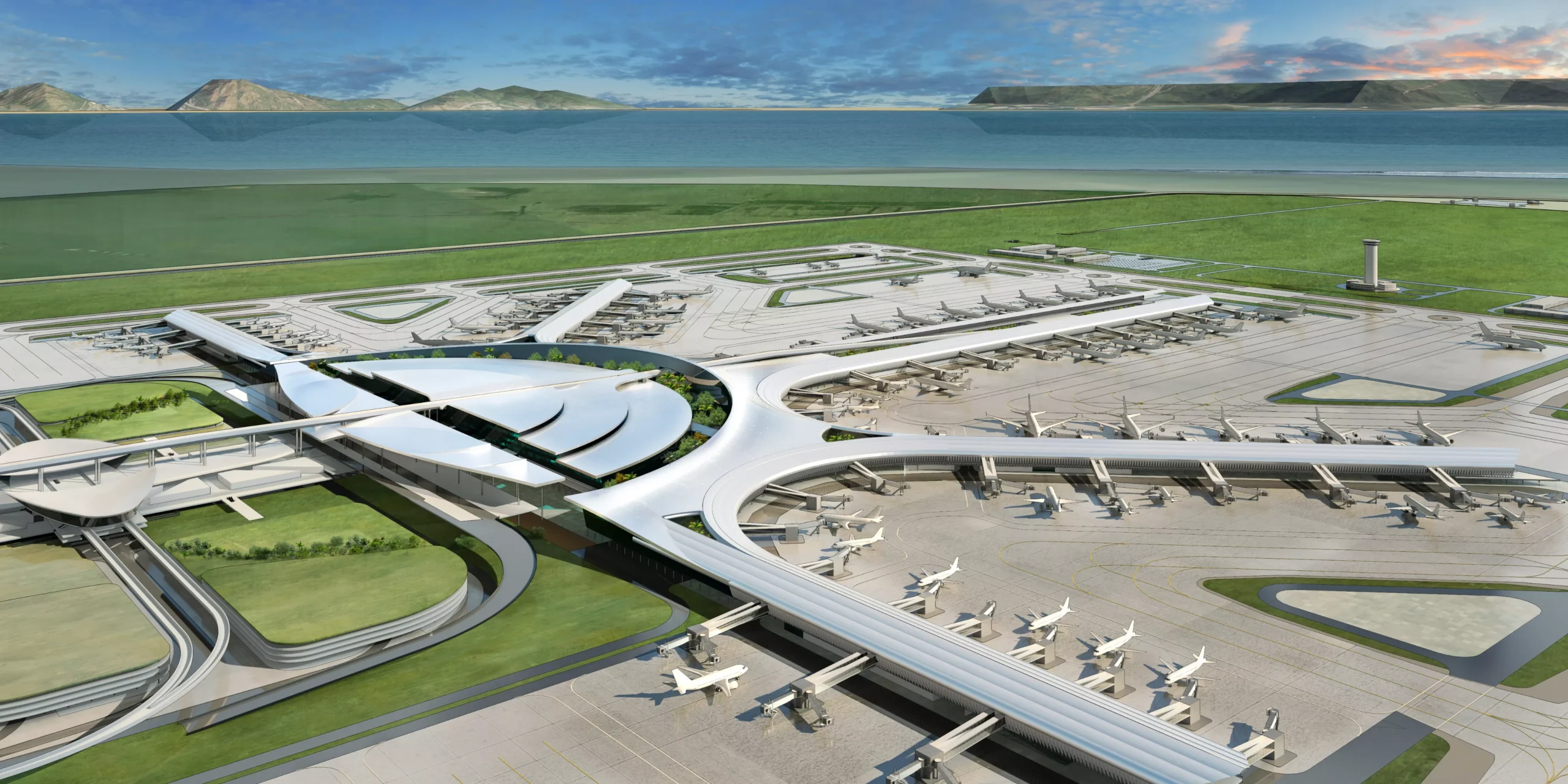
The New Manila International Airport project is an ambitious infrastructure project under construction. The new airport is located 35 km (21 miles) north of Manila.
Designed to be twice the size of JFK Airport and nearly three times the size of Sydney Airport, it will be built on a 6,200-acre coastal property. The $15 billion airport project will be able to handle over 100 million passengers annually.
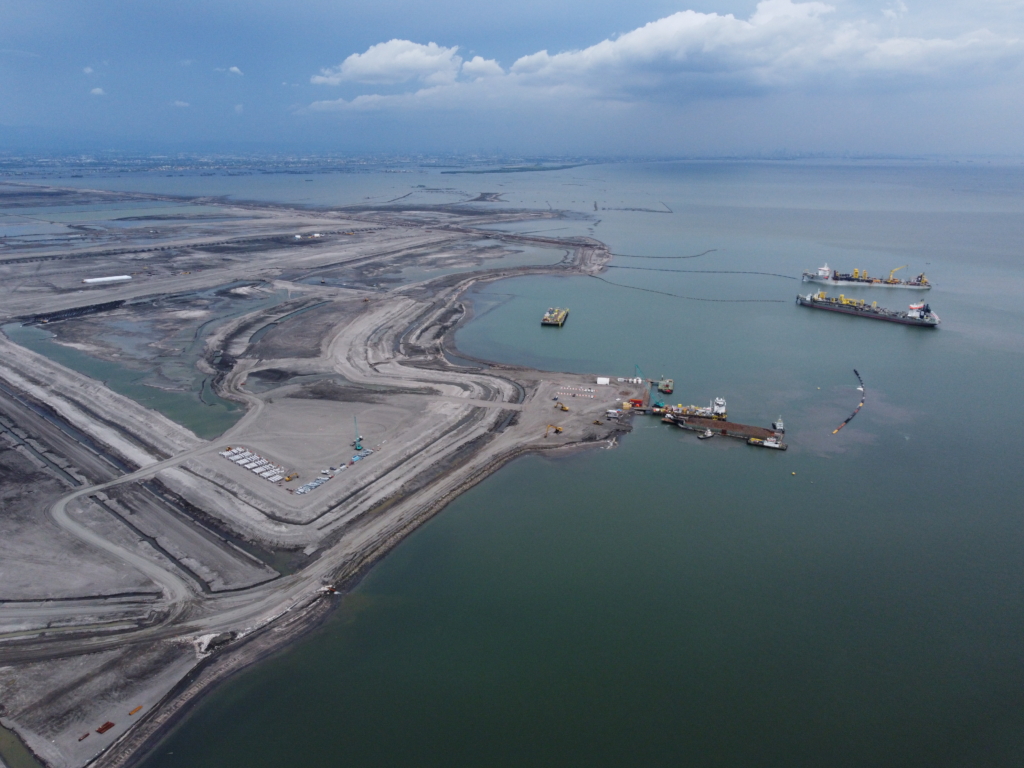
The airport will be supported by new highways and metro trains that offer fast connectivity to and from the centre of the capital city. The first phase of the project began in October 2020, including two runways and multiple terminal buildings. The first phase is slated for completion in 2028
5. Centralny Port Komunikacyjny Airport, Poland
Centralny Port Komunikacyjny (CPK) is a mega airport project in Warsaw, Poland. Located between Warsaw and Lodz, the new airport will serve as a major gateway to the Polish country. The increased demand for air travel in Europe and rising volumes of tourists in Poland have driven the need for this megahub.
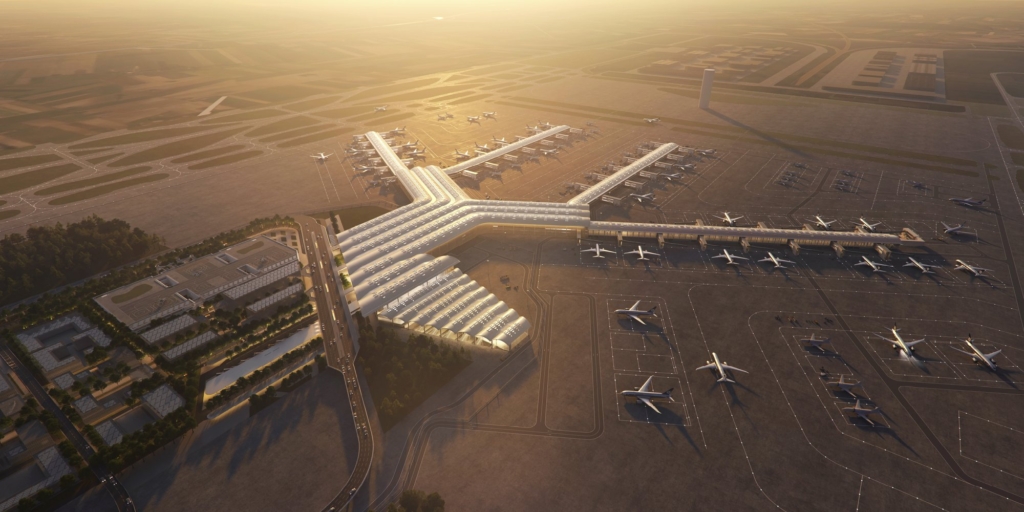
Expected to open in 2032, Centralny Port Komunikacyjny will become Poland’s international aviation hub. The airport is built to handle over 60 million passengers a year. A new high-speed transit system will link passengers to the Polish capital.
Designed by Foster + Partners, the airport will feature a state-of-the-art baggage system. Moreover, sustainable design and newer technologies will improve efficiency.
According to Foster + Partners, the firm designing the new CPK airport,
“A landside interchange plaza is animated by lush greenery and flooded with natural light. People congregate in this vibrant space before travelling or welcoming visitors. The plaza brings together three main modes of transport: air, rail, and road. It acts as the focal point of the scheme, supporting the shift towards more efficient and sustainable means of travel and accommodating emerging technologies.”
Featured image: SMC


