From Ying Yang to multiple choice: How airlines experiment with business class cabin layouts

3 min read

Business class has long been the stage for airlines to showcase comfort, innovation and prestige. But in the pursuit of differentiation, some carriers have introduced cabin layouts that range from odd to downright awkward.
From backwards-facing seats to angled herringbones that force passengers to look away from windows, and alternative options that complicate picking a seat, here are some of the oddest business class cabin configurations in commercial aviation.
British Airways’ Yin-Yang layout
When British Airways introduced its lie-flat Club World seat in 2000, it was revolutionary — the first fully flat seat in business class. But it came with a twist: a “yin-yang” layout that had half the passengers facing backwards.
The arrangement is space-efficient, and facing backwards is a better position to be in during a crash, but crashes are fortunately very rare events, and some passengers feel awkward about making eye contact with a stranger.
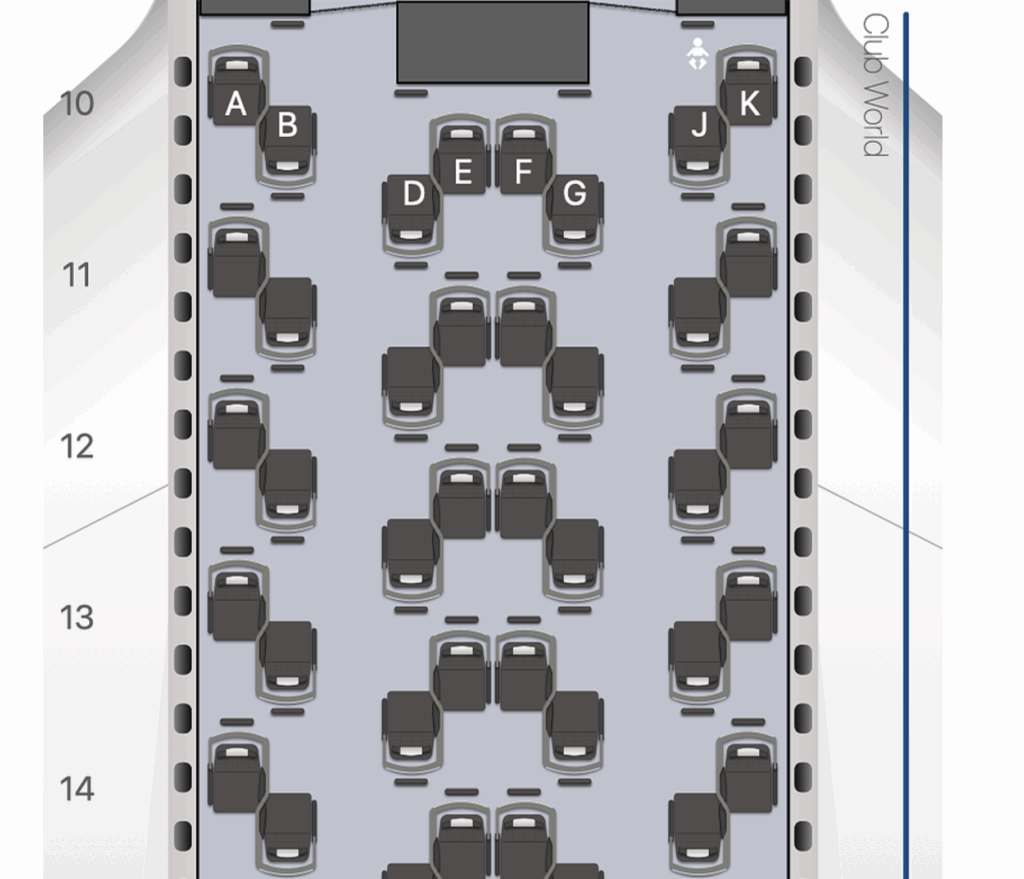
The Club World ‘Ying-Yang’ layout still flies on British Airways’ Airbus A380s.
Virgin Atlantic’s sharp-angled herringbone
Virgin Atlantic pioneered the herringbone design in 2003, which made excellent use of cabin space and offered passengers a uniform experience. The main disadvantage is that all passengers face inward toward the aisle. Those seated by the windows have to crane their necks to catch a glimpse outside.
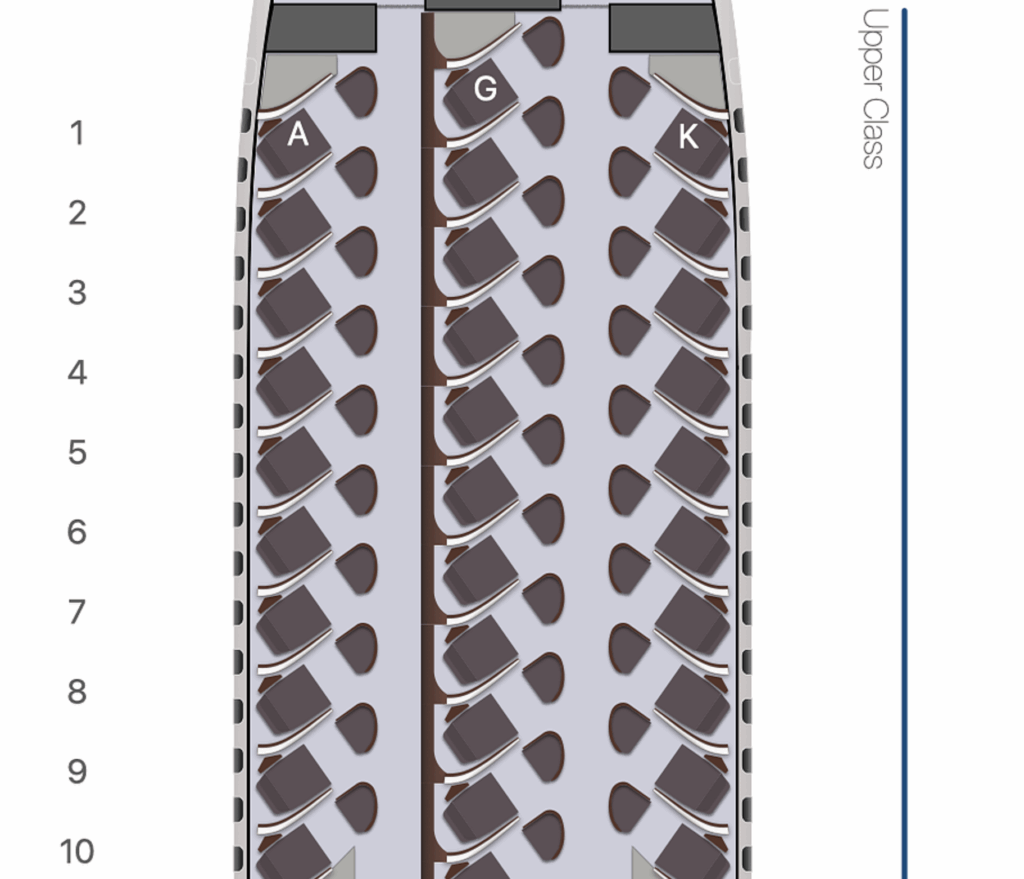
For passengers in the K row, mealtimes often mean two rows of heads across the aisle; just a little uncomfortable. The herringbone still flies on the airline’s A330-300s and Boeing 787-9s.
Virgin Atlantic installed reverse herringbone seats on its Airbus A350-1000, with centre seats angled away from each other, toward the aisle, and allowing all passengers on the sides to face the windows.
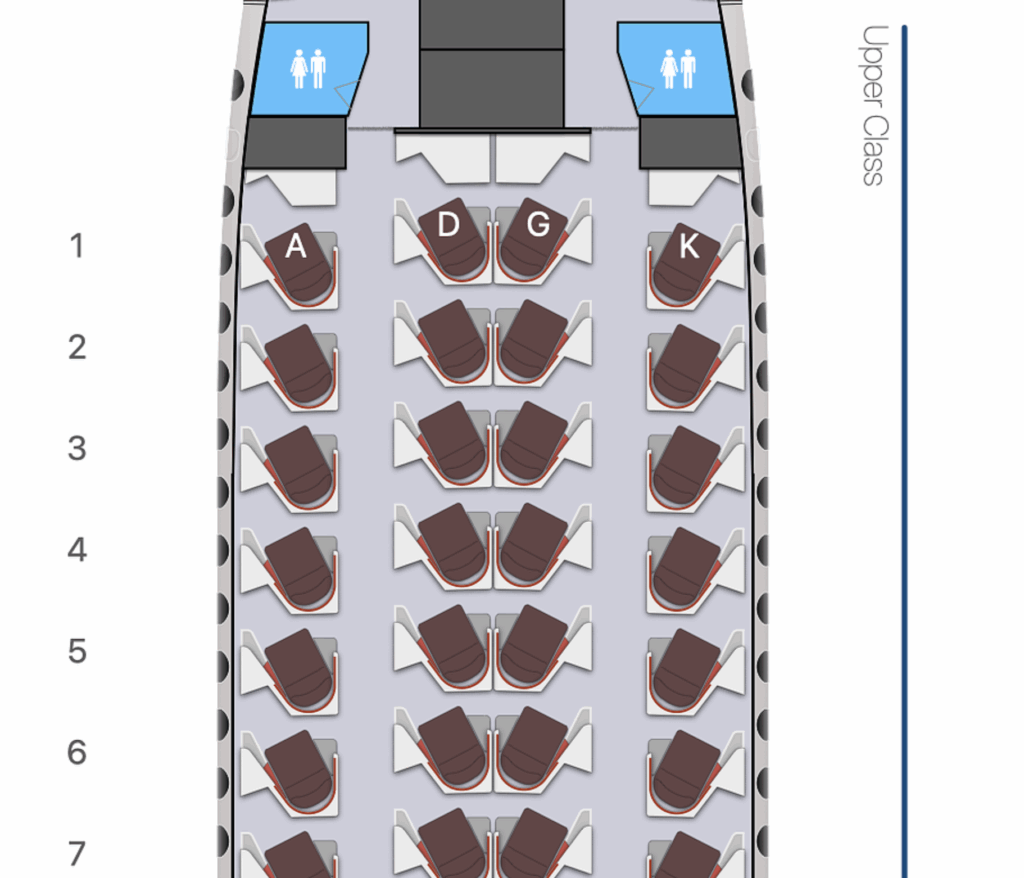
Malaysia Airlines’ “two in two out” and “one-two-two” business class layouts
On some of its Airbus A330-200s, Malaysia Airlines opted for a staggered business class layout with alternating middle row seats that switch between two together, angled towards each other, and two apart, angled towards the aisle. Single seats on each side switch between facing the window and facing the aisle.
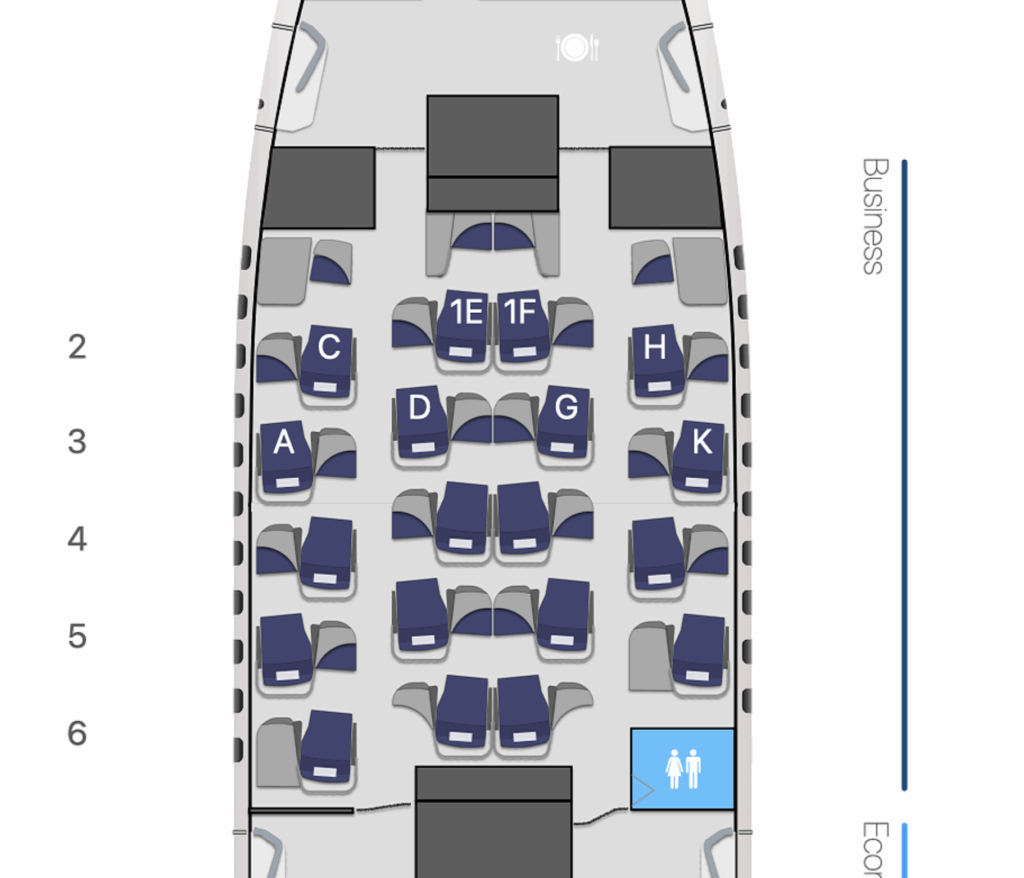
The A330-300s have a more awkward combination, alternating between singles and doubles on both sides with doubles at the centre.
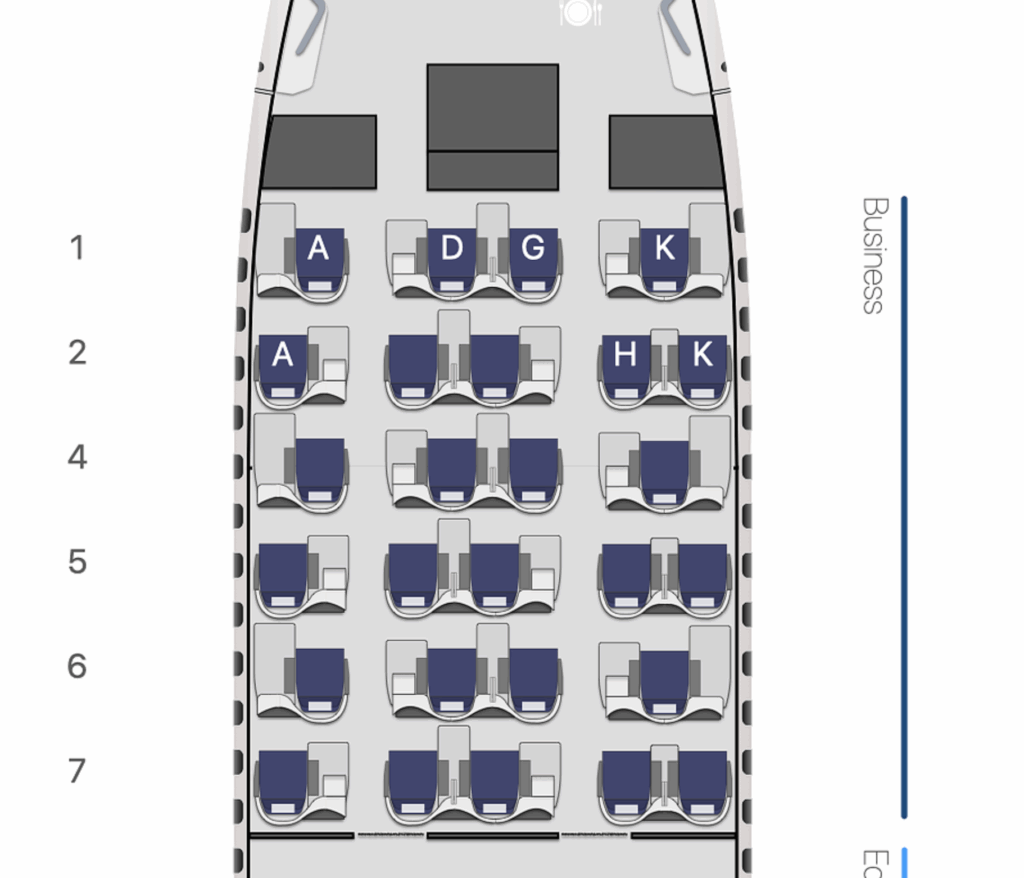
Malaysia is not the only airline to try complicated alternating rows. Others include Aer Lingus’ alternating one-two-one and one-two-two business class layout on the Airbus A330.
Lufthansa’s V-shaped business class and multiple-choice Allegris
Lufthansa’s business class on its long-haul Boeing 747 and Airbus A380 fleet features a peculiar “V” seat design where two seats are angled toward one another with feet almost touching in the middle. This brings some passengers too close for comfort when travelling with strangers.
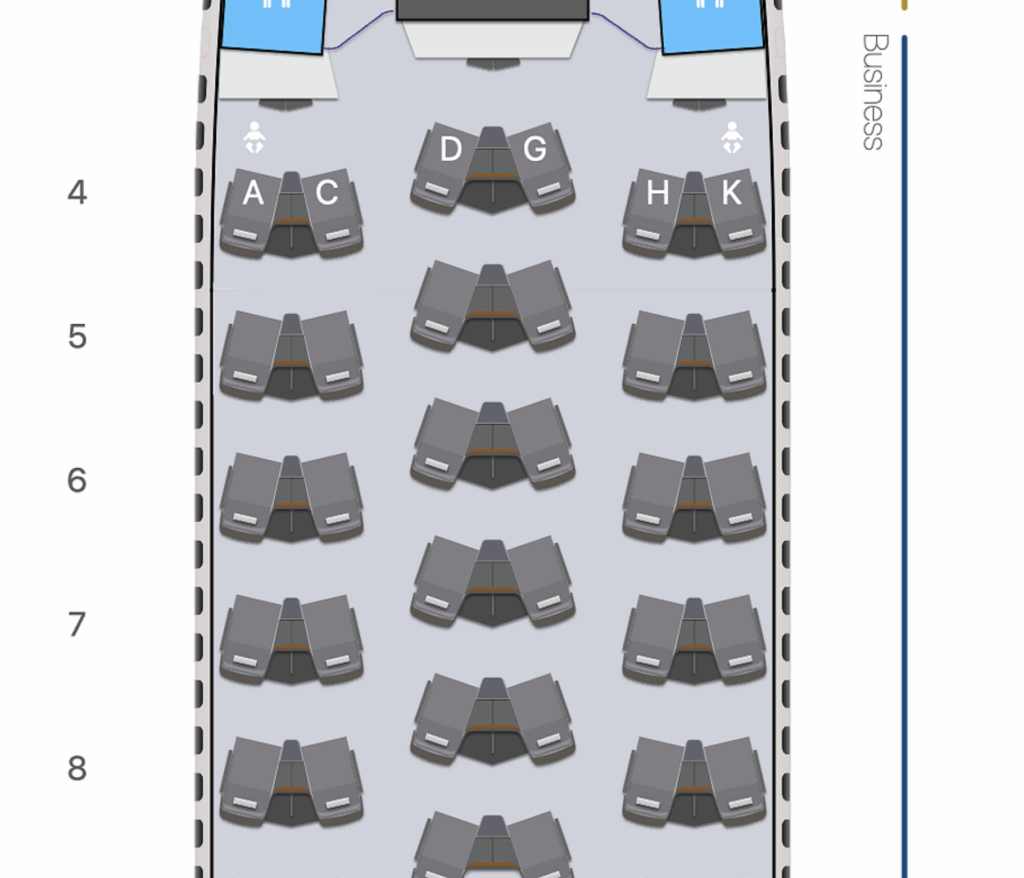
To make things more complicated, the Boeing 747-400 cabin has three seats in the middle, with two angled in the same direction. While efficient for fitting in more seats, the design puts passengers too close for comfort with their neighbour.

The airline’s new Allegris cabin design, introduced on the Airbus A350 and now flying on the Boeing 787-9, does away with personal space issues. However, it introduces a puzzle with five different seat types for passengers to choose from: classic, privacy, extra room, extra long bed, and private suites.
Why airlines experiment with seat layouts
Cabin space is some of the most expensive real estate on the planet. The cabin layout is critical to ensuring the right level of revenue for each flight. The weight distribution of the seats also impacts aircraft certification.
Working with tight regulatory requirements for safety, airlines try to maximise capacity while still promising what customers want most: privacy, flat beds, aisle access, storage, entertainment, and comfort.
As cabin design has evolved, many quirky configurations have flown and then been phased out in favour of more efficient layouts. Still, as the variable Lufthansa Allegris business class cabin proves, airlines will continue to experiment with odd cabin designs to attract high-revenue passengers and differentiate their brands.
Sign up for our newsletter and get our latest content in your inbox.


More from


October 17, 20264 min read