Why does the Boeing 777x have folding wingtips?

February 28, 2026
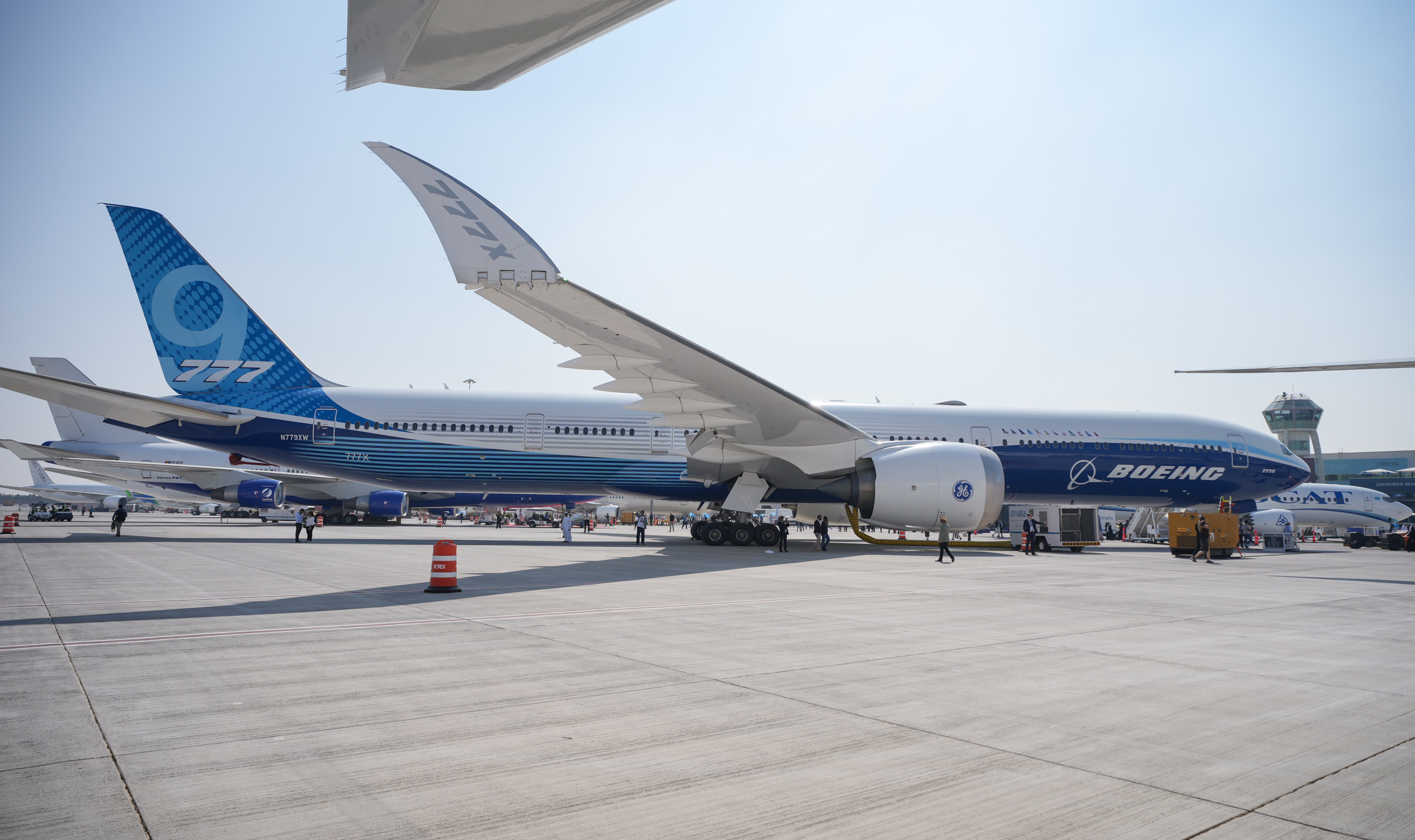
The most noticeable feature of the Boeing 777X is its foldable wingtips, installed to enhance lift efficiency while maintaining taxiway and gate compatibility at airports. The extended position used during flight adds the necessary surface area to generate sufficient lift, whereas the folded configuration enables efficient ground operations at most airports worldwide.
The 777X has a wingspan of 71.75 meters (235 ft 5 in), which reduces to 64.85 meters (212 ft 9 in) when folded. With the upward-folding mechanism, the wingspan is reduced by nearly 7 meters for ground operations. As a result, the aircraft can operate at Code E airport infrastructure that allows a maximum wingspan of 65.23 meters.
| Boeing 777-8 | Boeing 777-9 | |
|---|---|---|
| Passengers (two-class) | 395 | 426 |
| Range | 8,745 nmi (16,190 km) | 7,285 nmi (13,500 km) |
| Length | 70.9 m (232 ft 6 in) | 76.7 m (251 ft 9 in) |
| Wingspan | Extended: 71.8 m (235 ft 5 in) On ground: 64.9 m (212 ft 9 in) | Extended: 71.8 m (235 ft 5 in) On ground: 64.9 m (212 ft 9 in) |
| Height | 19.5 m (64 ft 1 in) | 19.5 m (64 ft 1 in) |
| Engine | GE9X by GE Aerospace | GE9X by GE Aerospace |
The increased wing wetted area and aspect ratio, when extended, deliver improved aerodynamic efficiency during flight. Without the folding wingtip design, the wingspan would exceed existing Code E airport limits, potentially limiting access to existing airports serving its 777 family predecessors.
The efficient composite wing structure
The Boeing 777X wing design makes it the first commercial aircraft to have a cockpit-controlled wingtip mechanism. The wingbox is similar to that of the legacy 777, but is heavier due to greater titanium reinforcement. The composite wing design is robust enough to handle flight loads while offering optimum fuel efficiency.

Boeing states that breakthroughs in aerodynamics contribute to the aircraft’s 20% lower fuel burn and emissions, and a 40% smaller noise footprint than its predecessors, with 10% lower operating costs than the competition. The aspect ratio – measure of the wing’s length relative to its width – of the wing is 10, greater than that of the 777-300ER. Boeing could optimise the wing’s aspect ratio due to the folding wingtip mechanism.
The folding wingtip mechanism
The folding wingtip design utilises an efficient actuation mechanism controlled by the pilots in the cockpit. A dedicated overhead switch controls and manages the wingtip position during flight. According to Liebherr, manufacturer of the folding wingtip actuation mechanism for the Boeing 777X,
“Liebherr developed the first wing-folding system in commercial aviation. The actuation system folds the tips of the Boeing 777X wings with increased span to improve efficiency in flight and to ensure it fits at any Boeing 777 airport gate. Components of the mechanism are the angle gearbox, the power drive unit, and numerous actuators.”
Wingtips remain in the folded position on the ground at the gate and during taxi. Just before takeoff, the pilot extends the wingtips, much like extending flaps as part of the takeoff procedure. The actuation mechanism takes approximately 20 seconds to complete before the wingtips lock into position. Similarly, wingtips are locked into the folded position upon landing, right before the taxi begins.
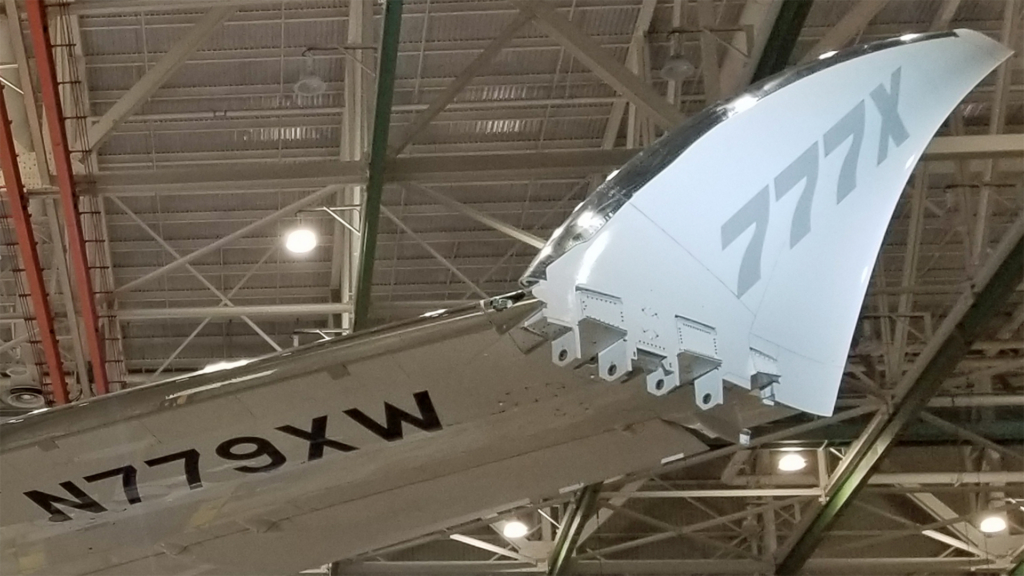
A hydraulic motor drives rotary actuators that move the wingtips in folded and extended positions. The end-to-end locking mechanism secures the tips during flight, preventing any unwanted movement. The tip remains secure even during a complete power failure of the system. The reliability of the folding mechanism is demonstrated through robust testing of the system.
The cockpit system also allows for specific procedures and alerts to handle any malfunctions. While the folding mechanism adds weight and design complexity, it is offset by the operational efficiency and airport compliance benefits.
Featured Image: Dubai Airshow

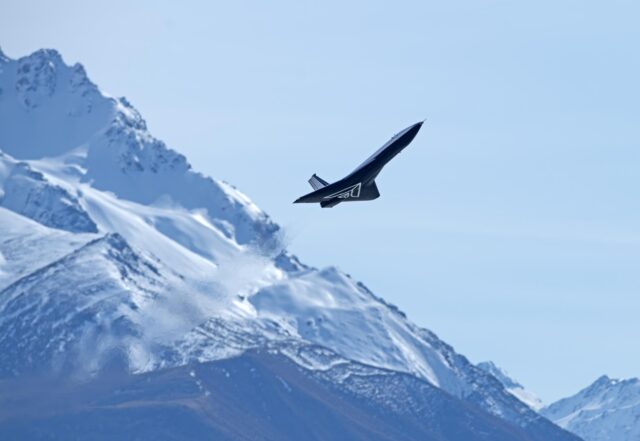


![NASA's X-59 Quesst [registration N859NA '859'] is seen in-flight over California during the experimental supersonic aircraft's brief second test sortie on 21 March 2026. Image: NASA/Jim Ross](https://aerospaceglobalnews.com/wp-content/uploads/2026/03/X-59-Second-Flight-21-03-26-NASA-Jim-Ross-crop-scaled-640x0-c-default.jpg)