Concorde at 50: Why supersonic passenger travel came to an end

4 min read

Concorde entered commercial service on January 21, 1976, with simultaneous flights by British Airways from London to Bahrain (G-BOAA) and Air France from Paris to Rio de Janeiro via Dakar (F-BVFA). Half a century later to the day, the dream of supersonic travel has been missing from the skies for over 20 years.
When Concorde retired in 2003, many assumed it was a temporary pause rather than a permanent goodbye. So why did Concorde stop flying? The answer lies in a complex mix of safety, economics, politics and timing.
Concorde: A revolutionary supersonic aircraft ahead of its time
When Concorde entered service on the 21st January 1976 with British Airways and Air France, it showcased what commercial flight could be.
Cruising at twice the speed of sound and soaring at around 60,000 feet, Concorde delivered a level of speed and glamour no other passenger aircraft could touch. But that breathtaking performance didn’t come cheap.
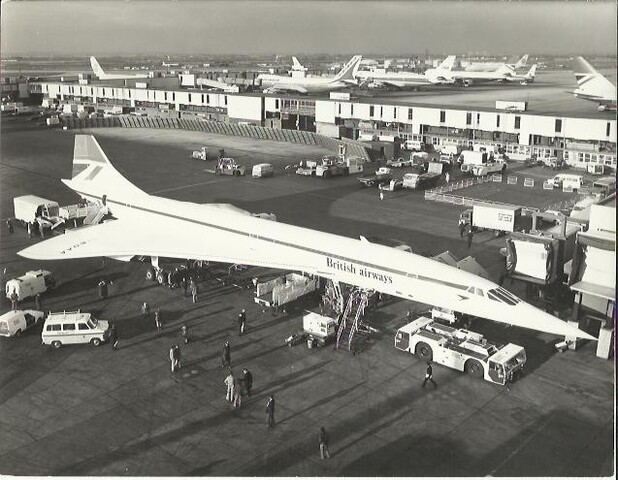
The aircraft was expensive to build, challenging to maintain and could only be flown by a few highly skilled pilots. For all its technical brilliance, Concorde was never meant to be an everyday airliner or a money-making workhorse.
The crash that changed everything for Concorde
The single most pivotal moment in Concorde’s history happened on the 25th July 2000. Air France Flight 4590 crashed shortly after take-off from Paris Charles de Gaulle Airport, killing all 109 people on board and four on the ground.
The investigation traced the cause to debris left on the runway which then burst a tyre. The rubber from the tyre then hit a wing and the shockwave this created ultimately ruptured one of the fuel tanks.
Up until that point, Concorde had built up a strong safety record, which made the crash all the more shocking. Public confidence was badly affected, and the entire fleet was grounded for more than a year while engineers introduced changes such as reinforced fuel tanks and redesigned tyres.
Even when Concorde got back in the air in 2001, it never quite regained the confidence and trust it had before the crash.
Rising operating costs and falling demand for Concorde
Even before the accident, Concorde’s finances were on shaky ground. It burned huge amounts of fuel, especially at supersonic speeds, leaving it vulnerable to swings in oil prices.
As the aircraft grew older, maintenance became more expensive too, with no active production line for spare parts and engineers increasingly having to create one-off solutions just to keep the fleet flying.

After the 9/11 attacks in 2001, things became even more difficult. Demand for high-end air travel fell sharply, almost overnight.
Concorde depended on a relatively small group of wealthy business travellers, and that market quickly dried up just as costs continued to rise. More seats went unsold, and before long, the figures no longer made sense, even for airlines that had previously accepted losses in exchange for the aircraft’s prestige.
Political and environmental pressures that constrained Concorde
Concorde also had to contend with ongoing political and environmental headwinds. Its sonic boom meant it couldn’t fly supersonic over land, confining most of its operations to transatlantic routes.

Add to that concerns about airport noise and a growing public focus on aviation’s environmental impact, and Concorde began to feel out of step with the direction the industry was heading.
By the early 2000s, regulators and governments were prioritising efficiency, sustainability and lower emissions. Against that backdrop, Concorde’s high fuel consumption and unmistakable noise signature made it increasingly difficult to justify.
Why Concorde had no successor and no path to continued service
Perhaps the biggest issue of all was that there was simply nothing to replace it. There was no next-generation Concorde on the horizon and no realistic plan to keep the aircraft going long term.
Airbus, which had taken responsibility for Concorde through corporate restructuring, saw little sense in continuing to support a very small fleet of ageing jets.
In 2003, it announced it would withdraw technical support, a decision that effectively sealed Concorde’s fate.
British Airways and Air France soon followed, agreeing to retire the aircraft later that year. On the 24th October 2003, Concorde operated its final commercial flight, quietly closing the chapter on the world’s only supersonic passenger service.
The Concorde legacy and the future of supersonic travel
Concorde didn’t retire because it couldn’t fly; it retired because the world it flew in had changed.
Safety worries, rising costs, environmental pressures and the lack of a next-generation plan all came together to make its continued operation impossible.
Today, as the likes of Boom’s Overture project are launched to reinvigorate supersonic flight through faster, quieter and greener travel, Concorde’s story stands as both a source of inspiration and a cautionary tale.
Visiting Concorde and appreciating her legacy reminds us of just how far aviation can push the limits. When and if passengers will be able to fly at supersonic speeds again remains to be seen.
Featured image: Ralf Manteufel / Wikimedia Commons
Sign up for our newsletter and get our latest content in your inbox.


More from

October 17, 20265 min read

October 17, 20264 min read