Shrinking seats: WestJet’s viral legroom squeeze isn’t even the worst in the airline industry

January 7, 2026

A TikTok video posted by WestJet passengers showing them wedged so tightly they can barely move their knees on the airline’s newly configured aircraft has gone viral and reignited a familiar debate: how far airlines can push “seat shrink” before economy class becomes unusable?
WestJet has acknowledged that some aircraft in its new layout have a seat pitch (legroom) of 28”, a configuration it says allows an additional row by varying pitch across the cabin, with the narrowest seats selling at cheaper fares.
But here’s the twist: 28” of legroom is already a well-established floor in parts of the industry—and in some cases it can dip below.
The lowest seat pitch in the airline industry
A 28” pitch is on the lower end of the spectrum for seat separation in the airline industry, though it’s more common among low-cost airlines. Most airlines aim to keep it at a minimum of 30”- 31”.

The worst offenders for low legroom economy seating are:
- Spirit (typical economy): 28”
- Frontier (typical economy): 28”
- Jetstar: 28” on A320/A321 with 28”-29” on A320neo and 29” on A321neo LR
- Scoot: 28”–29” on A320/A321
- Wizz Air (standard range): 28–29”
- WestJet (only some rows on new design aircraft): 28”
- Vueling: A321neo 28” with some seats 27.6”
Notably, Jetstar’s front row (usually a seat with greater separation) is very tight. The distance between the leading edge of the seat on row 1 and the bulkhead ranges from 26.9” on the A321 to as little as 23.9” on the A321neo LR.
Tight pitch vs “feels tight”: Why seat design matters
Airlines often lean on a technical truth: seat pitch isn’t the whole passenger experience. Pitch measurements indicate the distance between seats, but they can be misleading about the actual comfort of the passenger experience. Two cabins with the same pitch can feel dramatically different depending on the seat model.
Modern slimline seats can provide additional usable knee clearance without changing pitch by reshaping the seatback and reducing bulk around the knees. Many of these seat shells are angled to give the passenger behind as much room as possible and eliminate parts that get in the way, such as seatback pockets located near the knees.

Fixed recline (or “pre-recline”) designs can prevent passengers from encroaching on the limited space of those behind them, which is a common in-flight irritant.
The right seat ergonomics and “pre-recline” designs can make a 28” pitch more tolerable. Of course, the other element of the equation is passenger size. Taller passengers may require greater seat spacing, while passengers of size may need to book two seats to be comfortable.
There are standard metrics for passenger size in the crash dummies used to test aircraft interiors. Still, they date back to the 1970s and do not reflect the average size of the modern population. That’s been an issue the transport industry as a whole has largely avoided addressing, but will need to contend with at some point (hopefully soon).
Is a tight pitch a safety issue? Why there’s no universal “minimum seat pitch” rule
While some have argued that a tight seat pitch may impede evacuation, there is no documented evidence to support this claim. In fact, some evacuation trials have shown the opposite: lower seat spacing may make it easier for passengers to climb over seats when exiting the aircraft quickly, reducing aisle crowding.
For this reason, regulators, including the FAA, have refrained from mandating a minimum seat pitch. Airlines must demonstrate that they can evacuate the aircraft within 90 seconds under certification requirements. If they can prove that, then the aircraft is considered safe to fly regardless of how the seats are arranged.
Regulators consider seat pitch a commercial decision constrained mainly by airline economics and how loudly passengers complain when the squeeze becomes noticeable.
WestJet’s 28” and no-recline seats: why the airline pressed the pause button on this problematic new interior
WestJet aimed to optimise revenue on its narrowbody aircraft by redesigning the cabins to offer premium seat options with varying seat pitches ranging from 28” to 38”. It scaled fares based on the seat type the passenger selected, with more affordable seats at the back having a tighter pitch.
The airline also selected no-recline seats for the narrower rows to preserve the remaining passenger space. In effect, WestJet trusted the seat’s design to compensate for the reduced pitch.
The backlash to this new cabin design has been substantial, with a generally negative response and even protests by the airline’s pilots. In December, WestJet paused further rollout of the new cabins to gather feedback, without committing to cancelling the new design or reconfiguring the cabins already in service.

While WestJet’s 28” rows may be shocking in a “full-service brand” context, they’re not unprecedented in the low-cost airline market. WestJet may be on the upper end of the low-cost market, but it is still a low-cost airline.
Whether the cumulative negative press will sway the airline against this new cabin configuration is still unknown, but making a fuss is the only real way that passengers have to stop the advance of “seat shrink.” WestJet could restart the cabin reconfiguration as-is or make some adjustments, which could mean sacrificing an extra row of revenue.
If it does make changes, the airline will also have to decide whether to rework the aircraft in service, which would be a considerable expense. This is no doubt a difficult time for the airline’s aircraft interiors team.
Variable cabins make checking seat maps more critical than ever
What’s changing in the industry is the spread of experiences on the same narrowbody plane.
Several low-cost airlines, which once offered a single cabin class, now differentiate their cabins as WestJet has, offering seats with more legroom and additional comfort features. Naturally, they charge more for these “upscale” seating options.
On the other end of the scale, some ultra-low-cost airlines have normalised the industry’s tightest configurations, with very few seats offering more than 28” of separation and, in some cases, less.
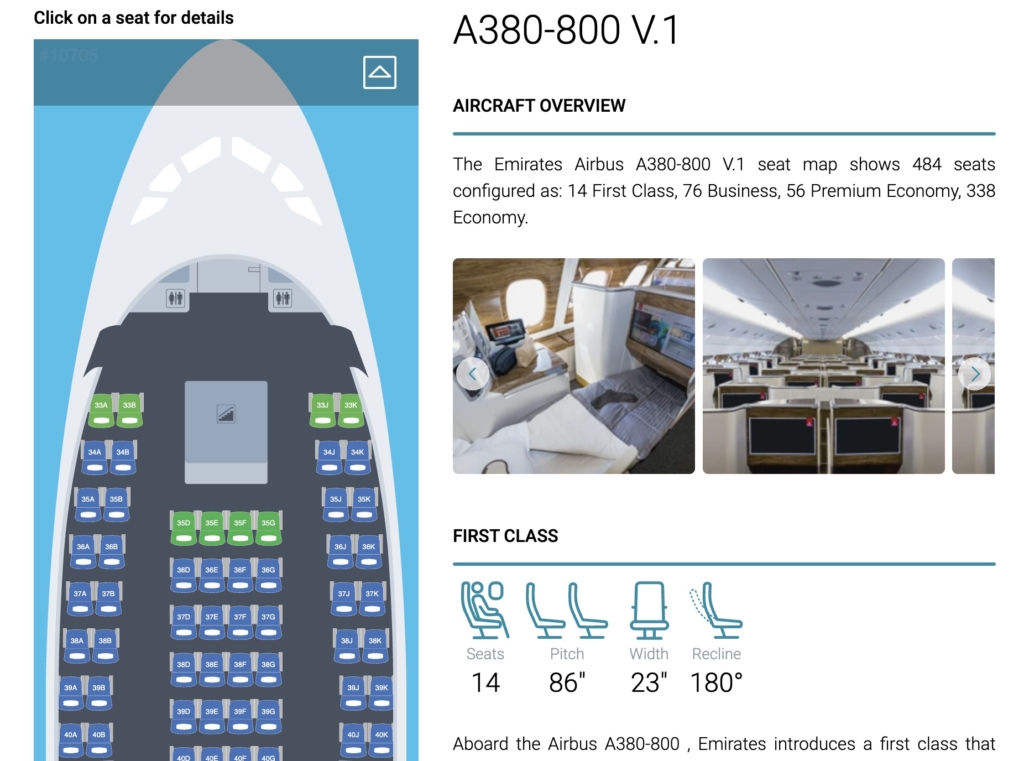
The viral video isn’t proof that WestJet is uniquely cramped, but it is proof that the industry’s tightest layouts are migrating upmarket. It also proves that the trend toward variable-cabin seating makes studying aircraft seat maps before booking even more critical for passengers, ensuring they at least know what they’re paying for—even if it is tight.
Featured Image: WestJet