US special forces rescue F-15E crew member in high-risk mission deep inside Iran

April 6, 2026
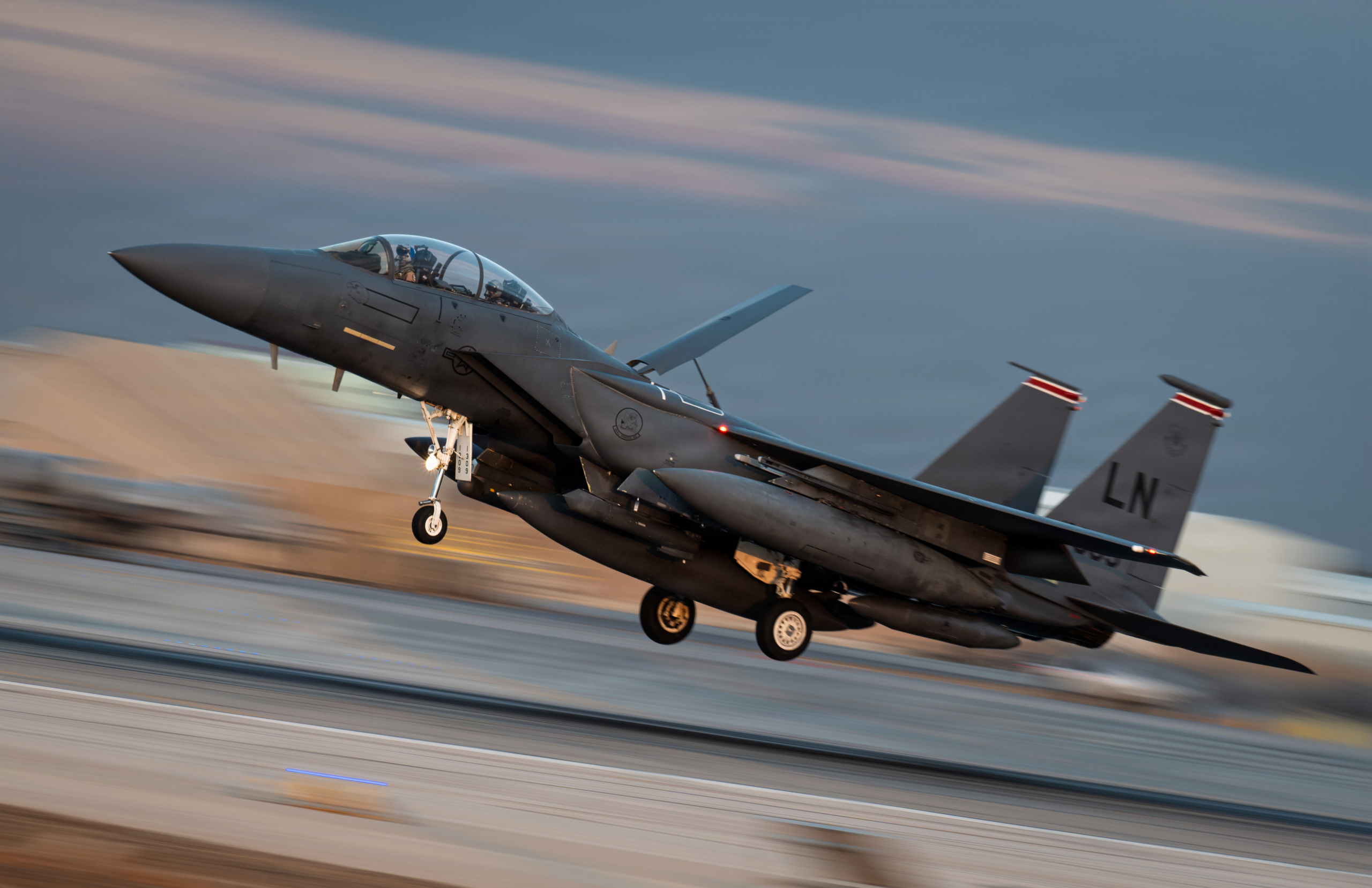
A high-risk US special operations mission deep inside Iranian territory has successfully extracted the second crew member of a downed F-15E Strike Eagle, bringing to a close a tense, multi-day search-and-rescue effort that unfolded amid active hostilities in the region.
The operation, confirmed by US President Donald Trump, saw American commandos recover an injured weapons systems officer who had evaded Iranian forces for more than 24 hours in mountainous terrain.
“WE GOT HIM! My fellow Americans, over the past several hours, the United States Military pulled off one of the most daring Search and Rescue Operations in US History, for one of our incredible Crew Office Members, who also happens to be a highly respected Colonel, and who I am thrilled to let you know is SAFE and SOUND!”, Trump said.
🚨“WE GOT HIM! My fellow Americans, over the past several hours, the United States Military pulled off one of the most daring Search and Rescue Operations in U.S. History, for one of our incredible Crew Office Members, who also happens to be a highly respected Colonel, and who I… pic.twitter.com/FNPWV6MPvA
— The White House (@WhiteHouse) April 5, 2026
“He sustained injuries, but he will be just fine,” Trump said, adding that no US personnel were killed during the mission.
How the US rescued an F-15E WSO from Iran
The first pilot was recovered in a seven-hour daytime mission, while the second airman had climbed 7,000 feet into the mountains and hid in a crevice after being injured. Reuters adds that US forces jammed electronics and bombed roads around the location to keep others away during the final rescue.
Rescue teams were under pressure to reach the injured airman quickly, particularly after Iranian state television announced a reward for his capture. Footage showed Iranian search parties sweeping through rugged mountain terrain, while US helicopters sent to locate him came under fire from the ground.
A senior administration official told Axios that before locating the weapons system officer, the CIA launched a deception campaign by spreading word inside Iran that the US forces had already found him and were attempting a ground exfiltration.
Close-up footage shows a U.S. C-130 transport aircraft refueling two UH-60 Black Hawk helicopters over southwestern Iran as the search and rescue operation for the missing F-15E crew continues.#BreakingNews #MiddleEastConflict #USMilitary #Iran #F15E #SearchAndRescue #WarNews… pic.twitter.com/c9lvwK2jFl
— Bùi Mai Hương (@Mhuong_fitness) April 3, 2026
In the meantime, the CIA used “unique capabilities” to search for him. “This was the ultimate needle in a haystack, but in this case it was a brave American soul inside a mountain crevice, invisible but for CIA’s capabilities,” the official told Axios.
As the search continued, Iranian state television announced a reward for the recovery of the downed crew, while another broadcast urged residents to “target” any Americans they encountered. The state broadcaster IRIB later said on social media that “many people” had gathered near the crash site, adding that the Iranian military had called on the public not to mistreat the pilot.
A second US official said the scale of the operation was significant, with military commanders diverting almost every available aircraft in the region to support the rescue.
Why the US blew up its own aircraft during Iran rescue mission
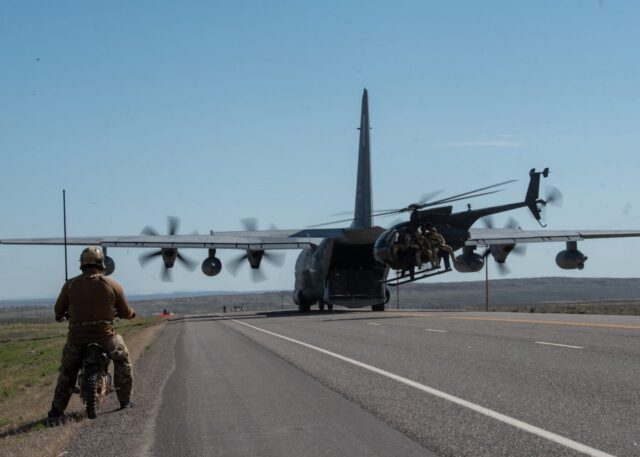
During the withdrawal, US forces destroyed two C-130 transport aircraft and at least two MH-6 “Little Bird” helicopters after they became stuck on a makeshift airstrip. The equipment was destroyed to prevent it from falling into hostile hands.
BREAKING: Photos confirm at least two USAF C-130 Hercules and multiple MH-6M Little Bird helicopters were destroyed at a forward operations base in southern Iran after last night’s F-15E rescue operation.
— The Hormuz Letter (@HormuzLetter) April 5, 2026
The aircraft were destroyed by US forces to prevent capture after the WSO… pic.twitter.com/b6oBexBdAL
Iranian media later aired footage from the site, showing what appeared to be the burned-out remains of US aircraft. The images included wreckage believed to be from at least one C-130 and an MH-6 helicopter.
The MH-6 is operated by the US Army’s 160th Special Operations Aviation Regiment, which supports elite units including Delta Force.
US plans news conference on Monday
As Donald Trump hailed the rescue on social media, other senior US officials declined to provide further details. One official said little more would be disclosed ahead of a news conference scheduled for Monday afternoon.
Sean Parnell, a Pentagon spokesman and Army veteran, reflected on the mission in a social media post, describing it as a complex operation in which each phase was shaped by experience, training and persistence.
🇮🇷🇺🇸 Imagens de policiais iranianos atirando contra helicópteros HH-60 Pave Hawk dos EUA que estavam realizando uma missão de Busca e Salvamento em Combate (CSAR) para resgatar a tripulação do caça F-15E que foi abatido dentro do território do Irã. pic.twitter.com/bynB8gv6u6
— Análise Geopolítica (@AnaliseGeopol) April 3, 2026
“Over the past 48 hours, I have had the privilege of witnessing two of the most daring, bold, and courageous rescue operations in American history,” he said. “Each phase was marked by profound moments of grace-small miracles made possible through unrelenting tenacity, extensive experience, and elite training.”
The rescue marks one of the most complex combat search-and-rescue (CSAR) operations conducted by US forces in recent years, carried out against the backdrop of an intensifying air war between the United States and Iran.
How the F-15 crew became stranded in Iran
The incident traces back to Friday, when an F-15E Strike Eagle was reportedly shot down over southern Iran. Iranian state media quickly claimed responsibility, initially asserting that an F-35 had been downed before images began circulating suggesting the aircraft was in fact an F-15E.
Photographs of wreckage, including a vertical stabiliser and what appeared to be an ACES II ejection seat, pointed towards an aircraft linked to the 494th Fighter Squadron based at RAF Lakenheath in the United Kingdom, although the origin of the imagery remained unverified.
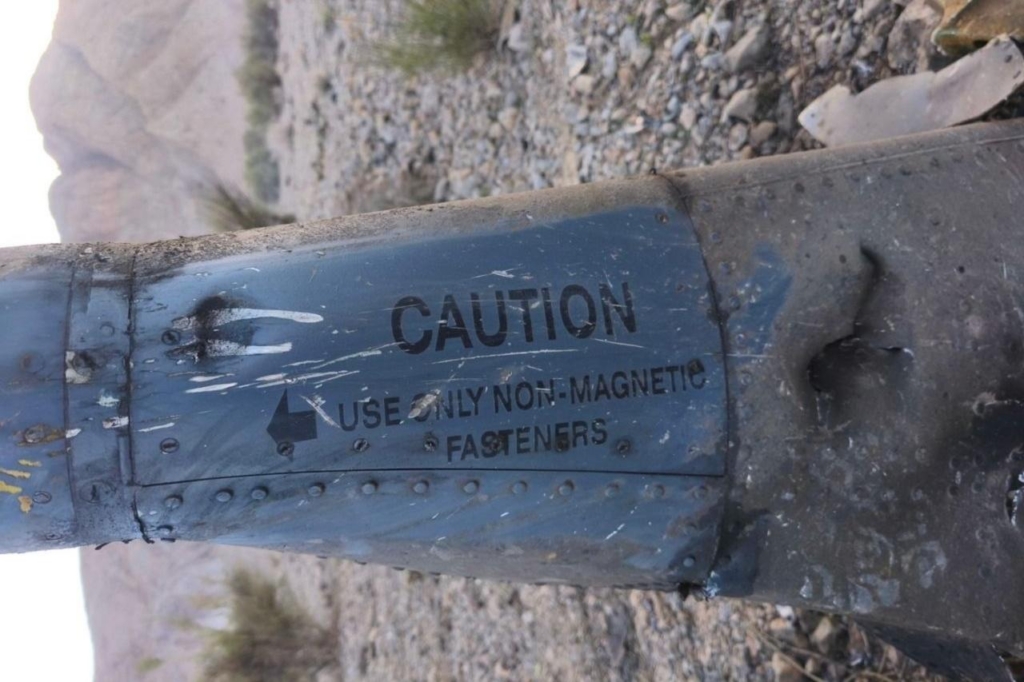
The United States did not formally confirm the shootdown at the time, with US Central Command maintaining that all aircraft were accounted for, even as search-and-rescue assets began operating over Iranian territory.
Both crew members ejected safely from the aircraft, according to officials familiar with the operation. The pilot was located and rescued within hours.
The second crew member, a weapons systems officer, was less fortunate. Injured but mobile, he avoided capture while moving through rugged terrain, reportedly equipped with little more than a sidearm.
His survival triggered what officials described as a “race” between US rescue teams and Iranian forces, including elements of the Islamic Revolutionary Guard Corps (IRGC), which had also begun searching for the downed airman.
Multiple aircraft sent to rescue crew from downed F-15
As the search intensified, US aircraft were observed conducting low-level operations over southern Iran, including platforms typically associated with CSAR missions.
According to reporting, the rescue package included A-10 aircraft, HH-60G Pave Hawk helicopters, HC-130J Combat King II aircraft and unmanned systems.
During one such mission, a HH-60G Pave Hawk helicopter was struck by Iranian fire while searching for the missing crew member. Images circulating online showed the aircraft trailing smoke, although the crew were reported safe and the helicopter was able to return to base.
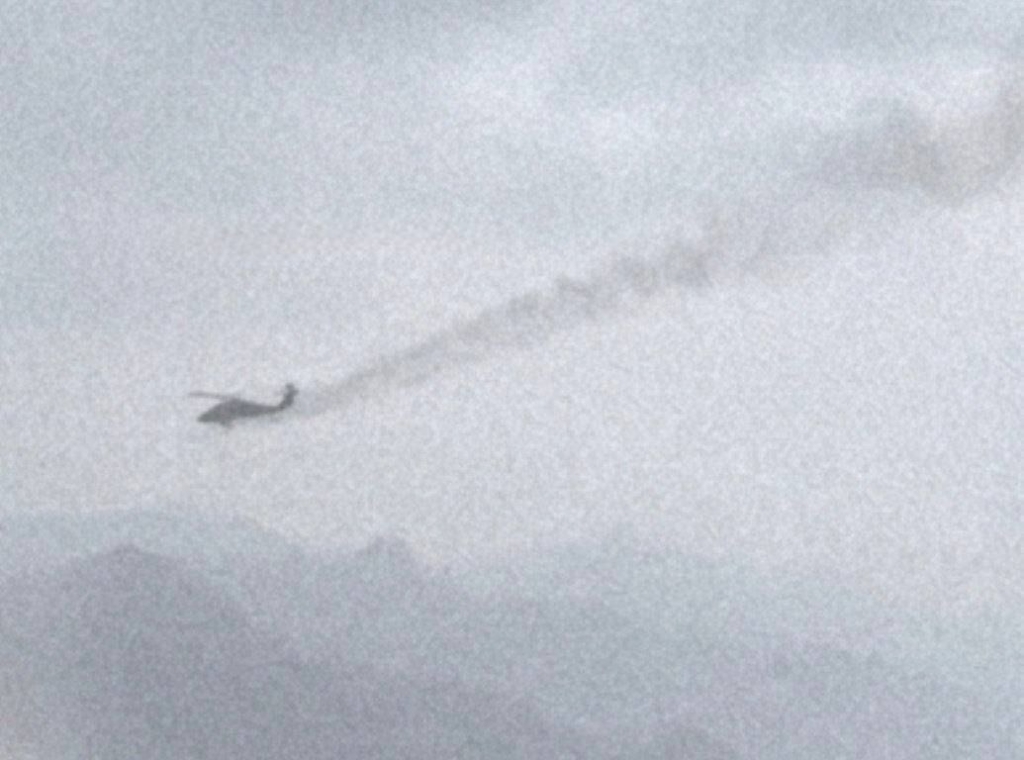
The incident highlighted the risks of operating at low altitude in contested airspace, even for heavily armoured rescue platforms designed for hostile environments.
The breakthrough came late Saturday, when US special operations forces launched a deep insertion mission to recover the stranded officer.
According to officials briefed on the operation, hundreds of personnel were involved, supported by extensive air cover. As US forces converged on the location, a firefight broke out with Iranian elements.
Despite the engagement, the extraction was completed successfully, with the injured officer evacuated and flown to Kuwait for medical treatment.
Aerial footage of a U.S. C-130 aircraft, which took part in the mission to rescue the second F-15 crew member, and deliberately destroyed so it wouldn't fall into Iranian hands after becoming stuck inside Iran during the operation, as reported by ABC News citing a U.S. official. pic.twitter.com/mmASxdzlhV
— Ariel Oseran أريئل أوسيران (@ariel_oseran) April 5, 2026
The mission was not without complications. Two transport aircraft involved in the operation reportedly became stranded at a remote location inside Iran, forcing the US to deploy additional aircraft. US forces subsequently destroyed the disabled planes to prevent them from falling into Iranian hands.
US aircraft losses mount as Iran conflict continues
The shootdown and subsequent rescue unfolded alongside other reported incidents in the region.
A US Black Hawk helicopter was struck during rescue operations, while separate reports indicated that an A-10 aircraft operating near the Strait of Hormuz had crashed, with the pilot rescued safely.
Together, the incidents have raised questions about US air dominance over Iran, despite assertions from senior officials that American forces retain control of the airspace.
The episode also reflects the increasingly blurred lines between confirmed events and contested narratives in the ongoing conflict.
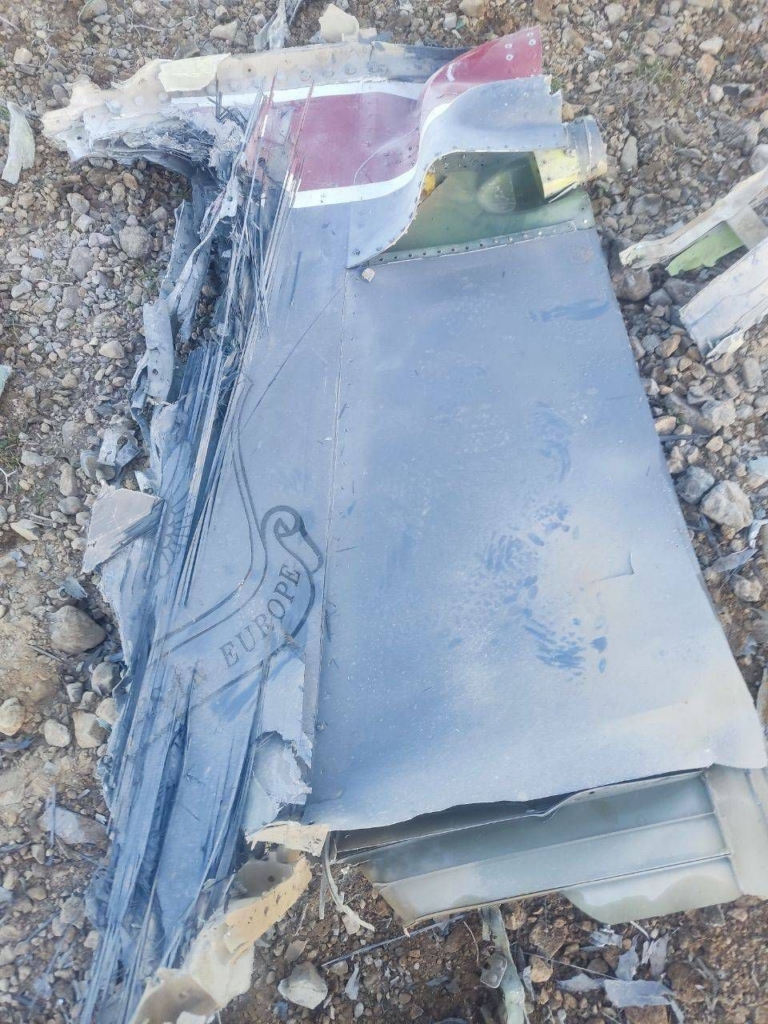
Iran has repeatedly claimed to have downed US aircraft in recent weeks, including earlier assertions involving F-35 fighters, many of which were denied by US officials.
At the same time, the scale and visibility of US search-and-rescue operations, combined with emerging imagery and now the confirmed recovery of the second crew member, lend weight to at least some elements of the Iranian narrative.
For now, the full picture remains incomplete. What is clear, however, is that the air war has entered a new phase; one where losses, recoveries and information campaigns are unfolding in parallel, and often in real time.
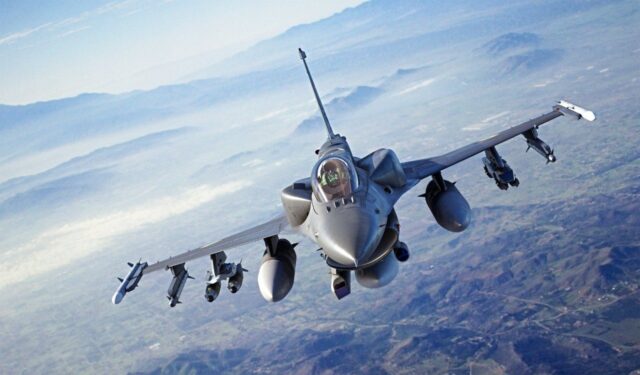
Featured image: DVIDS