US upgrades E-6B Mercury TACAMO nuclear aircraft despite looming replacement

January 7, 2026
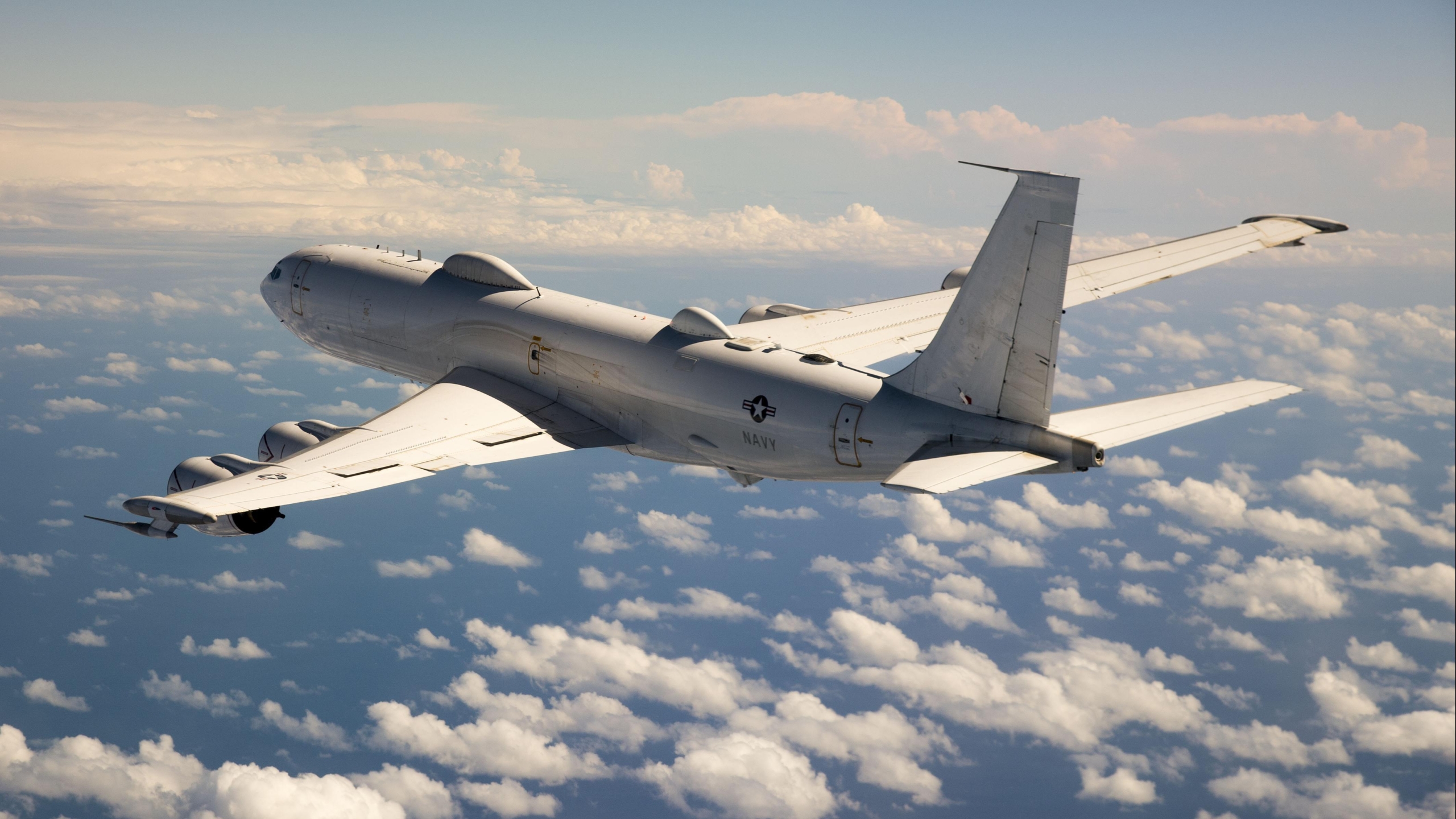
The US Navy has awarded a $20 million contract to upgrade key communications systems aboard its E-6B Mercury aircraft, reinforcing one of the most critical links in America’s nuclear command and control network even as plans move ahead to replace the ageing fleet later this decade.
The deal, awarded to Collins Aerospace, will fund the production of three high-power transmit set modernisation kits for the E-6B, the aircraft responsible for relaying nuclear launch orders to US ballistic missile submarines under the Navy’s TACAMO mission.
US orders new transmit set kits for E-6B Mercuries
Yesterday, the US DoD awarded Collins Aerospace a $20 million contract for the production and delivery of three E-6B full-rate production high-power transmit set modernisation kits for the Navy.
This exercises an option on a previously issued agreement and is a fixed-price agreement. The announcement says the work will be done in Richardson, Texas, and will be completed by June 2027.
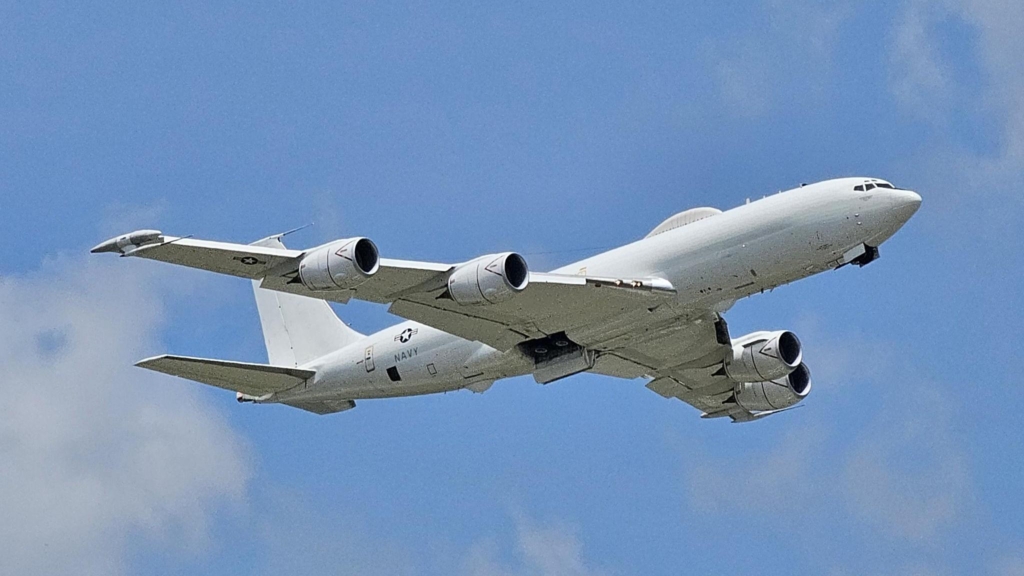
The Boeing E-6 Mercury is based on the Boeing 707-300, and its role is to be an airborne command post and communications relay for its specialised Take Charge And Move Out (TACAMO) mission. They relay launch orders to the Navy’s Ohio-class nuclear ballistic missile submarines, even when they are submerged.
#ReadinessRecap: September 2025
— United States Strategic Command (@US_STRATCOM) December 27, 2025
E-6B TACAMO aircraft exercised #USSTRATCOM’s resilient, redundant nuclear command, control & communications capabilities near Pituffik Space Base, Greenland, communicating with ballistic missile submarines in the Atlantic & Pacific oceans. pic.twitter.com/4dy9CxQpGI
They also serve an Air Force role called the Airborne Command Post (ABNCP), aka Looking Glass, for its nuclear bombers and its silo-based Minuteman III ICBMs.
The E-6B is sometimes dubbed the “doomsday” aeroplane and is a critical link in the Navy’s nuclear capabilities. It should not be confused with the E-4B Nightwatch “doomsday” aeroplanes the Air Force operates.
Plan to convert ex-RAF E-3D Sentries into E-6B trainers scrapped
The War Zone reported the Navy had selected the retiring RAF radar aeroplanes in 2021 for conversion into a dedicated training platform for crews of the E-6B aircraft called the TE-6B.

The RAF acquired a fleet of seven E-3D Sentries, although these have now been fully retired as the RAF switches over to the new E-7 Wedgetails. Three of Britain’s retired E-3Ds were sold to Chile; the US Navy took the others.
The Navy had received $16.376 million to acquire and convert the ex-RAF E-3D to the TE-6B standard, and then another $3 million in 2024.
However, in June 2025, the US Navy scrapped plans to convert the ex-RAF Sentries and decided to scrap them and harvest them for useful parts instead.
The @FACh_Chile (🇨🇱) deployed their F-16A/B MLUs, F-5Es and a lone E-3D AEW&C as part of a Chilean Air Force exercise in the Patagonian regions of the nation.
— SA Defensa (@SA_Defensa) November 8, 2023
Specifically the photos below are over Punta Arenas in the Magallanes Region. pic.twitter.com/6ZUSA0OLaD
The War Zone wrote that the Navy had quietly awarded a contract to Northrop Grumman to “strip useful parts from an ex-Royal Air Force (RAF) E-3D Sentry airborne early warning and control aircraft before disposing of it.”
Get the latest aerospace defence news here on AGN.
Plan to replace the E-6B with E-130J
The US Navy is in the process of replacing the E-6B Mercury with the Lockheed Martin E-130J Phoenix II, which is currently in development. The E-130J is based on the turboprop C-130J-30 Super Hercules. Northrop Grumman is the prime contractor for the E-130J programme.

The E-130J is expected to start replacing the Mercury fleet starting in FY 2028. They will replace the aircraft in the TACAMO role, but it is unclear if they will replace them in the “Looking Glass” role for the US Air Force.
The US Navy currently has 16 ageing E-6Bs in service. The US Air Force is also in the process of replacing its ageing fleet of E-4 Nightwatch aircraft with the E-4C Survivable Airborne Operations Center (SAOC) aircraft based on ex-Korean Air Boeing 747-8s.
It is possible these could take over the Looking Glass role for the Air Force.
Featured Image: NAVAIR