US Air Force prepares for digital twins with new predictive aircraft maintenance platform

February 23, 2026
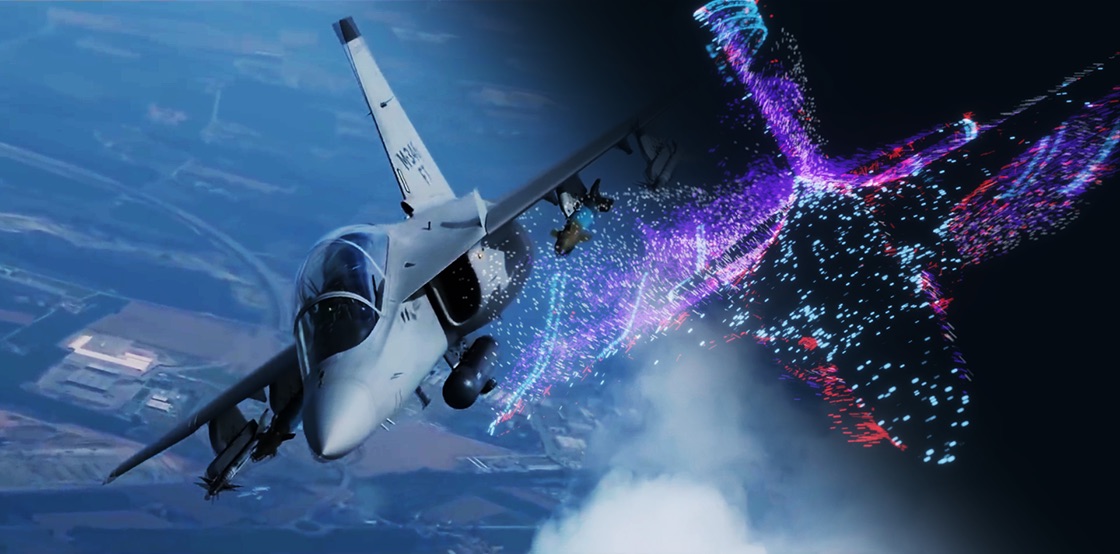
The US Air Force is taking a decisive step to tackle one of the least visible risks to aircraft safety by bringing decades of scattered maintenance and design data into a single digital environment.
A new Product Lifecycle Management (PLM) system being developed with Southwest Research Institute (SwRI) aims to give engineers a clearer picture of aircraft health and allow problems to be identified long before they turn into costly failures.
The SwRI effort is aimed squarely at improving fleet safety, readiness and long-term sustainment through what officials describe as prognostic engineering.
At its core, the project reflects a growing realisation inside the Pentagon that maintaining ageing aircraft is no longer just a mechanical challenge, but it is increasingly a data problem.
Why fragmented legacy data is a growing risk for US Air Force aircraft
Many US military aircraft currently in service were designed long before digital record-keeping became standard practice.
Over time, maintenance logs, structural data, usage histories and design documentation have accumulated across multiple databases, paper archives and incompatible formats.
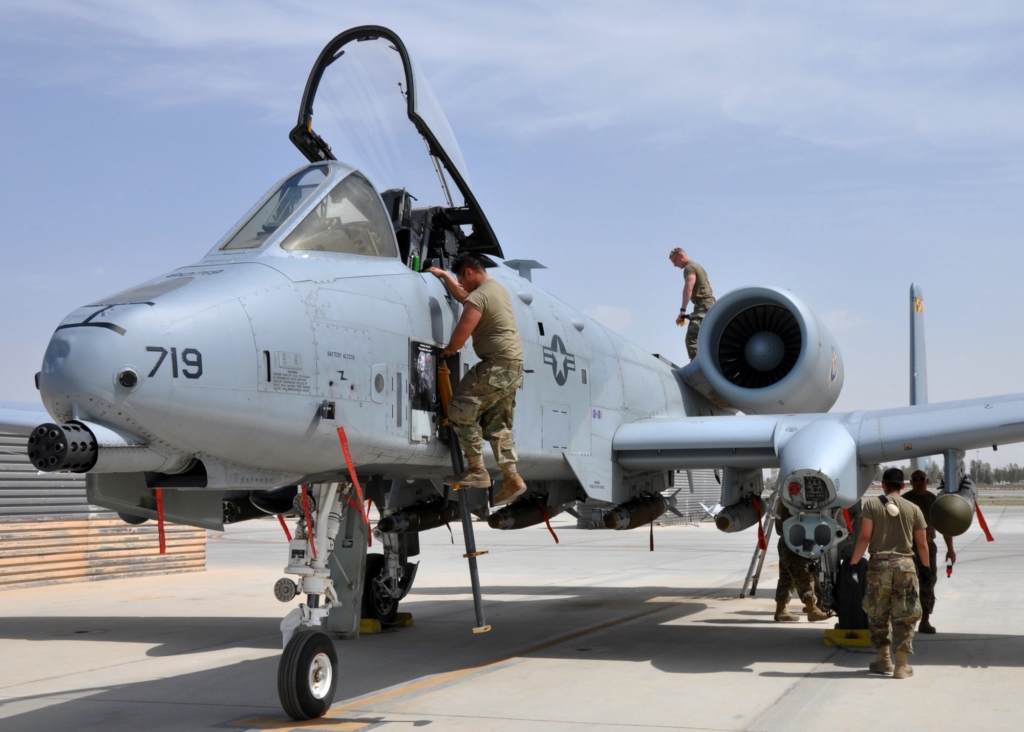
“Many legacy aircraft were designed and maintained long before digital recordkeeping was common, so design, usage and maintenance documentation is scattered across many formats and locations,” said Martin Raming, senior research engineer at SwRI and the project’s lead.
That fragmentation makes it harder for engineers to see the full health picture of an aircraft at any given time. It can also slow maintenance decisions and complicate safety assessments.
For fleets that routinely remain in service for 30 to 40 years, a common reality in military aviation, the problem only grows more acute.
US Air Force builds PLM backbone for predictive aircraft maintenance
The new PLM system is intended to act as the central nervous system for aircraft lifecycle data.
Rather than replacing existing analysis tools, it will sit above them, organising information, managing workflows and ensuring traceability across the aircraft’s operational life.
The Air Force Academy programme is focused on prognostic engineering using data modelling and analytics to anticipate failures before they occur.
“A PLM system will allow us to make more precise prognosis-based engineering decisions,” Raming explained. “Being proactive on that level increases safety and allows the military to save money on aircraft maintenance by fixing problems before they become expensive failures.”
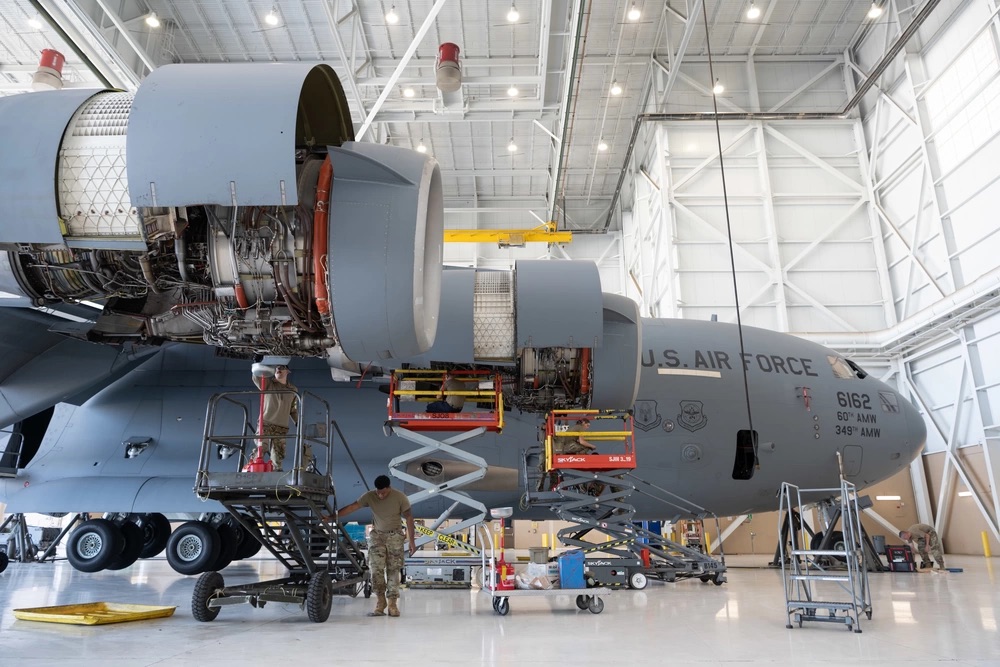
In practical terms, the system will link maintenance actions to specific aircraft configurations and component versions. If engineers revisit an analysis years later, they will be able to see exactly what data and assumptions were used at the time, a level of traceability that current legacy systems often lack.
SwRI is working with Siemens Government Technologies to build the architecture using existing commercial software, rather than developing a bespoke platform from scratch.
US Air Force prepares for digital twin aircraft capability
Perhaps the most consequential aspect of the programme is what comes next.
The PLM environment is being designed to support future digital twin development – highly detailed virtual replicas of real aircraft that continuously update based on operational data.
The concept, long discussed in aerospace circles, is gaining traction as aircraft systems become more complex and lifecycles stretch longer.
According to a NASA and US Air Force technical paper, a digital twin integrates high-fidelity physics models with onboard sensor data, maintenance history and fleet information to “mirror the life of its corresponding flying twin” and continuously forecast vehicle health and remaining useful life.
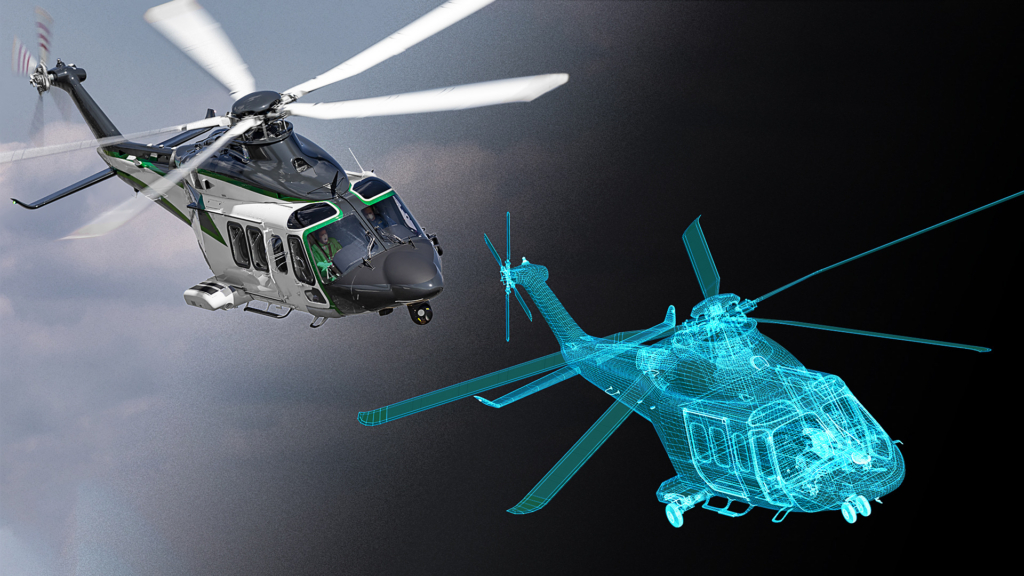
In theory, such models could allow engineers to predict structural fatigue, detect emerging faults and adjust maintenance schedules with far greater precision than today’s interval-based inspections.
The Air Force has already taken early steps in this direction. In 2021, the F-16 programme office sponsored a major digital engineering effort that involved physically disassembling and scanning retired aircraft to create detailed 3D models for sustainment planning.
In December 2025, Lockheed Martin adopted advanced PLM tools from IBM and Dassault Systemes for the United States’ and United Kingdom’s fifth-generation advanced military aircraft, the F-35 Joint Strike Fighter (JSF) programme, to improve design coordination and long-term sustainment.
However, much of the wider US military fleet still operates on fragmented legacy data systems, a gap the new Air Force effort is intended to close.
Why the Pentagon is accelerating aircraft PLM adoption
The move toward unified lifecycle management reflects broader pressures across the defence aviation sector.
Modern military platforms are extraordinarily complex systems made up of thousands of components and subsystems.
Managing configuration changes, software updates and structural modifications over decades of service has become increasingly difficult without integrated digital tools.
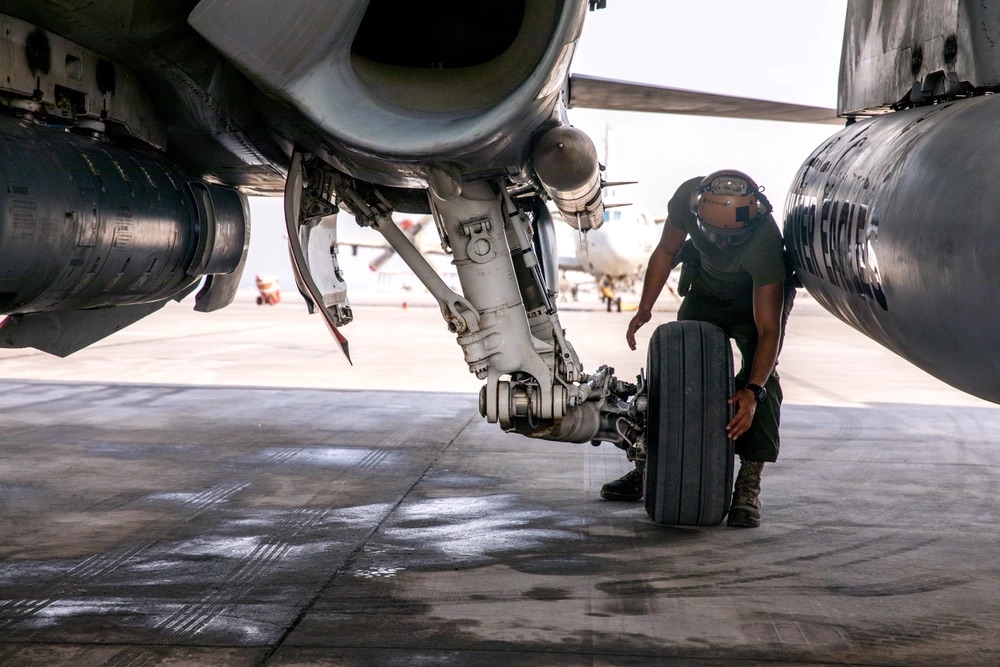
Industry has largely moved in this direction over the past decade, but the Department of Defense has lagged behind, in part because of the sheer scale of its legacy fleet.
The global aerospace and defence PLM market is projected to exceed $18 billion by 2030, driven largely by the need to manage increasingly complex platforms throughout long operational lives.
For the Air Force, the business case is straightforward: better data leads to better maintenance decisions, fewer unexpected failures and lower sustainment costs.
USAF shifts from reactive maintenance to predictive sustainment
Traditional aircraft maintenance has often relied on fixed inspection intervals and conservative safety margins derived from fleet averages.
While effective, that approach can be inefficient and sometimes overly cautious.
The digital twin vision points toward something more dynamic, something researchers describe as “self-aware” aircraft capable of continuously assessing their own structural health.
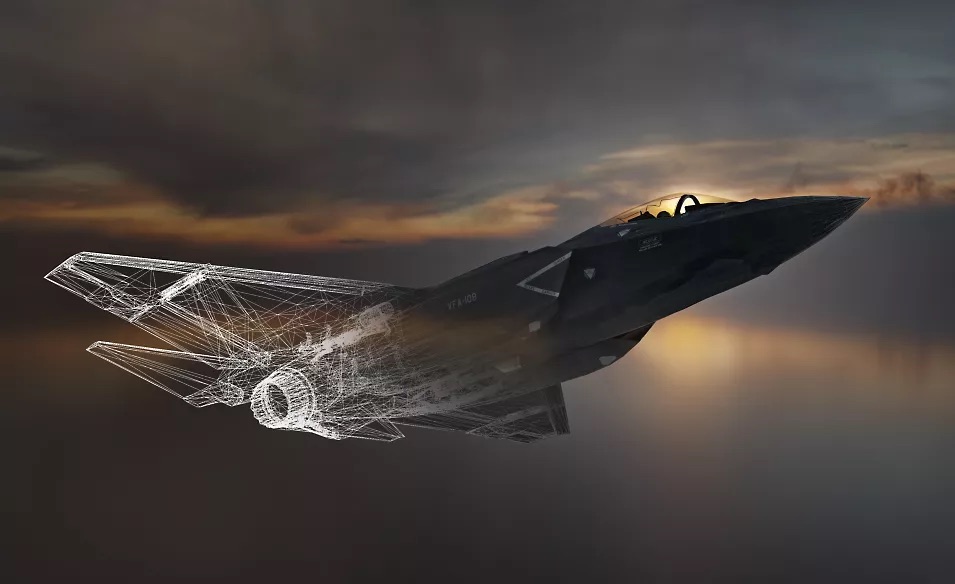
The NASA–Air Force study notes that current sustainment approaches are largely based on heuristic experience and worst-case assumptions, which may not be sufficient for future high-performance vehicles.
By contrast, a mature digital twin environment would allow mission managers to evaluate aircraft condition in near real time and adjust operations accordingly.
That transition will not happen overnight. Even the Air Force acknowledges that the digital twin remains a long-term goal requiring incremental steps.
US Air Force data modernisation reshapes fleet management
On the surface, the new PLM effort may appear to be an IT modernisation project. In reality, it signals something more fundamental.
As military aircraft age and mission demands grow more complex, the limiting factor is increasingly the ability to understand and manage vast amounts of technical data over time.
The Air Force’s latest move suggests it is preparing for a future where data architecture is as critical to aircraft readiness as engines or airframes.
Featured image: USAF