Turning HEFA waste into jet fuel: Unifuel’s Flexiforming validated to enable 100% SAF

March 24, 2026
Sustainable aviation fuel (SAF) mandates in the EU and UK have failed to scale SAF production and adoption, according to the International Air Transport Association (IATA).
However, California-based Universal Fuel Technologies (Unifuel) may offer a credible way forward, following Washington State University’s independent verification of its Flexiforming technology. The startup is accelerating production of 100% SAF using byproducts from the Hydroprocessed Esters and Fatty Acids (HEFA) process.
How Unifuel is addressing the supply gap nobody is solving
With HEFA leading SAF production today, Unifuel’s technology targets one of the industry’s biggest bottlenecks to full SAF adoption.
The company’s Flexiforming technology converts HEFA-derived naphtha into synthetic aromatic kerosene, which, when blended with paraffinic SAF, produces a fully synthetic jet fuel that meets the required performance standards.
“Scaling any new fuel technology globally comes down to a few fundamental challenges: economics, feedstock availability, and adoption within existing infrastructure,” Unifuel’s CEO Alexei Beltyukov told Aerospace Global News.
“SAF is still more expensive than conventional jet fuel, so even with efficiency gains, scaling depends on how quickly the cost gap can be reduced,” he continued. Flexiforming helps here directly. “It operates at roughly half the capital cost and a quarter of the energy consumption of alcohol-to-jet technologies, which means the economics work at much smaller plant sizes than is typically required.”
Feedstock availability is another key factor impacting SAF production. However, Beltyukov explained that Flexiforming is designed to be flexible. It enables operators to adapt to feedstock conditions in their region, while integrating with existing refinery and SAF infrastructure.
Critically, the technology “enables HEFA producers today to maximise their product yields while creating a fully synthetic jet fuel that performs like the fuel aircraft already use today.”
Breaking through the 100% SAF ceiling
IATA has underscored that failure to accelerate the expansion of SAF production capacity will prompt many airlines to review their own SAF targets. Speaking at the end of 2025, IATA’s director general Willie Walsh issued a stark warning. Many airlines that have committed to use 10% SAF by 2030 will be forced to reevaluate these commitments,” he said. “SAF is not being produced in sufficient amounts to enable these airlines to achieve their ambition.”
The reasons are structural. HEFA,Ethanol-to-Jet (EtJ) and Fischer-Tropsch (FT) processes, which account for the majority of today’s SAF production, typically produce predominantly paraffinic fuel components. Yet conventional jet fuel contains 8-25% aromatic molecules that are essential for aircraft engines and fuel system components.
Current ASTM standards require SAF to be blended with conventional fossil jet fuel to supply the required aromatics. This places a hard ceiling on how “sustainable” any blend actually is.
Unifuel’s Flexiforming technology is designed to break through that 100% SAF ceiling.
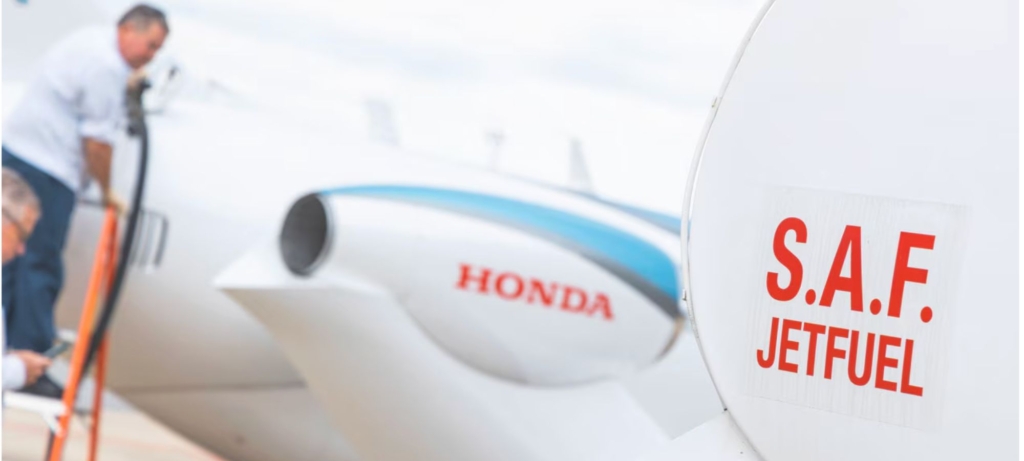
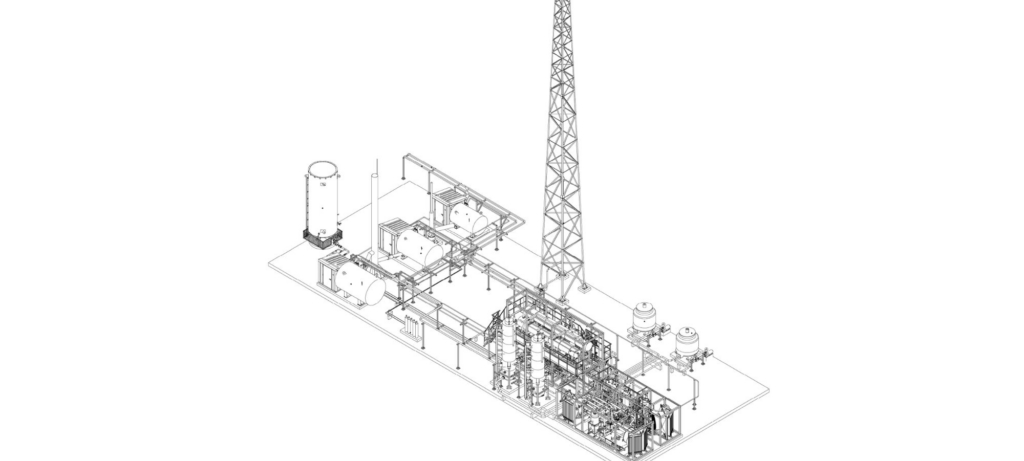
“For a standalone HEFA plant that is not a part of an operating refinery, it will mean adding a bolt-on unit, which, given the size, will most likely be a modular one,” revealed Beltyukov. “At this point – before we obtain ASTM approval – the first step would be upgrading HEFA naphtha to renewable gasoline with Flexiforming.”
This step would require a US$5 million investment with a payback within 1.5-2 years, according to Beltyukov. Once the ASTM qualification comes through, the second step of producing the aromatic component of SAF from that naphtha will become possible, requiring an additional US$5 million to add a second reactor and two recycle loops to maximise SAF output.
“An oil refiner with HEFA operations might already have a unit of equipment suitable for Flexiforming, like an idle naphtha hydrotreater or a reformer,” he added. “In such a case, their investment and time to first revenue from the upgraded naphtha will be reduced.”
From a byproduct into a breakthrough product
Flexiforming converts HEFA-derived naphtha – traditionally a low-value byproduct accounting for up to 20% of HEFA output and one that producers have struggled to monetise – into synthetic aromatic kerosene (SAK) that doesn’t require continued blending with fossil jet fuel.
“Aromatic SAF is a critical piece of the puzzle because it enables true drop-in capability: the molecular composition of SAF with aromatics will closely mimic that of the fossil jet, making the integration and subsequent substitution easier,” said Beltyukov.

He also noted the transition will be incremental rather than immediate. Two factors will largely set the pace. “On the regulatory side, no pathway scales commercially without ASTM approval. On the demand side, airlines are already using long-term offtake commitments to pull investment into SAF production – a dynamic that accelerates when producers can offer a fuel that’s fully fungible with conventional jet rather than a blended product.”
Beyond HEFA operations, Flexiforming’s naphtha-upgrading approach is also applicable to FT processes and other SAF pathways that generate naphtha as a byproduct, thereby giving it broad relevance across the production landscape.
What Washington State University’s testing showed
Researchers at Washington State University’s Bioproducts, Sciences and Engineering Laboratory evaluated the fuel through ASTM-sanctioned screening protocols, benchmarking it against conventional jet fuel standards. The test blend comprised 16% Flexiforming-produced aromatic SAF and 84% HEFA-derived paraffinic SAF. The tests demonstrated that the combined fuel satisfied all critical parameters.

A freeze point of -43.5°C, viscosity performance at low temperatures, and a heating value on par with or exceeding that of conventional jet fuel indicate the fuel would perform reliably under the demanding conditions of commercial aviation. Crucially, it also preserved the molecular composition and distillation behaviour that modern jet engines and aircraft demand.
Dr Joshua Heyne, Director at the university’s Bioproducts, Sciences and Engineering Lab, said that Flexiforming addresses a “key limitation in SAF production today.” It produces a fully synthetic jet fuel “with both the paraffinic and aromatic components needed for drop-in equivalency with conventional kerosene.”
Why Flexiforming could be a game changer for existing SAF producers?
What makes Flexiforming particularly compelling is that it provides HEFA, FT, and EtJ producers with a bolt-on solution that works within existing infrastructure. It requires minimal additional capital investment and is compatible with any alcohol feedstock. Rather than building entirely new facilities or implementing complex blending logistics with external aromatic sources, producers can integrate Flexiforming as a complementary processing step.
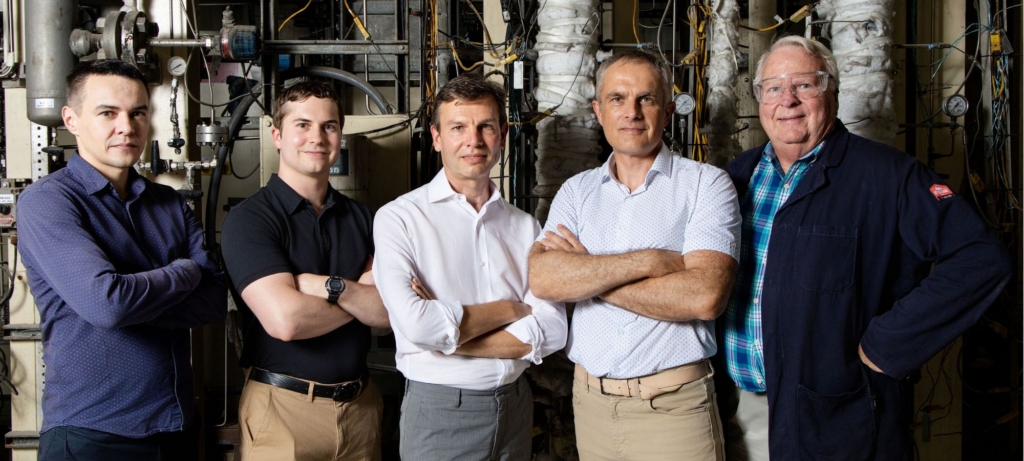
“Aromatics have been the missing piece for fully synthetic aviation turbine fuel,” explained Denis Pchelintsev, Co-Founder of Unifuel. “These results confirm we can reliably make aromatic molecules from the byproducts HEFA producers already generate, improving both the technical and economic challenges of making a fully synthetic aviation turbine fuel. We intend to apply a similar approach to other pathways that generate naphtha as a byproduct.”
A capital-efficient route to 100% SAF
Acknowledging that there is no “winner-takes-all” outcome for any single SAF production pathway, Beltyukov also emphasised, “we are likely to see a wider network of relatively small renewable fuel plants than a few very large ones.”
Adding that the facilities that will scale most effectively are those that can maximise yield from whatever feedstock they have access to and can adapt as market conditions shift, Beltyukov concluded: “Every HEFA plant produces naphtha it can’t sell as jet fuel. Every paraffinic SAF pathway produces a product that still needs fossil blending because it lacks aromatics. And most ATJ technologies require billion-dollar-scale plants to be economical.”
That’s what Flexiforming has been designed to solve. “It upgrades the low-value byproducts, supplies the missing aromatic component, and does it profitably at the required scale (often small), and it’s why I think the technology becomes more strategically relevant as the industry matures rather than less.”
With mandates tightening, supply falling short, and the aromatic gap remaining an unresolved structural challenge for the industry, the validation of Unifuel’s Flexiforming technology arrives at a critical juncture. It could provide existing SAF producers a practical, capital-efficient route to 100% synthetic aviation fuel.
Featured image: aapsky / stock.adobe.com